

Best VoIP Providers to Move Your Business Phone to the Cloud

A VoIP (Voice over Internet Protocol) provider is a company that delivers phone call services over the internet instead of traditional telephone lines. Rather than relying on copper wire infrastructure, VoIP converts your voice into digital data packets and transmits them over the internet, making calls faster, cheaper, and more flexible.
In simple terms, a VoIP provider gives you a phone number and the technology to make and receive calls using your internet connection from any device, anywhere in the world.
Whether you are a freelancer, small business, or large enterprise operating in North America, a VoIP provider offers significant advantages over traditional phone systems.
Cost Savings: Traditional phone lines are expensive, especially for international or long-distance calls. VoIP providers dramatically reduce costs because calls travel over the internet. Many providers offer unlimited calling plans within the USA and Canada for a flat monthly fee, saving businesses hundreds of dollars annually.
Virtual Phone Numbers for USA & Canada: With a VoIP provider, you can get a local USA or Canadian phone number even if you are located elsewhere in the world. This builds trust with North American customers and eliminates international calling barriers.
Remote Work Friendly: Post-pandemic, businesses need flexible communication tools. VoIP allows your entire team to use the same business phone system from anywhere, whether they are in New York, Toronto, or working remotely from another country.
Professional Business Features: VoIP providers give small businesses access to enterprise-level features like auto-attendants, call queues, extensions, and analytics without the enterprise price tag.
Scalability: Adding new lines or users with VoIP takes minutes, not days. As your business grows, your phone system grows with you no new hardware or technician visits required.
| Benefit | Traditional Phone | VoIP Provider |
|---|---|---|
| Monthly Cost | High ($50–$100+/line) | Requires hardware |
| International Calls | Expensive per minute | Cheap or included |
| Virtual Numbers | Not available | Available instantly |
| Remote Work | Office only | Work from anywhere |
| Setup Time | Days/weeks | Minutes |
| Scalability | Requires hardware | Add lines instantly |
The 2026 market for business phone systems is growing fast as companies move away from old copper lines. This list shows the best providers clearly, helping you choose without needing to understand complex tech terms.
We rated each provider based on real performance, international calls, AI tools, and total cost.
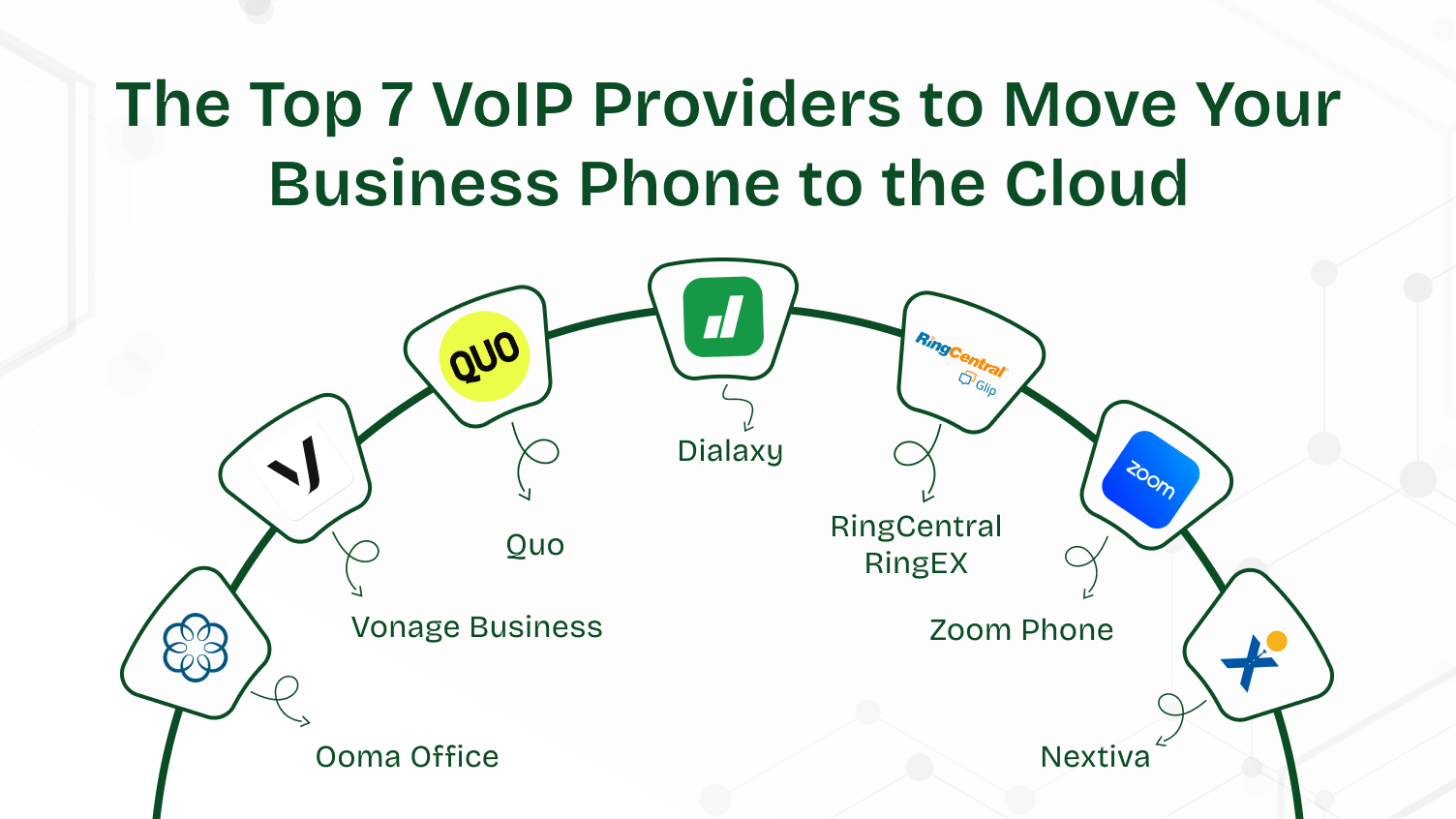
| Rank | Provider | Price/User | Best For |
|---|---|---|---|
| 1 | Dialaxy | $10/mo (Basic) | Speed & simplicity, SMBs, startups |
| 2 | RingCentral | $20/mo (Essentials) | Enterprise, compliance-heavy teams |
| 3 | Zoom Phone | $15/mo (Phone) | Video-first culture, remote teams |
| 4 | Nextiva | $15/mo (Core) | High-touch support, service-heavy |
| 5 | Quo (OpenPhone) | $15 (Starter) | Messaging-focused small teams |
| 6 | Vonage Business | $13.99/mo (Basic) | Customizable VoIP, developer tools |
| 7 | Ooma Office | $19.95/mo (Essentials) | Retail/physical locations, paging/fax |
Cloud migration in 2026 requires careful planning. Businesses must consider setup time, total cost, migration friction, and user experience to ensure a smooth transition to cloud VoIP systems.
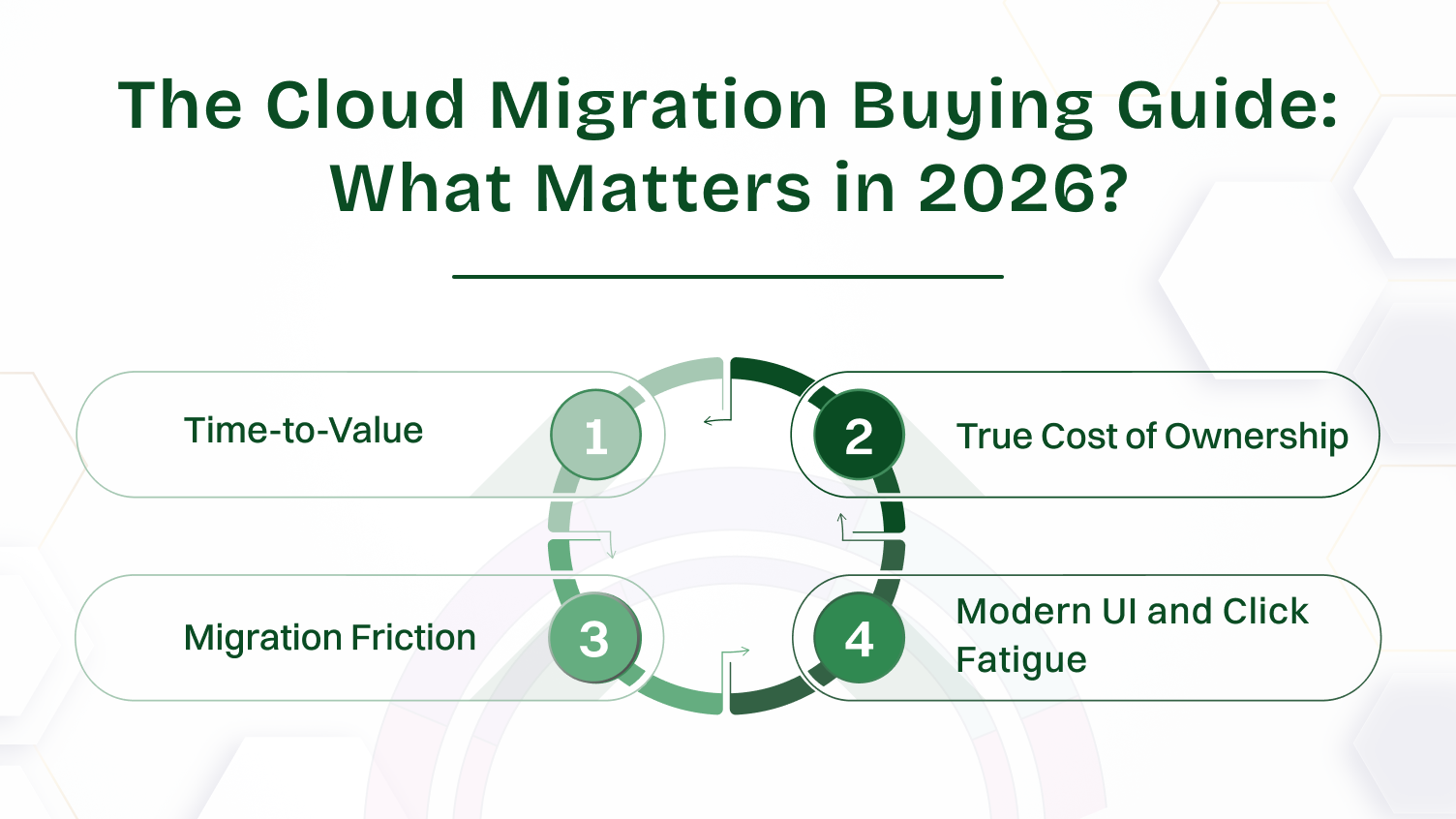
Time-to-value measures how quickly teams can make calls after setup. Delays in traditional systems reduce productivity, while modern VoIP platforms offer instant communication for remote teams.
Advertised pricing often hides additional fees. Real cost includes federal, state, e911 service, hardware rentals, and AI feature add-ons. Awareness prevents budget surprises.
Porting legacy numbers involves legal and technical steps. Minor errors on Letters of Agency (LOA) delay Local Number Portability (LNP). Modern providers reduce friction using automation.
Old PBX systems require multiple steps for call transfers, voicemail access, or conferences. Modern VoIP apps reduce clicks, improving productivity for support, sales, and remote teams.
Choosing the right phone system helps your business grow. This list compares the best cloud-based tools for modern teams. We looked at cost, setup speed, and key features to help you decide.
Dialaxy makes business phone systems easy. Teams can use mobile apps or desktop software phones without IT help. Ideal for SMBs and remote startups.
Best For: SMBs, remote startups, and sales groups needing a fast, easy setup.
RingCentral offers powerful features for large companies. Works best with IT staff who can handle complex setups. It provides strong uptime, call monitoring, and integrations.
Best For: Large companies with a dedicated IT staff.
Zoom Phone works well for teams already using Zoom for video meetings. Voice calls integrate with video and team messaging, but they lack full VoIP phone system features.
Best For: Teams that already use Zoom for video meetings.
Best For: Businesses like law firms that need great customer support.
Best For: Creative teams and freelancers who text more than they call.
Best For: Tech companies that want to build their own tools.
Best For: Restaurants and shops that need real desk phones.
Comparing top VoIP providers helps businesses decide which system fits their needs. We focus on cost, features, migration, call forwarding, SIP phone support, and cloud VoIP performance.
For a 20-person marketing agency, speed matters. You need clear call quality, browser-based calling, and AI call summaries without waiting weeks to go live.
| Comparison Factor | Dialaxy | RingCentral |
| Cost | $10-$30/user/mo; no hidden fees | $20-$35/user/mo; annual contract inflates the month-to-month cost |
| Features | Essential VoIP tools, softphone, desk phone support, call routing, and AI call analysis | 500+ features, mobile & desktop apps, 300+ integrations, call monitoring |
| Migration / Setup | Instant; automated porting dashboard, temporary numbers, fast onboarding | 2–4 weeks; implementation manager required, complex paperwork, slower onboarding |
Best Choice For: Dialaxy works best if you want to start calling immediately without extra hassle. RingCentral suits enterprises needing every feature and IT support.
Imagine a small law firm needing reliable cloud VoIP, call monitoring, and voicemail to email. Budget and support are both critical.
| Comparison Factor | Nextiva | Zoom Phone |
| Cost | $15-$75/user/mo; tiered by feature set (Core to Power Suite) | $15-$22.49/user/mo; bundles available with Workplace Pro |
| Features | BroadSoft backend, 24/7 support, voicemail to email, call queues | Video integration, familiar interface, softphone support, basic call logs |
| Migration / Setup | Hand-held; human project manager helps with porting | Moderate; adding new numbers is easy if Zoom already in use, porting is slower |
Best Choice For: Nextiva is reassuring if you want support and service on every call. Zoom Phone is great for teams comfortable handling setup themselves.
A solopreneur growing to three employees needs a business VoIP phone system that integrates with CRM, call logs, AI call transcription, and call forwarding.
| Comparison Factor | Dialaxy | Google Voice |
| Cost | $10-30/user/mo; transparent fees | $10-$30/user/mo; limited features |
| Features | CRM integration, Power Dialer, AI call transcription, call routing, visual voicemail | Basic softphone, voicemail transcription, limited call logs |
| Migration / Setup | Instant; temporary numbers, automated porting | Moderate; simple setup but isolated from CRM |
Best Choice For: Dialaxy fits small teams who want a professional cloud-based telephony service AI features. Google Voice works for freelancers needing basic calls.
Restaurants or retail locations need desk phones, paging, fax lines, and call forwarding. Hardware support is key here.
| Comparison Factor | Ooma Office | Vonage Business |
| Cost | $19.95–$29.95/user/mo; CAD/USD pricing varies | $13.99–$27.99/user/mo; advanced features cost extra |
| Features | Hardware support, overhead paging, virtual receptionist, call routing | API platform for custom solutions, softphone, call logs |
| Migration / Setup | Plug-and-play; base station setup, paperwork for porting | Standard; requires configuration and setup |
Best Choice For: Ooma is ideal for physical locations needing hardware support and call forwarding. Vonage fits developers who want custom APIs and integrations.
A 10-person sales team needs softphone support, AI call summaries, Power Dialer, and VoIP with CRM integration.
| Comparison Factor | Dialaxy | Quo |
| Cost | $15–$30/user/mo; includes global numbers. | $15–$35/user/mo; extra fees for SMS compliance. |
| Features | Power Dialer, call routing, AI transcription, call barging, CRM integration, unlimited calling | Threaded conversations, messaging, voicemail delegation, softphone only |
| Migration / Setup | Instant; automated porting, temporary numbers | Very fast; self-service porting, multi-line ports tricky |
Best Choice For: Dialaxy works for teams who need a full PBX with call monitoring and AI features. Quo is best for small teams focusing on messaging and calls.
A 200-person logistics company needs video conferencing, call monitoring, AI call analysis, and international calling support.
| Comparison Factor | RingCentral | Nextiva |
| Cost | $20-$35+/user/mo; higher costs for “Ultra” tier. | $15-$75/user/mo; price depends heavily on term. |
| Features | Mobile app, 300+ integrations, AI transcription, video meetings, call queues | 24/7 US-based support, voicemail to email, call logs, call barging |
| Migration / Setup | 2–4 weeks; complex paperwork, implementation manager required | Hand-held; project manager assists with onboarding |
Best Choice For: RingCentral is for tech-heavy teams needing advanced integrations. Nextiva is for teams who prioritize service, support, and smooth onboarding.
Switching to a cloud-based telephony service can feel confusing. Dialaxy makes it simple. You can keep your current numbers, use mobile apps or SIP phones, and set up call forwarding fast.
Good internet is key to cloud VoIP. Slow connections can cause bad call quality or dropped calls.
Checking the internet first stops problems later. Your team can enjoy smooth calls, video meetings, and international calling.
Before moving numbers, know which ones you have. Include main lines, fax, alarms, and direct dials.
This keeps your business running without missing any calls.
You need a Letter of Agency (LOA) to move numbers to Dialaxy. Doing it right avoids delays.
Dialaxy automates most steps, so your team can focus on work.
Cloud VoIP works with software or hardware phones. Choose what fits your team.
This keeps calls clear and makes your phone system easy to use.
Dialaxy gives useful VoIP phone tools in minutes. You can use AI and team features.
Setting up these features saves time and helps your team work better.
Test everything before going live. Make sure softphones, desk phones, and mobile apps work.
Testing prevents mistakes and ensures your phone system is ready.
This guide makes moving from home phones or old PBXs to cloud VoIP easy. Dialaxy helps teams use softphones, desk phones, call forwarding, and AI tools without downtime.
Communication Fundamentals
Mar 3, 2026
Read More
Not every VoIP phone system fits every business. Some industries need speed, others need hardware support or strict compliance. Here’s how the top providers match different needs.
Remote startups need fast setup and global numbers. Dialaxy makes it easy to get your team calling immediately.
Dialaxy works well for small teams that want a modern cloud VoIP system without hardware hassles.
Healthcare organizations need compliance and reliability. RingCentral meets strict regulations like HIPAA.
RingCentral is ideal for hospitals or clinics that must meet legal standards while managing many calls.
Retail stores and restaurants often use physical phones for ordering, paging, and front desk operations. Ooma fits this need.
Ooma is perfect for businesses with physical locations that rely on desk phones or traditional hardware.
Sales teams need speed, analytics, and CRM integration. Dialaxy keeps calls flowing efficiently.
Dialaxy helps sales teams stay productive while using modern contact center features.
These tips help business owners pick a phone provider that fits their work. Choosing the right cloud system gives you clear calls, easy call forwarding, and smart AI tools.
No matter which provider you choose, switching to VoIP in 2026 is one of the smartest moves you can make for your business communication. The cost savings, flexibility, and professional features far outweigh traditional phone systems in every category.
Try Dialaxy today and get your number set up in minutes.
The best VoIP provider for small businesses in 2026 is Dialaxy for its affordability, ease of use, and virtual number features. Ooma Office and Zoom Phone are also excellent budget-friendly options for small teams.
Dialaxy, RingCentral, and Nextiva all offer excellent service in Canada with local Canadian phone numbers, unlimited Canada-wide calling, and strong network coverage across all major Canadian cities.
VoIP provider costs typically range from $10 to $30 per user per month for basic plans. Dialaxy and Zoom Phone offer some of the most competitive pricing with all essential features included in their entry-level plans.
VoIP (Voice over Internet Protocol) is the technology that enables phone calls over the internet. A virtual phone number is a specific phone number assigned through a VoIP service — it is not tied to a physical SIM card or location, allowing calls from anywhere.
Yes! With providers like Dialaxy, you can instantly get a USA virtual phone number even if you are located in Canada — or vice versa. This allows Canadian businesses to have a local US presence without international calling fees.
Modern VoIP providers offer 99.99% uptime guarantees and HD voice quality. As long as you have a stable internet connection, VoIP is highly reliable and comparable or superior to traditional phone lines.
Yes. All top VoIP providers — including Dialaxy, RingCentral, Zoom Phone, and Nextiva — offer fully featured mobile apps for iOS and Android, allowing you to manage calls, SMS, and your account from your smartphone.
