

Answering Machine vs Voicemail: Which One Is Better for Businesses?


In the modern business world, communication is no longer a privilege but a requirement. Businesses will always find a way to simplify their operations and ensure that they never miss an important message. This raises a key question: an answering machine VS voicemail system?
Both tools share a similar purpose, which is to record missed calls; however, they differ in functionality and financial opportunities. These differences should be understood in order to make an informed decision that aligns with your business objectives and customer expectations.
In this blog, we’ll explain why choosing the right messaging system matters for your business.
Let’s get started!
An answering machine is a dedicated device. It is typically a physical unit and connects directly to a landline phone. It automatically answers the phone when you are unavailable and records incoming caller messages.
Moving beyond the physical, we find voicemail. This represents the digital evolution of message taking, a significant step towards answering calls even more effectively.
A voicemail system is a centralized platform that manages and records voice messages digitally. It is primarily software-driven. Many systems are cloud-based and do not require a physical device.
The comparison below shows the key differences between an answering machine and voicemail.
| Answering Machine | Voicemail System |
|---|---|
| Uses analog or basic digital technology. | Uses advanced digital or cloud-based VoIP. |
| Offers only basic recording and playback features. | Provides transcription, forwarding, and an auto-attendant. |
| Extremely limited scalability for growth. | Highly adaptable and scalable for business expansion. |
| Offers no integration with other software. | Provides extension CRM and business tool integration. |
| Involves a one-time purchase. | Requires ongoing subscriptions. |
How your business handles missed calls can significantly impact customer satisfaction and team efficiency. Choosing the right system isn’t just about recording messages; it’s about staying connected wherever you are.
Here’s how a voice mail system and traditional answering machines work in practice.
Setting up an answering machine is a physical process. You connect the device to your phone line. You manually record your outgoing message and manually listen to voicemail messages sequentially.
Rewinding and fast-forwarding are common. This process can be time-consuming, but you can still create an effective greeting despite these limitations.
A voicemail system setup is often guided online. You can upload digital greetings and record them directly. Management uses a visual interface. You can listen selectively and use custom voicemail greetings for various scenarios. This includes after-hours or holidays.
The answering machine ties you to a location. Its operational impact is significant. You cannot retrieve urgent messages when away. This severely limits remote work.
Imagine a plumber receiving an emergency call while he is on another job. The answering machine fails and cannot respond immediately.
On the other hand, a voicemail system allows remote access. Messages are available via mobile apps. Web portals and email work too. This fosters remote work environments and ensures teams can provide immediate responses.
The same plumber gets the call. He receives a transcribed message on his phone and calls back immediately. This offers immediate service. You can configure voicemail-to-email for instant notifications.
An answering machine offers minimal functionality. It is just a recording device. It misses many opportunities and cannot enhance business processes.
A voicemail system provides extensive functionality. Voicemail-to-text transcription saves time. You can quickly sort messages. Message forwarding enhances collaboration. Your team works together on messages. Auto-attendants and IVR create professional call flows. They direct callers without human help.
Call screening with caller ID integration prioritizes calls. Group mailboxes manage departmental inquiries. You use smart auto-attendants. These can replace a full-time receptionist and are important for scheduling appointments.
An answering machine creates a roadblock to growth. It has a fixed capacity and quickly becomes a bottleneck. It occurs when new team members are added. You must purchase more hardware.
A voicemail system is designed for scalability. You easily add mailboxes and increase storage. Cloud solutions offer elastic scalability.
Guides & How to
Dec 31, 2025
Read More
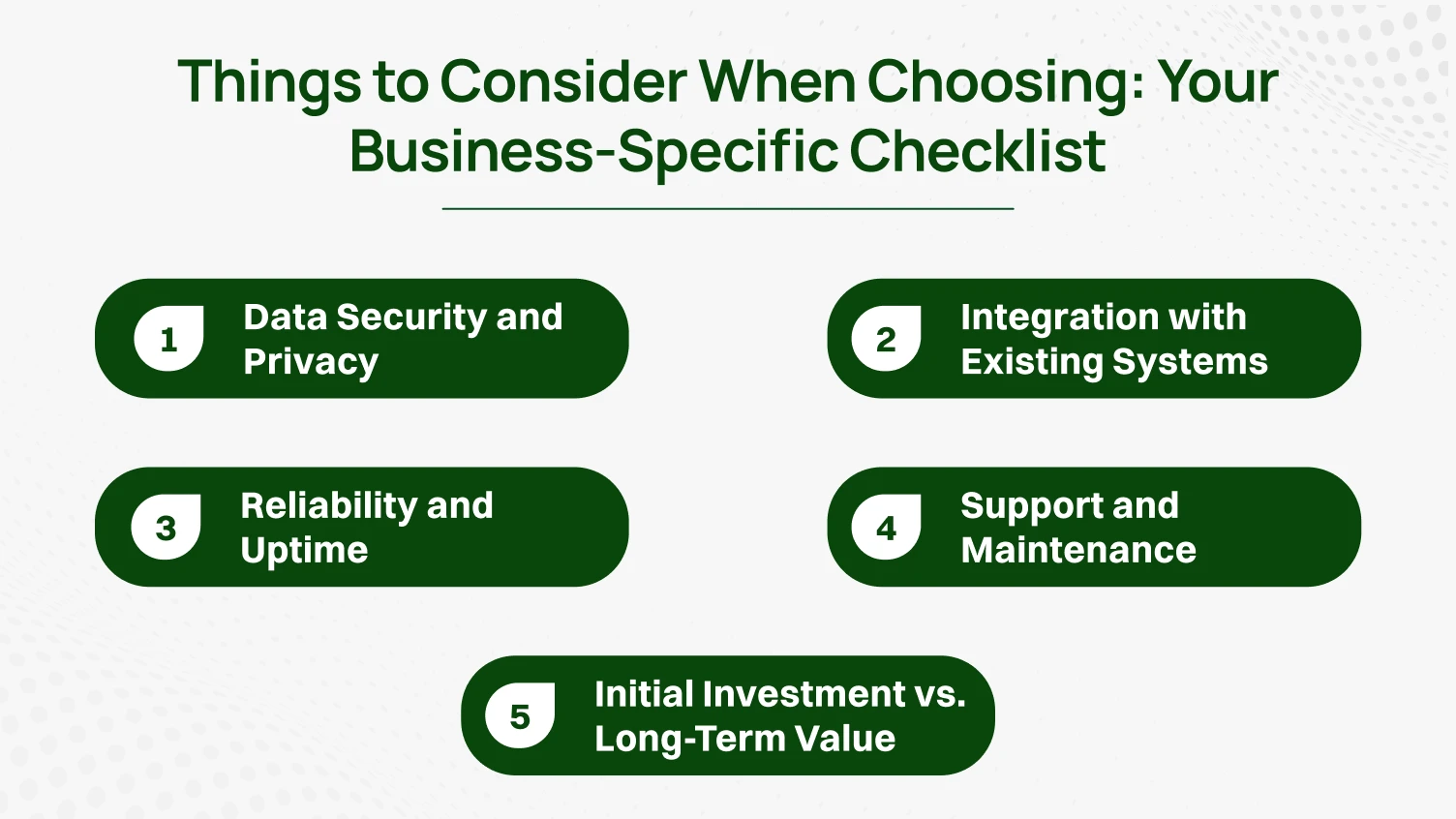
An important strategic decision for any business is whether to use an answering machine or a voicemail system. This decision will have a significant impact on your business communication and the efficiency of your working team.
Let’s consider the most important points to find the best system for your business.
For an answering machine, security is physical. The device itself is vulnerable. Risks include theft and physical damage. Stored messages lack encryption.
Voicemail systems offer robust security. Reputable providers use encryption and implement access controls and firewalls. Regular audits are common.
Compliance is important for some industries. HIPAA, GDPR, and PCI DSS compliance matters. A secure answering system protects sensitive customer information.
An answering machine generally offers no integration. It operates as an isolated device and cannot be connected to other software.
A voicemail system offers extensive integration. A CRM integration logs calls automatically. It tracks customer call history and improves lead tracking. Email and calendar integration sync messages. They help schedule callbacks.
Unified Communications as a Service (UCaaS) provides a broader range of platforms. This includes chat and video conferencing. List all critical business software and prioritize voicemail systems with direct integrations.
Answering machine reliability depends on the phone line, which relies on power. The device’s physical condition is key. It’s a single point of failure.
Voicemail systems offer high reliability. Reputable cloud providers use redundancy. They have multiple data centers. Failover mechanisms are in place.
Service Level Agreements (SLAs) guarantee uptime. You need a stable internet connection. This is crucial for VoIP-based systems. Research provider uptime history and review their SLA documents. Invest in reliable internet.
For an answering machine, troubleshooting is a DIY task. Manufacturer support is often limited. You need basic technical knowledge.
Voicemail systems offer professional support. Reputable providers offer 24/7 service. Different tiers are available. Knowledge bases are common. The provider handles automatic updates. They perform maintenance and security patches. Evaluate the quality of customer support. Read reviews about their service.
An answering machine has a low direct cost. It’s a one-time purchase. However, there are hidden costs. Time spent managing messages adds up. Missed calls can lead to lost leads and potentially damage a brand’s image.
A voicemail system has direct recurring costs. Monthly subscription fees apply. They vary in features and users. However, it offers significant ROI. Efficiency gains are high, and customer service improves. No leads are missed. Team collaboration is boosted. This long-term value often outweighs recurring fees.
Create a detailed cost-benefit analysis. Compare both options over several years. Include potential lost revenue for the answering machine.
To communicate efficiently, it is essential to optimize your message system, whether it is a traditional answering machine or a modern voicemail system. It is a critical factor in customer satisfaction. Action plans are necessary to make sure that you are getting the best out of the technology you have selected.
Here’s how to make the most of your system.
If available, personalize greetings. Design an effective auto-attendant menu. For example, “Press 1 for Sales, 2 for Support.” Draft several greetings. Implement them as needed.
Customers’ expectations have significantly evolved. A single “beep” is no longer enough. Your answering system is not just a tool but a strategic asset. It impacts customer perception directly and affects operational efficiency.
The decisive factors for choosing are clear. Consider the accessibility feature and evaluate all features. While answering machines serve niche scenarios, modern voicemail systems offer greater efficiency and convenience. Especially cloud-based VoIP, which is necessary for most businesses. They aim for growth and provide customer service.
Choose a solution that empowers your business. Connect with customers effectively and grow sustainably. A smart choice today pays dividends tomorrow. Your phone answering solution defines your business future.
IDialaxy transforms voicemail from a dead end into a strategic advantage.
No. An answering machine is a physical device that stores messages locally with limited features, while voicemail is a digital, often cloud-based system with advanced capabilities and automation.
Yes. This is commonly called a voicemail drop. Some voicemail systems allow direct mailbox access using special codes, letting you leave a message without ringing the recipient’s phone.
The number depends on your mobile carrier and voicemail storage limits. Available iPhone storage may also affect downloaded visual voicemail messages.
You typically connect the answering machine to your phone line and activate it using the device controls. Unlike voicemail or AI answering systems, it does not rely on cloud or mobile networks.
Yes. Live answering services are still widely used by businesses because they provide real human interaction and ensure customer calls receive immediate attention.
