

Virtual Call Center: What is It and How Does It Work?


Are expensive office buildings and outdated phone systems limiting your business growth and speed?
The world of customer service has officially moved to the cloud! It’s time to ditch the bulky, physical hardware and welcome the incredible flexibility of the Call Center.
In this guide, we’ll explain what a Virtual Call Center is and how it works. You’ll learn about the key software features you need and get a simple plan to set up your own system. This way, you can start saving money right away.
Let’s dive in!!🚀
Virtual Call Centers show a necessary change in how we communicate. They give businesses a reliable way to manage customer interactions in the future. These virtual contact center solutions are key to today’s business needs.
Here’s why these call centers are crucial for modern business:
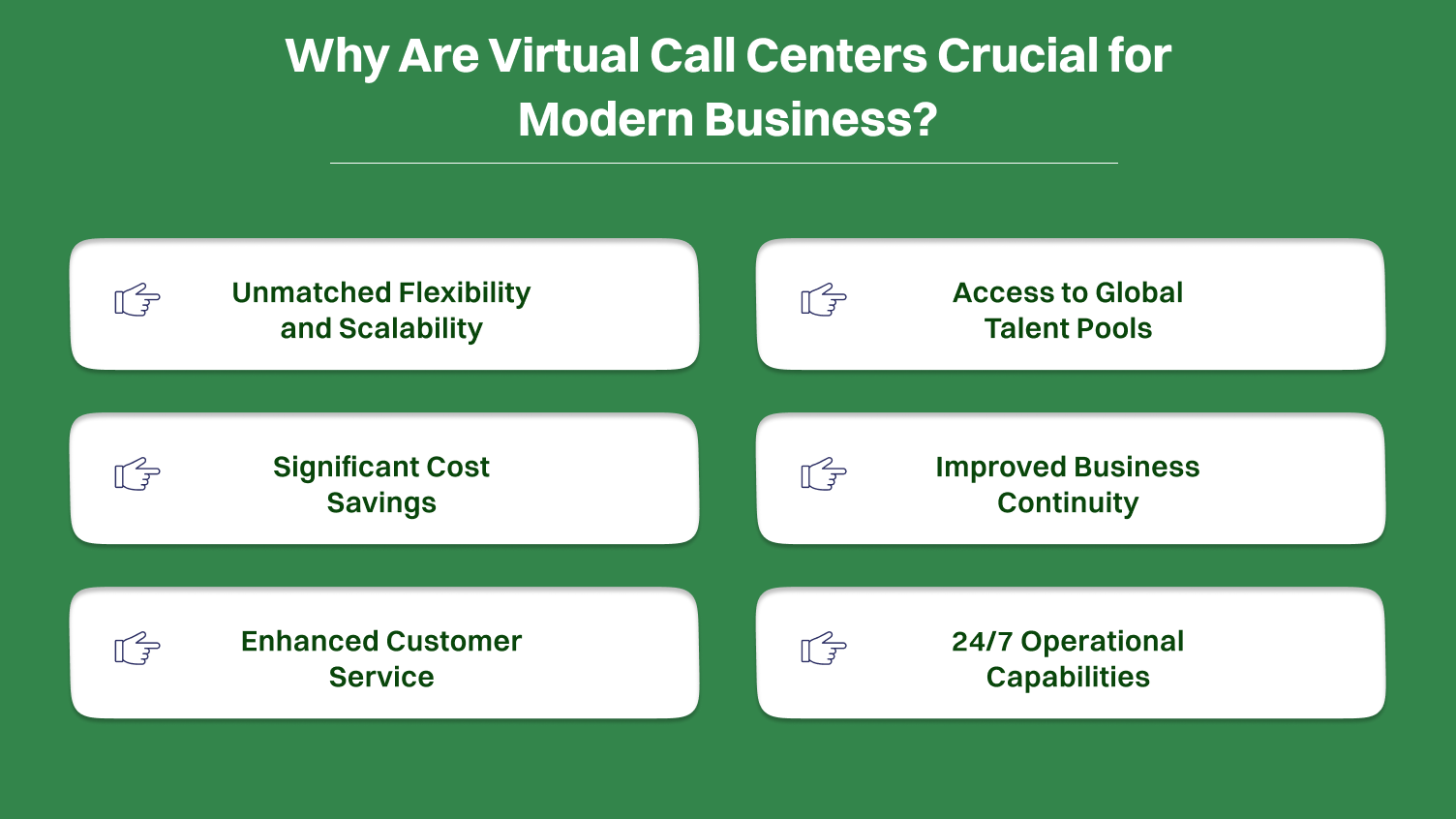
A cloud-based system lets companies grow instantly. You can quickly add remote agents during busy times. You then simply reduce staff when demand slows down. This kind of flexibility is impossible with a fixed, physical office.
The system makes sure your staff size always fits your customers’ needs. This is a huge benefit for businesses with changing service demands. Managing peak call volume becomes much easier this way.
Hiring a remote team is a significant positive change. Your office location no longer limits you. You can hire the best call center agent from anywhere globally. This wider search helps you find higher-quality staff.
It provides better service for your customers immediately. It also allows for full country coverage across many different areas. This brings diverse skills and language abilities to your operation.
Getting rid of the need for a physical office greatly reduces spending. Companies save money on expensive rent and utility bills. They also eliminate the cost of buying and maintaining hardware. This is a main reason these systems help to reduce costs so much.
Your investment goes into excellent software and talented people, not costly buildings. This smart financial move improves your overall business bottom line.
A cloud contact center is naturally strong against unexpected problems. Agents can work easily from many different places. A local power failure or bad storm will not stop your service. Your business can keep serving customers even when things are unpredictable.
This high level of reliability is essential for maintaining trust. It ensures your service is always available to those who need it.
Smart features like skills-based routing help solve calls faster. The system instantly sends incoming calls to the most skilled agent. This efficient process helps to improve customer experiences all the time. Customers appreciate receiving fast and effective support.
It avoids frustration and increases customer happiness significantly, or improves customer satisfaction. The system ensures an expert handles every interaction.
These Call Centers let you hire agents working in different time zones. This setup provides customer support constantly across the world. You can handle an inbound call or service request at any hour of the day. This round-the-clock availability is a major competitive boost.
It shows your customers that you are always ready to assist them. This ability to operate globally is a defining trait of modern service.
A Virtual Call Center is a service that operates over the internet instead of through dedicated physical, on-site hardware. It functions as a complete communication hub that exists entirely in a digital space. This approach contrasts sharply with older models dependent on bulky telephone equipment.
It fundamentally relies on a cloud-based telephony system known as Voice over Internet Protocol, or VoIP. This technology allows voice data to travel over a regular internet connection. The cloud foundation eliminates the high capital expenditure required for traditional private branch exchange, or PBX systems.
Key Components of the Virtual Call Center:
This model features true dual functionality. It seamlessly handles both inbound call center tasks and intensive outbound call campaigns with equal efficiency.
Modern virtual call center solutions are far more than just phone lines. They represent a suite of powerful, cloud-based tools. Developers designed these functions to maximize agent productivity. Choosing the right features is critical for any successful call center business. These technologies help every center agent manage high volumes of incoming calls and messages effectively.
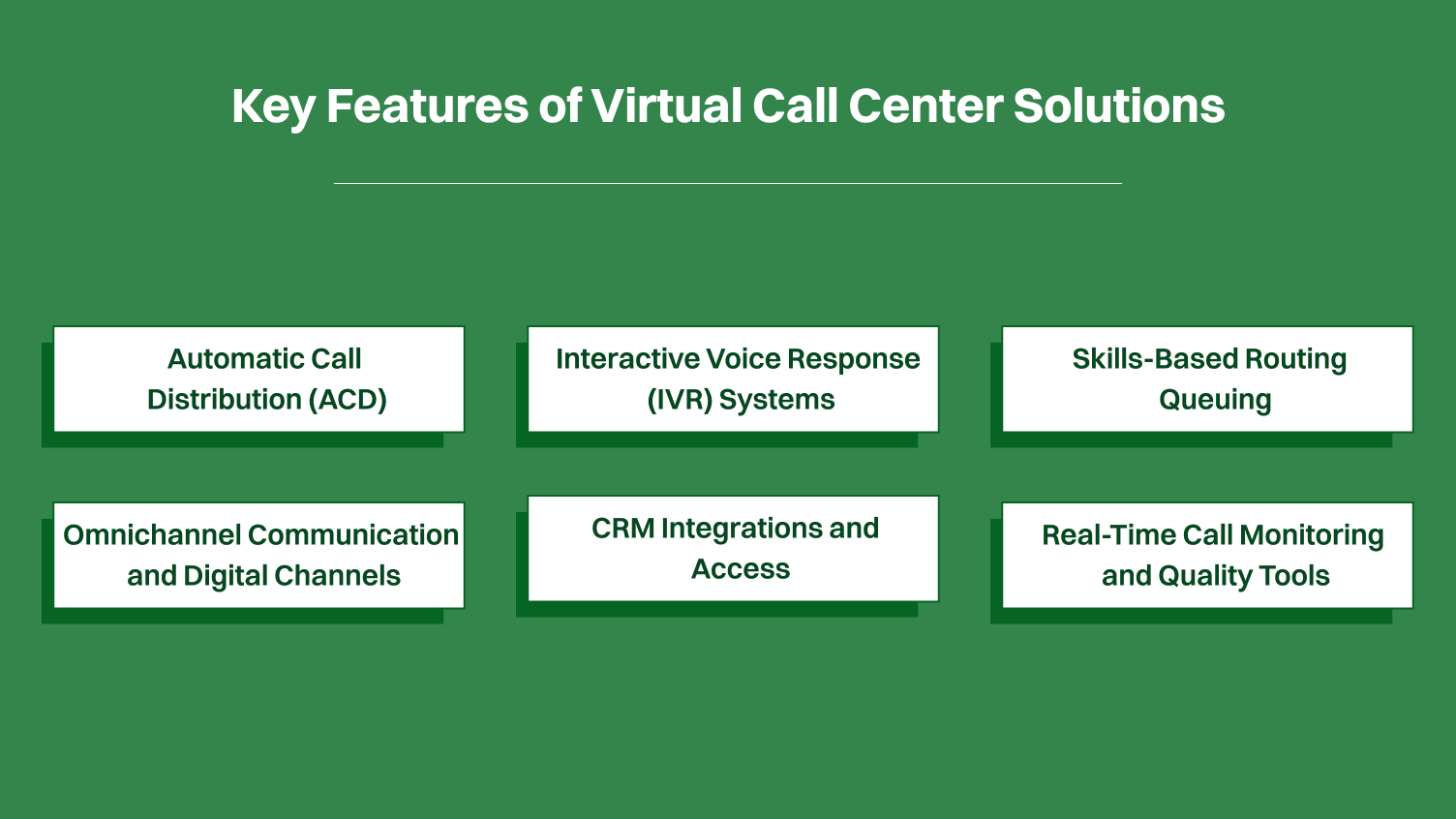
Industry experts call this crucial feature Automatic Call Distribution (ACD), which is the system’s brain. It automatically routes voice calls to the most suitable or available center agent. This system improves efficiency by reducing customer wait times significantly.
It uses smart logic to ensure that every inbound call reaches the correct endpoint swiftly. Good call distribution makes the entire call flow operate more smoothly and professionally.
The interactive voice response system acts like a self-service menu before an agent steps in. It presents customizable options to the caller, letting them choose their destination. A customer can quickly check their balance or track an order status without speaking to anyone.
This frees up human remote agents to handle complicated issues. The system manages basic inquiries, letting staff focus on high-value customer interactions.
This advanced capability goes beyond simple routing. Skills-based routing directs a caller to the call center agent with the exact expertise needed.
For example, the software routes a Spanish-speaking customer to a bilingual agent. This precise matching improves first call resolution rates dramatically. The system ensures the right agent answers the right call every time.
A true virtual contact center solution handles more than just phone calls. It unifies all digital channels into one agent interface. This includes email, web chat, and social media messaging.
Agents access the full history of every customer interaction in a single view. This streamlined approach makes multi-channel customer support reliable and cohesive.
Linking the virtual call center software to your Customer Relationship Management (CRM) platform is vital. These seamless CRM integrations provide agents with instant customer history pop-ups.
Agents can personalize the conversation immediately upon answering the phone. This access to the full customer relationship history improves speed and service personalization.
Supervisors need strong tools for quality control and coaching. Robust call monitoring allows managers to listen in on live calls without the customer knowing. They can provide subtle assistance or “whisper” advice directly to the call center agent.
This feature is critical for training new hires and maintaining high call quality standards. The system provides detailed reporting. As a result, it becomes easier to identify and fix training needs swiftly.
Implementing a robust virtual call center solution brings many clear benefits. These tools provide value far beyond just making phone calls. They actively help companies improve their entire operation.
Here are the following benefits of these call centers for businesses:
Getting rid of physical office space means huge savings. Companies avoid the large initial cost of buying hardware. They also lower the daily running costs of a physical call center business. This smart financial move directly leads to better profit margins.
Switching from a traditional setup to a virtual call system is a big financial victory. This helps to easily reduce costs across the board. The saved money can be used to invest in better training or new services instead.
Agents are often happier and more focused when working from home. The right call center software puts all necessary tools online. Features like automatic dialing save time every day. Specialized tools such as powerful sales dialers make sales teams much more effective.
This boost in agent productivity means agents handle more customer calls each hour. Agents spend less time on manual tasks and more time helping customers.
A flexible work schedule really lifts employee spirits. Letting remote agents choose their workspace is a huge perk. Companies can successfully build a strong company culture even with scattered teams. This flexibility often helps keep employees longer, reducing turnover.
When agents feel trusted, they become more engaged with their work. This leads to better service quality overall.
If an issue happens locally, the whole communication system stays working. The provider copies and protects your cloud contact center setup globally. Your plan for keeping the business running is much stronger by nature.
This reliable structure guarantees constant service for every customer. Customers rarely notice when a local problem affects your team.
These virtual contact center solutions allow for high levels of personalization. Businesses can create very specific, smooth call flow patterns. Skills-based routing makes sure the best agent handles every single inbound call.
This customized method is vital for truly improving customer experiences. The tailored approach makes the customer feel valued and understood.
Modern virtual call center platforms are built to connect easily. They link up smoothly with other common business programs. Connecting with customer relationship management systems is very simple.
This combined system makes sharing data between teams easy. It creates a single, unified environment for all customer interactions.
Launching a successful Virtual Call Center needs careful consideration. You require more than just installing good call center software. These major elements are absolutely critical for achieving long-term success. These points ensure your business stays ahead of the curve.

The journey from planning to operation is structured and requires attention. Following these clear steps ensures a smooth and effective transition to a successful virtual contact center. This process will set up your business for immediate long-term growth.
Start by clarifying your core service objectives right away. Determine if your main focus will be inbound call centers or if you need an outbound call capability. Calculate the current or expected volume of all incoming calls. This crucial scoping process will clearly guide your selection of the right platform.
Research different call center solutions with great care. Look for essential features like strong CRM integrations and superior scalability. Ask for live demonstrations to test the agent user interface yourself. Choose a call center platform that can handle growth easily in the future.
Create a detailed, mandatory checklist for all your future remote agents. Specify required computer equipment, headset models, and minimum internet speed. Provide a clear security setup guide for their personal home networks. Every agent must have all necessary tools before handling the first live call.
Begin the integration of the system without delay with your software provider. You should link the new platform to your current customer relationship management (CRM) system. Install the automatic call distribution (ACD) settings and the first call routing plan. Go through the entire call flow several times to ensure it is working correctly without any errors before the official service launch.
Hire experienced call center agents who clearly understand remote work dynamics well. Conduct comprehensive, engaging virtual training sessions for everyone. Teach them how to fully use all the features of the new call center software. Training should focus heavily on problem-solving and soft communication skills.
Start with a soft launch to a small, controlled group of customers first. Closely monitor initial performance metrics like resolution times and call quality. Use your call monitoring tools to assess agent performance fairly. Collect feedback from both customers and the remote team regularly across all time zones. Make necessary adjustments to constantly improve your operating efficiency.
Measuring performance is vital for success in a virtual call center. You cannot improve what you do not accurately measure now. Optimization is a continuous process that relies entirely on data.
This clear data guides managers to make smart, informed decisions. Using this systematic approach ensures that maximum efficiency is always achieved globally.
Here are the key points for measurement and optimization:
Track agent productivity far beyond simple handle time metrics now. Measure their true performance through the First Call Resolution (FCR) rates. Track the average time agents spend on crucial after-call work activities. Look at adherence to the schedule, which is key to a successful remote team. High productivity ensures you are maximizing all your staff resources across the network.
Monitor Customer Satisfaction (CSAT) Scores very closely. CSAT is a direct measure of your overall service impact instantly. Distribute short surveys immediately after the customer interaction ends. High satisfaction proves your call center solution is performing well. Low scores quickly signal areas needing immediate improvement to protect the customer relationship.
Analyze Call Flow and Distribution Efficiency constantly now. Review how quickly your incoming calls are actually reaching a waiting agent successfully. Analyze the true effectiveness of your automatic call distribution (ACD) rules daily. Check if the sophisticated skills-based routing is truly working as intended every day. Always optimize your routing strategy to minimize customer queue times instantly.
Use Conversation Analyzer tools for quality control purposes. Leverage sentiment analysis tools on every live call interaction. Identify customer pain points or common reasons for frustration clearly. This powerful insight helps refine training and communication scripts. Improving call quality often starts with grasping the emotional context deeply.
Regularly calculate and track the savings achieved by avoiding real estate and travel expenses. Compare these savings to the monthly subscription cost of the cloud platform. Proving the financial benefit strengthens the case to reduce costs.
Review how your system handles overflow or off-hours requests effectively. Ensure your system never misses critical calls. Use data to predict when and where you need extra coverage in specific time zones. This call forwarding strategy provides necessary business resilience.
Moving your support operations to the cloud is a smart decision for modern growth. However, many businesses make simple errors during the transition to a virtual call center solution.
Avoiding these common mistakes will ensure your remote call center is successful. It will also help keep customer satisfaction high.
Companies often fail to keep their remote team feeling connected. This happens once everyone starts working from home. You must actively work to build a strong company culture. This is true even when agents are apart. Schedule quick video check-ins that are just for fun. These informal calls help reduce isolation among call center agents.
It is a big mistake to think the software provider handles every security concern. Your business must set strict rules. These govern how remote agents handle customer data away from the office. Using personal devices or weak passwords can instantly create a security risk. This affects the entire operation.
Working from home requires different skills than working in a physical office. Many managers overlook training agents to be organized and self-motivated. Your remote team needs special coaching on managing their time. They also need to know when to ask for help. This is vital without a supervisor sitting nearby.
Sometimes, businesses try to get too clever with their automated systems and call flow. They design an interactive voice response menu that is simply too long. Alternatively, the menu might be too complicated. This frustrates the customer quickly. The system should always be simple. It should aim to quickly route the caller to the right person. This uses the automatic call distribution ACD.
When the main goal is just to reduce costs, companies often choose cheap call center software. This choice immediately hurts the quality of customer interactions. A reliable, feature-rich virtual contact center solution is an investment. It pays off by giving better customer experiences.
A huge error is picking call center software that does not communicate well. It needs to talk with your main customer relationship management system. When agents have to jump between screens, their focus shifts away from the customer. This inefficiency slows down every interaction. It also lowers agent productivity.
A mid-sized retailer sold niche handmade goods within only three states. Their traditional call center faced high operating costs and an upcoming lease renewal. They realized a critical change was needed to expand their potential country coverage. The management decided to transition their entire service operation to a full call center model.
What They Did:
Results:
Takeaway
The transition transformed the retailer from a regional player to an international brand. They accomplished global expansion while managing to significantly reduce costs simultaneously.
The flexible, scalable call center solution became the powerful engine for their sudden international growth. This success demonstrates how cloud technology can support ambitious business goals instantly.
The world of virtual contact center solutions is constantly evolving. New technologies quickly change how companies deliver customer service is delivered. Incorporating intelligent tools is a major, important trend. Now, automation is partnering with every center agent in a powerful way.
The AI Advantage is enhancing all live call interactions. AI assistance gives agents real-time suggestions and key information. This helps them solve customer problems faster and with great accuracy. This ultimately lifts the quality of all customer interactions.
Companies are using Advanced Analytics for a deeper understanding. Sentiment analysis gauges the customer’s mood during a voice call. This system listens for urgency or frustration in the language used. It can then prioritize truly urgent incoming calls to the most skilled agents. This ensures agents handle critical issues immediately, improving call quality.
AI-Powered Contact Center systems make complex routing decisions. Machine learning studies past performance and current queue situations. It determines the very best agent for each specific call. Bots also handle simple, repetitive tasks automatically. This shift allows human remote agents to focus on complex service issues instead. This partnership defines the modern virtual assistant call center.
These call centers are no longer just an option for businesses. They are a necessity for modern business growth and expansion. They offer an unmatched level of flexibility and significantly reduce costs. The technology allows for global reach and top-tier agent productivity.
Virtual contact center solutions are built on powerful call center software. This software enables advanced features like ACD and CRM integrations. Choosing the right call center platform is the first step. Embrace the future with AI assistance to fully empower agents
You can get contracts by reaching out to businesses, joining call-center partner programs, or using freelance sites where companies look for remote agents.
It depends a lot on scale and business model. Small remote agents might earn little, while large companies often generate millions. Profitability depends heavily on smart workforce management and the ability to significantly reduce costs compared to a physical center.
You’ll typically need a cloud phone system, ticketing software, call routing features, CRM integration, and performance dashboards to manage agents effectively.
Engagement also improves since they have flexible hours, better tools, and clear dashboards that help them stay on track.
Look for small businesses that need customer support. E-commerce stores and service companies are a good start. Promote your services on LinkedIn and make a simple website. Offer a free trial or a discounted first month to gain trust.
These call centers make money by charging businesses for handling their calls. They can earn per call, per hour, or with monthly service contracts. Some also sell extra services like chat support or lead generation.
A call center handles customer interactions primarily through voice calls. Whereas a contact center manages calls, emails, chats, and social media messages.
