

SIP Channel: Everything You Need to Know

Quick Overview:
SIP Channels offer reliable, low-cost internet calling, video, and messaging. They replace old lines, allowing easy scaling for modern business growth.
In modern business, clear communication is essential for achievement. Organizations must connect easily with customers, staff, & partners. Current technology provides better, quicker methods. It enhances teamwork, minimizes delays, & simplifies professional interactions across all communication platforms.
One popular technology is the SIP channel. It lets companies send voice, video, and data over the internet well. Replacing old phone lines with SIP channels is flexible, cost-effective, and reliable. This makes them a vital tool for current business communication needs.
Knowing about SIP channels is key for anyone in charge of business talks. This guide shows how they work, why they are essential, and what good they offer. You will also learn which groups gain the most and how to pick an exemplary SIP service easily.
A SIP channel is a virtual telephone channel that supports a single call at a given time over the Internet using SIP technology. Imagine it as a single highway lane; each call needs one channel. Businesses buy these virtual lines to match the simultaneous calls they must manage daily. Here is more on SIP Channel:
A single SIP trunk can hold many SIP channels, which are digital phone line replacements. Businesses choose channel numbers based on the expected number of simultaneous calls. A key benefit is scalability; companies can easily add or remove channels virtually to meet their changing call volumes.
SIP channels send voice calls as data over the internet, known as VoIP. This differs from older copper-wire phone systems. Since they are internet-based, the total number of channels a business can support depends entirely on the available capacity, or bandwidth, of its internet connection.
Modern companies cannot just use old phone lines. SIP channels give a cheap, flexible, and scalable way to communicate reliably. Here is why SIP channels are important now:
The SIP Channel is the interface between two essential systems in a contemporary business communication system:
This is your internal telephone system. It is responsible for extensions, routing, voicemail, and other call features at your office. The PBX controls the internal aspects of communication, whether it is a physical server in your closet or a cloud-based service.
This is the service provider that bridges your PBX to the outside world. Their network has the interface to the PSTN (traditional phone network) and other VoIP networks.
The medium linking these two points is the SIP Channel, which runs across the Internet. It is also a more effective substitute for the physical copper wires that were used to conduct this task.
Yes, the SIP channel is a significant part of a bigger SIP Trunking system. This system has four key components that collaborate to manage all of your electronic communication:
A SIP channel is a virtual telephone line that handles one call at a time over your internet connection using the SIP protocol. Businesses purchase multiple channels to support the concurrent calls they need. They can easily adjust capacity by adding or removing these virtual lines as required.
All communication (voice, video, and data) is carried over IP packets via your existing IP network using SIP channels. This is based on your Internet Telephony Service Provider (ITSP) to handle connections. The system’s model is a packet-switching model, which allows multiple communications to be made over a single non-physical connection.
SIP is entirely digital and supports multimedia services like video and messaging. Traditional lines (POTS or PRI) are analog, use physical copper wires, and are typically limited to voice calls only. SIP is highly scalable, whereas traditional lines require additional hardware purchases and installations.
SIP channels are the preferred choice for modern businesses, especially those with high call volume, multiple locations, or remote staff. They are used to improve team collaboration & call center performance through unified communication. Traditional lines suit legacy systems or basic, single-location voice needs.
Traditional phone lines, known as POTS (Plain Old Telephone Service), are physical, copper-wire connections. These systems are used by Primary Rate Interface (PRI), a common legacy standard for larger organizations. They are typically dedicated to reliably transmitting only voice calls.
Traditional phone lines operate using an analog method, sending signals over physical copper wires. The system links directly to the Public Switched Telephone Network (PSTN). It uses a circuit-switched model, which means a dedicated, private connection remains open for the entire call duration.
Traditional lines are analog and constrained to voice calls, lacking multimedia support. They require physical installation, making scaling complex and slow. In contrast, SIP is fully digital, supports video/messaging, and allows for instant, virtual scalability by adding or removing channels.
Smaller businesses and residences use traditional lines for reliable, basic voice communication where internet quality is a concern. PRI is often part of a company’s legacy phone infrastructure. They are dependable for voice, but offer none of the advanced features of modern IP-based communication systems.
SIP Channels and SIP Lines, sometimes called SIP Trunk Lines, refer to the same virtual service. They are both the digital equivalent of a traditional phone line. You can connect multiple channels or lines to a single SIP Trunk, which serves as the digital pathway.
The working mechanism is identical because the terms are interchangeable. They both support one simultaneous call, either incoming or outgoing. The SIP Trunk (the connection) carries the individual SIP Channel (the call lane). They function using the same internet connection and protocols.
Crucially, there are no functional differences between these terms. They describe the same core concept, often having different names based on the provider or context. Recognizing they are synonyms prevents unnecessary confusion during system setup or purchasing decisions.
Both terms are used interchangeably in business communication. Providers may use “channels” to emphasize capacity slots, or “lines” to reference old phone terms. Regardless of the label, they specify the number of concurrent calls your system can handle.
VoIP is a technology that sends only voice calls as digital data across the internet, making phone service cheaper. However, SIP Trunking is a complete system that uses the SIP protocol to control and manage various media, not just simple voice communication.
The VoIP process solely deals with the transmission of voice audio signals over the internet as digital packets. In contrast, the SIP Trunking process uses the Session Initiation Protocol (SIP) to manage various communication types. The SIP protocol manages all forms of communication.
The basic contrast here lies in their scope. VoIP services are limited to calling, whereas SIP Trunking services go far beyond that. The scope of SIP includes VoIP for voice communication, but it also covers other media such as video, conferencing, and messaging.
VoIP services are most appropriate for basic voice calls, in which case only an audio link is required. Using SIP Trunking, businesses can create a Unified Communication solution that integrates all communication tools into a single, all-encompassing service.
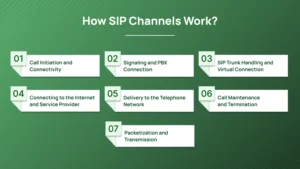
Calls begin in mobile or desktop applications that must be actively connected to the internet. This setup is part of your overall business communication strategy, integrating tools such as SMS and Voice APIs to enable advanced features.
A series of signaling processes, key to modern VoIP technology, connects the call to the Private Branch Exchange (PBX) network or server. This is a crucial distinction from SIP itself, enabling seamless call routing within the organization.
The call is then handled by the SIP trunk, which acts as the digital version of bundled traditional phone lines. These virtual SIP lines or SIP trunk channels manage high call volume and offer the benefits of SIP trunking.
The SIP trunk connects the call to the Internet and the SIP or VoIP service provider. Choosing the right provider is essential for maintaining excellent call quality and effective routing calls through the network.
The service provider efficiently routes the call from the internet to the telephone network, finalizing the connection. This seamless, reliable routing enhances the business phone system, often integrating features like AI voice agents for center solutions.
The call is maintained until termination. The ease of managing SIP trunk lines and the clear cost advantages make this system preferable to SIP trunks. When you get started building your systems, this flexibility is paramount.
SIP trunks break voice calls into digital packets for transmission over the Internet. This robust trunking system enables effective call routing and supports advanced features such as instant messaging and key workflow automation.
SIP channels provide clear advantages over old phone lines for any business phone system. Since they use Session Initiation Protocol (SIP), they naturally handle voice, video, and chat, making them superior to older communication methods.
The use of SIP channels helps businesses save on communication costs by using the Internet Protocol instead of phone lines for voice calls. This enables companies to manage incoming & outgoing calls more effectively, thereby reducing long-distance and other costs associated with a traditional phone system.
SIP lines enable rapid, easy scaling of communications as calls change. For a business phone solution, when considering a regular trunk line versus a SIP trunk, a SIP line offers greater flexibility for scaling up and down.
Using SIP channels, businesses can achieve clearer voice communications and better call routing. Internet telephony enhances audio quality, and failover solutions can prevent communications interruptions caused by outages in the existing phone infrastructure.
SIP channels support voice, video conferencing, and instant messaging on one platform. They integrate smoothly with VoIP technology, private branch exchange PBX systems, and cloud tools, making them ideal for AI voice agents, voice API use, and workflow automation.
Since SIP channels work over the internet, teams can manage business phones from any device or location. This helps companies using internet telephony, center solutions, and business communication tools stay connected without depending on traditional phone lines.
SIP channels work with SIP trunk channels, SIP trunk lines, and many trunking provider systems. Businesses can adopt SIP solutions without rebuilding their telephone network, making it easy to build a flexible, scalable communication setup.
SIP channels improve call routing and support AI-based voice and sentiment analysis, as well as automated voice agent tools. These features go beyond traditional phone lines and help businesses handle calls more efficiently across modern digital communication systems.
SIP channels combine voice, video, messaging, and collaboration in one place. This simplifies communication systems, reduces costs, and enhances workflows while delivering key benefits of SIP trunking and Internet Protocol–based business communication.
SIP Channels will be most beneficial for those businesses with heavily dependent phone communications setups throughout their daily operations. This can include businesses with high call volume, handling multiple calls simultaneously, and handling both incoming and outgoing calls.
The kinds of businesses that deal with center solutions require efficient communication to route calls. This is because SIP channels enhance call quality and can be scaled up during peak times, an added advantage compared with phone lines.
SIP channels are excellent in the case of your team working remotely or adopting a hybrid schedule, as they function via the internet. Employees can make and receive calls from any location using their work phone or an app, so business calls are not interrupted.
For businesses with operations across multiple offices and branches, a standard telephone solution is essential. This is made possible by SIP channels, which can be coupled with PBX solutions and trunk lines to connect teams.
Such companies that are using technologies like VoIP, AI for voice, voice APIs, SMS APIs, and instant messaging in their operations resort to SIP trunks for unified communications. Hence, the workforce can reach customers effectively through voice calls, video conferencing, and electronic messaging.
For businesses seeking ways to reduce costs for circuit-switched communications or trunked services, SIP channels are beneficial because they eliminate the need for a series of trunk lines, minimize long-distance charges, and let businesses pay only for the channels they use.
Final verdict:
The most significant advantage of SIP Channels is that it is available to businesses & organizations that require a reliable, efficient business phone system. This may include handling telephone routes, implementing internet telephony solutions, & creating voice agents for artificial intelligence speech recognition solutions.
You have many VoIP and SIP trunk providers to choose from based on your specific business requirements. When picking any business communication platform, keep the following crucial factors in mind:
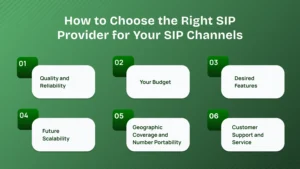
Always review their service agreements (SLAs), online customer feedback, and uptime records carefully. The standard for top reliability is 99.999% availability, also known as the “five nines” in the industry.
You will find providers across the entire range of pricing options available today. Ensure you select a provider whose communication solution & overall cost perfectly align with your company’s financial needs.
Virtual phone systems offer many features that simplify call flows & significantly improve staff productivity. Consider which specific tools are essential for managing your calls and daily business operations.
Long-term growth planning is essential, so select a SIP trunking provider that can easily scale your bandwidth and capacity as your business grows.
Ensure the provider covers all the locations where you do business. Also, confirm they allow you to easily transfer (port) your current business phone numbers to their service.
Evaluate the quality and availability of their technical support team. A reliable provider offers fast, knowledgeable 24/7 support to resolve potential outages or technical problems.
SIP channels are virtual phone lines using the internet (VoIP) for voice, video, and data. They replace old copper lines, offering high scalability, flexibility, and significant cost savings. This technology is vital for modern, reliable business communication.
SIP channels represent the optimal choice for contact centers and remote teams that aim for unified communications. While selecting a vendor, emphasize factors such as maximum uptime and reliability, budget, required features, and the system’s capacity to help your business expand effortlessly.
A SIP channel is a virtual telephone line that carries a single call (voice, video, or data) over the Internet using the Session Initiation Protocol (SIP).
VoIP (Voice over IP) only handles voice calls. SIP Channels are part of the larger SIP Trunking system, which manages voice, video, and messaging.
SIP channels offer greater flexibility, easier scaling, and significant cost savings because they use your existing internet connection instead of physical copper lines.
You need one channel for every simultaneous call your business expects to handle, including both incoming and outgoing calls.
No. SIP Channels work with various devices, including VoIP desk phones, computer-based softphones, and mobile apps, offering high flexibility.
