

What is Hosted PBX and How Does it Work?

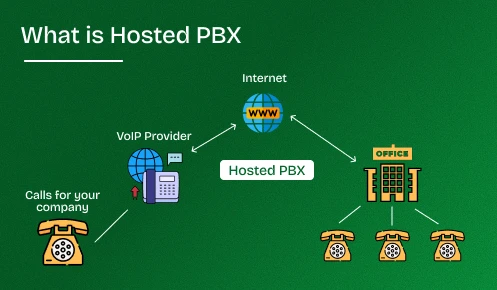
Have you heard about Hosted PBX? If not, don’t worry, you are not alone. Many still picture traditional PBX as a mess of copper wires in an office. Today, cloud PBX systems make business communication simpler, flexible, and easy to manage.
A hosted PBX (Private Branch Exchange) is simply a cloud-based phone system. You do not need to purchase and maintain costly hardware, with your calls being handled online by a provider. This implies that your business is able to deal with call routing, voicemail, auto attendants, call transfer, and even voicemail to email, even without the complex setup.
At the end, you would have known all about the hosted PBX system, including its meaning, operation, advantages, and the reasons why business organizations are replacing the old PBX with a cloud-based solution.
Hosted PBX is a call centre that is a cloud-based phone system that operates business calls without hardware being installed on-site. It is an online-based PBX, which is unlike a standard on-premise PBX since the provider does the maintenance, updates, and security.
PBX or Private Branch Exchange links the employees in-house together and also takes care of the external calls. Hosted PBX takes these facilities to the cloud and also provides call forwarding, auto attendants, call recording, and voicemail-to-email.
It is scalable, flexible, and inexpensive. VoIP phones, softphones, or mobile applications allow employees to use them, which is also suitable with remote teams and expanding businesses.

The phone system that businesses require is one that is easy, dynamic, and dependable. A hosted PBX system is cloud-based and thus has no costly hardware to maintain, and it has predictable monthly charges rather than unexpected bills.
It is important to be flexible, and in the case of a hosted IP PBX, the employees are able to receive calls in the office, at home, or from any place with a network connection. Remote and hybrid teams remain in contact with a single system, eliminating scaling issues. A virtual PBX allows you to add or remove lines and extensions within minutes without additional wiring and hardware. The system expands as you expand your business.
Hosted PBX is also able to provide such advanced services as call forwarding, email voicemail, auto attendants, and call recording. There are no extra expenses involved in using these tools to improve customer communications and internal processes.
Lastly, reliability and presence are important. In case of an outage, calls can be rerouted, and both local and international numbers can be set to reach customers anywhere.
Key Steps at a Glance
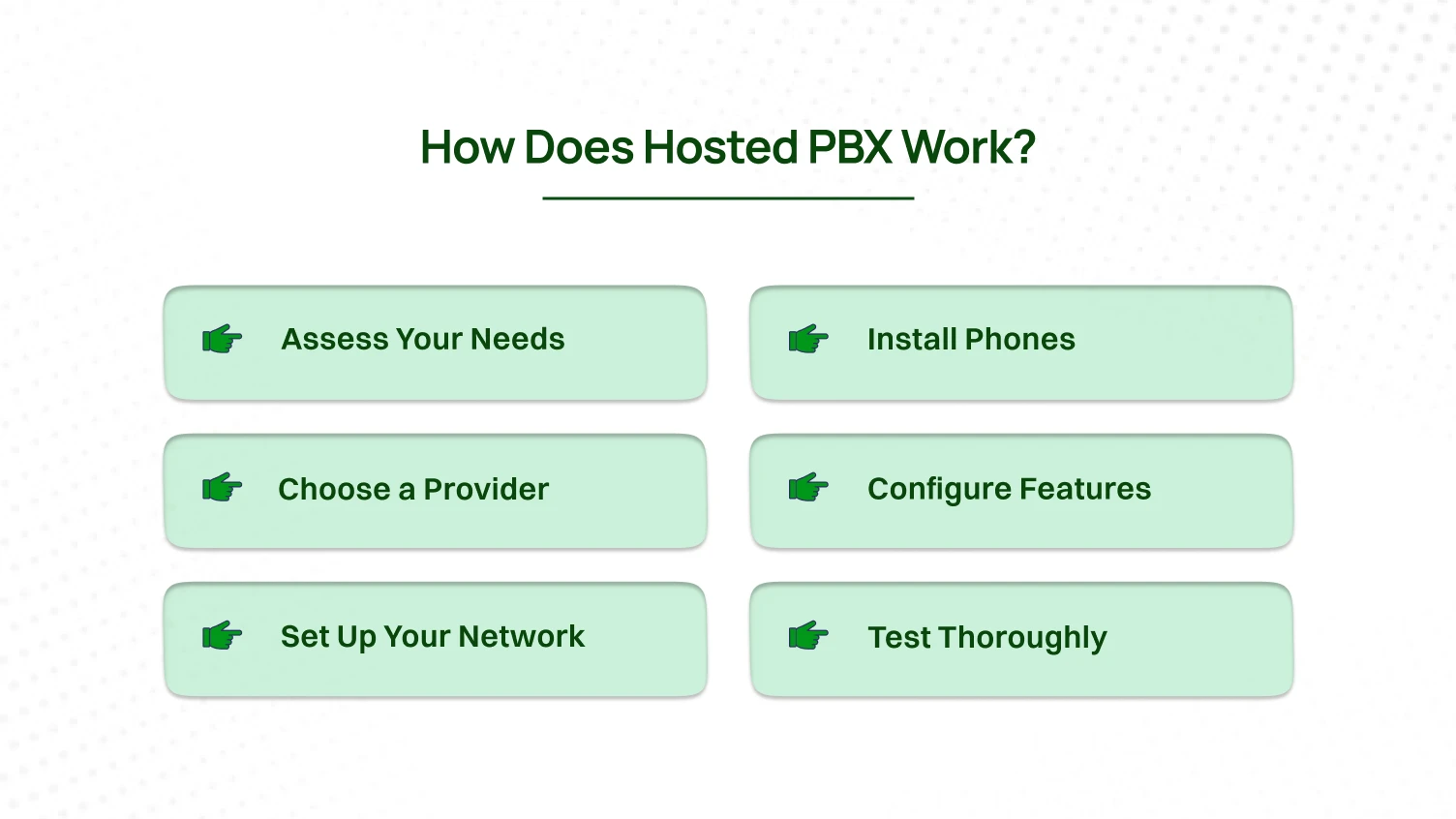
The operational aspects of the Hosted PBX system can be broken down. It is easier than it may appear to be.
First of all, have a harsh look at your present communication patterns. How many employees need phone access? Do they work remotely? What advanced features are essential for your operations? This step helps define your requirements for a Hosted PBX phone system. It makes sure that you pick a solution that best fits.
The choice of a Hosted PBX provider is very important. This is like choosing a partner for your business communications. Research different providers and compare their features, pricing, and customer support. Ask about their uptime guarantees and security protocols. A good provider makes all the difference in your Hosted PBX experience.
Your internet connection is the backbone of your Hosted PBX. You need reliable business broadband. Ensure sufficient bandwidth for all your voice traffic. Consider Quality of Service (QoS) settings on your router. QoS prioritizes voice packets. This prevents choppy calls and delays. Without a solid network, even the best Hosted PBX system will struggle. It’s like having a fancy car but no gas.
Once your network is ready, it’s time for the phones. You have options here. You can use dedicated VoIP phones, which look like traditional desk phones. Or, you can use softphones. These are applications on your computer or smartphone. They allow you to make calls through your Hosted PBX account. Connecting them is usually straightforward. Just plug in or install the software.
This is where you personalize your Hosted PBX phone system. You can set up an auto-attendant. This greets callers and directs them to the right department. Configure call routing rules. These ensure calls are transferred efficiently. Set up individual voicemails and call forwarding. These features streamline your customer communication. You can also integrate the system with other business tools.
Do not skip this step! Before going live, conduct extensive testing. Make calls to and from every extension. Test features like call transfer, conference bridge, and voicemail. Simulate peak call volumes. Identify any glitches or areas for improvement. A thorough test ensures a smooth transition. It also prevents embarrassing outages.
When you compare the two, it’s clear that a hosted PBX offers more flexibility, lower costs, and easier management than a traditional on-premises PBX. Unless you enjoy paying for bulky hardware and hiring IT staff just to keep phones running, the cloud option makes more sense. For most businesses today, hosted PBX is the smarter choice to save money, scale fast, and keep communication reliable.
| Feature | Hosted PBX (Cloud-Based) | Traditional On-Premises PBX |
|---|---|---|
| Setup | Quick — provider handles installation and hosting | Complex — requires on-site hardware and IT setup |
| Cost | Lower upfront cost, monthly subscription model | High upfront investment in PBX equipment and servers |
| Maintenance | Provider manages updates, fixes, and security patches | In-house IT team must handle upgrades and repairs |
| Scalability | Easily add or remove lines and users in minutes | Adding lines requires new hardware and wiring |
| Flexibility | Access from office, home, or mobile apps | Limited to office location and desk phones |
| Features | Advanced features like auto attendant, call recording, and voicemail-to-email included | Basic features; advanced ones often cost extra |
| Reliability | Cloud redundancy with automatic failover | Risk of downtime if local equipment fails |
| Business Continuity | Calls rerouted during outages with built-in disaster recovery | Limited backup options, dependent on local hardware |
| Global Presence | Easily add local or international numbers | Typically restricted to a single location |
| Best For | Small to large businesses seeking flexibility and scalability | Enterprises with legacy systems and dedicated IT teams |
Hosted PBX consistently outperforms its traditional on-premises counterpart in terms of cost, flexibility, and features. It’s the smart choice for future-proofing your business communications platform.
These are the essentials to get your hosted PBX system running.
Adding these features enhances your communication channels and efficiency.
Optional tools help your business scale and adapt to advanced communication needs.
Even though a hosted PBX system is easier to manage than a traditional on-premises PBX, businesses can still face some hurdles. Knowing these challenges in advance and addressing them properly can save time, prevent downtime, and ensure smooth communication across your team.
A common issue with cloud-based PBX is call quality problems such as jitter, delays, or dropped calls. These issues usually happen when the internet connection isn’t stable or when bandwidth isn’t prioritized for voice traffic. Poor call quality frustrates both employees and customers, reducing productivity and giving a bad impression of your business.
Firewalls or network address translation (NAT) settings can block VoIP traffic, causing failed calls, one-way audio, or inconsistent call quality. This is especially common when moving from traditional PBX systems to a hosted IP PBX, as cloud-based calls travel over the internet and require specific ports to remain open.
Adding new users or extensions without proper planning is another challenge. Businesses often underestimate the complexity of call routing, department extensions, and managing multiple phone lines. The result can be confusion among staff, missed calls, and frustrated customers.
A cloud-based phone system opens new security considerations. Weak passwords, unauthorized access, or outdated software can expose your system to hacking attempts, toll fraud, or call interception. Security is especially important for businesses handling sensitive customer data, such as in healthcare or finance.
Because hosted PBX relies on an internet connection, any outage can disrupt communication. This can be a problem if your business relies heavily on customer calls or internal collaboration through VoIP.
The advantages of switching to a Hosted PBX system are numerous and directly impact your bottom line and operational efficiency. Let’s count the ways.
These benefits make Hosted PBX a powerful tool for modern businesses looking to thrive.
Hosted PBX is not a one-size-fits-all solution. However, it suits many businesses very well.
Small Businesses
Small businesses benefit from lower costs. They get access to enterprise-level features. It helps them punch above their weight.
Remote & Hybrid Teams
This is an obvious winner. Hosted PBX allows teams to work from anywhere. Everyone stays connected and productive.
Growing Enterprises
As a business expands, Hosted PBX scales easily. You just add more users and features. No need for costly infrastructure upgrades.
Healthcare:
Healthcare providers require reliable and secure communication. Hosted PBX offers this. It supports features such as secure messaging and call recording for compliance purposes.
Retail & E-commerce:
These businesses handle many customer inquiries. Hosted PBX helps manage call volumes. It improves customer service with features like IVR.
Tech Startups:
Startups often need flexible, cost-effective solutions. Hosted PBX fits the bill perfectly. It allows them to focus on innovation.
Legal & financial services
These sectors demand high security and reliability. Hosted PBX provides encryption. It also offers call recording for regulatory compliance.
Alright, you’re convinced. Now, how do you actually get this thing going?
Before signing up for any service, understand your exact requirements. How many employees need a business phone? Do you need a main number with multiple extensions? How many concurrent calls do you anticipate? This initial assessment helps determine the right plan. It also informs how many PBX lines you will need.
Based on your needs, select a Hosted PBX provider. Compare different PBX plans. Look at the included features. Check the pricing structure. Read customer reviews. Ensure the provider offers robust customer support. This choice is critical for your long-term satisfaction.
Once you have a provider, it is time to set up your system. Assign extensions to each user. Create departments for efficient call management. Configure call routing rules. This directs incoming calls to the appropriate person or team. You might also set up an auto attendant here.
Always test, test, test! Make calls using both your VoIP phones and softphones. Check for clear audio. Listen for any delay or dropped calls. Ensure all features work as expected. This helps identify and fix issues before they impact your business.
Don’t just launch the new system and expect everyone to figure it out on their own. Provide thorough training to your employees. Show them how to use all the new Hosted PBX features. Teach them about call transfer, conference bridge, and voicemail. Proper training ensures smooth adoption. It also improves customer communication.
Security is paramount for any business communication platform. Hosted PBX is no exception.
The world of telecommunications is constantly evolving. Hosted PBX is at the forefront of this change. Trends in cloud-based communications, integration with AI analytics, and unified communications.
The future of Hosted PBX is bright. We continue to see growth in cloud-based communications. More businesses are moving away from traditional on-premises PBX systems. Integration with AI analytics will become more sophisticated. AI will offer deeper insights into call patterns and customer sentiment.
Unified communications platforms will integrate even further. This means voice, video, messaging, and business applications will all work together. This creates a truly integrated communication channel. Growing importance of VoIP phone systems and multi-channel communication platforms.
VoIP phone systems are already dominant. Their importance will only increase. Businesses will demand more multi-channel communication platforms. Customers want to connect via phone, chat, email, and social media. Hosted PBX will continue to evolve. It will support these diverse communication needs. Understanding trends helps you plan your future communications strategy.
A hosted PBX is more than just a phone system. It’s a cloud-based private branch exchange that gives businesses advanced features without the hassle of bulky hardware or high maintenance costs. Compared to a traditional on-premises PBX, it offers lower costs, greater flexibility, and stronger business continuity.
With features such as call routing, auto attendants, call recording, and voicemail-to-email, a hosted PBX helps businesses enhance customer communication while remaining scalable for future growth. Whether you run a small office, a hybrid team, or a growing enterprise, a hosted PBX phone system makes communication smarter and easier.
If your business is ready for a reliable, secure, and cost-effective communication platform, it’s time to switch to hosted PBX.
A hosted PBX runs in the cloud and is managed by a provider, while a traditional on-premises PBX requires physical hardware at your office. Hosted PBX is cheaper, easier to scale, and needs less maintenance.
Yes, but most businesses are moving from traditional PBX systems to cloud-based PBX. The old hardware-based systems are costly to maintain, while hosted PBX offers more flexibility.
The main disadvantages are that it depends on a stable internet connection, and call quality can drop if bandwidth is limited. However, with proper network setup and business broadband, these issues can be minimized.
The main types are:
PBX and VoIP are not the same. PBX is a phone system that manages calls inside a business. VoIP is the technology that sends calls over the internet. A hosted PBX often uses VoIP to provide modern call features.
A hosted PBX service is a subscription-based cloud phone system provided by a telecom or VoIP company. They handle the infrastructure, software, and updates, while your business simply connects and uses the features.
