

Blended Contact Center: What Is It, Benefits, & How to Set Up


The Blended Contact Center should be an essential part of the business today. It generates operational efficiencies, enhances customer service, and reduces costs. Conventionally, inbound call centers and outbound call centers would hire agents and leave them idle, waiting to receive calls when there are none, wasting their time and company resources.
A blended call center eliminates the issue of wasted time. Agents handle both inbound calls and outbound calls simultaneously. Therefore, agents are always occupied, enabling companies to utilize their resources more effectively.
This flexibility also expands the customer service strategy by reducing wait times on inbound calls while enabling a proactive outbound dialer. Managers can easily and effectively adjust call volume fluctuations and demand. There are numerous benefits to blended contact centers for business and customer engagement, making them an efficient and engaging call center strategy.
A Blended Contact Center is a model where call center agents handle both Inbound Calls and outbound call activities. It combines the functions of inbound and outbound contact centers, which allows agents to switch tasks based on call volume.
For instance, when incoming calls are low, agents can focus on outbound campaigns, such as sales or surveys.
Tools like automatic call distribution and skills-based routing help direct calls to the right agent. Call blending also ensures that agents handle both inbound and outbound calls efficiently. This setup improves operational efficiency, reduces idle time, and enhances customer interactions.
Blended contact centers are contact centers that combine inbound contact centers and outbound call centers into one system, where Blended Agents handle inbound and outbound tasks depending on call volume.
This minimizes idle time and maximizes productivity. For the Company, this creates operational efficiencies and productive agents as well as a more responsive approach to customer interactions. Here are the following benefits:
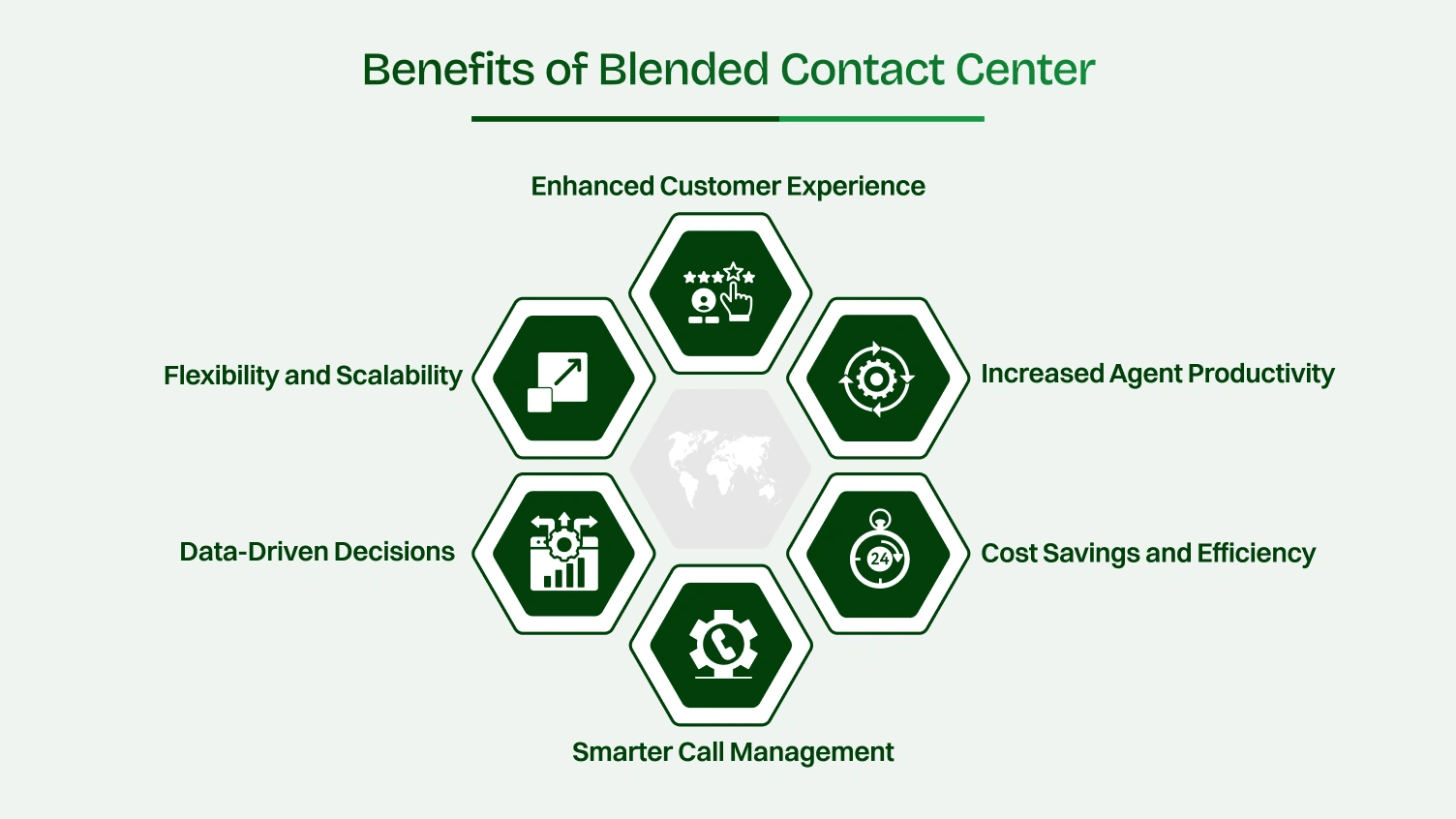
Customers want quick responses and helpful support. A blended center makes this possible. For example, a retail company may get many incoming calls during a holiday sale. Instead of leaving agents idle when the call traffic slows down, they switch to outbound calls to follow up on orders or send promotions.
This approach reduces waiting time for customers. Agents also use CRM systems to see previous interactions, orders, or issues. This helps them give more personal and accurate answers. When customers get faster service and feel understood, they are more likely to return and stay loyal.
A blended model keeps agents engaged throughout the day. When Incoming Calls are low, they focus on Outbound Call campaigns. A telecom provider saw a 20% increase in agent productivity after implementing blended call center software.
Agents handle mixed calls, switching easily between support and sales tasks. This keeps them engaged and reduces downtime. Metrics such as average handle time and first-call resolution improve. Agents also gain more experience. It makes them confident and skilled.
Instead of maintaining two separate teams for inbound and outbound tasks, businesses can rely on one blended team. This reduces expenses in staffing, training, and infrastructure. For example, a mid-sized bank cut operational costs by 25% after introducing blended call management.
The savings can be redirected to staff training or new tools, further improving service quality. With fewer resources, companies achieve more, making their operations both lean and effective.
Tools like automatic call distribution and skills-based routing make sure each call goes to the right agent. During busy times, urgent incoming calls go to experienced staff, while routine outbound calls are handled by others.
This reduces call queue time and makes sure customers speak to agents who can help them best. Agents feel confident because they handle calls suited to their skills.
Blended centers collect valuable data. Integration with CRM, conversational analytics, and AI knowledge tools provides actionable insights. A software company improved follow-up success by 30% using blended call reports.
Tracking customer feedback helps refine customer service strategies. Businesses can change campaigns and assign staff based on real-time information. This helps work more efficiently and keep customers happier.
Blended models are capable of adjusting to call volume fluctuations. If a peak season arrives, a special promotion occurs, or support volume unexpectedly increases. Agents do not have to be hired for this situation.
Agents can switch roles between inbound and outbound tasks, depending on demand, which keeps the service quality from declining and allows the business to grow without losing effectiveness.
Determining whether a Blended Contact Center is right for your organization means looking at the operations you currently undertake. It is also important to consider your strategic goals. The arguments for operational efficiencies and cost savings are certainly strong. However, it is not a one-size-fits-all solution for all call centers.
A blend model is appropriate for organizations needing to handle inbound calls with great variability and occasional outbound campaigns. If inbound call agents and outbound agents have long periods of inactivity, a blended model is an opportunity to make their work and your operations more efficient.
Consider if a Blended Contact Center is right for your team when:
Be cautious if:
In the end, if you are looking to minimize agency downtime in your call center and provide greater flexibility for agents, a blended call center can help. Blended call center solutions also provide flexibility in managing both inbound and outbound calls. It’s a great strategic path for your team to consider in looking for call center solutions.
Setting up a Blended Contact Center is a strategic initiative that requires considerable planning. Rushing things could impact operational efficiency and diminish customer experience quality. For contact center managers, a structured strategy is needed.
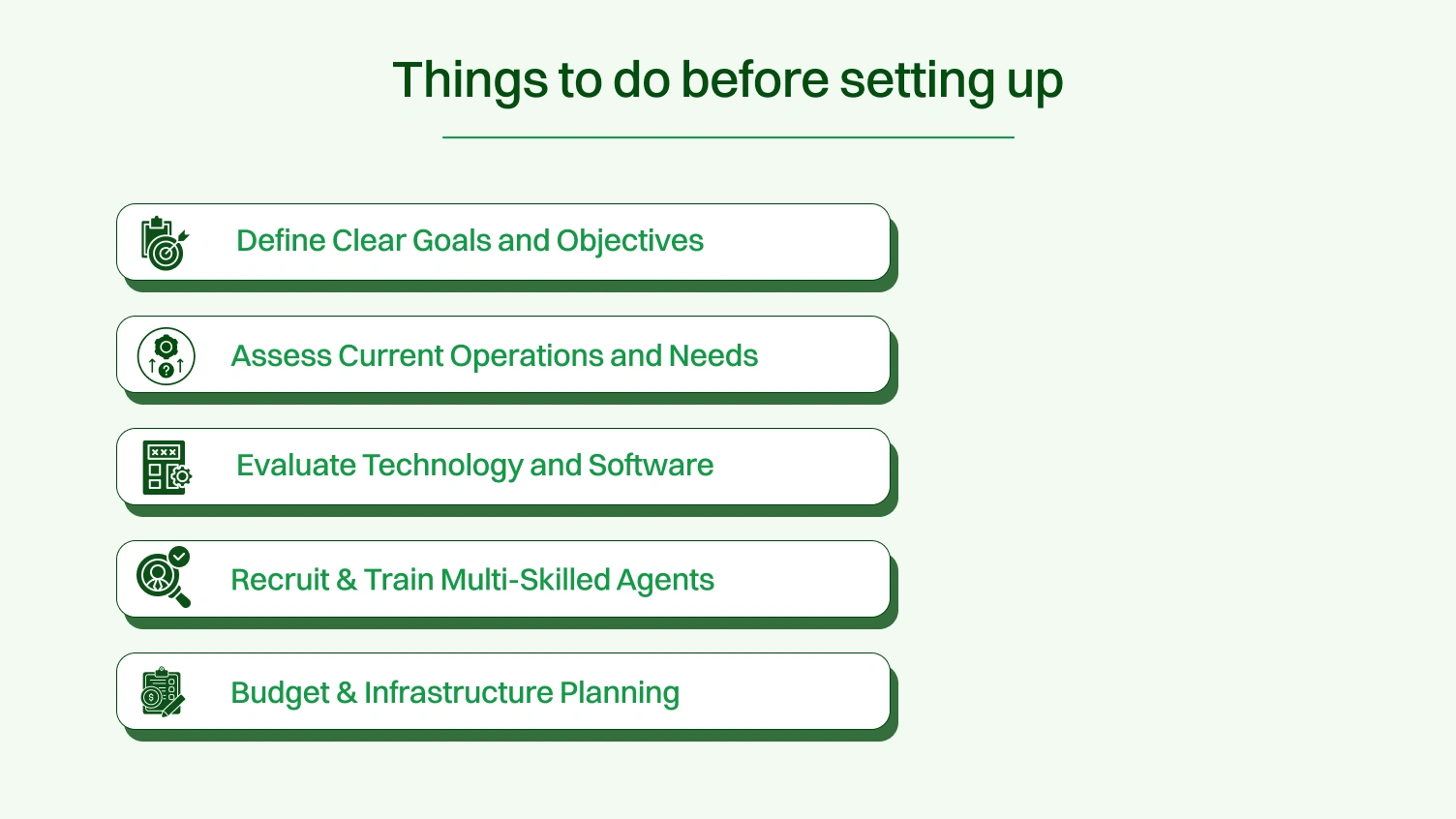
Here’s a checklist to ensure success:
Setting up a successful blended contact center needs good planning, the right tools, and trained agents.
Follow this step-by-step blueprint to ensure smooth operations and an improved customer experience.
Make sure you invest in solutions that support call blending, prioritize strong campaign management, and workflow automation. Look for additional features like AI-powered tools, such as AI agents, conversational analytics, and agent assist.
These types of tools handle calls and allow agents to maximize productivity while only allowing efficient customer interactions.
Determine how to blend calls. Will inbound calls be prioritized first? Will agents switch to outbound dialing during slow times? You must establish clear rules for the blending of calls. For example, add skills-based routing for inbound calls and ensure you have active call queue management, caller ID prioritized calls, etc.
A well-defined strategy to manage blended calls interprets the mixture of calls well, even during peak times for a blended call source, without overloading agents.
Training is essential for success. Agents must be skilled in handling both inbound and outbound calls. They should use agent assist tools. They also need to access customer information and manage campaigns.
Understanding the blended process ensures agents confidently switch between call types. They handle high call volumes and consistently deliver an improved customer experience.
Direct calls to agents with the most relevant skills. This improves first-contact resolution. It reduces average handle time. It also enhances customer interactions.
This approach ensures blended contact centers operate efficiently. It also keeps agent productivity high.
Continuously track key metrics. These include average handle time, inbound call volume, agent productivity, and customer feedback. Use conversational analytics to identify trends. Spot gaps.
Adjust your center management strategies. Regular monitoring refines customer service strategies. It optimizes call blends and ensures your software is fully effective.
A blended contact center can help improve your organization’s contact center function. Unfortunately, many organizations and contact centers make simple mistakes and cause issues that could be avoided.
Below are the most common mistakes and how to avoid them:
The implementation of a Blended Contact Center is not enough. Contact center managers need to ensure continuous improvement in order to succeed in the long run. Here are the best practices to keep your blended environment efficient and effective:
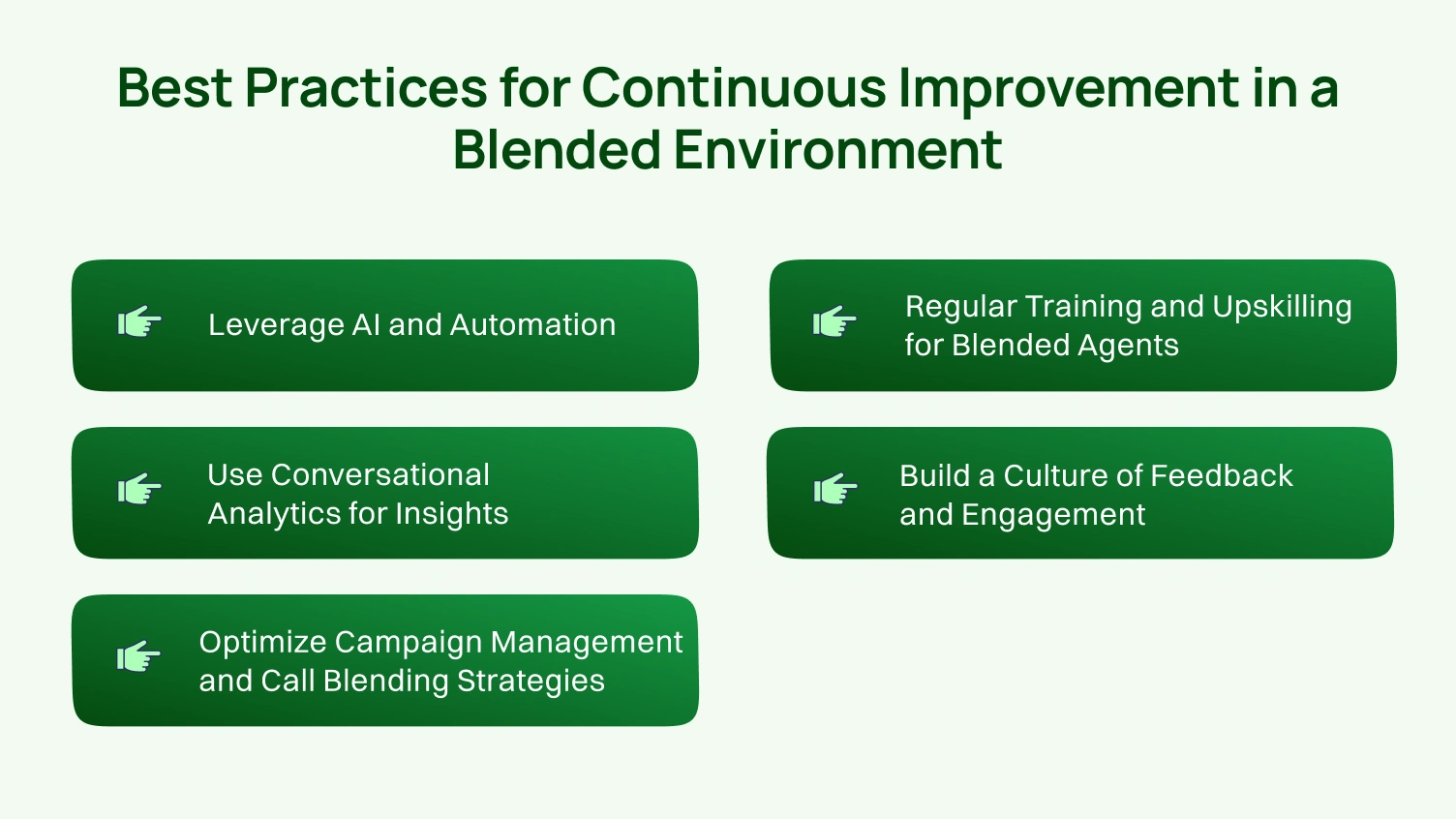
AI-Powered Contact Center: Routine queries can be used with AI agents. This enables blended agents to do more complicated work when dealing with customers. Tools such as Agent Assist and AI knowledge bases are used to assist in real-time.
Workflow Automation: Automate repetitive tasks to reduce handle time and improve agent productivity. This ensures a smoother blended process.
Ongoing Education: Conduct ongoing training. This training includes new products, approaches to customer service, software upgrades, and more. As a result, agents become more knowledgeable and stay current and productive.
Versatility Enhancement: Ensure agents continue to be proficient in handling a variety of calls. As a blended team, they should be quickly and efficiently using the whole range of blended call center service methods. The team you have will be quite powerful.
Data-Driven Decisions: Your ability to analyze customer conversations provides measurable insights into customer interactions. You can review both the feedback and conversation patterns. In general, you can gain an understanding of both sides of performance for inbound and outbound calls.
Identify Trends: Identify areas for improvement. Distribution of calls, training agents, and preventing idle time are just a few examples that can also impact average handle time.
Agent Involvement: Agents would give feedback on tools, procedures, and difficulties associated with calls. Their insights are valuable.
Workforce Engagement: The team of blended agents will perform more effectively when motivated. Promote the experiences that bring professional pleasure and enablement.
Improve Outbound Campaigns: Assess your outbound campaigns. Modify targeting, messaging, and calling strategies based on our data. Ensure these campaigns are effective.
Dynamic Call Blending: Check the number of incoming calls and the capacity of the agents on a regular basis. Keep records so that call queues can be managed more effectively, and less time is wasted by agents.
Technology plays a significant role in determining the movement of the blended contact center. Artificial intelligence (AI) is already starting to transform the way it works. More and more development will bring efficiency and personalization.
Let’s explore the key trends shaping the road ahead for blended agents and modern contact center solutions.
A Blended Contact Center is a useful tool for today’s businesses, which helps them work better and give customers great service. It lets agents easily switch between incoming (inbound) and outgoing (outbound) calls. This cuts down on waiting time, improves productivity, and saves money.
This flexible system helps companies handle calls more efficiently. It makes smarter decisions using data. It also deals with busy periods more easily. By using the right technology and training, businesses provide personalized service. They keep agents motivated. They also stay ahead in today’s fast-changing customer service world.
In short, a blended contact center is a smart choice for a faster, more efficient, and customer-friendly future.
Blended customer service combines inbound and outbound support. Agents handle both incoming customer inquiries and outgoing calls efficiently.
In BPO, blended means handling both incoming (customer support) and outgoing (sales or follow-up) calls within the same team. This maximizes efficiency and flexibility.
A blended agent is a BPO employee trained to handle both incoming customer queries and outgoing calls. They switch between tasks as needed, optimizing productivity.
A hybrid call center handles both voice calls and digital channels. These include email, chat, or social media. It offers a mix of traditional and modern customer support.
