

Live vs Virtual Telephone Answering Service: Which Is Right for Your Business?

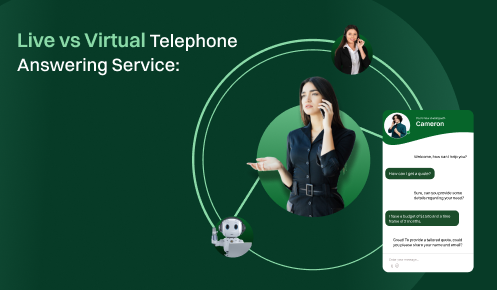
What if you never missed another important call?
Imagine focusing on your work without constant phone interruptions. Potential clients are always reaching someone professional who represents your business perfectly. Think about after-hours calls getting answered even when you’re off the clock. That’s what answering services deliver.
But here’s the dilemma business owners face. Should you pay for live receptionists who create genuine connections with callers? Or choose a virtual system that handles basic routing at a lower cost? The wrong choice wastes money or costs you clients. The right choice transforms how your business runs.
This blog breaks down everything you need to know. We’ll compare both options in the Live vs Virtual Telephone Answering Service section so that you can choose the answering service that best fits your requirements.
Let’s start by understanding what each service type actually does.
Learn how live receptionists and virtual systems actually work, what services they offer to your business, and how they handle incoming calls.
See the cost variations, quality differences, and which option fits different call volumes and business situations best.
Get a straightforward process to evaluate your needs and choose the business solution that aligns with your budget and goals.


A live answering service connects your business phone to a team of trained professionals. These live receptionists will respond on your behalf to custom scripts you provide. When you receive a call on your number, a real person picks up and represents your company.
Here’s how it works in practice:
The technology behind these services has improved dramatically over the past decade.
Live answering services offer several important features for businesses looking to improve their call handling:
Your customers will have access to a real person at any time. This involves after-hours calls, weekends, and holidays. You never lose a potential client since somebody is always willing to respond. This 24-7 cover means emergency cases are addressed promptly at all times, irrespective of the time of day. Business owners can finally disconnect from work knowing that live agents are managing incoming calls professionally.
An answering service provider creates customer scripting specific to your needs. These are custom scripts that make all your callers receive the same information regarding your services and prices. The scripts can be updated whenever there a new promotions, seasonal changes, or policy updates. Your dedicated account managers work with you to refine these scripts based on actual call handling experiences and feedback.
Live receptionists can schedule appointments in your system. They check your availability and make a reservation that will suit you and your customers. This saves you from playing phone tag. The agents rely on confirmation emails and text alerts to reduce no-shows. Most services are integrated with leading scheduling systems, such as Calendly, Acuity, and Google Calendar, for seamless appointment bookings.
When you’re unavailable, agents record detailed messages. You receive them via email, text, or through your CRM integration. Some of the services have also provided call recording as a quality assurance measure. Messages can be prioritized based on their urgency level, with the priority being given to all the important issues first. Depending on your preferences, the system can direct the various types of messages to various team members.
Most of the services have Spanish-speaking or other languages. It helps you in serving various communities and increasing your customer base among various demographics. Bilingual support eliminates the language barrier that may be costly to your business. This feature is very important to companies that want to expand into multicultural marketplaces to reach a new group of customers.
Business owners using live receptionists enjoy a number of relevant benefits:
A real person creates better customer experiences than any automated system. People like to communicate with somebody who listens and responds naturally. This human connection leads to higher conversion rates and customer loyalty.
Callers feel important and comprehended by the emotional intelligence of the live agents. They remember details from previous conversations and build a strong connection in the long run. This personal approach turns first-time callers into long-term clients who trust your business.
Live agents can manage difficult situations that confuse automated systems. They understand context and ask follow-up questions. When someone has a unique request, they adapt and find solutions rather than forcing callers through rigid menus.
Complex customer interactions require judgment that only humans provide. Live receptionists can handle objections during sales calls and provide detailed explanations about your services. They recognize when to escalate urgent matters and when to gather more information before disturbing you.
Even solo entrepreneurs can present like established companies. Having live receptionists answer your business phone makes you look more credible. Clients assume you’re successful because you have staff answering calls.
This professional image helps you compete with larger competitors in your industry. Small law firms and real estate agents gain credibility when callers reach a polished receptionist. The perception of size and stability influences buying decisions significantly.
When something unusual happens, humans adjust immediately. If your website crashes or you have a special promotion, live agents can inform callers right away. You can update your custom scripts within minutes to reflect new information.
This adaptability proves invaluable during emergencies or rapid business changes. Property management companies can quickly update their call handling procedures when maintenance issues arise. Live receptionists use good judgment to handle situations your custom scripts never anticipated.
Every answered call or social media message is a potential lead. Live receptionists qualify leads on the spot and capture contact information before prospects lose interest. They schedule appointments while the caller’s interest is highest.
This direct lead qualification improves your conversion rates significantly. Responding to leads immediately rather than hours later greatly improves your ability to convert them into customers. Live agents engage prospects immediately and move them through your sales funnel. The return on investment from captured leads often exceeds the service cost by 5-10 times.
A virtual telephone answering system uses technology instead of humans. These automated solutions handle incoming calls through pre-programmed responses and menu options. The system’s routes calls based on what numbers callers press.
Here’s what happens in practice:
Virtual answering service platforms offer these core features:
The system directs calls to various extensions or departments. Callers press 1 for sales or 2 for support. Call flow is done immediately without human intervention. You can create multilevel call routing with complex menu options to guide people who call to the correct path. The system also route-based on the caller ID, whereby repeat customers are recognized and automatically directed to their preferred department.
Callers can check business hours, directions, or information on the services. The information is presented in the system through pre-recorded messages. This handles routine questions without tying up your time. Customers like receiving immediate answers to their simple queries without waiting for a real person. The self-service options work especially with the FAQs that do not need human judgment and personalization.
In case someone leaves a message, the system converts it to text. You receive both the audio and the written versions in your email. This lets you go through messages without listening to each one. The transcription accuracy has improved significantly with modern AI technology, though complex technical terms may occasionally need verification. You can read messages anywhere and prioritize callbacks depending on their urgency, shown in the transcribed text.
The system knows your business hours. During open times, calls go to your office. After-hours calls redirect to voicemail or an emergency line. You set different rules for weekends and holidays. This automation ensures callers always reach the appropriate destination without you manually adjusting settings daily. Many systems also allow for special routing during lunch breaks or team meetings when you need uninterrupted focus time.
Virtual systems track every call. You see how many calls are answered, average wait times, and which menu options people select. This data helps you understand your call volume patterns and optimize your customer journey. The reports reveal peak calling times so you can staff accordingly if combining virtual with live support. You can also identify which menu paths cause callers to hang up, allowing you to streamline confusing navigation structures.
Virtual systems have several drawbacks that business owners should consider:
Automated systems are unable to read emotions or adjust their tone appropriately. A customer who is frustrated requires care and empathy. Robots can’t provide the emotional support that difficult situations require.
This limitation often makes angry customers even more upset. They feel dismissed and unimportant when talking to a machine. The impersonal nature of automated systems damages relationships with clients who expect personal attention from your business.
Virtual systems only understand programmed scenarios and predefined paths. When someone asks an unusual question, the system fails completely. Callers get stuck in loops or are transferred to the wrong place repeatedly.
This wastes their time and damages your reputation significantly. Law firms and property management companies particularly struggle with this limitation. Their clients often have unique situations requiring human judgment that automated menus simply cannot provide.
Many people hate pressing buttons through long menus to reach information. Older customers particularly struggle with complex phone systems. They prefer speaking to a real person who can help immediately without navigation complications.
Frustrated callers often hang up and call your competitor instead. Industry data shows the average call abandonment rate is between 5% and 8%. This friction in the customer journey costs you business without you ever knowing about the lost opportunity.
Customer interactions through automated systems feel purely transactional. There’s no opportunity to create a connection or remember previous conversations. This makes it harder to develop the trust that leads to repeat business.
Relationship-based industries suffer most from this limitation. Real estate agents and service providers rely on personal connections to close deals. Virtual systems prevent the bonding that happens during natural human conversation and storytelling.
Software crashes and internet outages happen unexpectedly. When your virtual system goes down, you miss calls completely. There’s no backup unless you’ve configured failover systems properly.
Unlike live receptionists who can cover calls from different locations, automated systems rely on a single setup, so if it fails, everything stops. Power outages or server problems can shut down your entire call handling operation. These technical risks make virtual systems less reliable during critical business periods.
Here are the differences to help clarify which option suits your specific situation.
| Factor | Live Answering Service | Virtual Answering Service |
|---|---|---|
| Cost Structure | $1–3+ per call, with $200–800 average monthly cost for small businesses. | Flat $20–100 monthly fee with no per-call charges. |
| Customer Experience | Warm, personalized conversations that build relationships and trust. | Fast, efficient routing, but often feels impersonal or robotic. |
| Complexity Handling | Excels at complex conversations, lead qualification, and unique situations. | Limited to simple routing and cannot handle unexpected scenarios. |
| Scalability | Staff-based capacity limits may cause wait times during peak hours. | Handles unlimited simultaneous calls with instant responses. |
| Setup & Customization | Requires 1–2 weeks of training with custom scripts via account managers. | Setup takes only a few days with instant self-service updates. |
Follow this five-step process to select the best business solution:
Track how many incoming calls you receive daily and note your peak times throughout the day. Many businesses looking for services find they get most calls between 9 AM and 2 PM. Understanding when calls concentrate helps you decide if you need constant coverage or just busy hours support.
Review your after-hours call patterns too. If you only get 5-10 calls weekly after 5 PM, a virtual system might handle those fine. But if you receive 20+ inbound calls daily during business hours, live receptionists become more valuable for maintaining quality customer interactions.
Consider both upfront and ongoing costs when comparing pricing for an answering service. A low-cost virtual system might seem attractive initially. But calculate the value of calls answered properly and what each conversation could generate.
If one new client is worth $1,000 to your law firm, spending $500 monthly on live agents pays for itself with one converted lead. Compare the average cost of both options against your typical customer lifetime value to understand the true return on investment.
Some industries have strict rules about call handling and data security. Medical offices need HIPAA-compliant services. Law firms require confidentiality protections. Property management companies must handle emergency calls according to specific protocols.
Many answering service providers specialize in specific industries and understand regulatory requirements. Look for services experienced in your field. Check if they offer required CRM integrations with your existing systems and meet all compliance standards.
Think carefully about who calls your business and what they expect. Older clients often prefer speaking with a real person. Tech-savvy customers might navigate virtual menus or use live chat easily without frustration.
Commercial real estate clients calling about urgent property issues want immediate human help and empathy. Routine appointment reminders work fine through automated systems. Match the service type to what your customers expect and value most in their interactions with your business.
Many companies seeking the perfect solution use both types strategically. You could have a virtual system during business hours for basic routing. Then live receptionists handle after-hours calls and complex inquiries that require human judgment.
This gives you the cost-effective option of automation, where it works while maintaining personal service when it matters most. Some answering service providers offer integrated solutions combining both approaches. This flexibility lets you optimize costs while maximizing customer experiences.
Sunrise Legal Services, a small law firm in Phoenix with three attorneys, handles personal injury cases and receives 40-50 incoming calls daily. The firm has only one administrative assistant who gets overwhelmed during busy hours. Missing calls meant losing potential clients to competitors.
The administrative assistant struggled to balance phone answering duties with critical case management work. Weekend emergencies and after-hours calls went completely unanswered, frustrating existing clients who needed urgent guidance.


Choosing between live answering services and virtual systems depends entirely on your specific business needs. Both options help you never miss an incoming call again. Live receptionists provide the personal touch that builds relationships and closes deals while handling complex situations with human judgment. The higher answering service pricing delivers value through better lead qualification and conversion rates for service industries.
Virtual systems offer a cost-effective option for straightforward routing needs and work well when you need basic call forwarding and information delivery. The low cost makes them attractive for companies looking to minimize expenses while handling high call volumes without adding staff. Many businesses looking for the perfect solution find that combining both approaches works best.
Start by tracking your current phone calls for two weeks and contact a few answering service providers to discuss your specific situation. Most offer trials so you can test their service before committing. The investment in professional call handling pays dividends through improved customer interactions and business success.
A virtual office phone system operates through the internet using VOIP phone technology rather than traditional phone lines. It provides call forwarding, voicemail, and routing features accessible through apps on your computer or mobile device without physical hardware.
The best service depends on your industry and needs. Ruby Receptionists and Smith.ai are popular for live answering, while Dialaxy works well for virtual options with basic routing needs.
Yes, most answering service providers allow cancellation with 30 days’ notice. Phone number portability ensures you keep your existing numbers when switching providers through a simple porting process.
Virtual receptionists provide comprehensive support, including appointment scheduling and CRM updates. Traditional answering services focus primarily on message taking and forwarding urgent calls with more limited functionality.
Yes, virtual systems charge flat fees of $20-100 monthly versus live receptionists at $1-3+ per call. However, live agents often convert more leads, making the higher cost worthwhile for many businesses.
