

What Is a Landline Number? Types,Pros and Cons

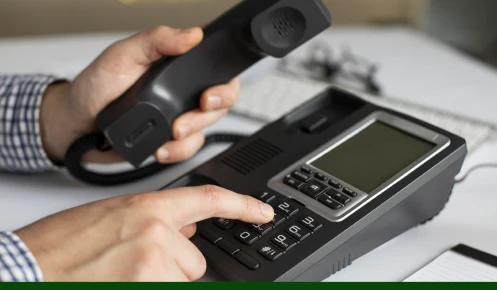
Walk into any hospital emergency room, and you’ll notice something peculiar: every nurse’s station has an old-fashioned desk phone. You will see the same thing in the cockpit of a nuclear power plant or the dispatch center of a police station. It’s not because these places can’t afford iPhones. It’s because when the power grid flickers or the cellular networks jam, they need a communication system that uses actual physics to guarantee a connection.
While marketing campaigns push us toward 5G and satellite tech, the traditional landline remains the heavy lifter of global communication. Whether you are a business owner deciding between VoIP and phone lines, or just curious about the physical infrastructure that has connected humanity for over a century, this guide breaks it all down.
This is the gap between what marketing tells us about mobile technology and what reality shows us about reliability. Landlines never died. They just stopped being handy.
At its simplest, a landline phone number is a telephone identifier assigned to a specific location rather than a specific person.
A landline number is associated with an address. It was the digital equivalent of a main door. If you call a landline, you are connecting to an actual location, a house, the main office of a company, or a help desk.
The term landline originally referred to a phone that used a solid medium, physical wires made of copper or fiber optics, to transmit signals. Mobile devices that use radio waves to communicate with the air are in complete contrast with this.
Once a landline number is given to you, that series of digits is stored in a switch at a neighborhood office. It is this switch that links you to the huge, worldwide system called the Public Switched Telephone Network (PSTN). A dial tone is still a sign of a direct, powered connection to the public network, which is at your disposal, and it is what you hear when you lift the receiver in 2026.
To truly understand what landline phone number structure is, we have to look at how these digits are built to route calls through physical space. In the North American Numbering Plan, for example:
With technology such as Voice over Internet Protocol (VoIP), we can now technically work from anywhere, but a traditional landline number is still very much tied to a certain location. It is possible to have a New York area code even when you are residing in Montana, but the system that is used for numbering still indicates where it originally came from.
In order to understand why landline connection quality is still better than that of a mobile, you need to follow the path that your voice takes. It is a delightful combination of 19th-century physics and 21st-century digital switching.
Everything starts with the actual phone that is on your desk. A standard telephone line is connected to a wall jack. From behind your wall, a pair of copper wires is coming out of your house to a utility pole or an underground box.
Sometimes, engineers call it the last mile, although the distance may be only a few hundred feet. This is named so because it stands for the final, most costly stretch of the infrastructure per person, as reaching every single address entails a huge investment in cable, conduits, and connection points.
While talking into the receiver of normal phones, you are generating sound waves. In the microphone, there is a device (usually carbon granules, but now electronic) that is affected by the sound.
The resulting movement changes the electrical current, which is always going on the phone lines. The phone company typically supplies -48 volts DC down the line. This is a crucial detail: the power comes from the phone company, not your house. This is why corded phones work even during power outages.
Your voice is instantly converted from acoustic energy into an analog electrical signal. In vintage phones, carbon granules would compress and decompress with your voice, changing electrical resistance. Modern phones use transistors, but the principle remains the same.
This electrical signal travels down the copper wires to the local Central Office. In the old days, human operators manually plugged these wires into different slots to connect you.
By the 1960s, electromechanical switches, massive racks of crossbar relays clicking and whirring in three-dimensional patterns, took over this work. Today, massive digital switches handle millions of connections per second.
Once your signal hits the Central Office, it enters the Public Switched Telephone Network (PSTN). This is the aggregate of the world’s circuit-switched telephone networks.
Here is the vital distinction: When a landline call is made, a “circuit” is set up. For the time of that call, a special way through the network is kept just for you. You are not sharing it with others. That’s the reason why the sound of a landline call is perfect, and you can hear every word clearly, while the quality of a mobile call drops to a robotic or choppy-sounding one when the network is overloaded.
It is circuit-switching, a technology that could be considered “inefficient” from today’s point of view, as the route remains reserved even during the periods of silence in your conversation. However, it is the one that ensures the quality of the connection, which cannot be at the same level as packet-switched networks during their busiest hours.
When people search for types of landlines, they often just think of the old beige phone with a cord. But the technology has evolved into several distinct categories, ranging from vintage copper to cutting-edge cloud tech.
This is the classic analog system. It relies entirely on copper twisted-pair wires.
This is the contemporary version. Voice over Internet Protocol digitizes your voice, breaks it into small data packets (just like an email or a Netflix stream), and sends it over the internet.
You might remember this buzzing technology from the 90s. ISDN was the bridge between the analog past and the broadband future, allowing voice and data to travel over the same copper lines simultaneously.
If you bundle your home phone with your cable or fiber internet package, this is likely what you have. It acts like a hybrid, giving you the feel of a traditional phone with the backbone of modern infrastructure.
Why do people keep landline phones when almost everyone has a smartphone? It isn’t just stubbornness. It comes down to a battle between reliability and mobility.
Choosing between a conservative PSTN line and Voice over Internet Protocol (VoIP) is a deciding factor for your business if you are a company owner. It changes both your money and the way you look as a professional.
The Business Phone Evolution.
Originally, businesses had to install expensive hardware called a PBX (Private Branch Exchange) in their utility closet to manage extensions and hold music. Today, internet-based communication has moved all that hardware into the cloud.
Now you manage your phone system through a web browser. Adding a new employee? Log in, create an extension, ship them a phone. Done. The difference in costs is unbelievable; what used to need capital expenditure and maintenance contracts can now be done through monthly subscriptions, which are often less than the cost of a single traditional line.
| Feature | Traditional Landline (PSTN) | VoIP (Internet Landline) |
|---|---|---|
| Technology | Analog signals over copper physical wires | Digital voice packets transmitted over the internet |
| Cost | $50–120 per line plus long-distance charges | $20–40 per line, often with unlimited calling |
| Reliability | High reliability; works without internet or power | Depends on internet stability and electricity |
| Scalability | Limited; requires installing new physical lines | Highly scalable; add or remove users instantly |
| Features | Basic calling features like Caller ID and Voicemail | Advanced features like video calls, CRM integration, and analytics |
| Emergency Services | Accurate address-based emergency routing | Emergency address accuracy varies by provider |
The Verdict for Business
For 95% of modern businesses, VoIP is the superior choice. It offers the professionalism of a “landline number” (the local area code implies you are a local business) with the flexibility of modern tech. Such functionalities as “find me/follow me” routing, which is a call to your desk, then your cell, and then your home, would be very expensive if done through a traditional service, but are basically included in the package when it comes to VoIP.
Nevertheless, companies that have particular requirements for their facilities, such as those having an alarm system, a fax machine, or an elevator phone, usually maintain at least one analog PSTN line as a backup.`
Alarm panels that call monitoring stations often require analog lines because digital compression interferes with the alarm signals. Elevator emergency phones are legally required in many jurisdictions and must work during power outages.
To truly understand what is landline phone number technology, we must contrast it with the mobile world. It is a tale of two infrastructures.
Telephone networks are massive, tangible webs.
Cellular networks use radio waves. Your phone is essentially a walkie-talkie talking to a tower.
At concerts or sports stadiums, this becomes painfully obvious. Twenty thousand people trying to use the same frequencies simultaneously turns your phone into an expensive paperweight, even with full signal bars showing.
Can landlines send texts? Historically, the answer was no. If you texted a landline, the message disappeared into the void. But today, text messaging on landlines is a thriving business tool. Through a process called “text-enabling,” software providers can route SMS messages sent to your landline number to an app on your computer or smartphone.
From the customer’s perspective, they’re having a normal text conversation with your business. They don’t know you’re receiving and sending via an app rather than an actual text-capable phone. This bridges the gap between customer expectations (everyone texts now) and business reality (you can’t abandon your established phone number).
This is where short codes come into play.
This technology blends the trust of a landline phone with the convenience of modern mobile text habits. For businesses, it means you can meet customers where they are (texting) without sacrificing the credibility of your established phone number.
Despite smartphones dominating the market, certain folks genuinely benefit from keeping their landline connections active.
My grandfather struggles with smartphones but operates his wall phone flawlessly. Big buttons, familiar operation, zero learning curve. During his fall last year, he instinctively reached for the home phone to call for help. Muscle memory from fifty years of using the same technology saved him time when seconds mattered.
Drive thirty minutes outside most cities and watch your signal bars disappear. Physical infrastructure reaches places where cellular networks don’t bother investing in towers. My cousin’s farm has one bar of cell service on a good day, but his landline works perfectly every time.
Millions of alarm systems still rely on traditional telephone networks to call monitoring stations during break-ins. Newer systems use cellular or internet connections, but if your house has an older security setup, you probably need that landline to keep your alarm functional.
Medical clinics can’t afford phone system failures. Neither can emergency services, legal offices handling urgent cases, or financial advisors managing millions. For operations where a dropped call could mean real consequences, traditional landline reliability justifies the cost.
Parents teaching kids emergency procedures often keep landlines because the phone stays in one spot. Kids remember “the phone is in the kitchen” easier than tracking down Mom’s cell phone. That geographic certainty provides genuine peace of mind.
Audio engineers, voice actors, musicians coordinating sessions, and professionals who live on the phone often prefer traditional landline call quality. When you’re spending six hours daily in conversations, the superior audio from physical phone lines reduces fatigue.
Basic landline service sometimes costs less than cell phone plans, especially for people making mostly local voice calls. If you don’t need mobile internet or texting, why pay for features you won’t use?
Compared to mobile devices that track your location constantly and collect data about your habits, traditional phones offer more privacy. Your calls stay between you and the person you dialed. No app companies are mining your conversations for advertising data.
It is more than just a legacy technology or a relic of the 20th century. It is a digital address tied to the physical infrastructure of the global public switched telephone network. It represents a dedicated, secure pipe for communication that doesn’t fluctuate with the weather or network congestion.
While mobile phones offer us the freedom to roam, landline phones offer the assurance of fidelity, security, and safety. Whether you are using traditional landline copper wires that have survived for decades or modern Voice over Internet Protocol that harnesses the power of the web, the landline remains a critical piece of the world’s communication puzzle.
For businesses, it represents professionalism and permanence. For homeowners, it represents a lifeline during power outages. As we move deeper into a future of internet-based communication, the definition of a landline is shifting from “copper wire” to “fixed connection,” but its purpose remains unchanged: providing a stable, high-quality connection to the public.
If you prioritize call clarity, emergency safety, and business credibility, the landline is not a tool of the past; it is a strategic asset for the present. The technology has earned its continued relevance by solving problems that smartphones created or simply can’t address through wireless technology alone.
Yes, absolutely. This process is called “number porting” or LNP (Local Number Portability). The FCC and other global regulators require that you be able to take your number with you. You can move your traditional landline number to a Voice over Internet Protocol provider.
It depends on the type.
People often use these interchangeably, but they are different.
Landline service is not dying; it is simply migrating to types of landlines that use digital or fiber technology. The concept of a fixed-location phone is staying; the delivery method is just getting an upgrade.
Mobile phones have to squeeze your voice into small data packets to fit over crowded radio waves. Landlines use a dedicated circuit or high-bandwidth digital connection, allowing for a fuller, richer voice spectrum where subtle vocal inflections are preserved.
By default, no. If you text a standard home phone, the text will likely vanish, or you’ll get an error. However, if a business has “text-enabled” their landline number through a third-party service, they can receive your text as an email or app notification. If not, some carriers will deliver the text as a robotic “voice” message that reads the text to the recipient.
