

Primary Rate Interface vs SIP Trunking: Key Differences Explained

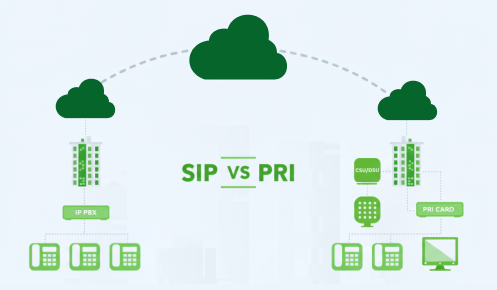
Choosing the right phone system can feel overwhelming, especially when everyone keeps mentioning Primary Rate Interface (PRI) and SIP Trunking. Which one is better? Which one actually fits your business? That’s where this guide helps.
While PRI has powered business communication for decades, SIP Trunking is quickly taking over with flexibility, lower costs, and modern features. But before you switch, it’s important to understand how these two technologies truly compare.
In this article, you’ll get a clear breakdown of Primary Rate Interface vs SIP Trunking, the key differences, and how to choose the best option for your business without any technical confusion
Primary Rate Interface is a standardized telephone network connection. It allows an organization’s private branch exchange or PBX systems to connect to the public switched telephone network.
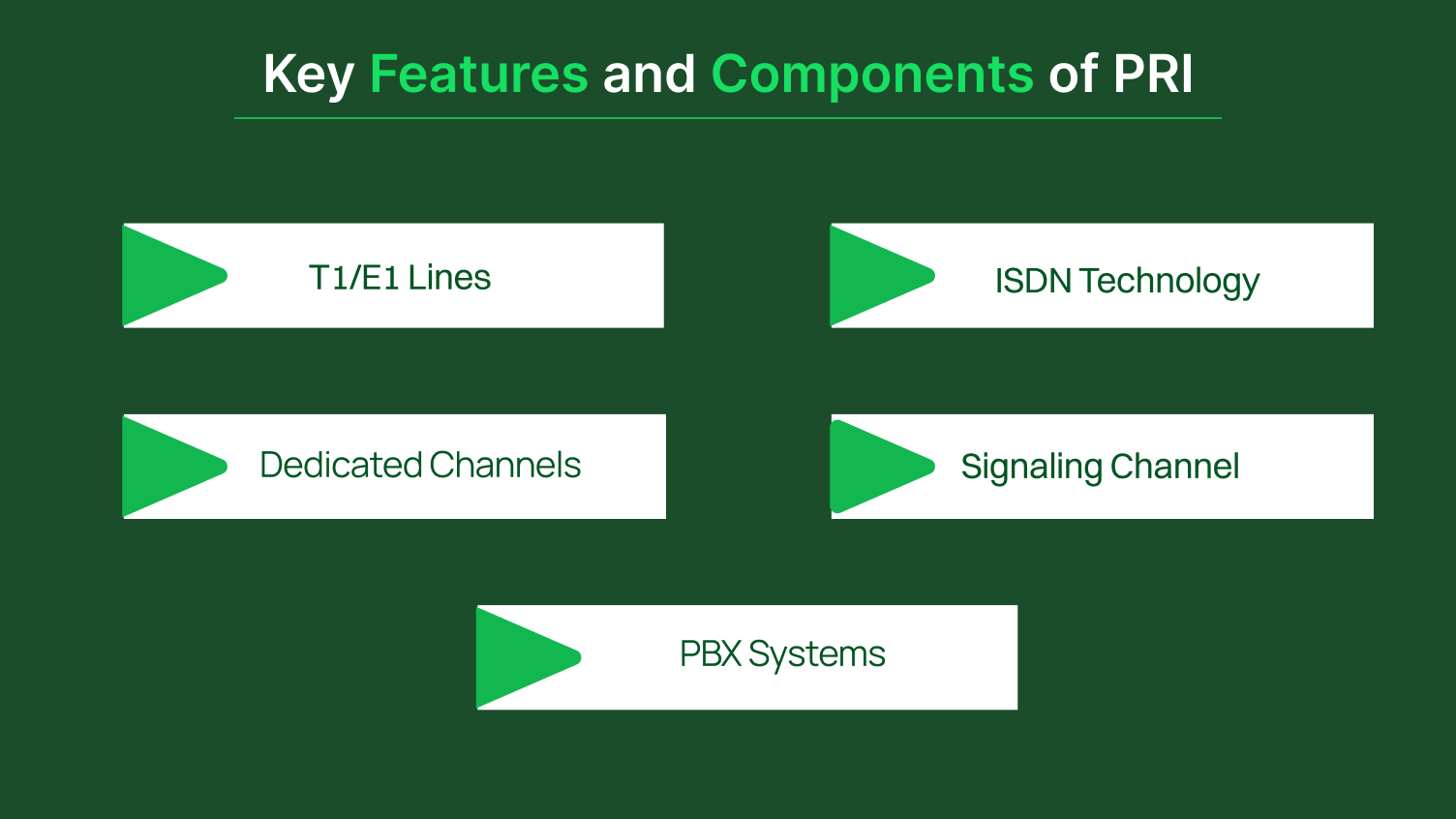
PRI is a circuit-switched method of connection. It provides 23 channels for voice and data in North America. An additional channel handles signaling for call setup and teardown. It is a dedicated digital network service.
A PRI circuit delivers service over physical lines. The copper wire physically connects your office to the service provider. This single connection bundles 23 bearer channels for voice or data. It also includes one dedicated channel for signaling.
This structure supports 23 simultaneous two-way calls. You gain access to a reliable, fixed digital network connection. This is how the system establishes and terminates calls very effectively.
Key Features and Components of PRI
Advantages of PRI
Disadvantages of PRI
Note: Many carriers are actively phasing out the copper infrastructure that supports PRI. You may find new PRI lines are no longer available in some major markets. This trend makes PRI a significant long-term risk.
SIP Trunking is a service that connects your private branch exchange to the Internet Protocol-based network. SIP stands for Session Initiation Protocol.
A SIP trunk is a virtual connection over the Internet instead of a physical line. It allows businesses to make and receive calls using their existing internet connection. This system effectively replaces the traditional pri circuit.
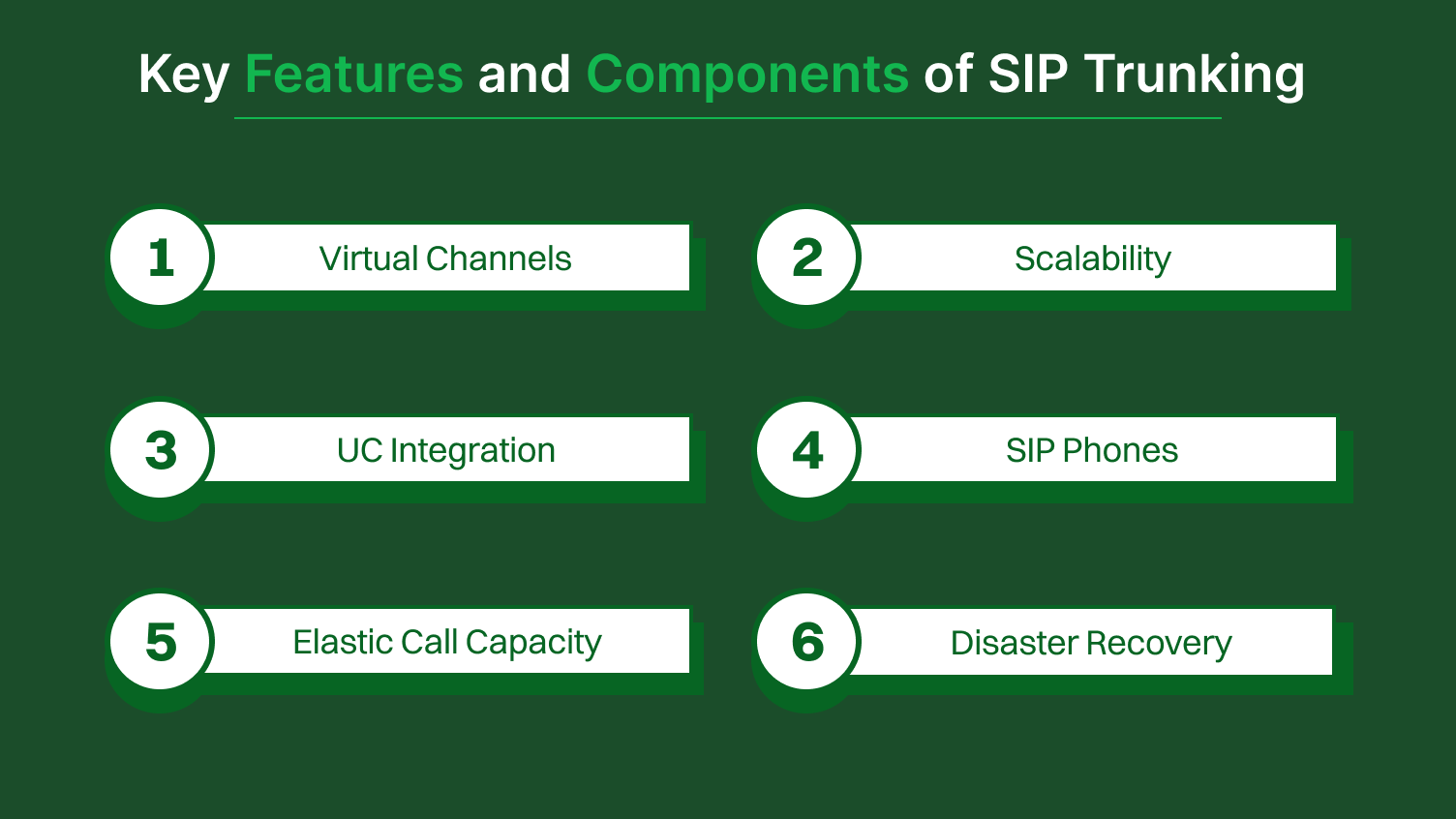
SIP trunking relies on the existing Internet Protocol connection at your office. It creates a virtual link to the service provider. The protocol manages the setup and termination of voice calling sessions. Unlike PRI, the channels are not fixed in place.
They are instead allocated virtually as needed. This internet-based approach removes the need for traditional, costly physical lines. It uses shared bandwidth efficiently. This allows for superior flexibility and utilization.
Pro Tip: For clear call quality, implement QoS (Quality of Service) on your router. This prioritizes voice calling data over large file downloads.
Key Features and Components of SIP Trunking
Advantages of SIP Trunking
Disadvantages of SIP Trunking
Choosing between Primary Rate Interface vs SIP Trunking requires careful analysis. This table outlines the core differences between PRI and SIP trunking for easy comparison:
| Feature | Primary Rate Interface (PRI) | SIP Trunking |
|---|---|---|
| Connection Type | Physical dedicated lines through the telephone network | Virtual connections over Internet Protocol |
| Infrastructure Required | T1/E1 circuits with specialized PRI equipment | Internet connection with compatible PBX systems |
| Capacity per Trunk | Fixed 23 (T1) or 30 (E1) simultaneous calls | Flexible, based on bandwidth and provider limits |
| Scalability | Requires adding PRI trunks in fixed increments | Easily adjustable through software settings |
| Installation Time | Weeks to months for physical line setup | Hours to days for activation |
| Monthly Cost | Higher fixed costs regardless of usage | Lower costs based on actual needs |
| Initial Setup Cost | High due to physical infrastructure investment | Minimal with existing internet and PBX |
| Call Quality | Consistently excellent with dedicated bandwidth | Excellent with proper network management |
| Reliability | Very high due to isolated physical circuits | Depends on internet connection stability |
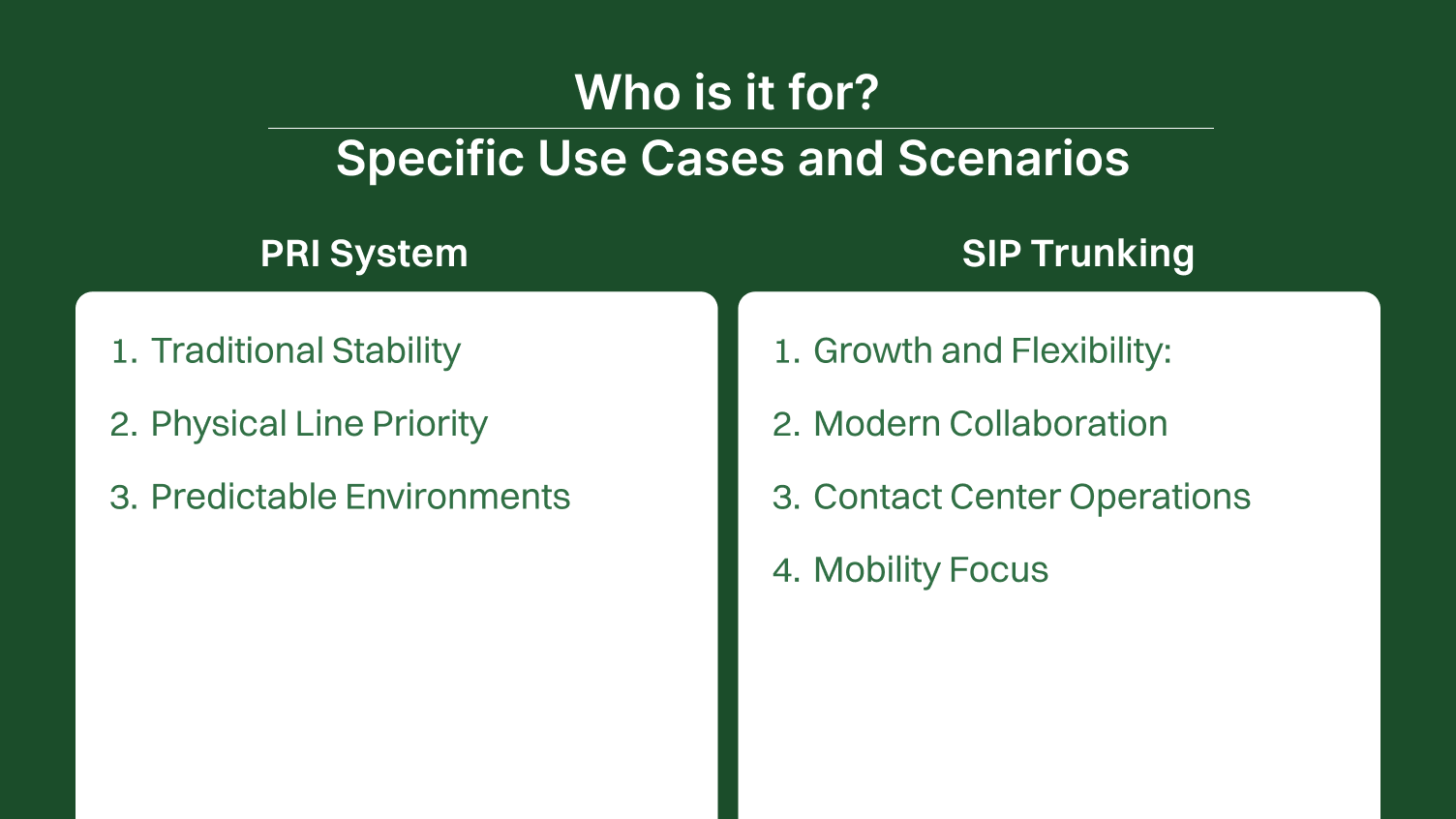
The choice between traditional Primary Rate Interface and modern SIP Trunking is a reflection of your company’s personality. It is about understanding your unique operational needs. The question is not which is superior overall, but which solution best serves your mission. We must examine where each technology truly excels.
PRI System
SIP Trunking
My honest opinion is that PRI is for businesses looking backward at proven stability. SIP Trunking is for companies looking forward to integration and growth. It is a fundamental decision that dictates the pace of your future communications infrastructure. Your choice should align with your long-term digital strategy. Consider the benefits of flexible scaling against PRI’s fixed capacity. SIP is the essential starting point for using any cloud service.
Moving your company from the old Primary Rate Interface (PRI) to modern SIP trunking is a big project. You want this transition to be smooth and stress-free. Follow these simple steps to ensure your new business phone system works perfectly from day one:
First, check your current private branch exchange (PBX) equipment. Does it support the Session Initiation Protocol (SIP)? Many newer PBX systems just need a software update. If you have a very old PRI system, you might require additional hardware, like a gateway, to handle the IP telephony.
This is the most crucial step. Your internet must be strong enough to handle all your voice calls. You need to know the exact number of simultaneous calls your team makes. Calculate the bandwidth you need for clear call quality. Don’t forget to account for future growth.
Do some careful research. Select a reliable SIP trunking provider with a proven track record. They should offer excellent support and a pricing model that fits your budget. Ask them about their redundancy and disaster recovery features.
SIP traffic can sometimes be blocked by strict firewalls. You need to open specific ports and configure your router settings correctly. This ensures the SIP trunk lines can pass freely without causing delays or cutting off calls. Getting this right is key to avoiding the common cons of SIP.
Before you disconnect your PRI lines, test the new SIP system completely. Make many incoming and outgoing calls. Check the sound quality and make sure all advanced features, like caller ID and direct inward dialing (DID) numbers, work correctly.
Start the process of porting your existing business phone numbers to the new SIP line service. Your new provider will handle this. This process ensures you keep your valuable contact numbers without interruption.
Never switch everything over at once. Start by moving just one department or a small group of users to the new SIP trunk vs PRI. Monitor their performance closely. Once you are confident, switch the rest of your internal communication to SIP.
Only when the SIP solution is running flawlessly should you contact your old provider. Cancel and disconnect the old Primary Rate Interface service. You have now successfully completed your migration to modern business communications.
Action Item: Want simple, instant number management? Get a quote today for International Numbers to expand your global reach fast.
When companies compare PRI vs SIP Trunking, several operational issues often emerge. These are the key practical differences that cause headaches during migration or daily use. Understanding these common problems helps you prepare for your switch to modern IP telephony.
The most frequent issue with SIP trunking is insufficient internet bandwidth. If you miscalculate the capacity needed for your simultaneous calls, call quality suffers greatly. Poor capacity leads to choppy audio or dropped calls. A traditional primary rate interface never had this problem because its lines were physically dedicated. Ensuring enough data transmission capacity is crucial for SIP success.
SIP trunking traffic must successfully cross your network firewall. The session initiation protocol can be tricky for firewalls to manage. If not configured correctly, you might hear one-way audio or fail to connect calls. This is a non-issue with the dedicated physical lines of a PRI circuit. This requires your IT team to have expertise in network protocols.
For SIP, all traffic travels over the same internet line. Your voice data needs priority over large file downloads or streaming. Failure to implement QoS on your network means non-voice traffic will degrade your voice calling quality. A P2P system avoids this complexity entirely because of its isolated network.
Sometimes, a client’s old private branch exchange (PBX) does not communicate smoothly with the new SIP trunking provider. This leads to compatibility issues during the initial setup. While PRI and SIP are different protocols, a modern PBX should handle both. Older PBX systems might require additional components, like a Session Border Controller, to mediate the connection.
A PRI circuit automatically associates with a fixed street address. If someone calls 911 using a pri phone, emergency services immediately know the location. With SIP, your SIP line is virtual and can be anywhere. You must manually register the correct location information for every direct inward dialing number. Neglecting this is a serious safety risk.
The reliability of PRI lines stems from their independent power supply from the carrier. Your SIP trunk vs PRI relies heavily on two things: your local power and your internet service. If either fails, your entire business phone system goes down. Implementing redundancy for both power and internet is essential for modern business communications.
The future of business phone calls is clearly digital. SIP trunking is becoming the standard because it offers unparalleled flexibility and savings. Companies are moving away from the rigid Primary Rate Interface (PRI) structure. They require communication that can be scaled up immediately. It must also be changed quickly.
With SIP, it is possible to have real unified communications (UC). This is a combination of voice, video, and chat on a single platform. In this way, the present necessity of remote work and mobility is covered. As internet reliability improves, the argument for PRI’s stability weakens daily.
Furthermore, modern SIP trunking provider services offer superior redundancy and failover options. PRI lines are simply too expensive and too restrictive for today’s fast-moving economy. The technology allows businesses to easily adopt cloud-based IP telephony services. Choosing SIP today means investing in a flexible, future-proof communications infrastructure. It can handle your business’s communication needs of tomorrow.
The choice between Primary Rate Interface and SIP Trunking defines your company’s path forward. While PRI offers reliable stability from a fixed, older technology, SIP delivers unmatched growth potential.
For the modern enterprise, embracing SIP is essential. It provides the financial savings and the flexibility needed to compete. It is the key to unlocking unified communications and empowering a mobile team. Stop paying for expensive, unused capacity on fixed pri trunks.
Move to a solution that scales instantly with your ambition. Take the next step today to upgrade your business phone system. Contact dialaxy SIP trunking provider now to start planning your seamless migration.
Not completely, but it’s mostly outdated and being replaced by VoIP and SIP in most businesses.
Yes, number porting usually allows you to keep your existing numbers with SIP Trunking.
The required speed depends entirely on your need for simultaneous calls. Each call uses a small amount of bandwidth for data transmission. You must ensure your connection has enough capacity for reliable voice calling.
Not inherently. SIP Trunking can be secure with encryption, but PRI is physically more secure since it’s a dedicated line.
It’s relatively easy with a good provider, but network configuration and firewall setup are required.
