

Contact Center Optimization: 7 Strategies to Improve Performance

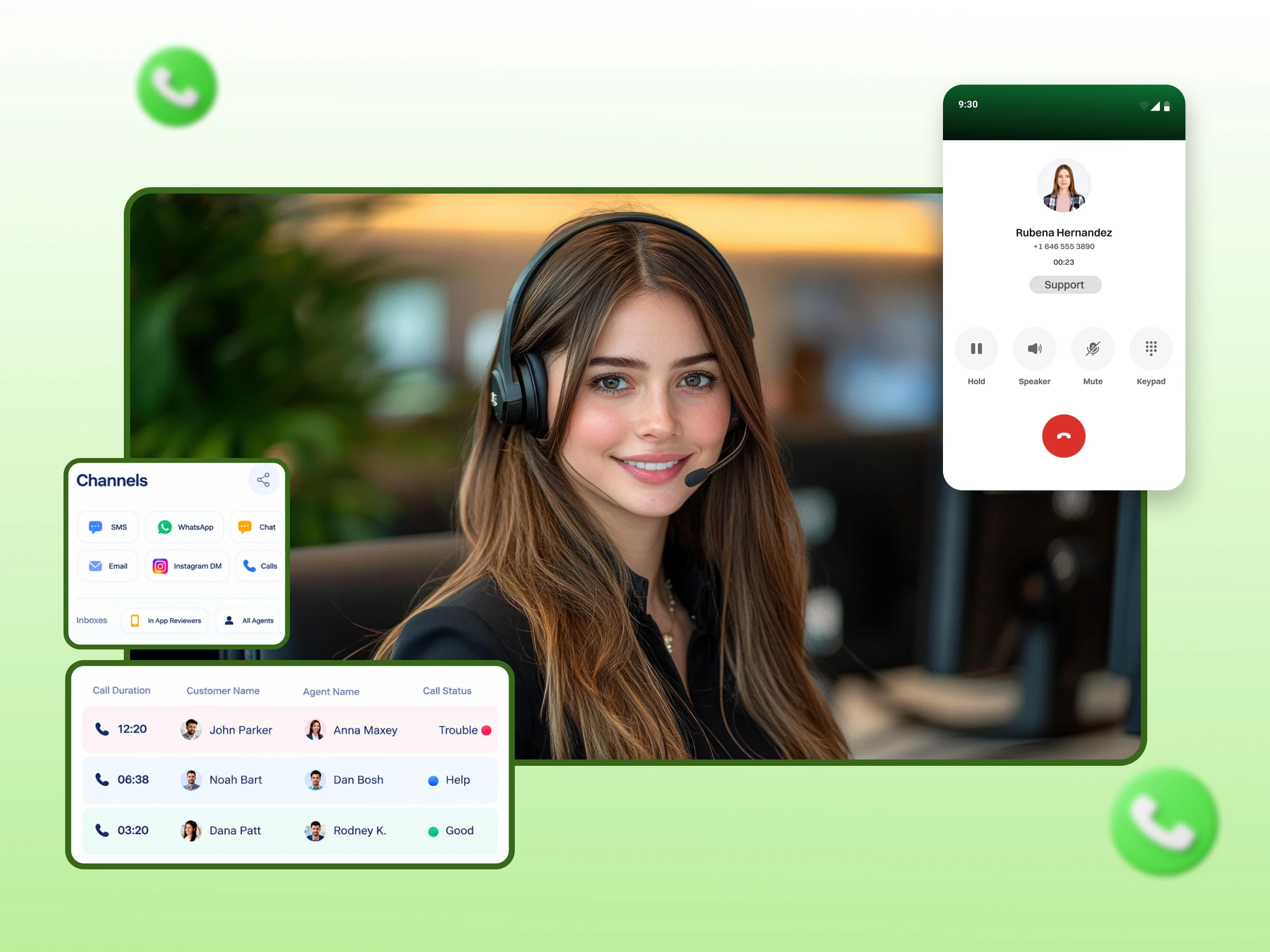
A slow response, long wait times, or repeated customer queries can affect both customer satisfaction and operating costs. Contact center optimization helps address these issues by improving workflows, making better use of agent time, and identifying where technology can make a difference.
In this guide, we’ll cover seven practical strategies to improve contact center performance, the key metrics to track, and how to start optimizing your operations.
Contact center optimization means improving how your team handles customer interactions. You study how your people and your tools work together. Then you fix what slows them down.
The main goals are simple. You want better operational efficiency and happier customers. You want stronger agent performance and tighter cost control. These goals apply to voice calls and digital channels alike.
Many people use the term call center optimization for the same idea. Call center operations once meant phone calls only. Now most teams also handle chat and email. That is why “contact center” is the wider label.
Here is the key point. Fixing one KPI is not optimization. You can cut call time and still upset customers. Real center optimization looks at the full picture.
Contact center agents work under constant pressure. Call volumes rise and fall without warning. Customers wait too long. Some call back because the first answer failed. Others land with the wrong person.
Customer expectations keep climbing, too. People want quick help on every channel. Meanwhile, artificial intelligence now handles tasks that agents once owned. That shift needs careful planning.
Most leaders cannot simply hire more staff. Budgets are tight. So you must meet customer expectations without raising costs. Contact center optimization improves service while it keeps spending in check. That is why it matters.
You cannot fix what you cannot see. These key metrics show your call center performance and point to trouble spots. Think of them as key performance indicators for your whole team.
FCR tracks how many issues you solve on the first contact. A low score points to weak training or poor routing.
AHT measures the length of customer calls plus after-call work. A high number may signal complex issues or clumsy tools.
This shows the share of calls you answer within a set time. A common target is 80 percent within 20 seconds.
Call abandonment rate counts callers who hang up before an agent answers. A rise often means long waits or too few agents.
Customers rate their experience after a call. These customer satisfaction scores show how people feel.
This is the share of time agents spend on active work. A very high figure means burnout risk. A very low one means wasted capacity.
CES asks how hard it was to get help. High effort tends to hurt loyalty.
These seven strategies work best together. Start with the one that fits your biggest problem. Add the others over time.
Many customer inquiries are routine inquiries. Think order status or business hours. Your agents should not spend their day on these.
Start by finding your top contact reasons. Then build self-service options for them. A clear knowledge base helps. A simple interactive voice response menu helps, too. This is the phone menu where callers press a key or speak to get what they need.
Follow one rule. Never trap people. Always give them a quick path to human agents. Self-service should cut avoidable contacts. It should not hide your team. Review the data often and update your answers as questions change.
Bad routing wastes everyone’s time. A caller reaches the wrong agent. That agent transfers the call. The customer shares the same information all over again.
Skills-based routing fixes much of this. You route calls by agent skill and customer intent. Priority rules help too. A billing question goes to billing. A VIP account goes to a senior agent. Each inbound call lands with the person best placed to help.
Good routing lifts first-call resolution and shortens the time customers wait. It also improves the customer experience. Review transfer rates each month to see where routing breaks.
Agents solve more when they have the right support. That starts with training. It also needs quick access to knowledge articles and customer history.
CRM integration matters here. Your customer relationship management system should open during the call. The agent then sees past orders and notes. Customers stop repeating themselves.
Coaching builds skill. Permissions build confidence. If an agent can approve a small refund alone, the customer leaves happy. Escalations drop. First contact resolution improves. That reduces repeat calls, too. Share wins in team meetings so good habits spread.
Staffing is math with real stakes. Too few agents and customers wait. Too many and you waste money.
Workforce management starts with a forecast. You study past call volumes and spot patterns. Mondays may run busy. Holiday weeks may spike. Then you match schedules to customer demand.
Workforce management software automates much of this. It flags gaps early. You adjust staffing levels before queues grow. Smart scheduling is really about managing resources well. Watch occupancy too. It shows whether agents carry a fair load. Plan for sick days and seasonal peaks well ahead of time.
Speed alone does not make a good call. You also need quality service. Quality management gives you a way to check it.
Call center quality management reviews a sample of calls against a scorecard. Call recording makes this easy. You listen for recurring problems and shared habits across call center agents.
Then you coach. Show agents what went well. Point out what to fix. Keep feedback specific. This helps you improve agent performance over time. Let agents review their own calls too. It builds trust.
Balance matters. Pushing agents to rush hurts service quality. Read quality scores next to speed numbers.
Use automation where it cuts repetitive work. That’s the basic idea. AI-driven tools can answer simple questions in chat or voice. Call summaries cut after-call work. Automated workflows handle small tasks like ticket tagging. This gives agents more time to actually help people.
Test any new contact center technology on a small group first. Make sure it fits your existing systems. People are still better at handling sensitive or complex conversations.
Optimization never ends. Treat it as a loop. You measure and find the problem. You dig for the cause. You test a fix. Then you measure again.
Analytics power this loop. Interaction analytics shows what customers say. Customer feedback adds their own voice. Contact reasons reveal what drives volume. KPI trends and channel reports expose service gaps. These valuable insights point to recurring customer issues.
Track results by channel. Customers now use multiple communication channels. A fix on the phone may not help chat. This habit drives continuous improvement. Share the results with your team so everyone sees progress.
Start with clarity. You do not need a big budget. Follow these five practical steps.
Track your foundation. Measure handle times, resolution rates, and CSAT across four to six weeks.
Target your worst issue. Check your dashboard for high abandonment, low resolution, or long delays.
Look beneath the numbers. Ask your agents directly and listen to calls to find roadblocks.
Apply direct fixes. Fix queues with routing, and train agents to improve poor resolution rates.
Test changes carefully. Run a small pilot, track results against your baseline, and scale success.
Success means more than one better number. It means the whole operation improves.
Compare your results to your baseline. Check customer satisfaction first. Then look at FCR and service level. Review agent productivity and operational costs. Track customer effort too.
Look for cost savings that come from fewer repeat contacts. Those savings are real. Reducing the contact costs should never cost you quality, though. Give each change a few weeks before you judge it.
Here is the main rule. Do not win one metric by losing another. Say AHT drops but FCR and CSAT fall. You did not improve anything. You just rushed your customers.
Every team hits obstacles. Knowing them early helps.
When tools don’t talk to each other, work gets messy. Agents end up switching screens all day, which slows everything down.
Speed isn’t everything. Pushing call center agents to cut average handle time forces rushed conversations. This hurts first-call resolution, lowers customer satisfaction, and triggers repeat calls.
New software alone won’t fix performance. When you launch new center technology without coaching, team confidence drops. Contact center managers must train staff thoroughly to improve agent performance and service quality.
Poor automation frustrates callers. Setting up self-service options or interactive voice response without studying customer needs harms the customer experience. This also increases call volumes for human agents.
Customers expect equal quality everywhere. If your phone calls run smoothly but chat lags, service gaps appear. Align multiple communication channels to meet customer expectations. Do this across every customer touchpoint.
Outdated habits limit your progress. Upgrading tools without updating workflows creates unnecessary manual effort. True contact center optimization requires continuous improvement. This drives customer satisfaction and cuts operational costs.
Think of these as habits. Contact center managers who follow them waste less effort.
Contact center optimization never really finishes. You measure, fix something, check the results, and then look for the next improvement.
Most teams improve through steady, small changes rather than big overhauls. Better routing, clearer coaching, and smarter scheduling all add up over time.
Dialaxy helps our team manage business calls with ease.
It’s continuous efforts to enhance the way your team and tools process customer interactions, with the goal of better service at a sustainable cost, which affects staffing and routing, training, and tools.
All of these metrics paint a different picture of service, and they must be included in a game plan starting with FCR and service level, followed by CSAT and abandonment rate, then AHT and occupancy.
Identify the biggest choke point first and then match a solution to that choke point. It could be better routing or smarter scheduling; then try it on a small scale, then measure the results.
Fix the root causes of long calls. Enable agents to access knowledge and CRM context. Employ the use of summaries to reduce wrap-up time. Don’t force agents to rush. Monitor FCR and CSAT alongside AHT.
The fundamental concepts remain the same for call center vs contact center: call center optimization is about voice; contact center is about voice, chat, email, or messaging. Digital channels require additional focus to ensure consistency.
Here are 10 tips that have proven effective in enhancing customer service in the contact center:
