

Why is My Phone Number Showing as Spam? Causes and How to Fix It

Have you ever made a call and your phone number is indicated as Spam Risk, Scam Likely, or Potential Spam? It doesn’t matter if you run a real estate agency, call center, or are just using your personal home phone – being labeled spam can drastically reduce answer rates, affect trust, and really impact your business.
This escalating and growing issue affects all business sectors, from small business owners to enterprise sales teams, especially those that use outbound call strategies and lead generation. Sadly, sometimes legitimate businesse, especially those considered “enterprise” scale, end up on the wrong side of these filters.
In this knowledge base article, we’ll explain what it means when your number is flagged and why your number might be showing as spam. How spam labeling works (including spoofed caller issues). Actionable solutions to fix and prevent spam flags, and tools to proactively monitor your phone number reputation.
If a phone number is marked as Spam Risk, Scam Likely, or Potential Spam on a caller ID, it pretty much shouts that the mobile carriers or third-party analytics tools have trashed the number as a suspicious number. Companies examine the call behavior, time-of-day comparison against the historical records/number profiles previously marked spam by the users, and other comparisons to classify the phone numbers into categories.
This is especially true for businesses that do outbound calling, use cloud-based calling recognition, or have just acquired a new number. Even legitimate calls can match spam numbers and patterns to trigger the spam call warning.
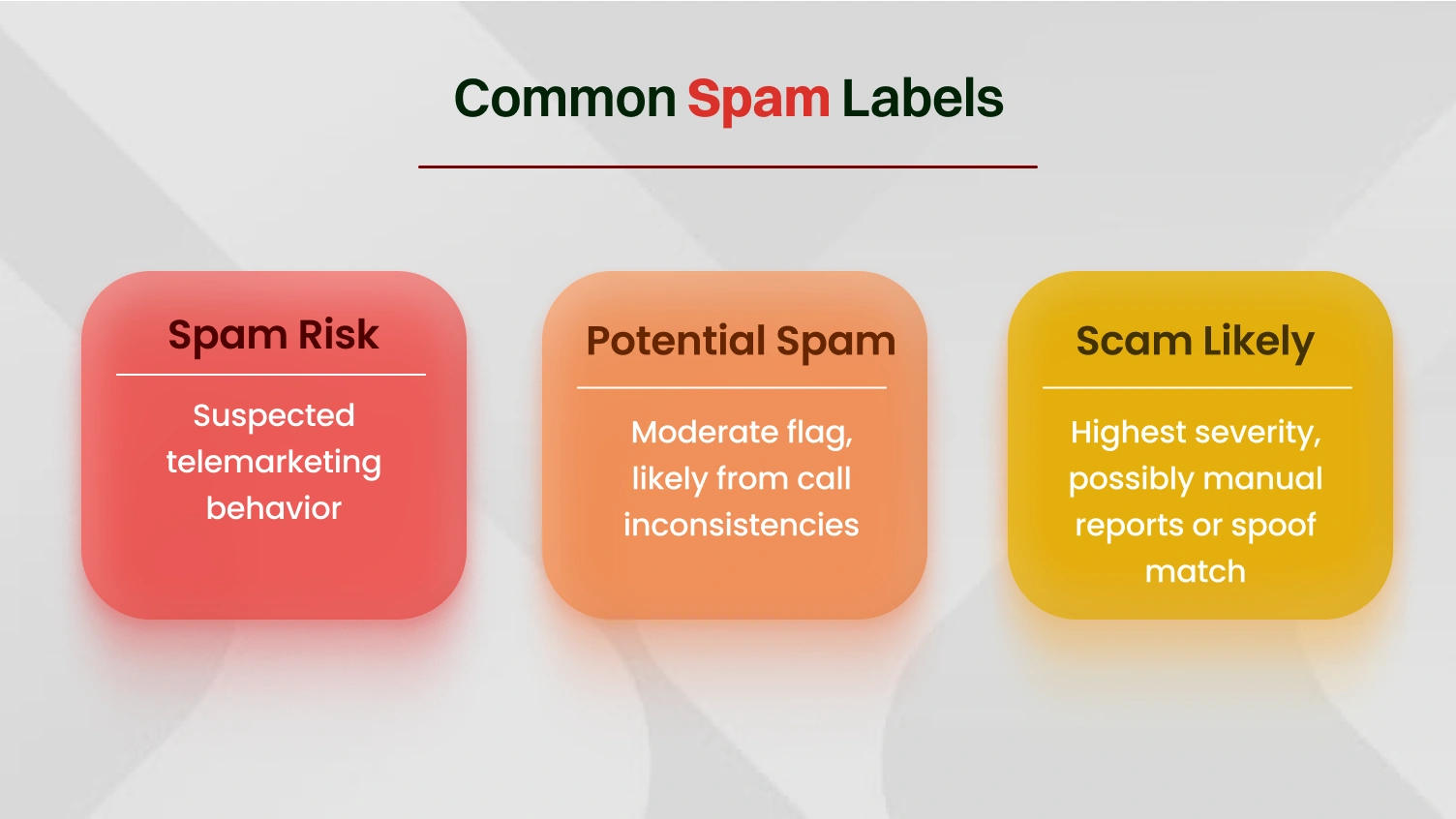
These are the most frequent flags you’ll see:
These tags are automatically assigned and may vary between carriers, meaning one network could flag your number while another does not.
You might be affected if you’re experiencing:
Whether you’re a sales team leader, a support agent, or a small business owner, having your phone number marked as spam can:
Many businesses don’t realize their number is flagged until it’s already costing them leads.
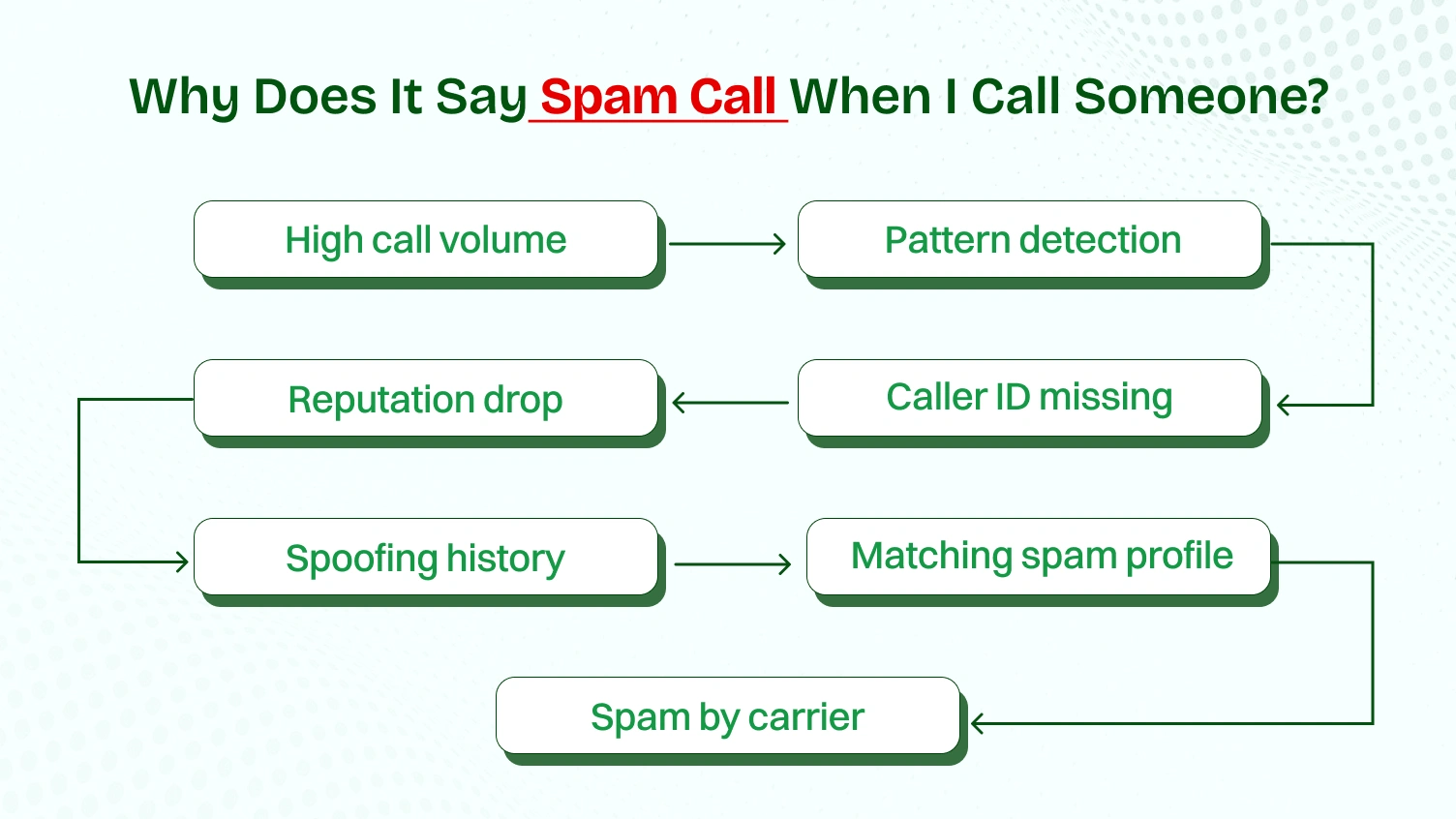
Even with a legitimate business or a personal call, you’ve still gotten flagged. Here’s why it happens and how carrier spam detection works behind the scenes.
Several behavior-based and technical factors cause your number to be labeled as spam:
Your number may be clean, but the behavior of your calls might mimic spam-like activity.
Carriers and mobile operating systems use AI-powered algorithms that analyze billions of call events per day. These filters are:
Even if just a small percentage of recipients report your number as spam, it can quickly impact your overall reputation.
Some of the leading technologies behind spam call detection include:
These systems operate independently, which means your number can be flagged on one carrier and still be clean on another.
When your phone number has been blocked as spam, there is no reason to panic because you can easily take some steps that will be fast and practical, which will restore your caller ID reputation and reduce the impact that this may have on your outbound call performance.
The first step is to check whether your number is actually flagged as Spam Risk, Scam Likely, or Potential Spam by carriers or apps, without applying any fix.
Use Caller ID Reputation Tools
Check your number’s status using platforms like:
These tools will tell you how your number is appearing across different carriers and spam detection databases.
These are quick solutions that can be used to undo the damage to your phone number (at least minimize its effect) in the case where your number is being reported as spam.
Major carriers rely on analytics firms like Hiya, First Orion, and TNS to label calls. Submit your number directly to their portals:
This allows you to explain who you are and why your legitimate business is making outbound calls.
Spam filters may trigger if your number exhibits:
Avoid behaviors that mimic robocalls, which can easily lead to calling restrictions or being auto-flagged as spam risk or scam.
Until your number is cleared, try:
This helps increase contact rates and improves customer experiences, even while resolving the spam label issue.
Implement branded calling to display your company name and purpose when calling:
Branded IDs help identify your number as trustworthy, preventing spam filters from flagging you automatically.
In case any of these actions do not work or your number is yet to be termed a spam number in most carriers:
Escalate to your VoIP or phone carrier provider. Many platforms like Zoom Phone, 8×8, or Teams can assist with registration and clearing your number from analytics databases.
Consider rotating to a new number only if your current one is permanently blacklisted, despite all efforts.
Add this to your resource library: Keep logs of call activity and customer complaints to support your case during escalations.
When your phone number continues to be marked as Spam Risk or Scam Likely, then you need to do something carefully planned and long-term. In contrast to fixes, the approach places emphasis on more substantial reformation of reputation management and best practices regarding compliance that reinstates trust in carriers and in spam analytics systems.
A damaged phone number reputation can severely affect your business, dropping answer rates by over 50%.
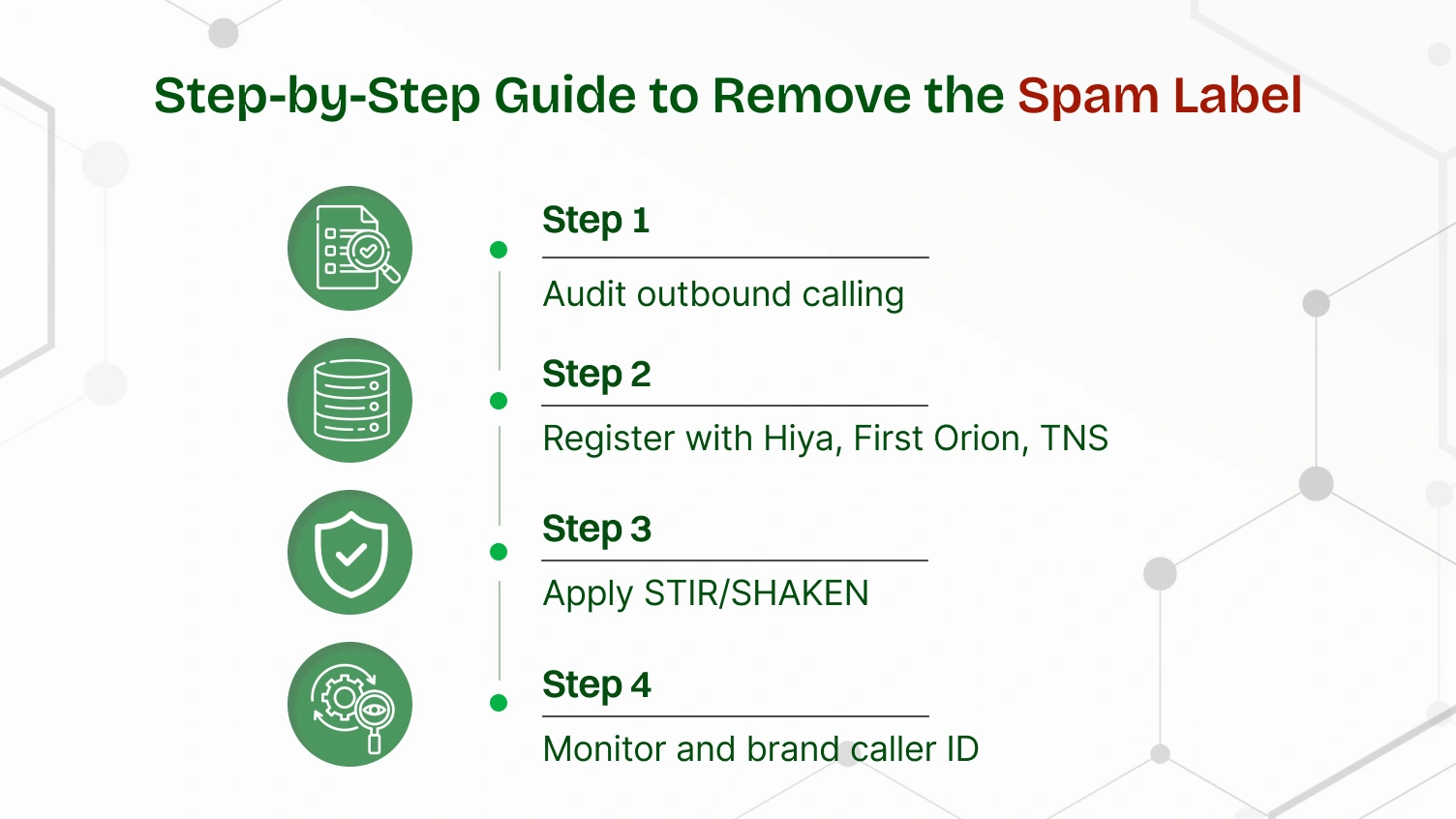
Follow these proven steps to clean up your number and avoid future calling restrictions:
Start by reviewing:
A spoofed caller or inconsistent caller ID can easily trigger spam filters, especially if your number was previously recycled.
As covered earlier, register your number with:
Provide your business name, vertical, reason for calling, and typical calls per day. This creates a valid use case for your outbound activity and begins to proactively monitor your status in their systems.
STIR/SHAKEN is a protocol that digitally verifies your number to prevent spoofed caller attacks. This framework is now required by U.S. carriers and helps reduce false spam flags.
Contact your VoIP provider (e.g., Dialaxy, RingCentral, Zoom Phone) to:
STIR/SHAKEN compliance builds trust with carriers and enhances your phone number reputation.
These databases drive most spam labeling decisions:
| Provider | Purpose | Registration Link |
|---|---|---|
| Hiya | Caller ID reputation scoring | Hiya.com/business |
| First Orion | Scam detection + branding | firstorion.com |
| TNS Call Guardian | Network-level spam filters | tnsi.com |
Submit your information and ask for ongoing reputation management updates. Some platforms even provide spam activity logs to help you optimize call behavior.
Branded Caller ID increases trust, reduces drop-offs, and helps you increase contact rates by letting recipients see who’s calling and why.
Legitimate businesses with clear branding rarely get flagged as spam risk or scam.
Keep a centralized resource library of your caller ID registrations, carrier tickets, and compliance credentials. It will help you:
The second thing to do is to watch what you do in calling activity so as to prevent a repeat occurrence after solving the spam label. No matter whether you operate a call center, a real estate agency, or are just conducting a lead generation program, prevention is the best tool in ensuring high answers and quality interactions with believable customers.
Spam flags aren’t always permanent, but if you don’t manage your phone number reputation, they can come back quickly.
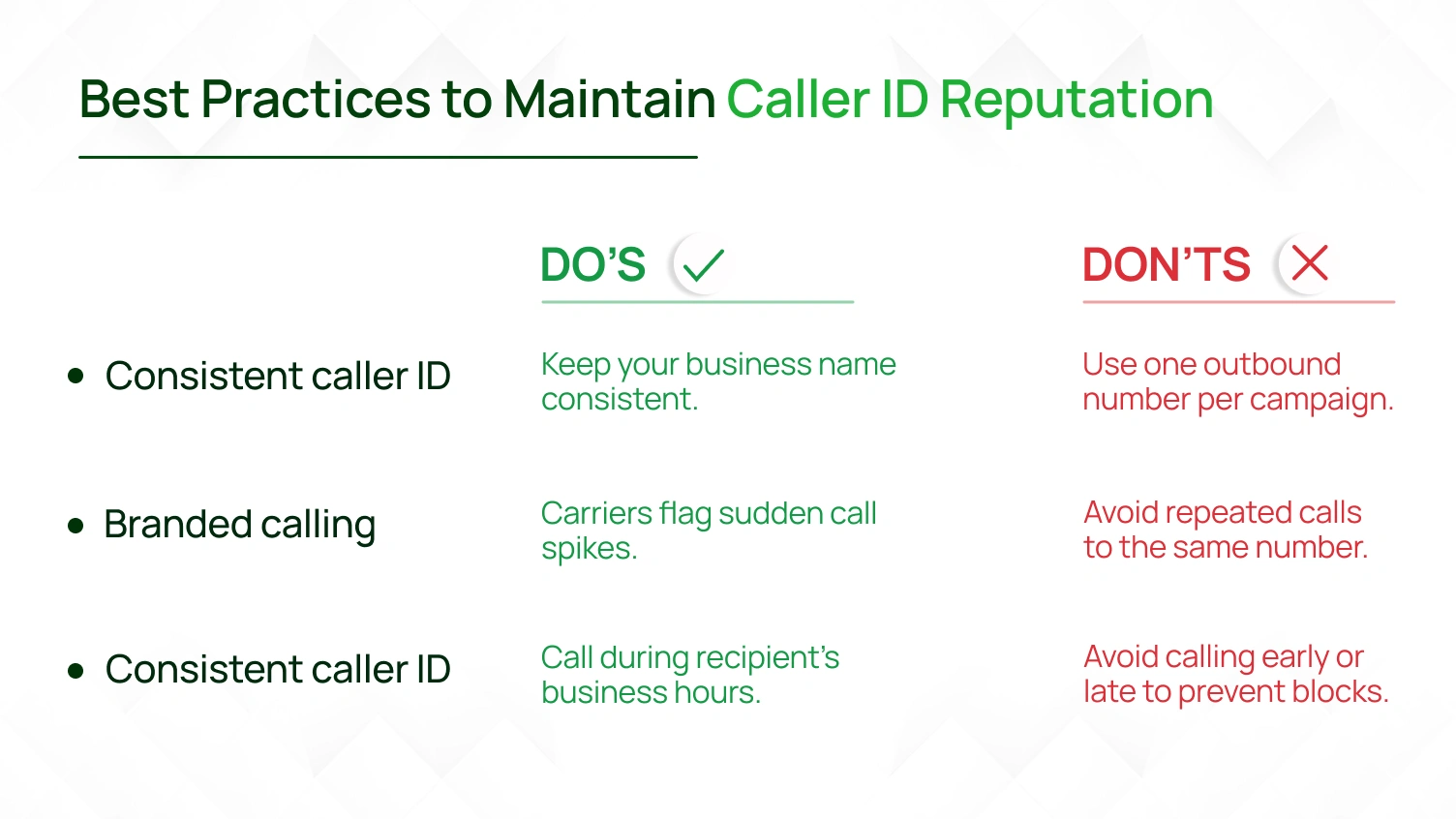
Even legitimate businesses get flagged when their behavior resembles that of spam operations. Here’s what to watch:
| Behavior | Risk Level | Recommendation |
|---|---|---|
| Short-duration calls | High | Aim for genuine conversations |
| No voicemails left | Medium | Leave a clear, branded message |
| Robotic pacing or dialers | High | Add a delay between dials |
| Inconsistent caller ID | High | Use branded tools like Google Verified Calls |
Your phone system should proactively monitor for changes in caller ID reputation. Use these tools regularly:
You can also build an internal resource library that tracks:
Occasionally, you can do everything correctly, and your number will continue to fall on radars with cars or spam programs. Escalating may be required by going deeper into analysis, whether it is to analyze a real estate office, a call center, or a home phone line being erroneously labeled.
Even numbers with clean reputations and verified caller ID can occasionally trigger call blocking or be labeled as a spam risk or scam.
Even after STIR/SHAKEN registration, branded caller ID, and number registration, the following edge cases can persist:
If you’ve exhausted self-service tools and your incoming calls are being blocked or diverted, here’s how to escalate:
Contact Tier 2 Support:
Request Investigation for Spoofing:
Rotate the Number (if necessary):
If your number continues to experience issues despite multiple clean-up attempts, it might be time to switch.
Before releasing your number, add an outgoing voicemail to redirect contacts and update listings across your resource library, marketing material, and platforms like Google, LinkedIn, and Yelp.
Having your phone number branded as spam can greatly impact your business’s brand, customer experience, and, therefore, lead generation and contact rates. By understanding the reasons behind your number being flagged and taking proactive measures- including reputation management, registering with caller ID databases, and following best practices for outbound calling – you will be able to take advantage of technologies for making calls and mitigating spam risk or scam labels.
Whether you are running a call center, real estate business, or personal home phone, staying on top of your phone number’s reputation is critical. Explore the resources in this knowledge base to keep your caller ID healthy and improve your incoming call rates.
Taking control of your phone number reputation not only improves answer rates but also safeguards your business from the negative impacts of spam call flags.
Your number may be flagged due to:
Be consistent and accurate with the caller ID, and spread out your call pattern, it is important to not be aggressive. Use branded calling solutions like Google Verified Calls or Twilio Trust Hub. You should also proactively monitor your number’s status using reputation management tools.
Common causes include:
If your number is incorrectly flagged:
Use these tools:
Receiving calls flagged as spam and it’s disturbing your businesses:
The process of removing a spam indicator consists of providing verification to spam analytical services, updating your business profile across all directories, and ensuring that your phone system follows STIR/SHAKEN regulations, so you can prove authenticity.
