

Spoof Call: A Business Leader’s Guide to Brand Protection

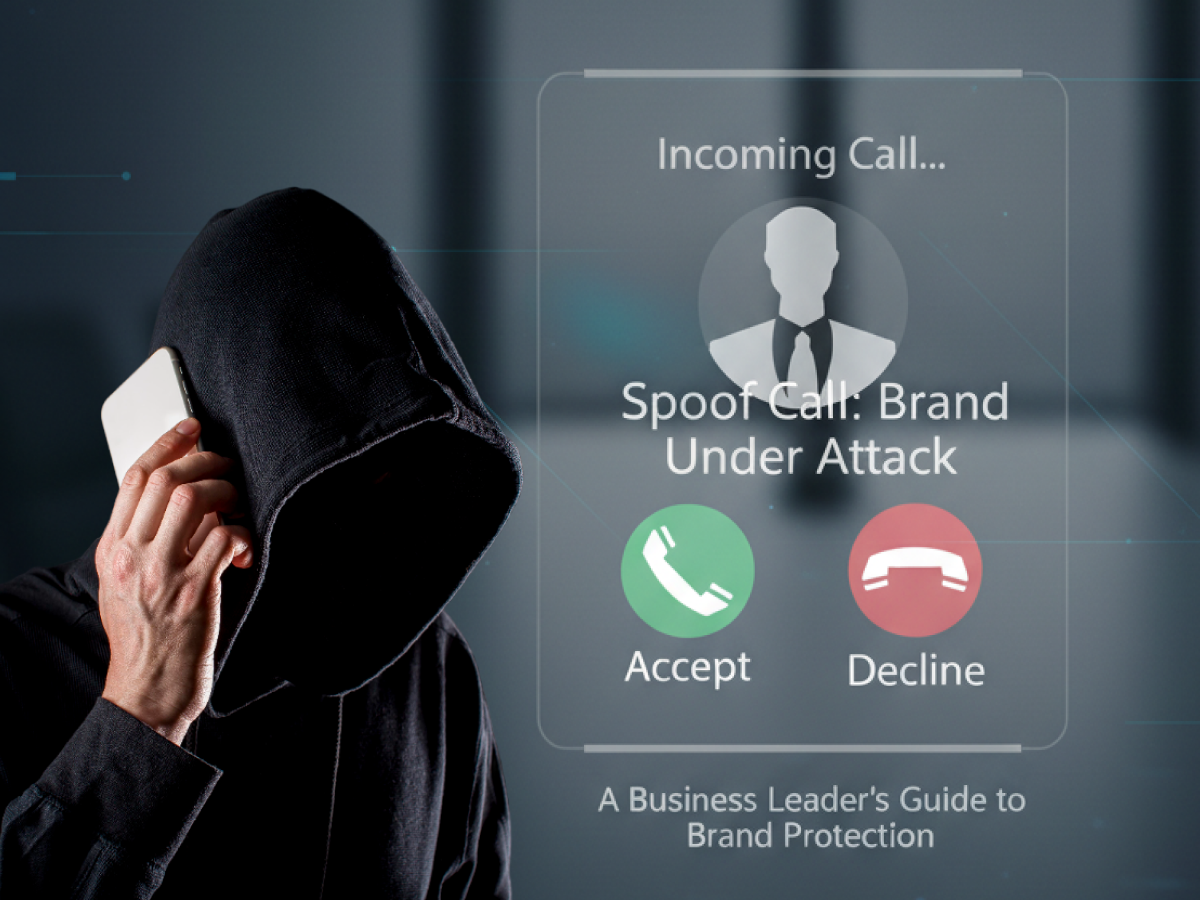
Imagine a business nightmare unfolding right now. Your customers are furious, and your crucial outbound calls show as “Scam Likely”. Your hard-earned reputation is under attack, yet you made none of these calls. This challenging scenario highlights a growing problem for many businesses.
Spoofing is no longer a simple consumer nuisance. It is a direct threat to your brand’s integrity and operational continuity. This issue demands immediate attention from all business leaders.
This guide provides a strategic framework for proactive defense. You will find a clear crisis response plan within these pages. We equip you with knowledge and actionable steps for your business.
A spoof call happens when a scammer hides their real identity. They change the caller ID to show a trusted name or a local number. This trick makes people think a safe person is calling.
Scammers use special tools to fake phone call and their phone information. They reach your phone through the internet instead of a landline number. This technology allows them to display any name they want on your screen.
The main goal of this fake call is to steal your private data. Criminals want your passwords or bank details for their own gain. They use lies to create a sense of deep panic.
Criminals use specific psychological triggers to manipulate their victims during a spoof call. They rely on technology to hide their identity and exploit human nature. Here are the primary reasons why these bad actors use caller ID spoofing.
Scammers use a local area code to make the incoming call look familiar. You are more likely to answer if the caller ID information shows a nearby city. This familiarity lowers your guard immediately.
Many smartphones and service provider tools use blocking features for known telemarketers. By using a fake caller ID, the spoofer bypasses these filters. This allows their phone calls to reach your phone lines successfully.
Fraudsters often impersonate a government agency like the IRS or a bank representative. They use fear tactics to suggest you are in trouble or owe taxes. This urgency stops you from checking the legitimacy of the caller.
Call spoofing is a tool for vishing, which is voice-based phishing. The scammer seeks access to your account number, passwords, or security codes. They often pretend to be from a credit card company to steal funds.
Call & Contact Center
Oct 17, 2025
Read More
Every business today faces a serious threat from caller ID spoofing scams. These actors do not just target individuals; they target your entire organization. You must recognize how a spoof call impacts your brand and staff.
Scammers change their tricks based on what your company does. They look for the easiest way to steal money or information by pretending to be someone you already trust. Whether they are acting like a patient, a supplier, or a boss, their goal is to create a fake emergency so your team acts without thinking.
No matter what your industry is, these criminals use two main tricks to attack your business. They either pretend to be you to hurt your customers, or they pretend to be someone else to trick your own staff. Let’s look into them.
The bottom line is that call spoofing creates a security issue that costs you money. It is not just a minor nuisance for your team to handle. The damage to your business reputation can last for many months or years.
A Deepfake is a fake recording that sounds exactly like a real person. Scammers use smart computer programs (AI) to copy your voice. Once they have a copy, they can make “you” say anything they want.
It is a new way for criminals to trick people into giving away money or secrets.
Scammers only need a small recording of your voice to start. They find these recordings online and use them to train a computer. After that, the computer can talk just like you in a live phone call.
The biggest danger for a company is when a scammer pretends to be the boss. This is called CEO Fraud. They use the fake voice to call employees and trick them into making big mistakes.
The scariest part of AI is that it ruins the trust we have in our phones. If you cannot be sure who is calling, it becomes very hard to run a business.
You must take action before a scammer targets your company’s phone lines. Being proactive is the best way to ensure brand protection. Follow these steps to secure your business against a spoof call.
Partner with a reputable VoIP or internet phone firm. These companies use strong fraud protections to block a fake caller. Always check if they follow KYC rules to verify every account on their networks.
New technology allows you to prove your legitimacy to every caller. These tools add a digital layer of identity to your outbound phone calls. Call authentication helps consumers feel safe when they see your business name.
STIR/SHAKEN acts as a unique digital fingerprint for your calls. It confirms the source of the call is actually your office. This system helps lenders and banks keep their caller ID information secure and clean.
Branded Calling uses RCS to show your logo and a verified checkmark. When you call out, the customer sees your brand clearly on their screen. This feature helps bridge the call and prevents it from being marked as spam.
Use the dashboard from your provider to watch for any weird activity. A sudden flood of very short calls from your number is a major red flag. This detection allows you to stop a scam early.
Submit your phone numbers to a central industry registry or database. This action helps mobile networks recognize your caller ID as legitimate. It lowers the risk of your business being flagged as a fraud threat.
Dialaxy provides secure business phone systems with advanced fraud protection and verified caller ID.
If your business suffers from an active spoof call attack, you must act fast. Do not let fraudsters ruin your brand reputation without a fight. Follow this action plan to regain control of your phone lines.
You need to stay calm while you collect every piece of evidence. Documenting the incident helps you build a strong case for your service provider. This proof is vital for any future police report or investigation.
For example, you might save a voice recording from an angry victim. You can also take a screenshot of a phone screen showing your caller id. These details help show the agency exactly how the scam works.
Contact your telecom or VoIP company to report the scam immediately. Ask them to investigate the source of the incoming call traffic. They have tools to see if third parties are using your number illegally.
An example of this action is asking for a fraud ticket number. You tell the provider that a spoofer is damaging your business identity. They might then use call analytics to find the international gateway causing the issue.
Clear communication is the best way to keep your audience safe. You must inform your contacts that scammers are mimicking your office phone number. This transparency helps maintain trust even during a difficult security issue.
One example is posting an alert on your social media page. You can also update your Google Business Profile with a short warning. Tell people to hang up if a caller asks for a credit card payment.
Filing a formal complaint with the FCC or FTC is a crucial step. These government agencies track phone scams to stop criminal networks worldwide. Your report helps protect other businesses from falling victim to the same tactic.
For example, you can visit reportfraud.ftc.gov to submit your information online. You should also contact your local police to file an identity theft report. This creates a legal document that proves your company is not the offender.
For a large organization, protecting your brand requires more than basic tools. You must adopt advanced practices that scale with your business needs. These strategies ensure your communications remain secure across the entire enterprise.
Using Rich Communication Services (RCS) allows you to display a logo and a verified badge. This digital identification makes your incoming call look professional and legitimate to every customer. It replaces a plain phone number with a trusted brand presence on smartphones.
For example, a bank using RCS shows its official logo and the reason for the call. A customer sees “Secure Bank – Fraud Alert” instead of an unknown number. This rich call data gives the victim confidence to answer and discuss their account.
Know Your Customer (KYC) rules for your VoIP provider ensure that only legitimate entities use their networks. These standards require service providers to verify the identity and intent of every client. This prevents scammers from accessing high-quality phone lines for spoof calls.
An example is a phone company requiring a business license before opening a new account. They check the trade name and tax records to confirm the owner is real. This vetting process stops a fraudster from using a fake business opportunity to trick people.
Advanced analytics monitors your phone traffic to find patterns of unauthorized use by third parties. These tools can flag a sudden flood of calls that do not match your normal work hours. Early detection allows your team to stop a scam before it causes damage.
For example, your dashboard might show 1,000 short calls made at midnight from your office number. Since your staff is at home, this activity is a clear red flag for spoofing. You can then action a block on those outgoing calls immediately.
Phone scams got so bad that lawmakers finally had to do something about them. Now we’ve got laws that actually punish people who pretend to be someone else when they call you.
The US and Canada both cracked down hard on this stuff. Break the rules, and you’re looking at massive fines, maybe even jail time if you really cross the line.
What’s the point of all this? So you can pick up your phone without wondering if it’s a scammer on the other end. These laws also keep your private info safe and cut down on spam.
The FCC runs the show here. They’ve got two big weapons: the Truth in Caller ID Act and the TRACED Act. That’s how they go after the scammers.
Regulations:
Penalties:
Get caught spoofing, and you’re paying up to $10,000 for every single call. Make a hundred bogus calls? That’s potentially a million bucks down the drain. From February 2026, lie to the robocall database, and that’s another $10,000 hit. Some people even end up behind bars for the really bad stuff, but usually it’s just the fines doing the talking.
Up north, the CRTC calls the shots. They’ve set up their own system through what they call Unsolicited Telecommunications Rules. It’s pretty similar to what’s happening in the States.
Regulations:
Penalties:
Regular folks get hit with up to $1,500 CAD per violation. Companies? They’re paying $15,000 CAD each time. Remember, every single call is its own violation. The CRTC doesn’t play around; they’ve already handed out millions in fines.
Fake calls often come from other countries, so the US and Canada must work together. The FCC and CRTC share information to find scammers across the border. They use a system called traceback to see where a call truly started. By working as a team, these countries can better stop global scammers and protect everyone’s phones.
Protecting your business from fake calls and AI voice scams is very important. Scammers now use “deepfakes” to steal your voice and trick people. This can make customers lose trust in your brand very quickly.
But you can stop them by using new technology to prove your calls are real and teaching your team what to look for; you can stay safe.
Your good name is your most important asset. Laws in the US and Canada help catch scammers, but the best way to stay safe is to be ready before a scam happens. Work with good phone companies and have a plan so you can act fast.
If you take these steps today, you will protect your money, your workers, and your company’s future.
Join thousands of business leaders who trust Dialaxy for secure, verified, and reliable phone services.
Yes, in certain limited circumstances. It is legal if done without intent to defraud or cause harm. Examples include law enforcement operations or legitimate business calls.
No. It’s only wrong if you’re using it to trick people or steal money. Plenty of people hide their numbers for good reasons. Doctors often do it when calling patients to keep their personal numbers private.
It’s hard to tell because AI-generated voices can sound very realistic. Listen for unusual pauses, robotic tones, or strange speech patterns. If someone asks for money or sensitive information, verify their identity through a trusted phone number.
Contact your phone service provider immediately and report the issue. You should also notify your customers through your website, social media, or email so they know to be cautious of suspicious calls.
A prank call using a fake number can be illegal if it is used to harass, threaten, scam, or deceive someone. Even if intended as a joke, it can lead to legal consequences depending on the situation.
