

AI Receptionist: Definition, Benefits, and Use Cases

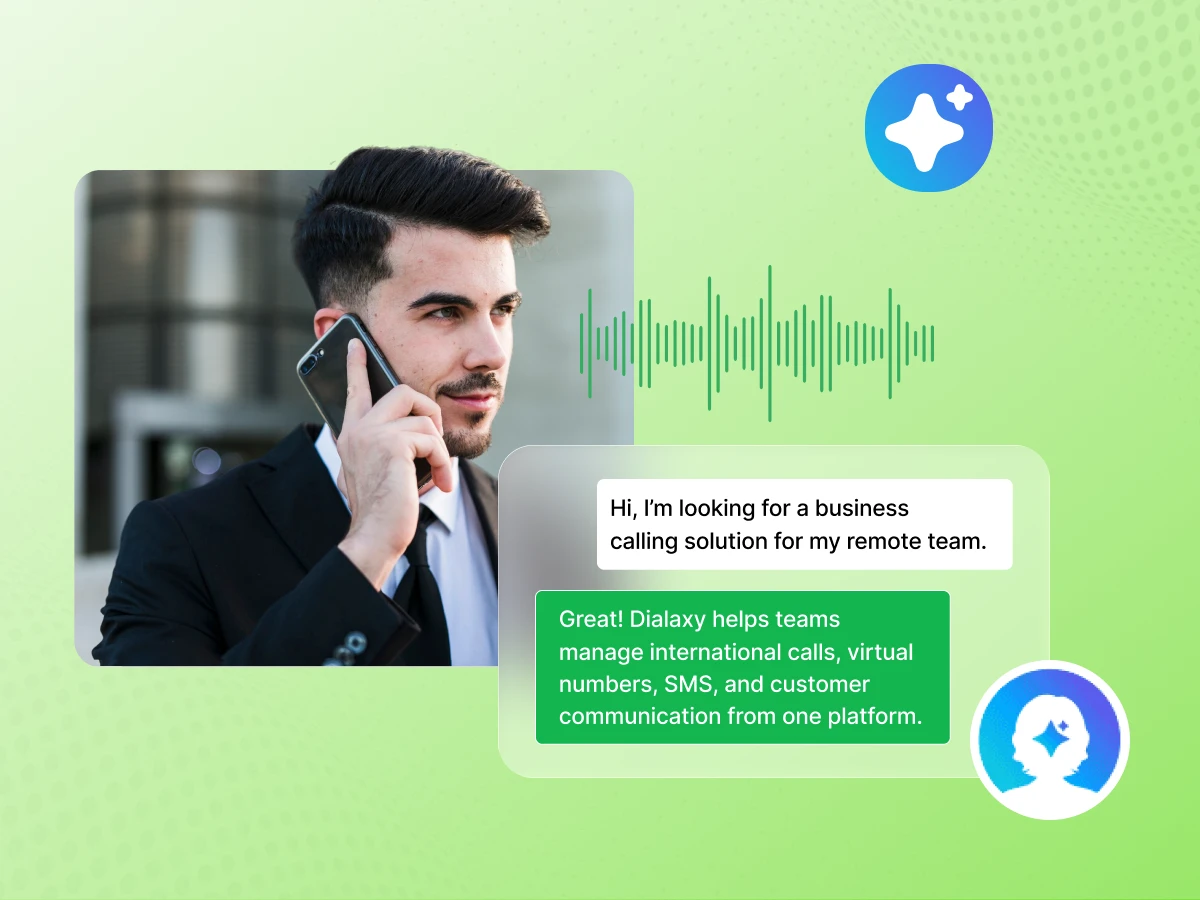
Overview:An AI receptionist is a virtual phone agent that answers incoming calls, understands what callers need, and responds based on your business information. Depending on the system, it can also handle tasks such as answering common questions, routing calls, taking messages, and scheduling appointments. Instead of having a person answer every routine call, businesses can use an AI receptionist to handle common requests and pass calls to a team member when human help is needed.
When a customer calls your business, they expect someone to answer. But when your team is busy handling calls, messages, and other tasks at the same time, some calls can easily be missed.
An AI receptionist helps take some of that workload off your team by handling routine calls and directing customers to the right information or person.
This guide breaks down how an AI receptionist works, what it does for your bottom line, and how to put one to work in your business.
Think of a traditional answering machine. Now, imagine if that machine could actually think, talk, and book meetings for you. That is an AI receptionist. It is a piece of software that acts as a digital phone assistant. It doesn’t just record a message; it has a conversation.
This AI platform uses modern AI models to process speech. Unlike the basic voice commands on your phone, a business-grade AI virtual receptionist connects to your existing tools. A Context store can give an AI agent a unified, searchable layer for discovering relevant data across those connected systems. It knows your calendar, your plans and pricing, and your customer history.
Its job is to ensure that every time someone dials your number, they get a response. The AI receptionist provides a layer of reliability that humans sometimes can’t. Humans get sick, take lunch breaks, and sleep. The AI doesn’t. It handles inbound calls and outbound calls with the same level of energy every single time.
An AI receptionist follows a simple process when someone calls:
Should you hire a person or use a custom AI? It isn’t always an “either-or” situation. Many businesses use both. However, the data shows a clear difference in how they perform under pressure.
| Feature | Human Receptionist | AI Receptionist |
|---|---|---|
| Availability | Usually 9 AM – 5 PM | 24/7/365 |
| Cost (Annual) | $37,000–$45,000+ | $200–$2,400/year |
| Simultaneous Calls | One at a time | Unlimited calls handled |
| Consistency | Changes with mood/stress | Always professional |
| Response Time | 30–90 seconds | Under 8 seconds |
| Sick Days / Turnover | Yes, it happens | Never |
A human is great for building deep relationships. But for answering questions about your hours or booking appointments, the AI is faster and much cheaper. You can’t ask a human to work on Christmas Day for twenty dollars a month, but you can do that with an AI platform.
We have all dealt with bad IVR (Interactive Voice Response). It is the “Press 1 for Sales” system that everyone hates. An AI receptionist answers differently. It doesn’t force you into a menu.
| Feature | Traditional IVR | AI Receptionist |
|---|---|---|
| Input Method | Keypad (Number pressing) | Natural speech |
| Flexibility | Rigid; if you miss a menu, you’re stuck | Context-aware, skip ahead anytime |
| Personalization | None | Greets callers by name via CRM sync |
| Customer Experience | Frustrating and slow | Conversational and helpful |
| Setup Complexity | High, requires a developer | Quick setup using AI tools |
The AI feels like a conversation. IVR feels like a maze. If you want your customers to feel heard, the AI voice agents are the better choice.
Depending on your business, you might need one specific type of AI receptionist or a mix of several.
Why are so many people switching to an AI virtual receptionist? It comes down to performance. When you look at an ROI calculator, the numbers favor automation for front-desk tasks.
Customers don’t just call during business hours. They call when they have a problem, which is often at night or on weekends. If you don’t answer, they call the next person on Google. An AI ensures every call is answered.
Hiring a person costs thousands in salary, benefits, and desk space. An AI receptionist for small businesses costs about as much as a Netflix subscription. You save tens of thousands of dollars every year that you can reinvest into marketing.
People hang up if they wait more than 30 seconds. An AI agent picks up within two rings. This speed keeps leads captured and keeps customers happy.
If ten people call your office at once, a human can only talk to one. The others get a busy signal or go to voicemail. An AI platform can handle hundreds of calls at the exact same time. Every caller thinks they are the only one talking.
The AI never has a bad day. It doesn’t get frustrated with rude callers. It follows your script exactly. The AI receptionist provides a consistent brand voice that builds trust with your audience.
Every time someone calls, the AI asks for their name and email. It performs data collection automatically and puts it in your CRM. This means you have a list of leads captured waiting for you every morning.
If your business doubles in size next month, you don’t need to hire a second receptionist. You just keep using your AI tools. It scales with you without adding headcount or stress.
How do you actually use this? Let’s look at how different industries put AI receptionists in action.
Clinics are busy. A phone assistant can handle appointment scheduling while the staff helps patients in the room. It can also manage reschedule appointment calls. This reduces the time people spend on hold and ensures patient records are updated via AI receptionist integrate systems.
Lawyers bill by the hour, so they shouldn’t spend time answering questions about their office location. An AI can qualify leads by asking “What is your case about?” and then performing routing calls to the right attorney.
Agents are often out showing houses. If a new buyer calls, the AI phone receptionist can give them property details and schedule appointments for a viewing. It ensures no lead is lost while the agent is driving.
Security is key here. An AI can help with data collection for loan applications or guide someone through the plans and pricing of different accounts. It handles the boring stuff so the bankers can focus on high-level finance.
Customers always ask, “Where is my order?” An AI can check the tracking number and give an update immediately. It handles these inbound calls so your support team can deal with more complex problems like damaged goods.
Hotels use AI for appointment booking at their spas or restaurants. It can answer “Is the pool open?” or “Do you have a gym?” 24 hours a day.
Big companies use an AI agent to help employees. It can answer questions about payroll or how to request time off. It acts as an internal phone answering service for the staff.
Here are the top use cases of an AI receptionist at a glance:
| Industry | Primary Use Case | Main Benefit |
|---|---|---|
| Healthcare | Appointment booking | Reduced wait times |
| Legal | Qualify leads | Better case sorting |
| Real Estate | Viewing scheduling | Zero missed calls |
| Retail | Order tracking | Lower support costs |
Not all systems are equal. When you are looking to contact sales for a new tool, make sure it has these features:
Communication Fundamentals
May 27, 2026
Read More
We have to be honest: AI has limits. It is a tool, not a miracle. Here are the things to watch out for:
Where is this going? By the end of 2026, the AI phone receptionist will be even more impressive.
Call & Contact Center
Dec 10, 2025
Read More
If you are tired of checking your voicemail and seeing five miss calls every day, it is time for a change. Dialaxy isn’t just another phone system. We provide the infrastructure for a modern contact center that works for you.
Our AI receptionist handles the heavy lifting. From booking appointments to answering questions about your services, our AI voice agents are designed to be helpful and professional. We offer quick setup and integrate with your existing phone systems, so you don’t have to change your number.
You get better data collection, more leads captured, and more time to focus on your actual job. Let us show you how a custom AI can transform your daily routine.
The era of the “standard” answering machine is over. In 2026, an AI receptionist is the most cost-effective way to grow a business. It solves the “missed call” problem, provides 24/7 service, and helps you qualify leads without spending a fortune on staff.
While it doesn’t replace the need for human connection in complex cases, it is the perfect phone assistant for the everyday tasks that clutter your schedule. If you want to stay competitive, you need to look at how these AI tools can help you handle calls better.
The AI is available 24/7, handles many calls at once, and costs much less. However, a human is better at handling complex emotional situations.
IVR makes you press buttons. An AI phone assistant lets you speak naturally and understands what you want through a real conversation.
You get zero missed calls, lower costs, instant response times, and an easy way to schedule appointments and capture lead data.
Doctors, lawyers, real estate agents, and online stores use them most. They use AI receptionists to handle calls and collect customer data after business hours.
It can replace repetitive tasks such as answering calls and handling FAQs. This allows your human staff to focus on more important and complex responsibilities.
Most AI receptionist solutions cost between $20 and $200 per month, making them far more affordable than hiring a full-time receptionist, which can cost $3,000 or more per month.
AI receptionists use technologies such as Natural Language Processing (NLP), Automatic Speech Recognition (ASR), and Text-to-Speech (TTS) to understand callers and provide natural, human-like conversations.
