

10 Essential Phone Etiquette Rules That Transform Customer Relationships


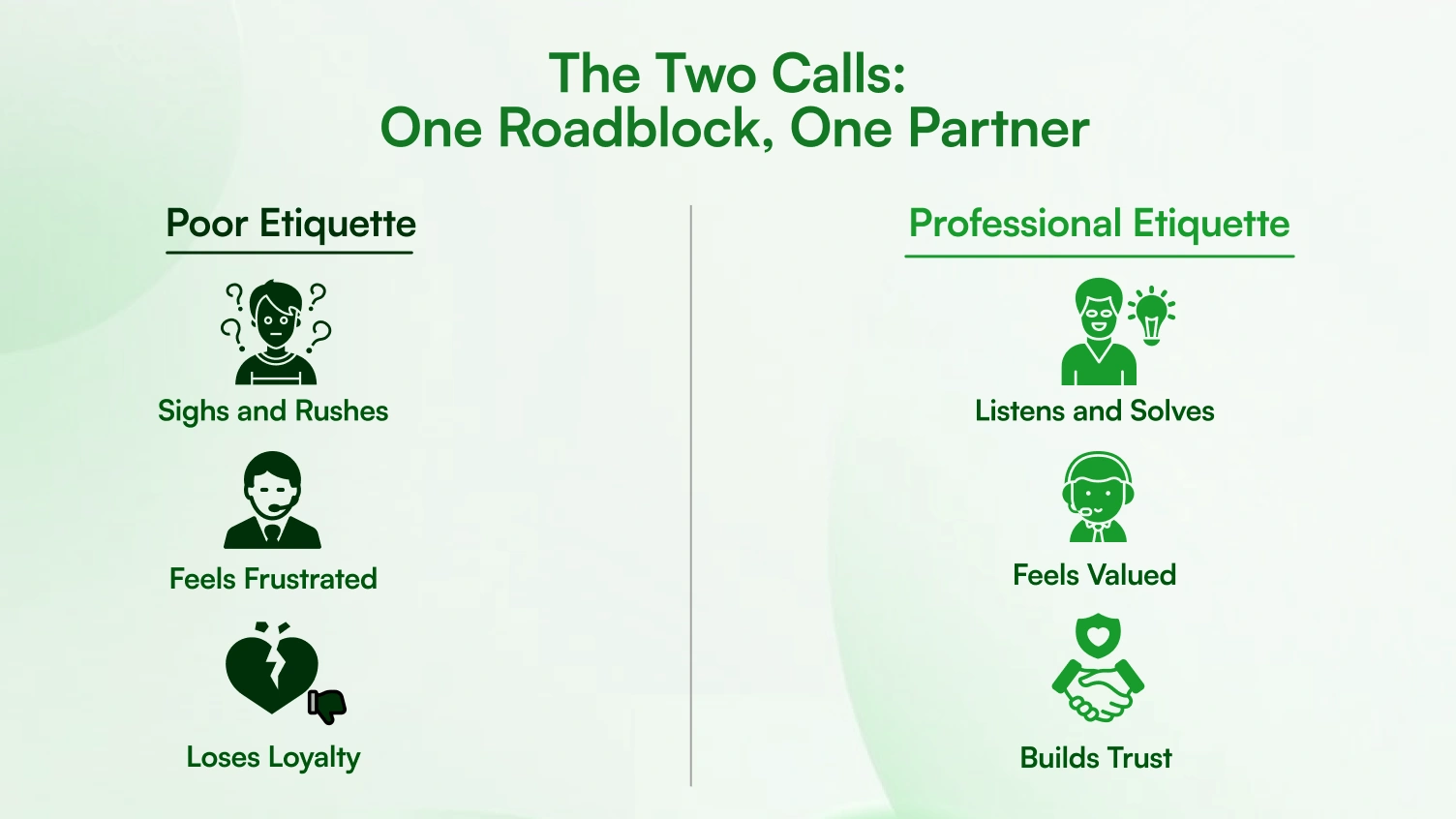
Imagine calling about an urgent order. One agent sighs and rushes. They say it is not their department. You feel frustrated and look for another company.
In another call, the phone is answered quickly. The agent greets you warmly, listens, and offers a clear solution. You feel valued and stay loyal.
The difference isn’t policy; it’s professional phone etiquette. Every call is a high-stakes moment shaping trust, loyalty, and your bottom line.
This guide delivers 10 essential phone etiquette rules grounded in a proven communication strategy. You will master preparation, conversation, and closing with confidence and care.
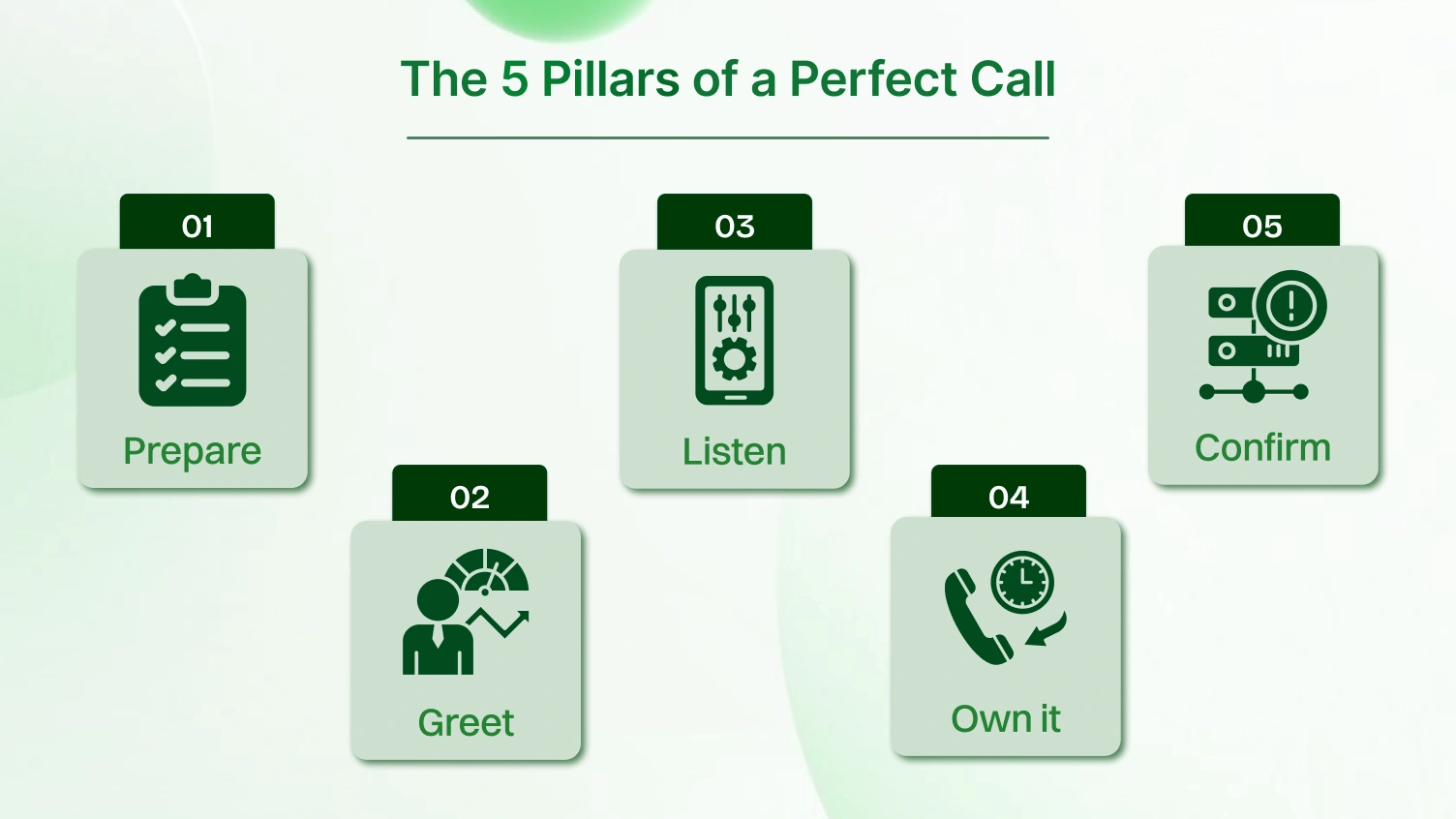
Every phone call is more than words exchanged. It determines trust, loyalty, and perception of your business by the customer. Proper phone demeanour enhances effective communication, conserves time, and makes customers have better interactions. These 10 rules will help you through the initial ring all the way to the last farewell.
The most important moments of a phone call happen before you say a single word. Professional service is not improvisation. It is preparation. By treating every incoming call like a scheduled meeting, you show respect and competence. The person calling feels valued, not like an interruption.
A strong introduction begins with context. Keep your CRM open before answering phone calls. Use caller ID to pull up their profile. Review their name, recent activity, or open tickets. This preparation allows you to greet them personally.
Your audio environment speaks as loudly as your words. Background noise, typing, or chatter signals distraction. Customers want focus, not distraction. Close your office door, silence notifications, and use a noise-canceling headset.
The caller on hold or the person calling should hear only your clear voice. This makes active listening possible and creates better customer experiences.
Your energy is heard before your words. Take a breath before picking up the phone. Sit straight and remain cheerful. Reset your focus from the last task. This positive tone creates confidence.
At the same time, check your equipment. Ensure your headset and call center software are working. Small checks prevent delays, unnecessary holds, and awkward moments.
Preparation shapes the entire call. It saves time, prevents errors, and sets the right tone. You introduce yourself with clarity and proper language. Customers feel respected and heard.
This foundation builds loyalty, reduces frustration, and strengthens every relationship that starts with a phone call.
The first ten seconds of a phone call do more than begin the conversation; they define it. How you answer reflects efficiency, professionalism, and respect. A prompt, warm, and structured greeting builds immediate trust. It also lowers tension before the caller even describes their concern.
Waiting creates anxiety and frustration. Never let phone calls ring more than three times. This standard signals organization and attentiveness. Answering too quickly can feel rushed.
Letting it ring too long suggests distraction or low priority. The second or third ring provides balance. When you speak, your tone must carry warmth and clarity. Customers listen carefully to your first words, and that shapes the entire call.
Consistency creates confidence. Every customer deserves the same clear structure. Follow this formula for each phone call:
On the phone, your voice replaces body language. A monotone greeting signals disinterest. A smile changes your vocal quality. It adds brightness and warmth that customers can hear.
Before picking up the phone, sit straight and take a breath. Physically smile. This small habit keeps you cheerful, improves your active listening, and helps build positive customer experiences.
Answering with promptness, structure, and energy reduces caller stress and strengthens relationships. It shows respect, builds trust, and ensures the conversation begins with confidence.
This professional approach to telephone etiquette turns routine phone calls into opportunities to demonstrate reliability, remain cheerful, and deliver lasting value.
After the greeting, the heart of the call begins, and your most powerful skill is active listening. Many people listen to reply. Professionals listen to understand.
Active listening means hearing the words, recognizing the emotion, and focusing fully on the person calling. This practice creates space where the customer feels respected and valued.
Active listening is more than a technique. It is an act of validation. It tells the customer, “Your concern matters, and you have my complete attention.” This simple act reduces tension and encourages cooperation.
Frustration often fades when someone feels heard. Instead of an adversary with a complaint, the caller becomes a partner in finding a solution. That shift strengthens trust and improves customer experiences.
Engaged listening reduces the duration of the call and eliminates errors, promoting loyalty. It turns difficult meetings into constructive dialogues.
Customers trust you when they think that they are actually listened to. Not only will that trust last long after the phone conversation is over, but it will cement the relationships in a way that supports your brand image.
Your expertise only has value when the customer can understand it. Clarity is both competence and respect. When you use simple, accessible language in a phone call, you build trust.
When you rush, mumble, or rely on internal acronyms, you create barriers. Confusion breeds frustration, doubt, and poor customer experiences.
Clear communication is empowering. When customers understand your words, they feel confident in you and in themselves. Jargon does the opposite. It creates a power imbalance. It can make a person feel uninformed or even foolish.
They must either interrupt to ask for help or pretend they understand. Both outcomes create tension. By translating technical terms into plain language, you invite the caller into the conversation. That partnership strengthens trust and makes telephone etiquette a tool for inclusion rather than exclusion.
Speaking with absolute clarity reduces misunderstandings, prevents repeated phone calls, and shortens resolution time. Customers feel respected, informed, and equal in the conversation.
They leave with confidence in both their own understanding and in your professionalism. This transforms potential frustration into a positive interaction and strengthens loyalty with every call.
Customers rarely call only to report a problem. They call to report feelings of frustration, disappointment, confusion, or anger. The greatest mistake is to ignore those emotions and jump straight to logic.
Empathy is not about taking blame. It is the essential first step of acknowledging their emotional state with respect before any solution can begin.
An upset customer is operating from emotion, not logic. Empathy unlocks cooperation.
By validating their feelings, “That sounds incredibly frustrating,” you signal that you are an ally, not an adversary.
This simple act reduces tension and reframes the situation from me versus you into us versus the problem. Once customers feel understood, they calm down. They shift from defensive to cooperative, ready to work with you toward a resolution.
Once the emotion is acknowledged, pivot with a bridge phrase. “Now that I understand the situation, let’s figure out the best way forward.”
The easiest piece of advice is to lead with empathy in order to de-escalate tense calls. It helps avoid unneeded escalations, reduces resolution times, and creates sustained trust.
The customers hang up the phone feeling that they are appreciated as individuals, and not treated as transactions. This approach transforms brand-damaging moments into opportunities for loyalty and stronger relationships.
In any challenging customer call, there comes one critical moment, that moment that determines whether you are their hero or just another stumbling block. The variation boils down to two strong words, which are, you must and I will.
“You need to” shifts responsibility back to the person calling. It creates extra work and signals the issue is no longer your problem. That approach destroys trust.
“I will” removes friction and communicates ownership. It shows strong communication skills, proper language, and respect. It proves you are accountable for the resolution.
For example:
This simple shift turns a stressful phone call into an interaction where the caller feels valued, supported, and understood.
A cold transfer forces customers to repeat details and re-explain their frustration. It signals disorganization and poor telephone etiquette. A warm transfer respects the customer’s time and creates confidence.
Steps for a warm transfer:
Ownership also extends beyond the transfer. If a solution requires time, never leave the customer uncertain. Instead of “Someone will call you back,” say:
“I am personally creating a ticket for our technical team and will call you by 5 PM with an update, even if the issue isn’t resolved yet.”
This safety net reassures the customer. Provide a reference number and your name so they feel secure if they must call back. Taking ownership saves time and reduces the background noise of confusion. It improves customer experiences and demonstrates you are listening carefully.
By saying “I will,” mastering warm transfers, and staying accountable until resolution, you do more than fix problems; you become their advocate, their trusted guide, their hero for the day. That is the experience customers remember and reward with lasting loyalty.
To a customer, silence during phone calls isn’t neutral—it’s a void where confidence disappears. An unannounced pause or a caller on hold without context creates anxiety and signals disrespect. Strong telephone etiquette replaces that uncertainty with clarity. It shows respect for time, prevents frustration, and keeps customer experiences positive.
Placing a caller on hold without asking is the conversational equivalent of turning your back mid-sentence. It suggests your needs outweigh theirs. Always ask permission first.
Instead of “Hold on a sec,” say, “To check your order details, I’ll need to place you on hold for about 60 seconds. Is that okay?”
This small courtesy transforms interruption into collaboration. It gives the person calling a sense of control and proves you listen carefully.
“Please hold” with no timeframe leaves customers uncertain. Respect their patience by giving a clear estimate.
This check-in is one of the strongest ways to remain respectful and accountable. It reduces the background noise of doubt and builds trust.
Not every pause requires a formal hold. Sometimes you need time to type, read, or confirm details. Dead air, however, can feel like neglect. Narrating your actions reassures customers that you are actively working for them.
This approach uses proper language, prevents the caller on hold from feeling abandoned, and reflects strong communication skills.
Mastering holds and silences eliminates anxiety and builds confidence. By asking permission, managing time with clear updates, and narrating actions, you prove professionalism and empathy.
Customers feel respected, valued, and cared for. Each pause becomes an opportunity to remain respectful, listen actively, and demonstrate telephone etiquette that strengthens every relationship.
Dale Carnegie famously said that a person’s name is the sweetest and most important sound in any language. In customer service phone calls, it’s also one of the fastest ways to turn an impersonal transaction into a personal connection.
Using a name shows you see the caller as a person, not just an account. But there’s a balance. Underuse it, and you sound distant. Overuse it, and you sound like a call center script. The key is to be strategic, natural, and respectful.
Instead of repeating the name at random, use it at the points where it carries the most impact.
The golden rule is simple: if it feels unnatural to say it, it will sound unnatural when hearing it.
Using a customer’s name with skill and moderation builds stronger customer experiences. It shows strong communication skills, attention, and respect. The person calling feels acknowledged, valued, and understood.
That small detail strengthens telephone etiquette, creates rapport, and lays the foundation for lasting loyalty after every phone call.
The last 30 seconds of a call decide how the entire interaction will be remembered. A strong, confident closing builds peace of mind and prevents future confusion. A weak or vague ending can unravel all the progress you’ve made.
Think of this as your verbal handshake, the final act that ensures both you and the customer leave perfectly aligned. A flawless finish requires two simple but powerful steps.
Before saying goodbye, recap the key points of the call. This is your final proof of active listening and professional care. It confirms that you understood the problem and delivered clear actions.
Use confident phrases like:
This summary isn’t a repetition. It’s a declaration of resolution and respect.
Every caller wonders, Now what? A flawless finish removes that uncertainty. State exactly what happens next, who is responsible, and when it will happen.
Weak: “Someone will get back to you.”
Strong: “Our technical team will email you with an update within 24 hours.”
Specific promises eliminate doubt, reduce repeat phone calls, and build immediate trust.
| Scenario | Weak Closing | Intact Finish (Recap + Confirm) |
|---|---|---|
| Immediate Fix | “Okay, you should be set. Anything else?” | “To recap, I’ve reset your password. You’ll receive an email with a temporary link within 3 minutes.” |
| Follow-Up Required | “I put in a ticket. We’ll let you know.” | “I’ve filed ticket 12345 for our technical team. Sarah will email you by 5 PM tomorrow.” |
| Customer Action | “You need to fill out a form online.” | “The next step is to complete the return form. I’ve emailed you a direct link. Once submitted, you’ll instantly receive your shipping label.” |
A strong recap and confirmation cements your reputation as competent and reliable. Customers don’t hang up, hoping for a solution; they hang up knowing it’s already in motion. That clarity and confidence are the hallmarks of great phone etiquette and a lasting trust-building experience.
The end of a phone call is your final opportunity to show respect. It’s the difference between making someone feel like a completed task or making them feel like a valued person. A rushed goodbye weakens trust.
A graceful exit, however, is a mark of professional telephone etiquette that builds lasting loyalty.
Before you close, always open the door one last time. This small act saves time, prevents repeat phone calls, and avoids frustration later. More importantly, it proves you are willing to listen carefully until the end.
Asking this question is not about efficiency, it is about customer control. It tells the person that their needs matter most.
Script example:
“Before we close, is there anything else at all I can help you with today, Sarah?”
This habit is a hallmark of strong communication skills and demonstrates true professionalism.
The last thing the caller should experience is warmth, respect, and proper language. This is achieved with two final acts of courtesy.
Offer a Genuine Thank-You
Never stop at “Thanks for calling.” Elevate your gratitude into something personal.
Instead of: “Thanks for calling.”
Say: “Thank you for being a customer, David. We truly appreciate your business.”
This validates their loyalty and frames the call as part of a meaningful customer experience, not just a transaction.
Let the Customer Hang Up First
Ending abruptly can feel like a slammed door. Waiting for the caller to disconnect first sends powerful, silent messages:
This final, silent courtesy is the ultimate demonstration of respect. Problems may be solved during the middle of a call, but loyalty is sealed at the end. A high-note closing shows that telephone etiquette is not just procedure; it is culture.
The caller does not hang up with uncertainty; they hang up feeling respected, valued, and supported. That is how lasting trust is built and how even routine phone calls become relationship-building moments.
Now that all 10 rules have been outlined, the next step is to clearly understand how these consistent habits directly shape stronger customer relationships.
These 10 norms are not simply good manners. They create a strategic framework and convert any phone call you make or receive into a relationship-building experience. Professional telephone etiquette has the capacity to simultaneously solve issues and develop the trust that is the fuel behind successful business value with consistency in use.
The trial of loyalty is in case of a wrong turn. Customers will either leave or remain depending on the manner in which issues are dealt with.
As agents practice active listening (Rule 1), speak with empathy (Rule 5), and become the doers by saying, I will take care of this on your behalf, ” it will be all gone (Rule 6), and frustration is diffused. A confident conclusion and detail (Rule 9) never gives a grey area.
Customers cannot abandon a company because of one flaw, but because they feel their opinion is not listened to or taken seriously! These regulations will ensure that customers will always feel valued, respected, and supported even after the end of a call that has been made to them, which was difficult; the backbone of retention.
With regularity comes the earned trust and, as a result, Customer Lifetime Value (CLV) increases. A shopper would feel more respected, remain longer in the store, and shop more, spending more money and being less price-conscious.
A bond is established through proper use of language (Rule 3), a natural invocation of their name (Rule 8), and a respectful professional tone (Rule 2) that goes beyond finding solutions to problems. These touches make agents trusted advisors.
When customers feel heard and valued, they respond more positively to future offers. Over time, these positive experiences build satisfaction and trust, turning customers into loyal advocates. Loyal customers often share their experiences, creating genuine word-of-mouth marketing, the most effective kind of marketing.
Every call center interaction is more than a private exchange; it’s a statement about your brand. A mishandled hold or transferring experience may result in a frustrated review.
On the other hand, a customer who experiences patience, respect, and professionalism remembers the support and often shares it publicly. By mastering warm transfers (Rule 6), handling silences with respect (Rule 7), and closing on a high note (Rule 10), your agents actively protect and enhance the brand’s reputation.
Each call becomes a living example of the importance of phone etiquette, shaping public perception in real time.
Ineffective communication wastes time and money. It creates repeat calls, longer handle times, and escalations. Strong etiquette practices reverse that trend.
Listening carefully (Rule 1) and recapping clearly (Rule 9) increase First Call Resolution by addressing the real issue immediately. Taking ownership (Rule 6) ensures customers aren’t bounced between departments. Narrating actions during pauses (Rule 7) reduces uncertainty and shortens calls.
A professional and confident approach does not cost extra time; it saves time. It lessens cost-per-contact as well as the burden to the Agent and enables teams to work on more complex cases.
Although these 10 rules are sure to allow for strong communication, they can be complemented by the use of modern instruments such as a virtual assistant and a live chat. The final section discusses the benefits of applying the current technology to enhance your phone manners as well as generate even more appreciable customer experiences.
The 10 telephone etiquette rules are grounded in the connection between human beings. The use of modern tools, such as CRM systems, Voice over Internet Protocol (VoIP) phones, and call recording, allows one to use these rules more carefully.
Good communication skills cannot be removed due to technology. It enhances them, and the experience becomes unified, professional, and reinforces all the customer relations.
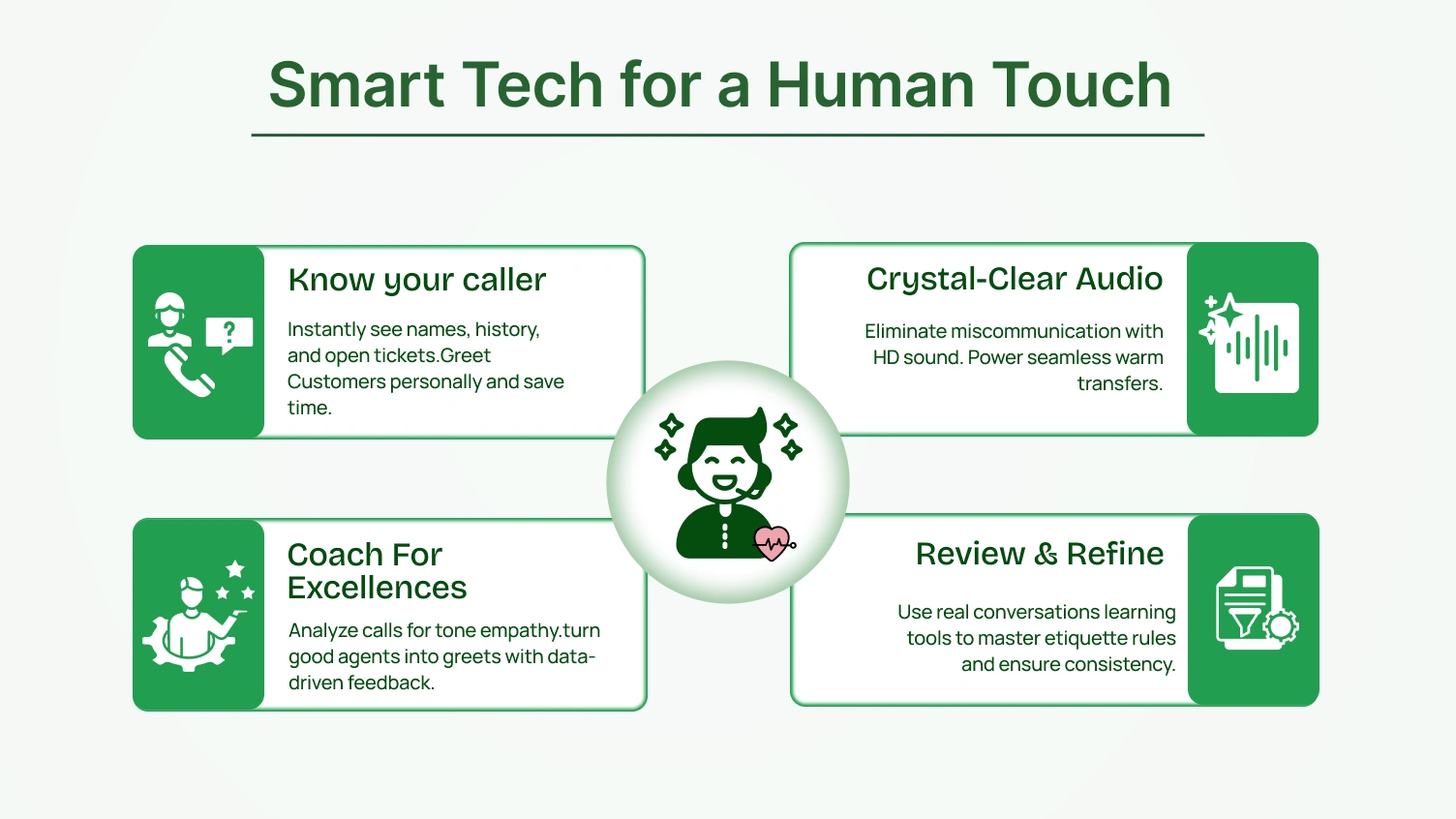
A CRM system linked to your phone provides instant context. Once the caller is connected, can be seen on the screen of the agent, their history name: purchases and past problems.
Impact: This complements Rule 8 (Use the Customer Name) by allowing one to greet the customer personally, yet it begins in the first second. It also supports Rule 1 (Active Listening) since it makes it unnecessary to ask the same question over and over again. Customers know they are understood and valued, and are less likely to get frustrated and develop trust.
Modern VoIP systems deliver high-definition audio and smart call-routing features. They form the technical foundation for professional communication.
Impact: Crystal-clear sound supports Rule 3 (Use Clear Language) and Rule 4 (Speak at a Measured Pace) by eliminating miscommunication caused by poor connections. Advanced routing powers Rule 6 (Warm Transfers), allowing agents to brief colleagues before introducing the customer, ensuring the caller feels guided instead of abandoned.
AI tools analyze calls for tone, sentiment, and phrasing. They highlight what worked and what needs improvement.
Impact: Analytics flag calls where agents used “you need to” instead of taking ownership with “I will” (Rule 6). They reveal moments where empathy could be stronger (Rule 5). This objective feedback empowers managers to coach effectively, ensuring etiquette rules are applied consistently. Customers benefit from more caring, confident, and reliable interactions.
Call recording provides a direct way to evaluate and improve phone etiquette. It turns real conversations into practical learning tools.
Impact: Reviewing a call helps agents hear for themselves if they interrupted, failed to recap clearly (Rule 9), or ended too abruptly (Rule 10). Constructive feedback based on recordings transforms theory into measurable skills. This builds a culture of accountability and continuous improvement.
Using all these technologies in conjunction, businesses translate personal professional phone etiquette into company standards. The effect is that agents who are more confident, calls are easy, and the customers always feel appreciated and respected.
Two calls, two outcomes, one ended in frustration, the other in loyalty. The difference was not policy. It was phone etiquette. One agent was a roadblock. The other became a partner.
These 10 rules form a culture of respect and care. Each call is a chance to solve problems, show values, and build loyalty that lasts.
Take the Next Step with Dialaxy.
Dialaxy unites CRM, VoIP, analytics, and recording. Use it today to strengthen every customer relationship.
Business calls follow strict rules of phone etiquette with clarity, while personal calls are informal.
Stay calm, practice active listening to understand the core concern, validate their feelings, then guide them toward a respectful solution.
Ask permission, give a time frame, and check back, showing professional respect and trust.
Introduce yourself, be polite, concise, and clear to create a professional and effective voicemail message.
