

Automatic Number Identification: Meaning, Benefits, and How it works?

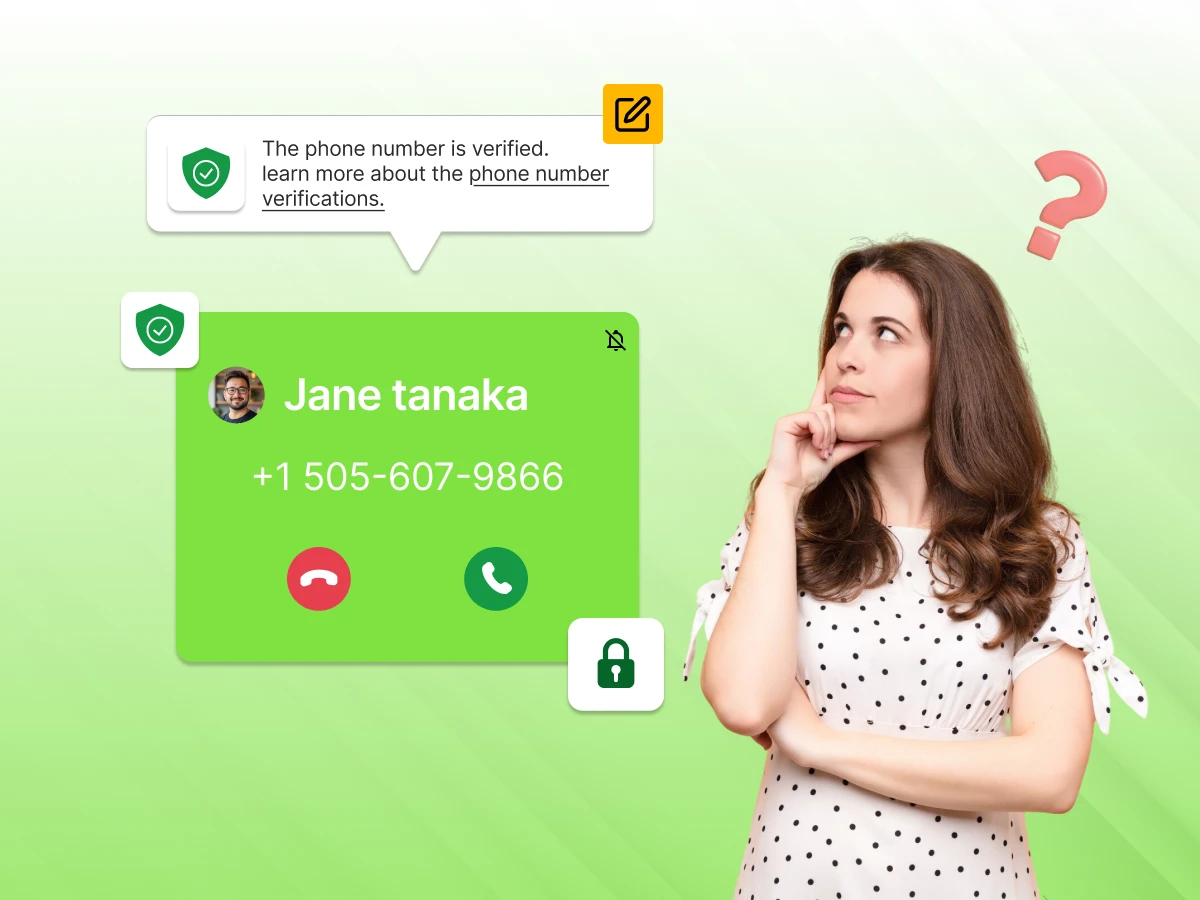
Have you ever called a support line and felt the immediate frustration of having to repeat your name, account number, and birth date for the third time?
After all these years of loyalty, it seems that the company doesn’t know who you are. Now, think of the scenario when you call a number, the agent says your name and starts talking before you even say anything. They already have your full customer account history pulled up and know exactly why you’re calling. This isn’t a lucky guess; it is the result of a powerful tool called Automatic Number Identification (ANI).
You will learn how modern systems, even those that are AI-trained to sync with social media, use this data to turn a standard phone call into a world-class experience.
Automatic Number Identification (ANI) is a telephone technology that enables the automatic display of calling party telephone numbers on the display of the called party’s telephone. While it sounds a lot like caller id, it is actually much more powerful.
ANI was originally developed by AT&T for billing purposes. They needed a way to identify which number should be charged for long-distance calls. Today, it has evolved into a cornerstone of contact center technology. It provides a reliable way for businesses to identify customers before the phone is even answered.
In a professional call center environment, ANI serves as a data trigger. Automatic number identification (ANI) data is passed to the company’s customer database when a call arrives. This way, the system can search for the customer account that the phone number belongs to.
Many people confuse what ANI is with a standard VoIP caller ID. However, for a business, the difference is critical:
To truly understand what ANI is, we need to look under the hood of the telephony system. It isn’t just a number appearing on a screen; it is a complex exchange of data.
The calling party dials a number, and the call goes into the public switched telephone network (PSTN). Here, the phone company or phone service provider adds the ANI data to the call signal.
The call travels through various exchange points. Along with the voice signal, the network signaling system carries a packet of data. This packet contains the automatic number identification digits.
Once the call arrives at your contact center, the phone system (such as Dialaxy) gets the ANI data. This happens even before the system determines the logic of IVR vs IVA to start talking to the caller.
The most exciting part of what is ANI is what happens next. Through AI automation and computer telephony integration (CTI), the ANI data is sent to your CRM system.
By the time the call center agents say “Hello,” they already know the caller’s transaction history, previous customer stories, and current account status.
In a modern contact center, ANI is the “brain” behind call routing. Without knowing who is calling, you cannot route the call effectively.
Call routing is the process of sending an inbound call to the right department or specialist. By using ANI, your system can make smart decisions:
Workflow automation is about removing manual steps. When you use automatic number identification, you automate the “identification phase.”
Whether you are a small private limited company or a massive global corporation, the benefits of understanding what ANI is and implementing it are huge.
No one wants to stand in line or deal with long call queuing times. With the use of ANI, the identification process can be accelerated, which helps to minimize the waiting time. This results in improved customer experiences and increased customer satisfaction.
Call center agents often spend the first 60–90 seconds of a call just verifying identity. With ANI, you eliminate thousands of hours in your workforce engagement strategy. This allows agents to be able to concentrate on problem-solving instead of data entry.
In sectors such as finance or healthcare, security and compliance are a must. ANI is an additional identity verification. While it shouldn’t be the only security measure, it helps the fraud team spot an anomaly, like if a caller claims to be “John Smith” but the ANI shows a number from a different location.
The executive team needs accurate metrics to make decisions. ANI data helps track calling patterns, call volumes, and first-call resolution rates. This data is vital for long-term business goals.
Modern customers don’t just call; they interact with you on social media and through email. When you identify the calling party via ANI, an AI-trained system can instantly link that phone call to the user’s entire digital history. This creates a seamless journey that makes your business look incredibly professional and organized.
The future of what is ANI lies in AI trained systems. We are moving beyond simple number matching.
Modern AI automation can analyze ANI data in real-time. If a calling party calls three times in one hour, an AI trained system recognizes this pattern. Instead of a standard greeting, the interactive voice response might say, “I see you’re calling back about your previous issue. Let me get you to a specialist immediately.”
AI automation can estimate how long a call will take by analyzing the ANI and comparing it to the customer history in the customer account. This way, you can plan a more effective workforce to have enough agents on the floor during high call volume.
ANI can be utilized to route calls to a particular partner portal or support group for businesses that collaborate with third-party vendors. In this way, the customer’s trip is smooth even if there are several companies.
While fraudsters are becoming ever more sophisticated, ANI can still be a potent weapon against social engineering attempts.
The problem with caller ID is that it can be manipulated through caller ID spoofing, whereas ANI is much harder to manipulate because it is linked to the telephone network’s billing records.
This emphasis on data privacy, security, and compliance is what’s driving many private limited companies to invest heavily in contact center platforms with an emphasis on ANI accuracy.
If you dial 911, the person answering (dispatcher) must have your location when you call, even if you cannot speak. ANI gives the phone number, which is used in the lookup of the registered address. This is perhaps the most life-saving application of automatic number identification.
In a banking call center, ANI is used to trigger a screen pop of the customer account. The agent can see if there are any recent fraud alerts or if the caller is a “Premier” member who deserves priority routing.
If a customer calls a retail contact center, the ANI can be used to pull up their recent orders. By using a professional call center script, the agent can skip basic questions and ask, “Are you calling about the blue jacket that you ordered yesterday? Full customer engagement creates amazing brand loyalty.
Patients often call with sensitive inquiries. Using ANI to identify the patient account helps receptionists and agents maintain privacy while providing fast service. It also helps in scheduling an appointment by matching the phone number to the patient’s existing file.
For a private limited software company, time is money. If a customer dials in a number for technical support, the AI-trained system recognizes the telephone number and identifies which subscription level the customer has. AI automation ensures that the caller bypasses the general queue and goes directly to a senior specialist if it’s a high-priority enterprise client.
Call & Contact Center
Sep 21, 2025
Read More
Communication Fundamentals
Mar 7, 2026
Read More
Simply having access to ANI isn’t enough. You need to use it effectively to improve customer outcomes.
For the tech-savvy readers, ANI is deeply tied to Signaling System No. 7 (SS7). This is the global standard for telecommunications that allows phone networks to communicate with each other.
While newer systems use SIP (Session Initiation Protocol) for VoIP calls, the concept remains the same: the calling party’s identity is passed as a mandatory piece of metadata.
Many times, today’s private limited companies have been moved to SIP cloud call service, but the essence of the concept remains unchanged. The call passes via both old-school copper wires and high-speed Internet; either way, the identity of the caller passes as necessary metadata. In this era, the raw information is frequently fed into an AI-based system that may even try to find a match with a user’s social media or past interactions.
This means that the call routing is not only quick but super intelligent, too. The technical path of ANI is here, and its logic is evident: If you really grasp it, you will realize how vital ANI is in the chain of modern customer engagement.
The phone number of the calling party is the Personally Identifiable Information (PII) provided by ANI. The processing of this data is not only a technical decision, but also a legal one.
No matter the size and type of your private limited company or big enterprise, the application of this data is subject to strict laws such as GDPR in Europe and California’s CCPA. If you are using AI to search social media to correlate with a phone call, you need to be even more careful.
To keep your business safe and your customers happy, follow these core pillars of security and compliance:
By maintaining these high standards for security and compliance as part of a Business Continuity Plan, your company builds a foundation of trust. When a customer knows their phone call is secure, they engage more deeply with your team, leading to better long-term customer experiences.
As contact center become more complex, a new role has emerged: the Workflow Automation Specialist.
This person is responsible for:
If you want to stay ahead of the competition, having someone who understands the intersection of what ANI is and IT automation is essential.
What does the future hold for ANI? By 2027, we expect to see even more integration.
Imagine combining ANI with voice biometrics. The system identifies the phone number via ANI and then confirms the identity of the calling party by their voice. This would eliminate the need for security questions entirely.
In the future, ANI will be just one of many identifiers. Whether a customer reaches out via social media, email, or a phone call, the system will use AI automation to link all those interactions to a single customer account.
AI-trained systems will become so good at analyzing ANI data that they will predict why you are calling before you even say a word. If your smart home device just sent an error code to the manufacturer, and you call their contact center, the ANI will trigger a routing rule that sends you straight to a technician.
Understanding what is Automatic Number Identification is no longer just for telecommunications engineers. It is a vital piece of knowledge for any business owner, executive team member, or call center manager.
Automatic Number Identification (ANI) is the foundation of:
By leveraging the power of automatic number identification Automatic Number Identification, you can transform your contact center from a cost center into a powerful engine for customer engagement. Whether you are looking to improve customer satisfaction or boost agent efficiency, ANI is the key.
No. While they both show a phone number, ANI is more reliable, harder to block, and used primarily for billing and call routing in contact centers.
In most cases, no. ANI is required for telecommunications network operations, billing, and emergency services.
Yes! Modern VoIP systems use protocols like SIP to carry automatic number identification data to contact center platforms.
It identifies the calling party instantly, allowing for screen pops of the customer account. This saves time and allows agents to solve issues faster.
It is as secure as your customer database. Businesses must follow security and compliance rules like GDPR to protect this information.
