

What Is Omnichannel Marketing? A Complete Beginner’s Guide

Overview:
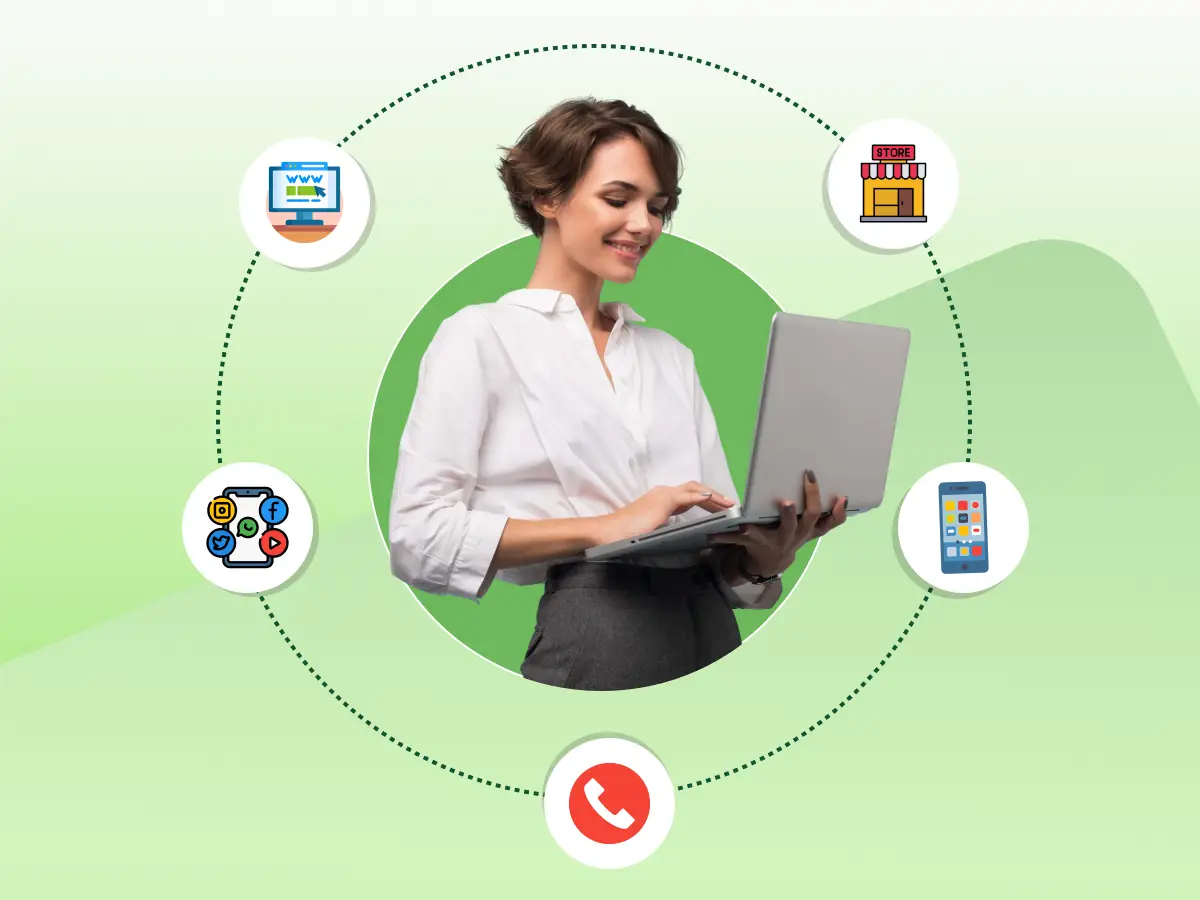
Omnichannel marketing is a strategy that creates a seamless, unified customer experience across every digital and physical channel. Whether a customer shops via a mobile app, a website, or online and offline in a physical store, the experience remains consistent. By 2026, the benefit of omnichannel marketing will be the standard for customer loyalty, as analytics platforms allow brands’ identity to adapt to customers’ behavior in real-time.
Let’s be real for a second. The days of calling omnichannel marketing an optional strategy are over. In 2026, if your business isn’t where your customer is, you are basically invisible.
Today, people don’t just shop in a straight line. They bounce. They see an ad on social, browse the site on a phone, jump to an app, and then maybe walk into a physical store. This often happens in a ten-minute window. These customers expect you to recognize them instantly. They want you to remember what they like and keep the conversation going without a hitch. If they have to repeat their preferences twice, they are gone.
Looking at the 2026 landscape, three big shifts are moving the needle:
It does not matter if you are a big B2B company or a small B2C retailer. The rule is exactly the same. One brand. One conversation. No matter where it happens.
The logic here is actually quite simple. Omnichannel is a strategy that stitches together every single touchpoint into one seamless digital customer engagement. This includes online, offline, and everything in between.
Instead of treating your email team, your social media team, and your store staff like separate islands, you connect them. You use a central marketing automation hub and unified data so that every part of the business knows what the other is doing.
The goal is not just to be everywhere at once. That is just making noise. The goal is to be relevant everywhere.
This is where most people get confused, so let’s keep it blunt.
It has a presence on many platforms, like email, Facebook, and a physical store. But here is the catch. They do not talk to each other. It is like a choir where everyone is singing a different song at the exact same time.
It is when those channels are in total sync. The customer moves between them and the brand remembers exactly where they left off.
Comparison Breakdown:
The bottom line is simple. Multichannel is about being there. Omnichannel is about actually providing a decent experience.
Does This Work for B2B Too?: A lot of folks think omnichannel is only for retail. That is a massive mistake.
Retail and consumer brands use this to bridge the gap between the screen and the store door.
Example: You browse a pair of shoes on an app, get a reminder email, check if they are in stock at the local mall, and then go buy them. The brand knows it was you the whole time.
B2B companies use this to handle those long and painful sales cycles.
Example: A CEO watches your webinar, sees a targeted LinkedIn post, downloads your data sheet, and then gets a demo invite. They never have to hear the same pitch twice.
This is how you drive real engagement with intent. It is not about making noise. It is about making sense.
Think of omnichannel marketing as a single machine. It works by hooking up your data, your tech stack, and every one of your customer touchpoints into one living system. Instead of having five different teams doing five different things, everything works together.
First, you need a map. A real customer journey map shows the messy path people take to find your brand. It is almost never a straight line from seeing an ad to buying a product.
These maps usually cover four main areas:
Using these maps helps you stop the guesswork. You see exactly where people are bailing out, where you need to be more personal, and which channels are actually doing the heavy lifting to get people to convert.
This whole strategy falls apart without unified customer data. You need a single source of truth. If your data lives in separate folders, you cannot give a good experience. Every talk they have had with customer service, which is a key part of an omnichannel contact center.
You need to track everything in one spot:
Modern analytics platforms or CDPs (Customer Data Platforms) are what make this happen. If your data is messy, your marketing is just a bunch of loud, disconnected campaigns.
This is the engine. A solid marketing automation platform takes that data and starts doing the work for your team. It connects the channels and triggers actions so you do not have to do it manually.
Here are a few ways that automation keeps things moving:
Automation does three things really well: it saves you time, keeps customer engagement high, and makes sure your brand feels consistent.
If your brand doesn’t look and sound the same everywhere, the system fails. You have to provide a consistent brand experience. If you are funny on Instagram but cold and corporate on your website, people will get confused.
You need clear brand guidelines that define:
The logic is simple. Consistency builds trust. Trust is what turns a stranger into a long-term customer relationship.
Here is the honest truth about why omnichannel marketing is a big deal: customers do not think in terms of “channels.” To them, it is all just one big experience. They do not care if they are on your app or in your store; they just want it to work.
When brands fail to link those touchpoints together, the wheels fall off. You see it happen all the time. If the left hand does not know what the right hand is doing, things get messy fast:
But when a brand actually gets this right, it is a total game-changer. It turns a standard business into a powerhouse:
The data is pretty clear on this. We are seeing some strong signals that you cannot ignore. First off, people who interact with you across multiple channels always show a much higher lifetime value. They stick around longer and spend more. Second, those personalized experiences are what drive repeat purchases. If you know what they like, they come back. Finally, time and again, we see that integrated campaigns absolutely crush single-channel marketing campaigns.
This is not just a theory. This is the benefit of omnichannel marketing working in the real world. It is about being smart with how you talk to people.
Why Omnichannel Marketing Delivers Better Results Than Traditional Marketing? Omnichannel wins for one simple reason: it actually matches how people shop. Today, customers are not following some perfect, straight-line path. They are all over the place.
People do not follow linear funnels anymore. Instead, they:
A solid omnichannel approach handles this reality. It aligns your marketing strategy, your technology, and your customer experience with how humans actually live. It is about being smart, not just loud.
If you are not using omnichannel integration, your business is going to feel messy. It is like a bad first date every time a customer interacts with you.
Without a connected plan:
This is why the whole omnichannel vs. single-channel or multichannel marketing debate is dead. It is no longer a choice you make. It is a necessity if you want to stay in business in 2026.
An omnichannel marketing strategy only works when your systems, your people, and your messages are all pulling in the same direction. It is not just about having a lot of tools; it is about making them talk to each other.
To do this right, you need a presence across the board. This includes the basics:
The real difference here is the connection. It does not matter how many channels you use if they are all acting like strangers. The goal is to make the jump from a mobile app to a physical store feel totally natural.
Stop guessing what your customers want. Customer journey maps are how you visualize exactly how people interact with your brand over time. You need to see the whole picture, not just bits and pieces.
Effective journey maps do three big things:
Here is the truth: Most brands just map their channels. But the high-performing brands map intent. That is how you actually improve customer experience instead of just flooding people with more messages they don’t want.
Think of the marketing automation platform as your core engine. This is what powers the entire omnichannel execution. Without it, you are just doing manual labor that will never scale.
A good platform lets you:
This is the point where omnichannel marketing starts to save you serious time while actually improving your results.
If you are doing omnichannel marketing without measurement, you are just making noise. You need solid analytics platforms that can track the data that actually matters. Most of those platforms still stop at clicks and conversions, though, leaving out whether a shopper found you through a ChatGPT recommendation in the first place, which is the gap an AI visibility platform is meant to close.
You have to keep an eye on:
The most advanced teams go even deeper. They monitor micro-signals like scroll depth, click patterns, and specific drop-off points. These small details indicate whether your customers find your experiences useful or if they are just getting frustrated and walking away.
Let’s stop talking about theory and look at how this actually works on the ground.
Imagine a beauty brand launching a new skincare line. They aren’t just putting up a billboard; they are creating an entire ecosystem for the shopper.
The omnichannel flow usually looks like this:
The result? Customers get one consistent brand experience. It doesn’t matter if they are on their couch or standing in a store aisle; the message is the same. This approach is what drives real customer engagement, makes the brand feel solid, and keeps people coming back for more.
Now, let’s look at the B2B side. Imagine a software company rolling out a big new feature for its platform. They can’t just blast people; they have to guide them through the process.
The omnichannel flow for this might be:
The result? The customer journey feels like a guided tour rather than a forced sales pitch. This is exactly how B2B companies drive deep customer engagement without overwhelming the people they are trying to sell to.
I’ve looked at the data from a mid-sized B2B firm that finally stopped working in silos. They tied their email, LinkedIn ads, and direct sales team outreach into a single marketing automation platform.
The results after just 90 days were a wake-up call:
The expert takeaway is simple: Omnichannel success is not about the volume of noise you make. It is about being relevant at the exact second it matters.
Drive Customer Engagement Across Touchpoints. Keeping people interested isn’t just about making noise; it is about actually reacting to how they behave in the moment. Omnichannel marketing keeps customer engagement high by:
When your customers can jump between your Instagram and your website without feeling like they are talking to a stranger, they stick around longer. They do not just browse; they convert faster because you are not getting in their way.
Loyalty is not something you just get; you have to earn it. People become fans of a brand when they feel seen. Customer loyalty grows when you actually:
Omnichannel marketing builds this loyalty by creating a sense of trust. Every time they interact with you, it feels familiar and professional. That familiarity is what turns a one-time buyer into a long-term fan.
Let us be honest: generic, one-size-fits-all marketing is a relic of the past. Personalization is the floor now, not the ceiling. It is how you stay relevant. When you have all your customer data in one unified spot, you can finally:
This is the benefit of omnichannel marketing that most brands completely miss. It is not just about the tech; it is about making a massive business feel like a personal conversation. When you improve customer experience at scale, you stop being a vendor and start being a partner.
First things first, you need the right gear. Do not go overboard with tech right out of the gate. Focus on the basics:
My advice? Avoid over-stacking your tools too early. It just makes things messy and harder to manage.
Next, stop treating everyone the same. You need to break your audience down into groups. Segment them by:
Better segmentation always leads to better experiences. It is that simple.
The same message should never look exactly the same on every platform. A text is not an email. You have to adapt your content for the specific channel, but keep these things identical:
This is how you protect your brand experience and stay recognizable.
When you send a message is just as important as what you say. You want to reach people:
Good omnichannel marketing feels like a helpful hand, not an intrusion. Do not be the brand that people want to block.
Finally, you can never stop tweaking the engine. You should always:
The teams that actually win are the ones who test and measure continuously. They do not just set it and forget it.
If you want to move from amateur to expert, you have to shift your focus. Stop worrying about the shiny new channel and start focusing on the human being on the other side of the screen.
Here is the high-level playbook for staying ahead:
These are the habits that separate a winning omnichannel marketing strategy from a really expensive failure.
Having the right tools makes omnichannel campaigns efficient, measurable, and personalized. Top experts rely on these categories:
Why it matters: Consistent follow-ups and personalized experiences across touchpoints.
Pro tip: Monitor micro-signals like scroll depth and click patterns to understand engagement.
Example: Retailers use app reminders for cart abandonment or product launches
Example: Sephora’s AI personalization platform recommends products online and mirrors in-store displays.
Practical templates help teams launch faster and measure performance efficiently.
Staying ahead requires understanding where the market is going:
AI and Machine Learning
Mobile-First Experiences
Omnichannel Loyalty Programs
Seamless Integration
Hyper-Personalization
| Goal | Strategy | Metric Example |
|---|---|---|
| Drive customer engagement | Personalized multi-channel campaigns | 30% increase in open rates |
| Improve loyalty | Consistent brand experiences | 25% increase in repeat purchases |
| Optimize touchpoints | Journey mapping & analytics | Reduced drop-off by 20% |
| Increase sales | Coordinated campaigns | 15–30% lift in conversion |
Expert tip: Start with one channel, optimize, then scale to a full omnichannel approach.
Omnichannel marketing is no longer optional; it’s essential. Today’s customers move seamlessly between apps, websites, social media, and stores, expecting brands to recognize them and provide a consistent experience. Failing to connect these touchpoints risks frustration, lost trust, and missed sales.
By unifying data, leveraging AI-driven personalization, and coordinating every channel through automation, brands turn fragmented interactions into smooth, meaningful journeys. Whether B2B or B2C, omnichannel marketing bridges technology and human behavior, building loyalty, engagement, and sustainable growth.
The brands that master this approach don’t just reach customers, they connect with them. Consistency, relevance, and personalization aren’t optional; they are the standard for survival and success in 2026.
The benefit of omnichannel marketing is delivering seamless, personalized experiences across channels, improving engagement, loyalty, and sales.
Omnichannel vs multichannel: Multichannel uses multiple platforms independently. Omnichannel integrates them into a cohesive customer journey.
Customer touchpoints include in-store experiences, mobile apps, emails, social media, websites, and customer service interactions.
Start by selecting the right tools, mapping the customer journey, personalizing messages, scheduling campaigns, and tracking results via analytics platforms.
You need a marketing automation platform, analytics tools, mobile app integration, CRM system, and social media management tools.
