

How to Start an SMS Marketing Campaign from Scratch

A study shows most people check texts almost immediately, with 90% of messages read within three minutes. Your emails? The days may go on when they are left unread.
That is why an SMS marketing campaign works. It reaches people instantly on the device they carry around. No apps, no barriers. Just your message in their hand.
Most businesses still rely heavily on email and social media. Those channels are worth something, but are congested. Your message competes with hundreds of others. SMS marketing cuts through that noise and lands right in someone’s hand.
In this blog, you will be shown how to start your first SMS marketing campaign. You will be informed of the tools and tactics, and the legal aspects you must know.
Let’s get started.
Picture this: You have received a text message on a rainy Tuesday morning from your favourite coffee shop. “Today, we are having a 20% off sale on all hot drinks.” You’re already thinking about coffee. The shop is on your way to work. You use the discount code and grab that latte.
That’s an SMS marketing campaign in action. It’s a business reaching you directly through text message with something you actually want to hear about.
An SMS marketing campaign is just a strategy in which companies interact with their customers through SMS. You can send out messages regarding sales, new products, special events, or key updates. The main difference between other marketing channels is the medium itself.
The SMS marketing system connects several parts. Understanding how these parts work helps you run better campaigns.

Your SMS marketing software controls everything from one place. The software connects to something called an SMS gateway. That gateway communicates with phone carriers like Verizon and AT&T.
The carriers then deliver your messages to actual customer phones.
Someone becomes one of your SMS subscribers when they opt in. They might text a keyword to your short code, scan QR codes created with a QR code maker at your store, or fill out a form on your website.
Once they join your list, they start getting your marketing messaging based on what you schedule. Maybe they receive a welcome message right away. Then they get promotional texts once or twice a week. You can track everything when they click links or reply to your messages.
You create your message campaign inside your SMS marketing platform. The system automatically checks time zones to send at a good time. It also filters out anyone who previously opted out of your messages.
Your mass text goes first to the SMS gateway. The gateway routes everything to the correct carriers. Those carriers deliver to individual phones and send back delivery reports. Most of this happens almost instantly after you hit send.
The existing SMS marketing software can automatically deliver messages based on customer activities. You set up triggers once, and the system handles the rest.
Abandoned cart messages, birthday reminders, and reengagement campaigns are automated tools that save time. They boost customer engagement without requiring constant effort.
Building your first SMS campaign takes nine steps. Here’s exactly what to do.
Pick your goal first. What do you want this SMS marketing campaign to do?
Maybe you want more brand awareness. Or you need sales during Black Friday. You might want customers to come back more often. Or you need people at your event. Or you want to recover abandoned cart sales. Pick one goal and focus on that.
The right SMS marketing software makes everything easier. Just ensure that the product’s features align with your actual requirements.
You need list management for your SMS subscribers. Get message scheduling that handles time zones. Look for automation tools and check the analytics. Make sure it has double optin for SMS compliance. Also, read each platform’s resource center before you decide.
Your subscriber list is everything in text marketing. Build it right from the start.
Add signup forms at checkout on your website. Let people text keywords to your short code. QR codes should be added to receipts and packaging. Ask customers to join at the register. Give them a discount code for signing up. Use double optin to confirm interest. Every person should choose to join your list.
Don’t send the same message to everyone. People want different things.
Split your list by age and location. Split by purchase history. Frequent buyers get different messages than occasional shoppers. Loyal customers can get more messages. New people need fewer at first. Set up audience segments before your first send. Basic segmentation works better than none.
Good SMS marketing messages say a lot in a few words. You only get 160 characters.
Say who you are right away. Identify yourself clearly. Then share your offer or value. Add one CTA and use personalized messages with names when you can. Make sure to start with one or two messages per week.
SMS compliance keeps you legal. Basic rules apply everywhere.
Send a confirmation after someone opts in. Every promotional SMS needs an opt-out option. Use “Reply STOP to unsubscribe” in each message. Show your business name clearly. Keep records of every opt-in with timestamps. Never buy phone lists and get permission from each person directly.
Test first and identify problems before they hit your whole list.
Run AB test experiments with small groups. Try different wording. Send tests to yourself and your team. Make sure to check all links. Verify time zone settings and test abandoned cart automation. Small testing prevents big problems.
Launch day is when planning pays off. Stay alert for the first few hours.
Schedule your SMS campaign for late morning or early afternoon. Watch closely the first hour. Check delivery rates and clicks immediately. Be ready to reply if people respond. Have someone engage customers in real time. Start with your best customers if you’re nervous. Expand after you fix any issues.
Your SMS marketing campaign continues after you send it. Keep watching and adjusting.
Change things based on the data. Low clicks might mean your offer needs work. High opt-outs might mean too many messages. Reply fast to anyone who texts back. Track which messages work best. Try different approaches each time. Review your SMS marketing strategy every three months. Look for patterns and find ways to drive loyalty better.
Text message marketing works better than most other channels. Here’s why businesses stick with it.
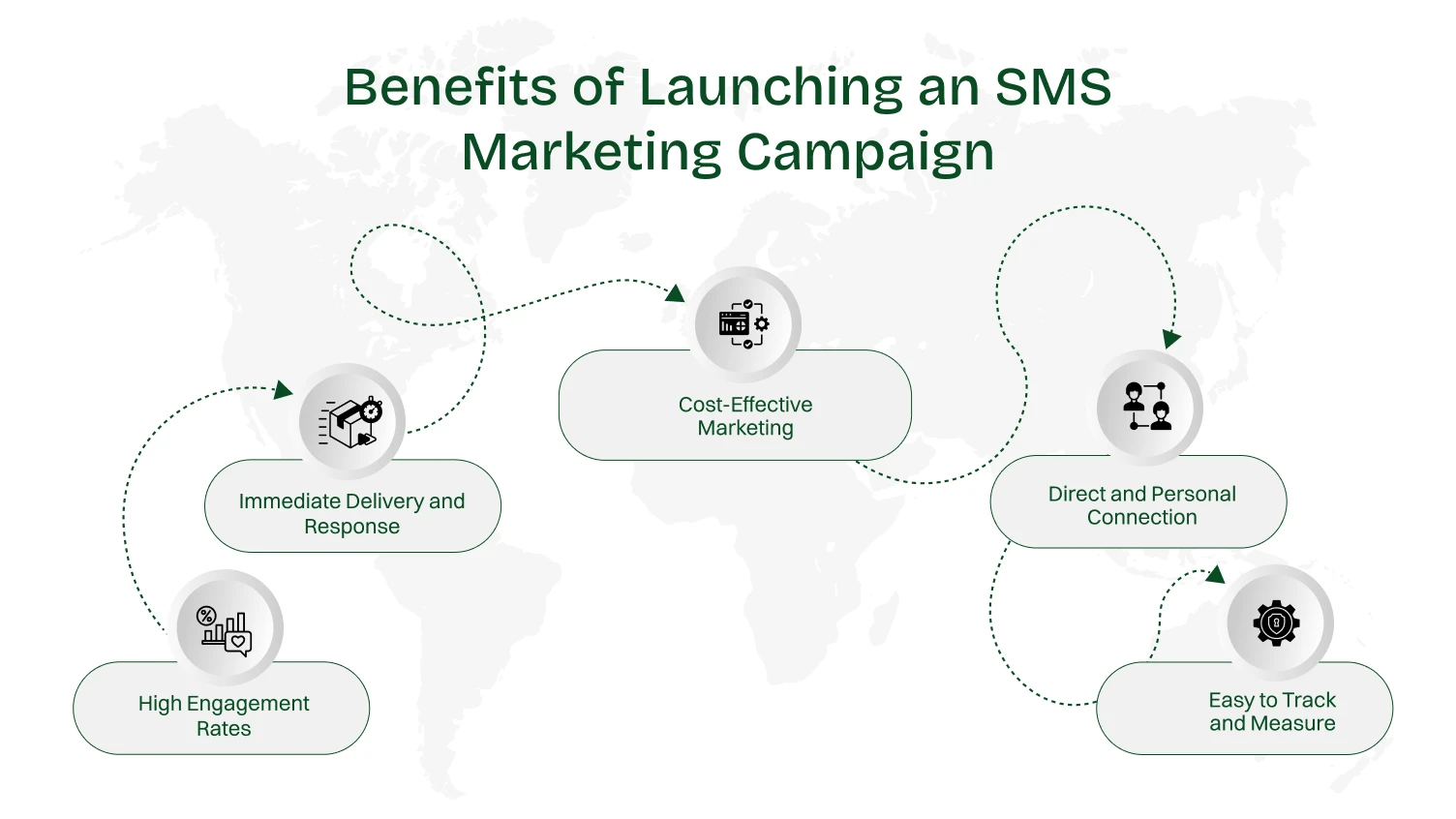
SMS marketing campaigns get read by most recipients within minutes. People read text messages within three minutes.
Click rates hit 15-30%. Email only gets 20% opens. Social media posts reach even fewer people. Your marketing message actually gets seen with SMS.
SMS messages land on phones in seconds. No apps or login required.
This makes text marketing great for flash sales. A 2-hour sale message gets people moving now. Abandoned cart reminders catch people while they’re still interested. You can adjust based on the results the same day.
SMS marketing costs pennies per message. But it can bring real sales.
You don’t need designers and fancy graphics. Mass texting reaches thousands for less than a few Facebook ads. A $100 text campaign might generate thousands in sales. Low cost means you can test more ideas.
Mobile devices stay in pockets all day. Sending SMS feels personal.
Personalized messages with names feel like friend texts. Two-way SMS makes it stronger. This builds real relationships. Instead of just being a number on a list, subscribers really feel like they are important.
SMS marketing platforms show clear data. You see deliveries, clicks, and sales right in the dashboard.
Link shorteners show which SMS campaign drove which sale. Most SMS marketing software has analytics built in. No complex setup required, and you get straight numbers. This makes your next campaign better.
Performance measurement is what really differentiates successful campaigns from those that fail to deliver the expected results. You need to focus on these metrics mentioned below.
Delivery rate tells you what percentage of your SMS messages actually reached customer phones. High-quality lists typically achieve high delivery rates.
Low delivery rates usually indicate problems with your list quality. Old phone numbers and typos cause most delivery failures. Check your SMS marketing software delivery reports after every single send. Fix issues immediately if you drop below 90% delivery.
CTR is used to determine the number of people who actually clicked the links in your text message. This metric directly shows whether your message and offer appeal to people.
Effective SMS campaigns usually have a 15% and 30% CTR. Any lower rates indicate that you need to do more or do better with your offer or timing. Run AB test experiments with different CTA phrases and link placements to boost your performance over time.
Conversion rate tracks the percentage of people who completed your desired action. Did they actually buy something? Did they book that appointment you wanted?
This metric connects directly to your actual business goals and revenue. A 5% conversion rate is considered solid for most promotional SMS campaigns. Link your SMS marketing platform directly to your CRM or analytics tools to track this metric accurately across your entire sales funnel.
An opt-out rate is the proportion of individuals who choose to unsubscribe after receiving your message. Low numbers indicate your list is engaged.
Healthy SMS programs maintain opt-out rates below 2-3% per individual campaign. Most of the promotional SMS campaigns have a conversion rate of 5%. Monitor this metric both at the campaign level and as a monthly aggregate to be able to identify the onset of any trouble trends.
ROI calculates the revenue you generated compared to what the campaign actually cost. This is the ultimate metric that determines whether your text marketing efforts truly pay off.
Calculate ROI by subtracting your campaign costs from revenue generated. Then divide by costs and multiply by 100 for a percentage. Successful SMS marketing campaigns often deliver strong ROI. The extremely low cost per message makes these impressive returns quite possible when you execute well.
Most SMS marketing platforms include built-in analytics. Here’s what to use:
Platform Analytics
Link Tracking
Offline Tracking
CRM Integration
SMS compliance protects your business from massive fines and potential lawsuits. Regulations vary by region, but these basic principles apply almost everywhere.
Each individual subscriber has to make an active consent to receive your SMS messages. The consent must be clear and separate from any other agreements.
Keep a record of the date and manner of each individual’s subscription to your list. Store this information permanently because you might need it years later. Never assume that email permission automatically grants you SMS permission too. Collect completely separate opt-ins for text messaging.
Include unsubscribe instructions in each of your promotional SMS. “Reply STOP to opt out” or similar clear language must appear in each message.
Make opting out completely effortless for people. No website visits required. No forms to fill out. No phone calls needed. Just a simple reply should work instantly. Your SMS marketing software should handle STOP commands automatically and immediately remove that person from your sending list.
Recipients must know instantly who is texting them. Include your business name right at the start of every message you send.
“Hi from [Your Store Name]” works perfectly for this purpose. Never leave it to the sender ID, as not every phone uses it properly. Understanding who you are creates trust in your audience and not confusion or mistrust.
Federal law technically gives you up to 10 business days to process opt-outs. Best practice means handling them within minutes or hours instead.
Configure your SMS marketing platform to automatically suppress opted-out numbers across all your campaigns. Apply opt-outs universally. Someone who opts out of promotional texts shouldn’t receive any other messages either unless they separately opt back in for something specific.
Document absolutely everything related to SMS compliance. Store opt-in timestamps, consent methods, and confirmation messages permanently.
Most SMS marketing software maintains these records automatically for you. Retain all records for at least 4 to 5 years. Include copies of your opt-in forms, program terms, and text message confirmations. You might need to prove consent many years after someone initially joined your list.
Mike runs a yoga and fitness studio in Austin with three locations. He had 3200 email subscribers but struggled to fill weekday morning classes. Email reminders weren’t working. People just didn’t open them in time.


Appointment reminders via SMS dramatically reduced no-shows. The 2-hour advance notice gave people enough time to plan. Flash deals for empty slots filled classes that would have run nearly empty.
Personalized messages with names made members feel valued. Text message marketing worked better than email because people saw messages while they could still act on them.
Best Practices of High-Performing SMS Marketing Campaigns
These five practices show up in winning text message marketing campaigns. Use them in your business.
Never send messages without permission. This is the law and the right thing to do.
Make your opt-in forms clear. Tell people what messages they’ll get and how often. Use double optin when you can. They text to join, and you text back to confirm. Write down when they joined and how. Keep this information. You might need it later if questions come up.
You get 160 characters. Make every word count.
Start with your brand name. People need to know who’s texting. State your offer next. End with one clear action. Use real numbers. “30% off” works better than “big discount.” Test messages between 120 and 150 characters. Find what works for your audience.
Generic mass text messages don’t work as well as targeted ones. Use what you know about people.
Split your list by past purchases. New customers get different messages than loyal customers. Use names in your messages. Mention what they bought before. SMS marketing software makes this easy with merge tags. Show people you’re paying attention to them.
The right message at the wrong time is the same as no message at all.
Check time zones if you have customers in different areas. Don’t send before 9 AM or after 9 PM. People hate that. Test different days and times with small groups. Tuesday through Thursday afternoons work well for most businesses. Weekend mornings work better for retail. Find what works for your customers.
Every message needs one clear next step. Tell people exactly what to do.
Use action words. “Shop now” works. “Claim your discount” works. “Book today” works. Vague phrases like “Check it out” don’t work. Put one CTA in each message. Make it easy with a short link or a simple reply word.
The comparison table below helps you pick the right SMS marketing platform quickly. Match your specific needs to what each platform actually offers.
| Platform | Pricing | Key Features | Best For | Integrations |
|---|---|---|---|---|
| Dialaxy | From $10/month | SMS marketing, automated campaigns, analytics | Small businesses to Enterprises | CRM systems, Zapier, webhooks |
| EZ Texting | From $20/month | Mass texting, keywords, QR codes, automation | Small to medium businesses | Shopify, Salesforce, Zapier |
| Twilio | Pay-as-you-go ($0.0079/SMS) | API focused, global reach, voice + SMS | Developers and enterprises | Custom via API documentation |
| SimpleTexting | From $29/month | Two-way messaging, MMS, polls | Service businesses, events | HubSpot, Mailchimp, Google Sheets |
| Postscript | From $100/month | Ecommerce focus, abandoned cart, product launches | Online retailers | Shopify, Klaviyo, Attentive |
| Attentive | Custom enterprise pricing | AI segmentation, conversational AI, analytics | Large ecommerce brands | All major ecommerce platforms |
You now know how to launch an SMS marketing campaign from scratch. You learned the tools, the strategy, the legal stuff, and the metrics. Start small with your first campaign. Build your list through QR codes and website forms. Write clear SMS marketing messages under 160 characters. Stay legal by getting consent first and including opt-out instructions in every message.
The numbers speak for themselves. Your SMS marketing campaigns can drive revenue when you do them right. Pick your SMS marketing platform today. Build your first list. Write your first message. Send it and see what happens.
Your competitors are already using text marketing to grow their sales. Use this guide to launch your SMS program and get results for your business.
SMS marketing strictly limits you to 160 characters, while email lets you write as much as you want. Text messages consistently get 98 percent open rates on average. Email typically averages only 20 percent opens, which is dramatically lower.
The best SMS marketing software depends entirely on what you actually need and what you can spend. Dialaxy works really well for small businesses just getting started with this channel. It keeps things simple with automated campaigns and two-way messaging at an affordable price.
Keep your SMS marketing messages between 120 and 150 characters total. This length gives you enough room to say what actually matters while safely staying under the 160-character technical limit that splits messages.
Yes absolutely. SMS compliance laws in virtually every jurisdiction require explicit written consent before sending messages to anyone. Document every single opt-in with an exact timestamp. Never buy phone lists from anyone ever.
A one-time alert is a single text message sent for one specific event, like appointment reminders or order delivery updates. An ongoing SMS campaign sends multiple marketing messages over an extended time period to build relationships and drive repeat business.
