

Why Should You Use Local Numbers?

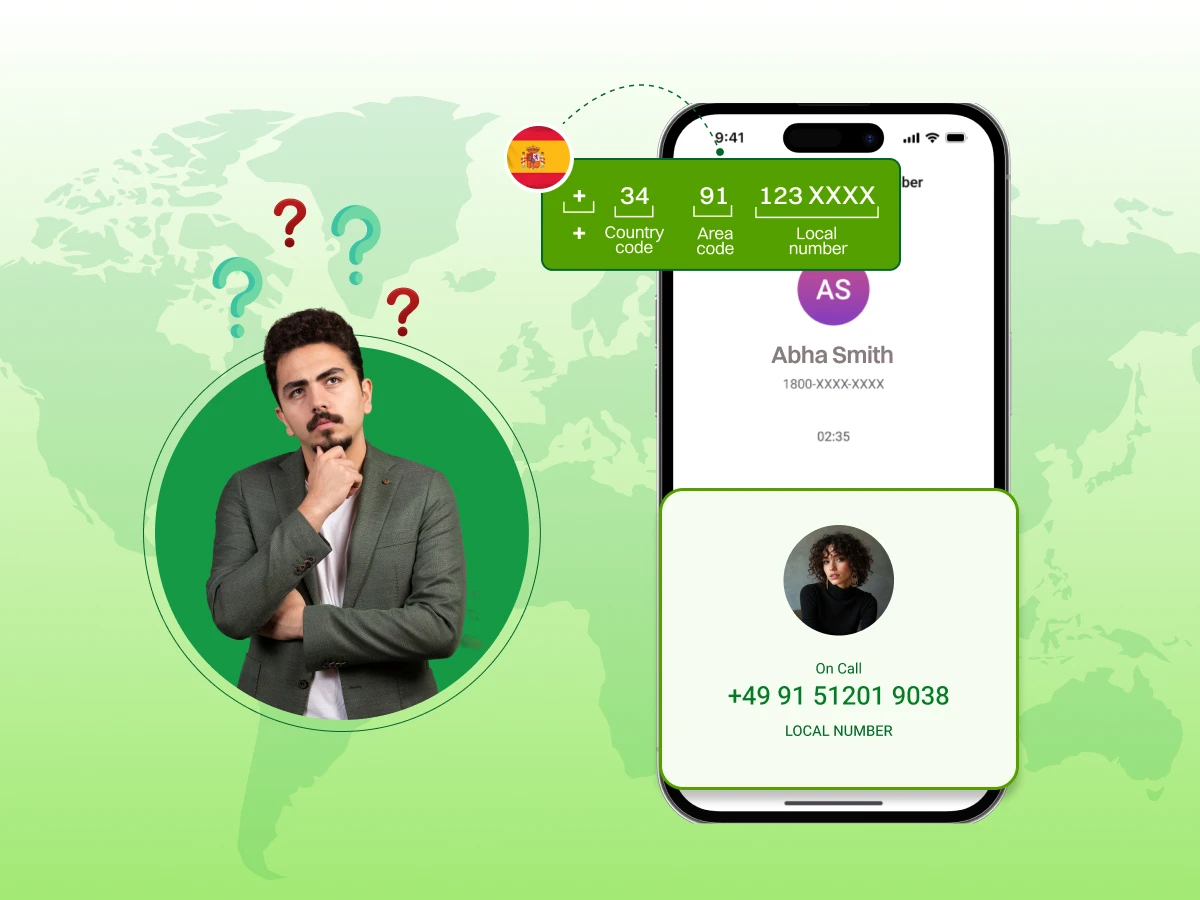
Your business phone rings. The customer sees an unfamiliar 800 number and ignores it. Another missed opportunity.
Meanwhile, your competitor down the street, or maybe three states away, gets the call. Their secret? A local area code that customers recognize and trust.
So why should you use local numbers? Well, most businesses underestimate their phone number. It’s not just contact information; it’s your first impression, your SEO ranking factor, and often the difference between a callback and a lost sale.
Here’s why local phone numbers consistently outperform toll-free alternatives, and how to set one up in under an hour.
A local business phone number includes the area code of your city or region, the three-digit number that lets your customers know the exact location of your business.
The instant recognition comes when a person in Denver sees a 303 number or a person in Chicago sees 312. And it is common, and familiarity breeds trust.
There is a big distinction between local and toll-free numbers. While 800 numbers indicate a national corporation, a local area code means they belong to your community.
The best part? Modern VoIP phone systems mean you don’t need a physical office in that location. You could run your business from your home office in Seattle but maintain a local presence in Boston, Atlanta, or anywhere your customers are.
This flexibility changes everything for small businesses. You’re not limited by geography anymore, but you still get the credibility that comes with a local connection.
It’s how a solo consultant can look like an established firm, or how a growing company can test new markets without the overhead of opening actual offices.
Okay, if, like everybody else, you’re wondering “why use local numbers?”, we’ve got you covered.
The right phone number impacts whether customers trust you enough to call. Here’s why local numbers consistently win over toll-free alternatives.
People trust familiar area codes. When a Denver resident requires a plumber, they will always prefer the 303 number to the 800 number. It is easy: the local aspect means that you are their fellow citizen, not a faceless organization.
This local presence signals you’re accessible and invested in the area. Customers feel that difference immediately.
Local numbers get answer rates up to 4x higher than toll-free. Why? Most people ignore unknown 800 numbers, assuming spam. But a local area code could be their dentist or a shop they visited.
For sales teams making outbound calls, better connection rates mean more conversations and more phone leads. Your caller ID becomes an advantage.
Google rewards consistency. When your website and Google Business Profile show the same local number, you rank higher in local searches. A restaurant with a local area code beats one with a toll-free number in “near me” results.
Your phone system becomes part of your visibility strategy.
Want to test new markets? Skip the office lease. A virtual phone system lets you have Miami, Atlanta, and Phoenix numbers, all managed from one dashboard.
This is ideal for businesses serving multiple regions. You’re expanding into new markets without the overhead.
Use different local numbers for different campaigns and get real call tracking data. You’ll know which cities and ads actually work.
Functionality such as call routing and call forwarding allows you to forward incoming calls to a team, based on location. Enable voicemail geolocation, train with call recording, and handle time zone management of business-related conversations.
So, why use local numbers? They create genuine connections that toll-free can’t match. Whether building trust locally or targeting specific markets nationwide, the right area code gives you a real advantage.
But local numbers aren’t a one-size-fits-all solution. Certain types of business benefit more than others; here’s where they make the biggest impact.
Local numbers aren’t for everyone, but they’re critical for certain businesses. Here’s who benefits most.
Plumbers, electricians, contractors, and salons; you serve a specific area. Get a local number. When someone’s pipe bursts at midnight, they’re calling the 617 number, not the 800. Local says you’ll actually show up.
Your value is local knowledge. A matching area code proves you know the market before prospects even call. Property managers need this more; tenants with maintenance issues want the office managing their building, not a corporate line routing them around.
Give each store its own number. Customer calls your Phoenix location, they should reach Phoenix. Not headquarters. Not another city. Local numbers make each spot feel like its own business while you manage everything centrally.
Lawyers work with state laws. Accountants handle local tax rules. A local number shows you practice there. Clients hiring professionals want someone who knows their jurisdiction; toll-free numbers create doubt about that.
Selling online to specific regions? Match your number to your market. Texas hot sauce company with a Texas number beats generic 888 every time. Looks like you actually know what you’re selling and where it comes from.
Nobody’s driving 40 miles for a checkup. Patients look close to home. Your area code confirms you’re nearby before they read anything else. Dentists, therapists, and clinics, if people visit you in person, this matters as much as your location.
Simple test: Does location affect whether customers trust or choose you? Then use a local number.
Ready to get started? Setting up a local business phone number is straightforward; most people finish in under an hour. Follow these steps, and you’ll have a professional system running today.
Getting a local number takes under an hour. Here’s how to do it right.
Figure out what you actually need first. How many people answer calls? Just you or a team? What can you spend monthly, $20 or $100?
List your must-haves. Need a call recording? Voicemail transcription? Ability to route different calls to different people? A solo consultant doesn’t need the same features as a sales team tracking phone leads.
Don’t pay for stuff you won’t touch. Know what matters before you start comparing.
Pick your area code. Targeting Boston? Get 617. Want presence in multiple cities? Get a number for each.
Research VoIP solutions that have those numbers available. Check uptime guarantees, 99.9% minimum. Read reviews about actual call quality, not just feature lists.
See what’s included: call forwarding, SMS, CRM integration? Some providers charge extra for basics. Watch for that. Most offer free trials. Use them. Test call quality on your internet before paying anything.
Takes ten minutes. Pick your plan, add payment, and search numbers by area code.
Grab something memorable if you can; repeating digits stick better. Already have a number? Most providers port it over in about a week.
Some businesses grab multiple numbers upfront, separate for sales and support. Others add more later. Depends on your setup.
Set business hours so after-hours calls hit voicemail instead of ringing forever. Record a clear greeting, doesn’t need to be fancy.
Set up call routing for inbound calls. If you have a team, create extensions. Turn on voicemail-to-email so nothing gets missed.
Enable call recording if you need it. Fix your caller ID so your business name shows, not just digits. Most dashboards make this simple. No tech background needed.
Download the app. Get your team on it, too, if applicable.
Call your number from your personal phone. Does it ring right? Leave a voicemail. Does it come through? Make an outbound call, does your business name appear?
Test actual call quality during a real conversation. Walk around. Check different locations. Try call forwarding to your cell. Fix any issues now, not after customers start calling.
The whole setup takes an hour or two maximum. After that, you’ve got a working system that makes you look professional regardless of your actual size.
Before you commit to local, though, you should understand the alternative. Toll-free numbers serve a purpose for certain businesses. Let’s weigh these two options next.
| Factor | Local Numbers | Toll-Free Numbers |
|---|---|---|
| Area Code | Specific region (e.g., 305, 617, 213) | 800, 888, 877, 866, 855, 844, 833 |
| Customer Perception | Local, accessible, community-focused | National, corporate, established brand |
| Trust Level | High for regional customers | Moderate; can feel impersonal |
| Answer Rates | 4x higher than toll-free | Lower; often ignored as spam |
| Call Charges | Standard rates (free on most plans) | Free for the caller, business pays |
| Local SEO Impact | Boosts local search rankings | No SEO benefits |
| Best For | Local businesses, regional services | National companies, customer service lines |
| Marketing Tracking | Multiple numbers per region work well | One number for all campaigns |
| Professional Image | Community expert | Large corporation |
| Geographic Flexibility | Can have numbers in multiple cities | One number, nationwide accessibility |
| Cost | $10-30/month per number | $15-40/month typically |
| Ideal Customer Base | Specific geographic area | Customers across multiple states |
| Connection Rates | Higher, familiar equals trusted | Lower; generic means suspicious |
The Verdict: Which should you choose?
Choose local numbers if:
Choose Toll-free numbers if:
Use both (hybrid strategy) if:
So, why use local numbers instead of toll-free? Because customers are more likely to answer, trust, and engage with businesses that feel nearby.
For most small to medium businesses, local numbers win. They build trust faster, get answered more often, and cost less. Toll-free makes sense when geography doesn’t matter to your customers, but that’s rarer than most businesses think.
Once you’ve got your local number, though, half the battle is avoiding common mistakes that kill its effectiveness.
Here are some pitfalls that trip up most businesses:
Your local number needs to match everywhere it appears, Google Business Profile, website, Yelp, Facebook, and industry directories. Different numbers on different platforms confuse customers and tank your local SEO. Google hates inconsistency.
*Around 80% of consumers lose confidence in a local business if its contact information or anime doesn’t match across the web.
Fix: Do an audit. Search your business name and check every listing. Update them all to match your primary local number. Takes an hour but protects months of SEO work.
Outdated business hours, wrong addresses, disconnected numbers; these kill trust fast. Someone calls your local number during posted hours and gets voicemail? They’re calling your competitor next.
This happens when businesses change phone systems or update hours, but forget to update their online presence everywhere. Or they set up multiple local numbers for different locations and mix them up.
*93% of consumers are frustrated by incorrect information in online directories.
Fix: Keep a master document with the correct info for each location. Update everything when anything changes. Set calendar reminders to verify details quarterly.
Having a local area code helps SEO, but only if you use it strategically. Businesses grab a local number, then never mention their service area on their website. Or they don’t claim their Google Business Profile. Or they ignore customer reviews.
Your local number should tie into your whole local strategy: location pages, service area mentions, local content, and directory listings. It’s one piece, not the whole puzzle.
Fix: Build location-specific pages if you serve multiple areas. Get reviews mentioning your city. Make sure your local number appears in schema markup on your site.
Blasting out hundreds of calls from your new local number flags you as a spammer fast. Phone carriers track this. Too many outbound calls, too quickly, get your number labeled as spam, and suddenly nobody answers.
Fix: Ramp up slowly. Start with 20-30 calls daily, not 200. Space them out. Mix in inbound calls. Let the number build a legitimate history before going heavy on outbound calling.
Using local numbers doesn’t exempt you from Do Not Call regulations. Businesses think that because they’re calling from a local area code instead of a 1-800, the rules don’t apply. Sales teams making automated calls without checking DNC lists rack up massive fines fast.
Fix: Scrub your call lists against the National Do Not Call Registry before every campaign. Keep records proving you checked. It’s not optional.
Your local number shows you’re in their timezone. So when you call someone in Chicago at 8 PM from your Chicago number, they’re annoyed; you should know better. Automated calling systems set to the wrong time zones cause this, or employees forgetting the time difference.
Fix: Set strict calling windows, 9 AM to 8 PM in the recipient’s timezone. Configure your system to respect this automatically. No exceptions.
Some VoIP providers offer “recycled” local numbers, previously used by another business and recently released. Problem: that number might already be flagged as spam from the previous owner’s behaviour.
Or businesses skip registering their caller ID properly, so recipients see “Scam Likely” instead of their business name.
Fix: Ask Providers for clean numbers with no previous history. Register your business name with the CNAM databases so your caller ID shows correctly. Check how your number appears before making customer calls.
Just because you have a local presence doesn’t mean every call should go out. Local numbers work for targeting specific geographic markets, but the offer still needs to match. And generic scripts that don’t mention anything local destroy the credibility your area code just built.
Fix: Match your outreach to your market. If using multiple local numbers for different cities, customize your approach for each. Mention local landmarks, events, or specific details that prove you actually know the area.
Some businesses buy local numbers in dozens of cities they don’t actually serve, just to trick people into answering. Customer calls back later and realizes there’s no actual local office, just a call center routing them around.
This reduces trust immediately. Worse, it can violate FTC regulations about deceptive business practices if you’re misrepresenting your location.
Fix: Only use local numbers where you genuinely serve customers. If you’re testing a new market, be upfront. “We’re expanding to Atlanta” is honest. Pretending you’ve been there for years isn’t.
Your number shows up, but no business name. Or it shows “Wireless Caller.” Or worse, it shows the previous business that had this number. All of these make people ignore your calls.
This happens when businesses don’t properly register their business information with CNAM databases, or when they port numbers without updating the associated business details.
Fix: Register your business name and number with major CNAM providers. Verify how your caller ID appears by calling friends’ phones before launching campaigns. Update it if anything looks wrong.
Most mistakes come from treating local numbers like just another tool instead of part of your business identity. Your area code makes a promise about who you are and where you operate.
Keep that promise and avoid these pitfalls, and your local number becomes one of your strongest assets for building customer trust and driving business growth.
Ready to go beyond basics? These pro tips turn your local number from a simple contact method into a genuine marketing and customer service advantage.
Getting a local number is step one. Using it strategically separates businesses that grow from those that stagnate. Here’s how to squeeze every advantage from local presence.
Your Name, Address, and Phone Number must match exactly everywhere online. Not “Street” on one site and “St.” on another. Not different phone formats. Exact matters.
Check your website, Google Business Profile, Facebook, industry directories, and anywhere else you’re listed. Inconsistent information confuses search engines and customers.
Google especially uses NAP data to verify legitimate businesses; mismatches hurt your local SEO rankings. Set a quarterly reminder to audit this. Takes 30 minutes and protects your visibility.
Your local number should be front and center on your GBP. But don’t stop there. Add photos showing your actual location. Post updates mentioning local events. Respond to reviews. Get customer photos.
Google prioritizes complete, active profiles in local searches. A verified local area code plus an optimized profile puts you ahead of competitors using toll-free numbers or incomplete listings.
Enable messaging if your provider supports business SMS through your local number. Customers can text you directly from your Google listing.
Your local number belongs in three places minimum: top right header, footer, and contact page. Mobile users should see a click-to-call button immediately, no scrolling.
Many businesses bury their number in a contact form. Bad move. Customers ready to call shouldn’t hunt for your number. Make it visible on every page.
If you serve multiple regions with different local numbers, use location detection to display the right one automatically. Someone in Miami sees your 305 number, Boston visitors see 617.
Mobile users tap phone numbers to call instantly. Make yours tappable everywhere it appears. This small detail dramatically increases connection rates. People browsing on phones won’t manually type your number; they’ll leave if it’s not clickable.
Track these clicks in your call analytics. You’ll see exactly how many calls come from mobile website visitors.
Get separate local numbers for different marketing channels, and you’ll know exactly what works. One number on Google Ads, another on Facebook, a third on print materials.
Your VoIP phone system shows which number got called and when. You’ll see Facebook drove 47 calls while print ads drove 3. Now you know where to spend your budget.
This tracking works even better when you match local numbers to local campaigns. Running ads in three cities? Use each city’s area code for its respective campaign. You get geographic and channel data simultaneously.
Google and Facebook let you run ads with your phone number, no website click required. These work incredibly well for service businesses where customers want to talk immediately.
Call-only ads using local numbers get higher connection rates than ones using toll-free numbers. People see their area code and trust it’s a real local business, not a national call center.
Set these up during high-intent search times, like “emergency plumber” searches at 11 PM. Your local number showing up then beats every competitor’s website link.
“Call now and mention this ad for 10% off” turns your local number into a trackable promotion. You know ads drive actual revenue, not just calls.
Works especially well for service businesses. “Call our local number by Friday for free estimates” creates urgency while tracking campaign effectiveness.
Make the incentive worth it, but not desperate. “Free consultation” works. “90% off everything” looks sketchy.
Your local number promises personal, professional service. Then someone answers with “Yeah?” and that promise breaks immediately.
Train everyone who answers calls; greeting with business name, speaking clearly, never putting people on hold without asking, and tasking messages properly. Basic stuff that many businesses skip.
Use call recording to catch problems. Listen to random calls weekly. You’ll hear where your team excels and where they’re losing customers.
For businesses with multiple locations using different local numbers, staff should know which number the customer called. “Thanks for calling our Boston office” beats “How can I help you?” when they specifically chose your local line.
Those who implement even half of these tips see measurable improvements: higher answer rates, more conversions, and a stronger local market position.
But here’s the thing: none of this works if your provider can’t deliver on the basics. You need a system that’s reliable and feature-rich, like Dialaxy.
You’ve learned what local numbers do and why they matter. Now you need a provider that actually delivers without the usual headaches.
Why should you use local numbers from Dialaxy? Here’s a breakdown:
We offer local numbers in 100+ countries and thousands of cities. Need a number in Des Moines? Got it. Expanding into Toronto? Covered. Testing markets in Denver, Austin, and Phoenix simultaneously? You can grab all three in just a few minutes.
Search by area code or city name. The system shows what’s available instantly. No calling sales reps or waiting for callbacks to see if a number exists in your target market.
Poor call quality ruins the professional image your local number creates. We built our network for reliability; 99.999% uptime means your line works when customers call.
HD voice quality on every call. No static, no delays, no dropped connections during important conversations. Your business communications sound as professional as they should.
Test it yourself during the free trial. Make calls, receive them, and check the quality of your actual internet connection before committing.
Local numbers without proper features are just phone lines. We include what actually matters for business calling:
Smart call routing sends incoming calls to the right person based on time, location, or caller. Set business hours per timezone if you’re managing multiple regions. After-hours calls automatically go to voicemail instead of ringing endlessly.
Call forwarding to mobile means you can answer from anywhere. Voicemail-to-email sends messages to your inbox instantly. Call recording lets you train teams and resolve disputes. Call analytics show which numbers perform, which campaigns work, and where your phone leads come from.
Business SMS works through the same local number; customers can text instead of calling. Ideal for businesses where quick questions don’t need full conversations.
The dashboard makes configuring everything straightforward. No tech degree required.
We don’t hide fees. The pricing you see covers what you need: local numbers, core features, and support. Add more numbers as you expand into new markets. Scale up or down based on actual business needs.
No surprise charges for basic stuff like call forwarding or voicemail. No locked contracts forcing you to stay if it doesn’t work. Plans designed for real businesses, from solopreneurs to growing teams with multiple locations.
You’ll know exactly what you’re paying and what you’re getting. Simple.
Get Your Local Number Today
Set up takes minutes. Pick your area codes, configure your settings, and start taking calls. Free trial lets you test everything before deciding.
A local number has your city or region’s area code. It shows customers you’re in their area, unlike 800 numbers that look national.
Local numbers build trust, improve answer rates, support local SEO, and help businesses connect with customers who prefer familiar area codes.
Yes. Scammers spoof local numbers to trick people into answering. That’s why legitimate businesses need proper caller ID registration showing their real business name.
Local numbers have regional area codes (like 305 or 617). Toll-free numbers start with 800, 888, or similar prefixes. Local numbers get answered more often and help with local SEO. Toll-free numbers look corporate and work for national businesses.
Higher answer rates, better local SEO, more customer trust, lower cost than toll-free, and the ability to target specific markets. Customers see their area code and assume you’re nearby and accessible.
