

How do Scammers get my phone number?

Quick Overview:
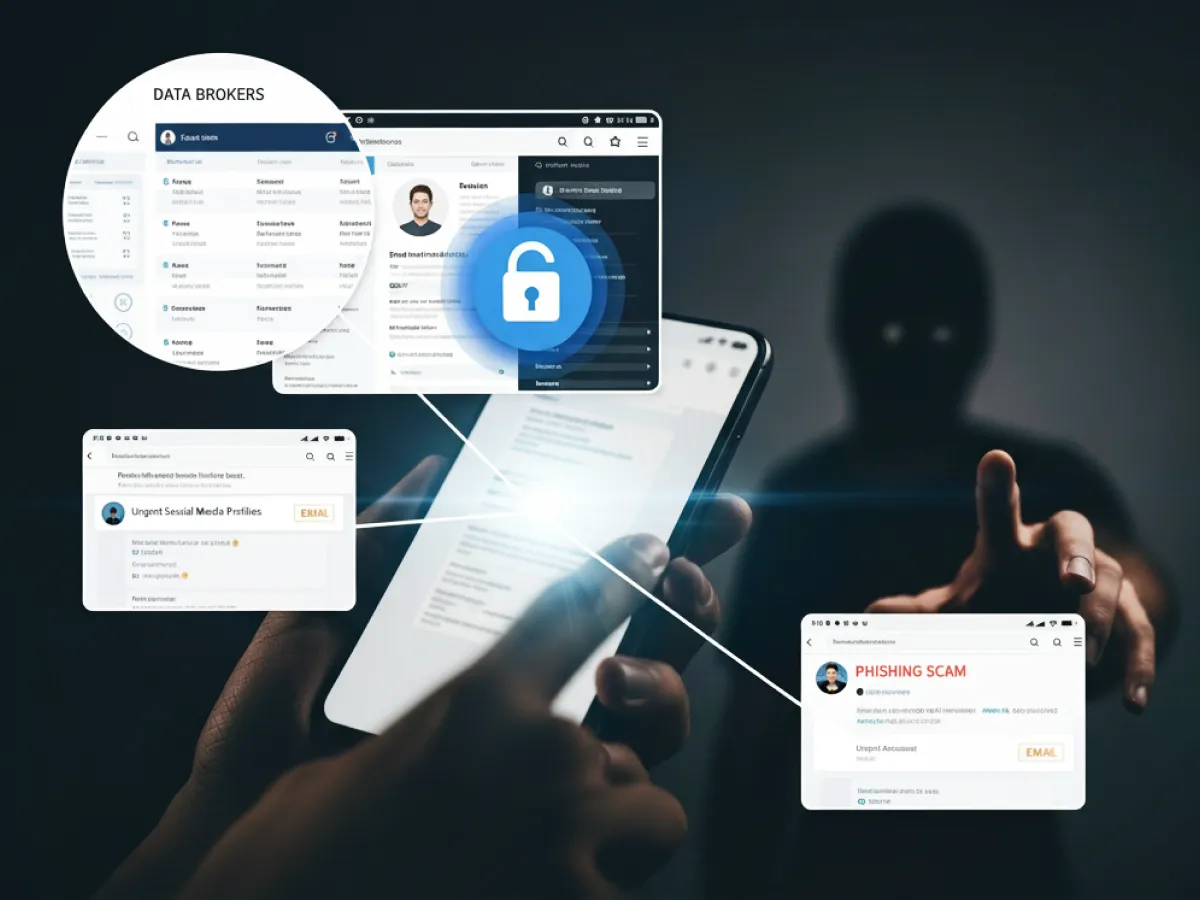
Scammers get your phone number through data breaches, data brokers, social media scraping, phishing scams, public records, and automated dialers. Sometimes you hand it over unknowingly through sketchy apps or contests. Your number’s likely already circulating; the key is limiting how much damage they can do with it.
You know that sinking feeling when your phone buzzes with yet another scam call?
Here’s the uncomfortable truth: your number’s probably already out there, getting passed around like currency in the digital underworld. And no, you didn’t do anything obviously wrong to end up on their radar.
The question isn’t if scammers have your number; it’s how they got it, what they’re planning to do with it, and most importantly, how you stop them before they strike.
If you’re thinking, “How do scammers get my phone number?”, well, here’s a guide for you.
Your phone number isn’t just ten digits. In the wrong hands, it’s a weapon that can wreck your finances. When a data leak happens, you’re not dealing with a few spam calls; you’re staring down real money problems that stick around for years.
The second a scammer has your phone number, the trouble starts.
When businesses lose customer phone numbers in a breach, it’s a total disaster.
Bottom line? A leaked phone number isn’t some minor hassle. It’s a direct threat to your money, whether you’re a regular person or running a company.
Now that you understand what’s at stake financially, let’s talk about how scammers are actually getting their hands on your phone number in the first place.
“How do scammers get my phone number?”
It’s the question we all ask while staring at a screen filled with “Scam Likely” notifications: How on earth did they get my number? You haven’t handed it out to anyone suspicious, yet the phone calls and phishing scams keep rolling in.
The reality is that your cell phone number is no longer just a way to chat with friends and family; it’s a master key to your digital security. Unfortunately, bad actors have turned the acquisition of your digits into a high-tech sport.
Here are the 11 most common ways scammers get your phone number and, subsequently, access to your phone.
This is the “big fish” for criminals. When a major corporation, such as AT&T or a large bank, suffers a data leak, millions of records are exposed. These data breaches often include your customer names, email addresses, and, most importantly, your phone number.
Once this personal information is leaked, it’s often packaged and sold on the dark web, giving fraudsters a ready-made “hit list” for phishing campaigns.
Ever wonder how those “Search Anyone” websites know so much? Enter the data broker. These entities exist solely to crawl public records, social media, and marketing profiles to build a comprehensive dossier on you.
They aggregate everything from your date of birth to your financial information. If a scammer is willing to pay a few dollars, they can buy a report that puts your cell phone number right in their hands.
We all love sharing, but a “public” social media account is a goldmine for social engineering. If your contact information is visible on your profile, or if you’ve listed your number in a “Contact Me” button, scammers don’t even need to be tech-savvy to find you.
They use an AI web scraper to harvest thousands of numbers in seconds. Remember, once they have your number and your name, they can start crafting a believable phishing attack.
Occasionally, we end up losing it. Or a scammer may send a text message (also referred to as smishing) stating that there is a problem with a recent purchase or a delivery.
When you click on links in these messages, you are usually redirected to a bogus webpage pretending to be a legitimate bank screen or a checkout screen. When you check your identity by entering your number, you have given the keys to the kingdom to the bad guys.
If you’ve ever answered a call, heard a second of silence, and then a click, you’ve been “pinged” by autodialers. These machines dial thousands of phone numbers per minute to see which ones are active.
If you answer, your number is marked as “live” and sold to other scammers as a “vetted” lead. This is also how the infamous one-ring phone scam works: they call once and hang up, hoping your curiosity leads you to call back and incur massive VoIP service charges.
“Win a free iPad! Just enter your name and phone number!” We’ve all seen these ploys. While some are legitimate marketing, many are bait designed to collect online accounts data.
These apps and websites often have buried in their “Terms of Service” that they can share your data with third-party “business partners.” Before you know it, your number is being cycled through the scam call-center industry.
Malware could be lurking on your computer in case you have downloaded a harmful application or tapped a suspicious link. Some forms of spyware might access sensitive data, such as your address book and your own number.
This enables the actors to target you as well as spoof your number to target your friends and family.
It would be tempting to log into Free Airport Wi-Fi, but it is a criminal playground. Hackers are able to conduct “man-in-the-middle” attacks to intercept the data that passes through your web browser without a mobile security solution.
This can include payment info, online accounts with strong (or weak) passwords, and the phone number associated with your service provider accounts.
Old-school but effective. Criminals still rummage through the recycling pile or steal mail to find a bill, credit card statement, or government licenses. These documents are rife with personal information.
A single discarded phone bill can reveal your phone number, account details, and address to a scammer, making identity theft much easier.
In the scam call-center industry, efficiency is king. Scammers purchase “Target Lists” from the dark web that are filtered by age, location, or even interest (like a “recent baseball fan” list).
These lists are often the result of previous account takeovers or SIM swapping incidents, where the scammer already knows you are a high-value target for romance scams or cryptocurrency schemes.
While the Yellow Pages might feel like a relic of the past, public records are very much alive. Voter registrations, property records, and even professional registrations are often accessible to anyone.
If your cell phone is linked to these public records, it’s a simple matter of a search query for a data broker or a dedicated scammer to find your contact information.
So how do scammers get my phone number? Through any of these eleven methods, and sometimes all of them at once, which is why protecting yourself means closing as many of these doors as possible.
Knowing how scammers get your number is one thing, but how do you tell if they’ve already got it and are actively using it against you?
It is a frightening fact: the machine, which you keep in your pocket, which you call and text your friends and relatives, may not belong to you anymore.
When a scammer possesses your mobile number (or even worse, the phone itself), they do not always pronounce it out loud. They are instead operating in the shadows, and they are accessing your life with every text message.
You must move quickly in case you think you are becoming an identity theft victim. The following are the red flags that scream that your digital security has been compromised.
These are the “code red” scenarios. If these happen, a scammer called your mobile carrier and likely performed a SIM swap.
Sometimes the breach isn’t a total takeover but rather a “quiet” infection via malware or an AI web scraper-linked bug.
The damage often shows up in your “real world” records before you notice it on your screen.
The quicker you identify these red flags, the quicker you are likely to shut down scammers before they can cause real harm to your bank account or steal your identity.
Now that you have seen the red flags, it is time to know what you can actually do to secure your phone number before scammers seize it.
In the age when we carry digital horcruxes in our cell phones, ensuring your fingers are no longer a luxury but a necessary practice in digital security.
You must have a proactive defense strategy so that scammers do not have access to your life.
The following is a way of defending yourself and your friends and family against constantly evolving phishing attacks.
Your mobile carrier account is the front door to your identity. If a scammer has your phone number transferred to their device, they can bypass almost every social media account or bank account security measure you have.
On an iPhone, navigate to Settings > Cellular > SIM PIN.
On Android, look under Settings > Security > More Security Settings.
Just don’t forget it; entering the wrong code three times will lock your SIM until you get a PUK code from your carrier.
You don’t have to be a victim of the “always-on” robocalls culture. Use the tools at your disposal to block spam calls before they even ring.
The less your number is floating around the dark web or public records, the better.
If you do pick up a call that feels “off,” remember these three golden rules:
The good news is that you don’t need to be a cybersecurity expert to protect yourself; just be consistent about following these practical steps that actually work.
Next up, let’s break those protection strategies down into a straightforward checklist you can actually follow without getting overwhelmed.
Let’s be honest: most of us treat our cell phone number like a public utility rather than the sensitive piece of digital security it actually is.
To prevent falling victim to account takeovers or SIM swaps, you need a repeatable system. This isn’t just about a 5-minute read; it’s about a lifestyle change in how you handle your personal information.
Think of this checklist as your personal ROI calculator for safety; the small amount of time you invest now yields a massive return in avoiding identity theft.
This checklist isn’t everything, but if you knock out even half of these items, you’ll be miles ahead of most people, and way too much trouble for scammers looking for easy targets.
Even with all these protections in place, your number might already be floating around in scammer databases, so here’s how to start scrubbing it out.
Once your personal information is out there, it feels permanent. However, while you can’t always delete every byte of data from the dark web, you can significantly shrink your “attack surface.”
If you want to protect yourself from a future phishing attack or the headache of identity theft, you need to scrub your digits from the digital record systematically.
Here is your manual for de-listing your life from the reach of bad actors.
First things first: make it official. While bad actors and phishing scams often ignore the law, reputable telemarketers do not. By visiting DoNotCall.gov, you can add your cell phone to the list.
A data broker makes a living by scraping public records and selling your dossier to anyone with a few dollars. This is often where scammers get your phone number to begin with.
Did you know Google has a “Results About You” tool? If your cell phone number appears in search results, you can request its removal.
Your online accounts are likely leaking more data than you realize.
Scammers having your phone number may link it to your full identity and create synthetic identities.
Use an authenticator app or a physical security key to secure your online accounts.
Cleaning up the past is great, but you must also lock down the future.
If you are currently seeing the red flags we discussed earlier, or if you realize you’ve already clicked on links you shouldn’t have, take a deep breath. Panic is a scammer’s best friend; a clear head and a bit of grammar-perfect logic are your savior.
But what if it’s too late for prevention and you’re already getting hit with suspicious calls or texts?
If you realize a scammer has your phone number or has already accessed sensitive information, you must act immediately.
Don’t suffer in silence. Reporting the incident helps authorities track the scam call-center industry.
Therefore, acting fast is everything here. The quicker you move through these steps, the better your chances of limiting the damage and protecting yourself from whatever comes next.
Traditional phone numbers aren’t the only target. If you’re using VoIP or the internet-based services, you’ve got a whole different set of vulnerabilities to worry about.
If you use a VoIP service for business or privacy, your security needs are slightly more technical. These numbers are often targeted because they can be accessed from somewhere else in the world without a physical SIM card.
The damage might already be done, but how you respond in the next 24 hours determines whether this stays a close call or turns into a financial nightmare.
Beyond the practical advice, here’s what recent research and cybersecurity experts are revealing about the evolving threats to your phone number.
Phone scams have exploded in scale. They aren’t just “fringe” problems anymore; they are a major security crisis.
By the end of 2024, vishing attacks jumped 442% because scammers improved their social engineering tactics over the phone. Experts warn that these tactics change fast, making phone calls one of the easiest ways for criminals to steal your money or identity.
The report shows 90% of these scammers pretend to be from the government. Even though most people have heard of “vishing”, 71% of them don’t actually know how to identify a scammer. Businesses aren’t doing much to help, with only 28% offering any kind of vishing defense training.
To put these scales in perspective, phishing is a numbers game; 3.4 billion fake emails go out every day, and some, like the LinkedIn scams of 2021, see click rates as high as 42%, with new starters as the prime targets.
Therefore, in an era where a scammer can clone a voice or mask their identity with a click, your best defense is a simple rule: never trust, always verify.
Look, scammers aren’t going away. They’re getting scammer, their tools are getting cheaper, and your phone number is more valuable to them than ever. But you’re not helpless either.
Now that your query “How do scammers get my phone number?” is solved, start with the basics today: lock your SIM card, check those social media privacy settings, tighten up your online accounts with strong passwords.
Every small step makes you a harder target. Because in this game, more challenging targets get skipped for easier ones.
Scammers get your mobile number most likely through a data breach at a major company or by purchasing your data from a data broker. They also use AI web scrapers to pull numbers from public social media profiles.
Yes, you should be alert, but not panicked. A phone number alone is usually not enough to steal your identity, but it is the first step in social engineering attacks. Immediately secure your online accounts with 2FA.
Not directly. However, if they use your number to perform a SIM swap, they can intercept your bank account’s 2FA codes, which could give them full access.
The biggest sign of a hacked phone number is a sudden loss of service (“SOS Only”). Other red flags include receiving 2FA codes you didn’t request or your friends and family receiving strange messages from you.
