

Call Deflection: Definition, Strategy & Benefits

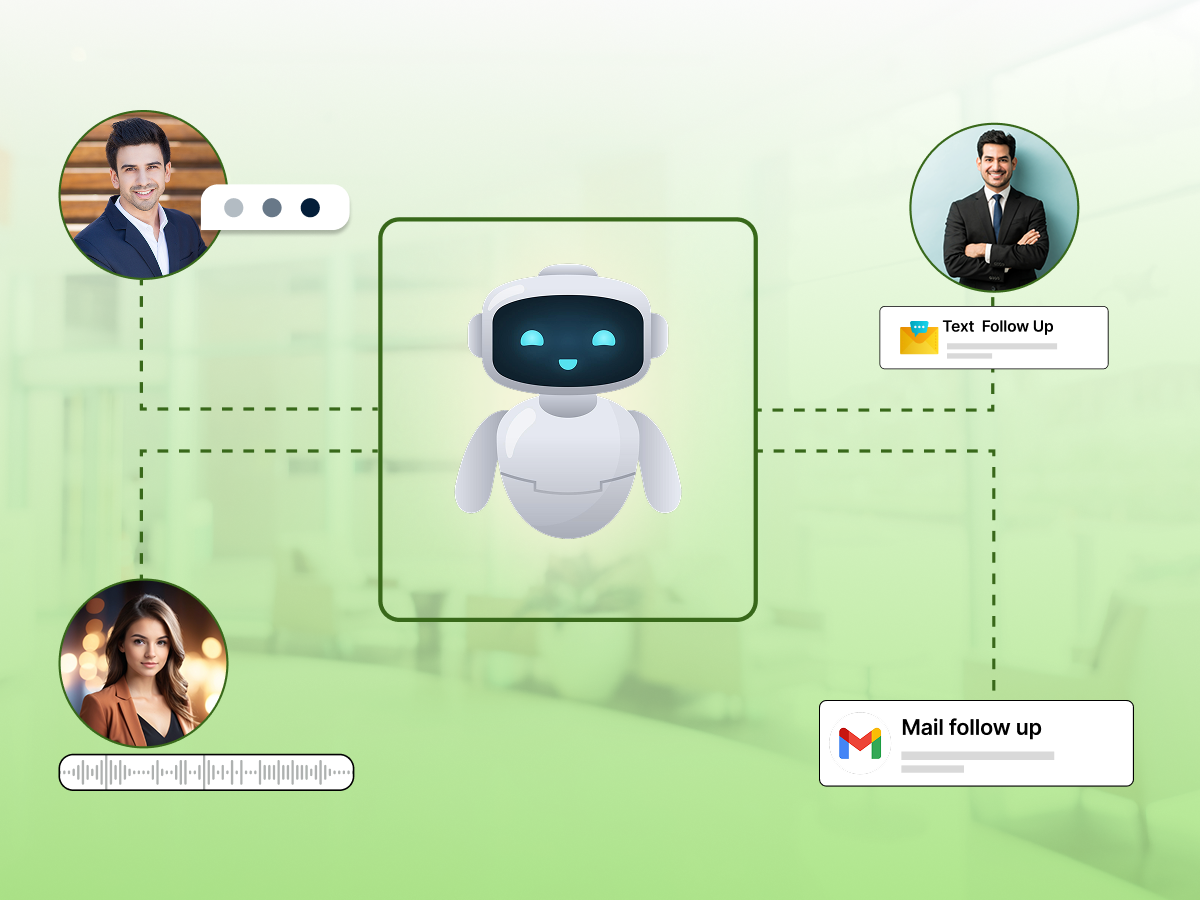
Call deflection is a customer service strategy that redirects routine customer inquiries from phone support to self-service or digital channels, such as IVR, chatbots, SMS, knowledge bases, and online portals, so customers can resolve issues without speaking to a live agent.
The goal is not to prevent customers from getting help. It is to resolve suitable inquiries through a faster channel while giving customers a clear path to human support when needed.
This guide explains exactly what call deflection means and explores how companies can safely reduce call volumes while simultaneously protecting vital customer experiences.
Call deflection means redirecting customer calls to different support formats before a live agent ever has to answer. Rather than routing every phone call to a standard call center, organizations point users toward quicker digital alternatives.
If someone dials in to reset a password, they might reach an interactive voice response (IVR) menu that suggests a self-service option. The routing logic can point them toward a knowledge base, a live chat window, or an AI chatbot.
This resolves the issue immediately without tying up a human representative.
Today’s contact center solutions rely on various systems to deflect calls effectively. Operations teams use IVR systems, self-service portals, chatbots, and messaging platforms to redirect customer queries and compress the customer journey.
The objective isn’t to hide from buyers. The real goal is to enable customers to handle basic tasks faster on their own.
As a result, live agents get to handle the difficult situations that genuinely require empathy, which is why so many leaders are implementing call deflection inside their cloud contact center setups.
Formula to calculate call deflection rate:
Call Deflection Rate = (Successfully Deflected Contacts ÷ Total Potential Contacts) × 100
Here’s an example: If 1,000 potential support contacts are received and 300 are successfully resolved through self-service without agent involvement, the call deflection rate is 30%.
The system determines what the customer is calling about, such as billing, order status, appointment changes, or technical support.
The business identifies whether the issue can be handled through self-service or another digital channel.
The customer is directed to an appropriate option, such as IVR, SMS, chatbot, knowledge base, or self-service portal.
If the alternative channel resolves the issue, no live-agent interaction is needed. If it cannot, the customer is transferred to an agent.
The business tracks whether the interaction was successfully resolved, along with metrics such as deflection rate, resolution rate, repeat contacts, and CSAT.
Companies don’t just use this technology to save money; they use it to make their support teams run better. A calculated approach optimizes multiple branches of contact center operations. Here are the standout advantages.
Forcing every incoming call to a human is an expensive habit. Automated software severely cuts the price tag of an average interaction.
Whenever buyers utilize self-service options, the business saves money while keeping the service standard high. This stands as one of the most attractive benefits of call deflection.
Staff members get exhausted answering the same password reset questions for eight hours. This routine quickly destroys job satisfaction.
Pushing these tasks to automated self-service tools gives representatives room to breathe. The resulting boost in workforce engagement is highly noticeable across the floor.
People expect immediate answers today. They would rather read a quick article on digital channels than wait in a phone queue.
By providing live chat, messaging, and knowledge bases, brands elevate their overall customer experience (CX). This translates directly to higher customer satisfaction scores.
Most support tickets are incredibly basic. Buyers just want facts, not a 10-minute conversation with a representative.
Self-service portals, FAQs, and an AI chatbot let them find those facts instantly. This compresses the customer journey and completely eliminates queue friction.
Support traffic spikes wildly during holiday sales or sudden service outages. In those moments, high call volumes will completely crush a standard team. Automated deflection channels easily absorb that overflow without missing a beat.
Today’s cloud contact center platforms capture incredible amounts of behavioral data. Managers can track the deflection rate, customer satisfaction, and typical queue metrics.
Studying this customer data highlights exact areas for improvement, helping leaders refine their call deflection strategies.
Beyond these, call deflection also reduces labor expenses, lowers infrastructure costs, reduces attrition costs, and improves customer retention.
Now let’s look at the specific tools used to make this happen.
Management teams rely on a variety of communication channels to pull traffic away from the phone lines. These alternatives give buyers a much more convenient way to find answers. The best contact center solutions blend these formats together smoothly.
Here are the primary options available.
Text-based communication is now a baseline expectation. Many buyers simply refuse to make a phone call unless absolutely necessary. These digital interfaces let agents handle multiple customer interactions at once while integrating basic chatbot flows. They effectively cut inbound call volume and dramatically speed up response times.
SMS/Business texting: Standard SMS is still incredibly popular among consumers. Users can shoot over a quick text instead of listening to hold music. Brands use this channel to send product updates or drop a link to an FAQ page. It is a proven, fast way to reduce customer wait times.
WhatsApp Business: Using WhatsApp Business Chat puts the brand inside an app the user already opens daily. Buyers submit questions, receive updates, and navigate automated menus seamlessly. It is incredibly effective for brands handling a global digital customer base.
Apple Messages for Business: The Apple Business Chat feature lets iPhone owners message companies straight from their native text app. They can verify accounts or book appointments without ever dialing a number. This native integration limits the overall reliance on traditional voice calls.
Facebook Messenger: Brands heavily leverage Facebook Messenger to catch users while they naturally scroll. Buyers can get help right on the social media platforms they already prefer. This setup filters out simple customer queries before they ever impact daily call volumes.
Algorithms do the heavy lifting in a modern deflection setup. They point users to the finish line without requiring a human to intervene.
AI chatbots & virtual assistants: A well-programmed AI chatbot or AI agent answers straightforward queries in seconds. They read the user’s text intent and fire back the correct database answer.
Teams build out chatbot response flows to walk people through basic troubleshooting, which heavily protects the live staff.
Interactive voice response: A standard Interactive Voice Response (IVR) setup asks callers to press specific numbers to route their issue. Users select the path that leads them to the right digital link or pre-recorded answer. Modern IVR systems pull data from the CRM to personalize the entire sequence.
Voice bots: These operate exactly like text bots, but they handle spoken words. They can verbally confirm an appointment time or read back a shipping status. They are a standard, expected feature in most cloud contact center platforms.
Archiving your solutions online lets people fix their own problems quietly. Building these libraries is a mandatory step for reducing total ticket counts.
Knowledge bases & help centers: Comprehensive knowledge bases hold all the necessary tutorials, manuals, and troubleshooting steps. Giving buyers access to this library improves the customer support experience significantly. It also drastically lowers inbound phone traffic.
FAQs pages: A simple FAQ page answers the most predictable questions instantly. Since buyers usually search the website before calling, this acts as a perfect first line of defense.
Community forums: A branded community space lets users trade solutions with one another. These boards often contain the answers to highly specific glitches that aren’t in the official manuals.
You don’t always have to wait for the buyer to reach out. Proactive outreach stops problems before they even start.
Proactive notifications: Sending out an alert about scheduled server maintenance answers the question before the buyer even asks it. This single tactic prevents massive spikes in incoming customer calls.
Email & web forms: Contact forms force users to organize their thoughts into a structured ticket. Since email isn’t an instant conversation, it takes the immediate pressure off the contact center floor.
With so many options available, companies must build a unified plan to route traffic properly.
Just throwing a bot on your homepage won’t work; you need an actual blueprint. A solid setup works like a table of contents that guides the user to the right answer. Here is what you need to succeed.
You have to know exactly why customers are calling. Pinpointing caller intent tells you which specific problems to automate. Teams use sentiment analysis and reporting to study behavioral trends. This data leads directly to much sharper deflection strategies.
A functioning self-service infrastructure connects your knowledge bases, text bots, and self-service portals. The information provided must be accurate and very easy to read. If these tools actually work, users will gladly stop calling the main phone line.
Old numeric phone menus are frustrating, but an AI-powered IVR listens to natural speech. It holds a conversation with the caller to figure out what they actually need. This massive upgrade heavily boosts your overall deflection rate.
Don’t limit your support to just one format; spread it across email, text, and live chat. Giving buyers choices ensures they can use the exact format they prefer. General accessibility increases while phone dependence decreases.
A buyer might start reading an article, switch to a chat window, and then ask for a phone rep. Their customer journey shouldn’t break or reset during those transitions. Keeping the context intact stops people from getting angry.
Never trap a buyer inside an automated loop. They must always have a clear button to speak to an agent when the bot fails. Keeping this option open protects your brand reputation and prevents escalations.
Good managers stare at their contact center analytics daily. They check the deflection rate, customer satisfaction, and call volumes to find leaks in the system. Constant tweaking is the only way to maintain a successful setup.
Even then, mistakes happen if the system isn’t monitored.
While the financial perks are great, a clumsy rollout will quickly infuriate your buyers. You have to actively avoid these structural traps when building your routing logic.
Mistake 1: Endless Transfer Loop: Nothing angers a buyer faster than a menu that keeps sending them in circles. Clunky IVR menus create dead ends that never actually solve the problem. This structural failure destroys customer satisfaction immediately.
Mistake 2: Removing the Human Fallback: Trying to automate 100% of your traffic is a terrible idea. Some account issues legally require a human to verify details. Buyers need a direct line to live agents when things get complicated.
Mistake 3: Deflecting Complex Inquiries: You cannot push highly technical glitches to a simple FAQ page. Complex situations require a real conversation to troubleshoot properly. Do not force these specific callers into an automated text thread.
Mistake 4: Poorly Trained Chatbots: If an AI chatbot doesn’t understand context, it will give out completely wrong advice. This actively ruins customer experiences and causes repeat tickets. You have to update its logic rules regularly to maintain accuracy.
Mistake 5: Ignoring the Voice of the Customers: If buyers complain about the new menu, you need to listen. Ignoring their feedback guarantees a drop in service quality. Watch your customer satisfaction scores closely to see if the new setup is actually helping.
Mistake 6: Inflexible Automated Menus: Rigid menus force people to guess which number matches their problem. Modern setups should let the user speak naturally to find their destination.
Mistake 7: Lack of Context Retention: Forcing a caller to repeat their account number three times is awful service. A good contact center platform saves the customer interaction history, so the human agent already knows the problem.
Let’s look at how specific markets handle these interactions.
Every market deals with unique support bottlenecks. Different sectors mold these digital tools to fit their specific buyers perfectly.
Banks get crushed with basic questions about wire transfers and account balances. Secure IVR systems and mobile apps hand over this data instantly. Nobody actually needs to talk to a teller just to check a balance.
Online stores use chat widgets to confirm shipping dates and item sizes. A buyer can track their box without calling a dispatcher. This keeps the line clear and directly helps optimize your sales.
Airlines deal with a constant flood of flight changes and cancellations. Their mobile apps let travelers rebook seats on the fly. This automation saves the gate agents from dealing with massive crowds.
Clinics use automated text reminders to handle appointment scheduling. Patients click a link to confirm their slot instead of sitting on hold with the receptionist.
Freight companies get asked “Where is my package?” thousands of times a day. Automated tracking portals let the buyer watch the truck on a map themselves.
Power companies blast out text alerts the second a grid goes down. Alerting the neighborhood immediately stops thousands of people from calling the local office to report the outage. Let’s look under the hood at how the software operates.
Understanding how call deflection impacts businesses requires looking at real-world research. Industry studies reveal the growing role of self-service options and automation in reducing support costs and improving customer experience.
Gartner predicts that automation in customer service interactions will increase fivefold and reach 10% by 2026, highlighting the growing importance of call deflection technologies like chatbots, IVR, and AI assistants.
Modern customers increasingly prefer solving problems themselves. Studies show that 75% of Gen Z and 62% of Millennials prefer self-service options to contacting support agents.
These findings highlight why implementing call deflection strategies is no longer optional. Using tools like AI assistants, chatbots, and IVR systems can significantly optimize contact center operations and meet modern customer expectations.
Let’s move on to some of the best practices for successfully implementing call deflection.
Launching this technology requires a strict game plan. You have to balance the software capabilities with what the buyer actually wants.
Dive into your contact center analytics to see exactly why people are dialing in. Finding the patterns in your customer queries tells you what support articles to write first.
Warn people about downtime before they notice it themselves. A single SMS blast can easily deflect a thousand angry phone calls.
Keep your knowledge bases and self-service portals completely updated. If the articles are old or confusing, people will just give up and call the support line anyway.
Give people the choice to hang up and receive a call later. This eases the immediate call center workload and stops the buyer from getting angry while waiting.
Use the CRM’s customer data to provide personalized experiences. A customized chat window boosts customer engagement and shows you are meeting your customer where they are. Using a secure trust center ensures their data remains completely safe.
Keep a close eye on your deflection rate, customer satisfaction, and average handle times. The numbers will tell you quickly if the bot is actually working.
Make sure the buyer doesn’t lose their chat history if they decide to call in. Smooth journey orchestration via a partner portal helps in-person customers and digital users alike. Sharing these tools with channel partners boosts efficiency everywhere.
Call deflection empowers teams to reduce call volumes, lower overhead, and speed up issue resolution. By pointing buyers toward accessible self-service options, organizations build a frictionless support environment while letting live agents handle complex escalations.
If your staff is drowning in incoming calls, configuring automated routing within a cloud contact center solution will eliminate the bottleneck. Review your customer stories, evaluate your current software stack, and start building a much smarter, highly efficient support strategy today.
Businesses use call deflection to reduce call volumes, lower customer support costs, and improve operational efficiency. By directing simple inquiries to self-service channels, support teams can focus on more complex customer needs.
Yes. Call deflection allows customers to get answers faster through digital channels such as chatbots, knowledge bases, and messaging apps, helping them avoid long hold times and improving the overall support experience.
Common call deflection tools include IVR systems, AI chatbots, live chat software, SMS and messaging platforms, self-service portals, and comprehensive knowledge bases.
Yes. Any business that receives a significant number of inbound customer calls can benefit from call deflection. It helps improve efficiency, reduce costs, and provide faster support options for customers.
