

Branded Caller ID: Boost Call Answer Rates & Trust

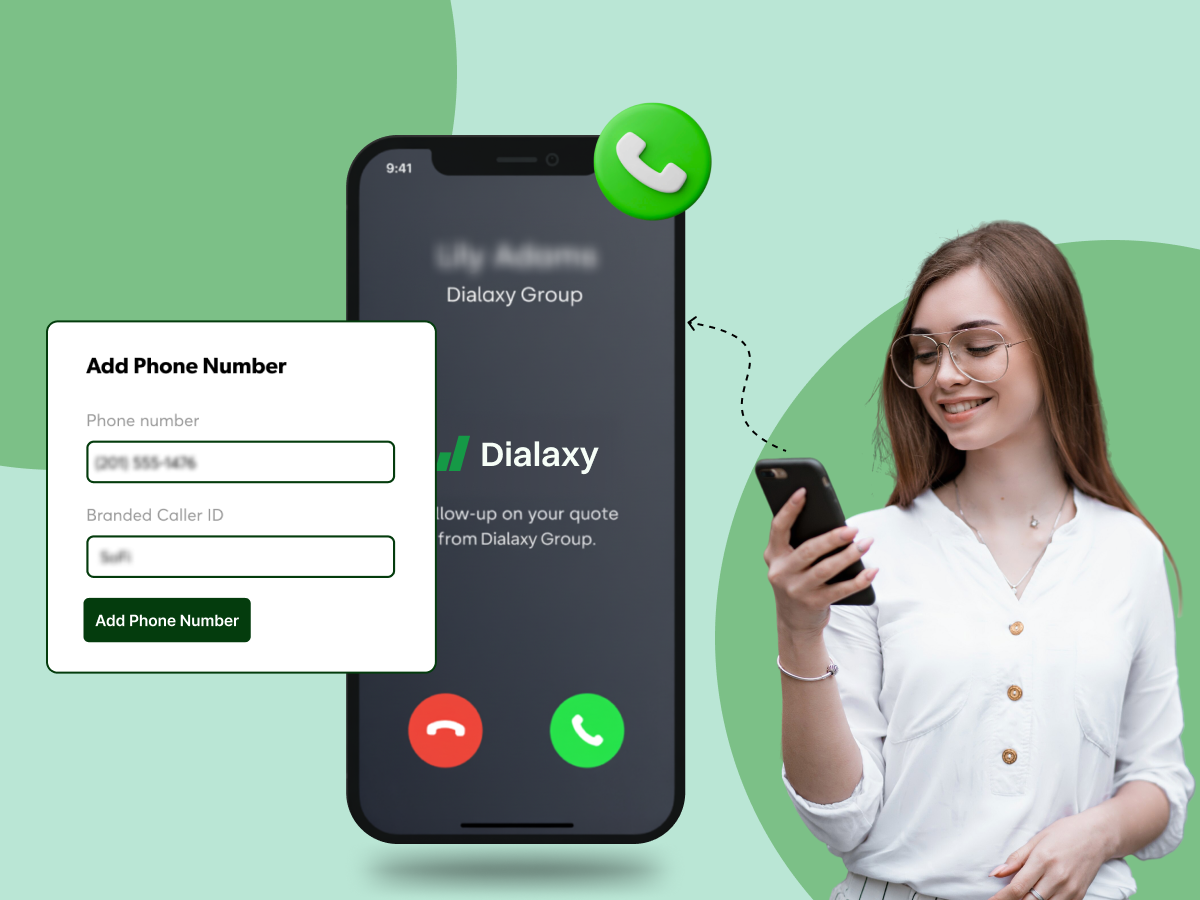
Think about the last time an unknown number called you. Did you answer it? Most people don’t, and that’s a problem if you’re a business trying to reach customers.
Branded Caller ID changes this entirely. Instead of displaying just a phone number or a generic “Unknown Caller,” it shows your business name and logo directly on the customer’s phone screen before they answer.
It’s a verified identity for your business calls. When customers see your familiar brand instead of a suspicious number, they’re far more likely to pick up.
This verified branded calling solution transforms every outbound call into a trust-building opportunity, reassuring customers that it’s genuinely you calling, not a spam or robocall.
Let’s explore branded calling ID in more detail.
Branded Caller ID is a technology that displays your business name, logo, and call reason on a customer’s phone screen when you call them.
Unlike traditional caller ID, which only shows a phone number, this verified branded solution gives your calls a professional, recognizable identity.
Here’s how it works: when your business makes an outbound call, the branded calling display automatically shows your company’s details. So instead of seeing “Unknown” or just digits, customers see something like “ABC Bank – Account Alert” with your logo. Its authentication and verification are built into every voice call.
The difference is huge. Regular caller ID relies on basic phone number reputation, which spammers can fake. Branded calling uses rich call data and proper call authentication to verify the caller’s identity, helping mitigate robocalls and prevent fraud.
Understanding what banded calling is matters, but the real question is: how does it actually help your business?
Now that you know what a branded caller ID is, let’s talk about why businesses actually care about it. Spoiler: it’s not just about looking fancy on someone’s phone screen.
When your business name and logo show up, customers know it’s actually you. No guessing, no hesitation. With the number of scam calls people get nowadays, this verified identity makes a real difference.
Your phone number reputation gets better, and customers stop treating your calls like potential spam, because they can see you’re legit.
Here’s the big one. 78% people were found to be more willing to answer a call when the caller ID shows a recognizable brand name and logo. That’s not a small bump; that’s the difference between reaching half your customers versus almost all of them.
Show people your business name and logo, and they’ll actually pick up. When they know who’s calling, they answer. Simple as that.
Think about it, your name and logo appearing on thousands of screens every day. Even when people don’t answer right away, they’ve seen you. That visibility adds up over time and keeps your business stuck in their heads.
It’s marketing that happens automatically with every call you make.
People hate mystery calls. But “Dr. Smith’s Office – Appointment Reminder” instead of a random 10-digit number? They know what’s up. They can choose to answer now or call back at their convenience.
Showing the reason for the call upfront just makes sense, and customers appreciate the honesty.
This is where branded caller ID really proves its worth, in your bank account.
More people answering means more deals closing. Your sales team stops leaving voicemails and starts having actual conversations. Higher connection rates lead to more qualified leads and closed sales.
Getting someone on the phone is half the battle, and a branded caller ID wins that fight every time.
When customers answer the first time, your team isn’t stuck redialing the same numbers for hours. That’s lower phone bills, less wasted agent time, and way better productivity.
Some businesses cut massive costs just from reducing missed appointments and callbacks. Your people get more done in less time.
Scammers love spoofing real business numbers. Without a branded caller ID, your customers have no clue if it’s really you or some con artist. This tech stops that cold. The call authentication protects your company’s name and helps with fraud prevention.
When customers can trust your branded calls, they won’t ignore you, and they won’t fall for fakes using your identity.
All these benefits, better answer rates, higher conversions, lower costs, they stack up fast. Companies see real ROI within weeks. More customers reached means more money made.
In competitive industries, getting through to people first can be the difference between winning and losing business.
Therefore, a branded caller ID does more than help people answer your calls. It builds trust, protects your reputation, and drives actual financial results. That’s why businesses across every industry are making the switch.
The benefits apply to nearly every business, but let’s see how different industries actually use branded calling.
Branded calling works differently depending on your industry. Some businesses get more value from it than others. Here are 10 ways companies actually use this technology.
Doctors’ offices have a massive problem with no-shows. Patients don’t answer unknown numbers, so they miss appointment reminders and the office loses money.
When someone sees “Dr. Johnson’s Clinic – Appointment Reminder” with the clinic logo, they know it’s their doctor calling. They answer. Healthcare providers send appointment reminders, share test results, and notify patients about prescription updates this way.
The difference in missed appointments is substantial.
Your bank calls to warn you about suspicious activity on your account. You don’t recognize the number, so you ignore it. By the time you check your voicemail, the fraudulent charges have already gone through. This happens constantly. Branded caller ID solves it.
When “First National Bank – Security Alert” pops up with your bank’s logo, you answer immediately. Banks use this for fraud alerts, large transaction verifications, and account security notifications.
The call authentication proves it’s really your bank, not a scammer trying to steal your information.
A homeowner calls a plumber about a leak. The plumber says they’ll call back to schedule. When they do, the homeowner sees an unknown number and sends it to voicemail. The plumber calls someone else.
Contractors, electricians, and plumbers lose jobs this way every single day. With branded calling, homeowners see “Smith Plumbing – Service Call,” and they pick up.
Trade professionals use this to confirm appointments, give arrival times, and follow up after jobs. It keeps their trucks full and their revenue steady.
Your package is out for delivery, but the driver can’t find your building. He calls three times. You don’t answer because you don’t recognize the number. The package goes back to the warehouse. You’re annoyed. The company wastes money.
Delivery companies deal with this nightmare constantly. Branded caller ID shows “QuickShip Delivery – Your Driver” so customers actually answer. Drivers get gate codes, clarify addresses, and arrange safe drop-off spots.
Fewer packages get returned, and customers get their orders on time.
Electric companies need to notify customers about planned outages or reschedule meter readings. Internet providers want to confirm installation appointments. Most of these calls go unanswered because people think it’s another sales pitch.
When customers see “Metro Electric – Service Notice” with the company logo, they know it’s important. Utility and telecom companies use branded calling for service appointments, outage notifications, and billing concerns.
They spend less time making repeat calls, and customers get better service.
You order something online. Two days later, an unknown number calls. You ignore it. Turns out the item was out of stock, and they needed to discuss alternatives. Now your order is delayed. Online retailers face this constantly.
When customers see “ShopMart – Your Order” with the store logo, they answer. Retailers use branded caller ID to verify orders, coordinate deliveries, and resolve payment issues. Customers get their products faster, and retailers reduce order cancellations.
A school needs to inform parents about an early dismissal due to the weather. They call 500 families. Maybe 50 people answer. The rest think it’s a robocall. Parents show up at the regular time, and the building is locked.
Schools use branded calling to display “Riverside Elementary – Important Alert,” so parents recognize them. They send enrollment reminders, emergency notifications, and schedule updates. Parents actually get the information they need.
You contact a company’s support team, and they promise to call you back. Three hours later, your phone rings with an unknown number. You’re busy, so you let it go to voicemail. You call back the next day and wait on hold for 45 minutes. Everyone loses.
Support teams use a branded caller ID to show “TechSupport – Your Callback” so customers know to answer. They handle support callbacks, conduct satisfaction surveys, and reach out to at-risk customers. Problems get solved faster because they actually connect with people.
Nobody wants calls from collection agencies, but legitimate debt collection is part of how credit systems work. The problem is that people can’t tell legitimate collectors from scammers. Both use unknown numbers.
Branded calling shows a verified business name, which helps legitimate agencies reach people who genuinely owe money. It increases answer rates while giving consumers confidence they’re not talking to a scam operation. The call authentication protects both parties.
Different industries use branded calling for different reasons, but the core benefit stays the same: customers answer when they recognize who’s calling. That simple change affects everything from revenue to customer satisfaction.
Now that you’ve seen how businesses use it, let’s break down what makes branded calling different from traditional caller ID.
Traditional caller ID has been around since the 1980s. Branded calling is a newer technology that works completely differently. Here’s how they compare.
| Feature | Traditional Caller ID | Branded Caller ID |
|---|---|---|
| What it displays | Phone numbers, sometimes a generic name from carrier databases. | Business name, logo, and reason for the call. |
| Data source | Public databases, often outdated or incorrect. | Verified business information submitted through a registration process. |
| Verification | None – anyone can spoof any number. | Call authentication verifies that the caller’s identity is legitimate. |
| Visual presentation | Basic text on the screen. | Rich call data with full brand identity, including logos. |
| Security | Zero protection against spoofing. | Call authentication prevents fraud and robocall scams. |
| Accuracy | Frequently wrong or shows “Unknown.” | Accurate because businesses control their own display information. |
| Answer rates | Declining every year as spam increases. | 60–80% higher than traditional caller ID. |
| Brand control | No control, it displays whatever the carrier decides. | Full control over how your business appears on customer screens. |
| Trust level | Low. Customers can’t verify legitimacy. | High. Verified branded identity builds customer trust. |
| Spam protection | None. Scammers easily fake caller IDs. | Verified identity helps to mitigate robocalls and prevent fraud. |
| Cost | Free, included with phone service. | Requires subscription to branded calling solution. |
| Setup | Automatic, no setup needed. | Requires a business onboarding and vetting process. |
The gap between these two technologies keeps growing. Traditional caller ID worked fine when most calls were legitimate. Now that scam calls outnumber real business calls, customers need a way to verify who’s actually calling them.
That’s what branded caller ID provides: a verified identify customers can trust.
Traditional caller ID shows whatever information is in a database. Branded calling displays exactly what your business wants customers to see. One is passive and unreliable. The other gives you control over your phone number reputation and how customers perceive every call.
If your business depends on reaching customers by phone, traditional caller ID isn’t cutting it anymore. Branded calling gives you the verification and brand recognition that actually gets people to answer.
Now, let’s talk about how branded calling actually works in detail.
Understanding how branded calling works helps you see why it’s more secure than regular caller ID. The whole process happens in seconds, but there are several important steps.
Before your business can use branded calling, you need to get verified. This isn’t a quick sign-up form. The provider checks that you’re a real business with the legal right to use your company name and logo.
You submit business documents, tax ID, incorporation papers, and proof that you own the phone numbers you want to brand. The vetting process confirms you actually control those numbers. This stops scammers from impersonating your business.
Some providers finish this in a few days, others take a couple of weeks, depending on their verification standards.
After verification, your business information goes into a centralized platform. You upload your logo, set your display name, and decide what shows up on customer phones. You can create different profiles for different call types.
Appointment reminders might show one message, while delivery updates show another. The platform connects to major phone carriers and ensures your branded information reaches various networks.
You’re building a verified profile that carriers recognize and display. This database becomes the official source for your caller identity across all networks.
When your business makes an outbound call, the system runs several checks before anyone’s phone rings. It verifies that the call actually comes from your registered number. Then it applies authentication protocols that prove you’re authorized to use that number.
This call authentication uses technology similar to email verification; it creates a digital signature that travels with your call. Carriers check this signature to confirm the call is real, not spoofed.
Without proper authentication, your branded information won’t appear. This keeps the whole system secure.
As your call moves through the phone network, the system attaches your rich call data to it. This includes your business name, logo, and the reason you’re calling. The data packet is small but has everything needed to create the branded display.
The system knows what type of call you’re making: appointment reminder, delivery update, customer service callback. It automatically pulls the right display information for that call type based on settings you configured during registration.
When the call reaches the customer’s phone, their device asks the carrier network for caller information. Instead of pulling outdated data from some random database, it gets your complete branded profile. The phone then shows this information on the screen.
The customer sees your business name, logo, and text explaining why you’re calling. This all appears before they decide whether to answer. The exact look varies a bit between phone models and carriers, but the main information stays the same.
Most modern smartphones handle this automatically; both iPhones and Android devices support these formats. If the carrier supports branded calling display, it works right away. The technical side is complicated, but fast.
From the moment you dial to when their phone rings, all these authentication and data steps finish in under a second. That speed makes branded calling practical for businesses that make thousands of calls while keeping everything secure through verified identity.
The technical setup gets your branded calls working, but keeping them working requires following specific compliance rules and avoiding common pitfalls.
A branded caller ID has specific compliance requirements you need to follow. These aren’t suggestions; they’re mandatory rules that keep you legal and your service running.
STIR/SHAKEN is the authentication standard carriers use to verify calls are legitimate. Your branded calling solution must support it. The system assigns attestation levels to each call: A, B, or C.
Level A means full verification that you own the number and authorized the call. That’s what you need for proper display and to avoid spam flags.
Without STIR/SHAKEN compliance, carriers block or downgrade your calls. The FCC requires it for all U.S. voice providers. There’s no workaround.
You need complete business verification before making branded calls. Submit documentation proving your legal entity, phone number ownership, and right to use your brand assets.
Healthcare and financial services face stricter checks because of the sensitive information involved. Keep your registration updated. If your business name changes, you move, or ownership transfers, update your verification immediately.
Your branded information must be identical across all carriers. The same logo, same business name, same call descriptions everywhere. You can’t show different information on Verizon versus AT&T.
Inconsistency confuses customers and alerts carriers to potential problems. It makes your business look unprofessional or fraudulent. Set your brand information once and keep it uniform.
Compliance requires ongoing attention. Check your call analytics weekly for drops in answer rates or spam report increases. These signal display or authentication problems.
Test your calls monthly across different carriers and phone types. An iPhone might show your brand differently from an Android device. Regional carriers might handle displays differently from major networks. Regular testing catches these issues early.
Never display a business name that isn’t yours. Don’t pretend to be calling from a local area code when you’re not. Don’t use misleading call reasons like “Prize Winner” when you’re actually selling something.
This violates FTC rules and gets your service terminated fast. Misrepresenting the caller’s identity also damages customer trust and can result in legal action.
Each major carrier has its own branded calling standards on top of federal requirements. AT&T, Verizon, and T-Mobile all have slightly different registration processes and display guidelines.
Ignoring these carrier-specific rules means your branded display won’t work on certain networks. Work with a provider who handles multi-carrier compliance, or study each carrier’s requirements carefully.
Your logo changed six months ago, but your branded caller ID still shows the old one. Your company rebranded, but your display name is outdated. These mistakes happen when businesses set up branded calling and forget about it.
Update your profile whenever anything changes, logo, business name, phone numbers, or call reasons. Outdated information looks suspicious to customers.
Only use phone numbers you legally own and have verified through proper registration. Never spoof numbers or use someone else’s number to make calls appear local. Even if you think it improves answer rates, it’s illegal.
Carriers detect spoofed numbers quickly and will block all your calls. Proper call authentication requires using only your verified numbers.
Compliance protects both your business and your customers. Following these guidelines keeps your branded calling service active and maintains the verified identity. Cut corners on compliance, and you’ll lose access to branded calling entirely.
You know the compliance rules you need to follow, now let’s talk about choosing a provider that actually helps you meet them.
Not all branded calling solutions work the same way. The provider you choose directly affects your answer rates and compliance. Here’s what actually matters.
Your branded calling ID needs to work across all major carriers: Verizon, AT&T, T-Mobile, and regional networks. If your solution only covers two carriers, you’re missing customers. Ask about carrier coverage upfront.
Device compatibility is just as important. Your brand’s logo and business name should display correctly on iPhones, Android phones, and different OS versions. Some older devices handle branded calling differently.
A good provider like Dialaxy tests across multiple devices to keep your display consistent. When displays vary too much, it hurts trust and lowers answer rates.
Strong call authentication separates real branded calling from basic spoofing. Your provider should support full STIR/SHAKEN with Level A attestation. This verification reassures customers that your calls are genuine, not scams using your business name.
Reputation management tools let you monitor how customers see your calls. If spam reports jump or answer rates drop, you need to know fast. Good providers track your phone number reputation across networks and show you why customers flag calls as spam.
This helps you fix issues before they hurt your customer communications.
You need real analytics to see if branded calling improves your answer rates and ROI. Look for solutions that track answer rates, call duration, and spam reports. These numbers show whether your investment pays off.
Customization lets you adjust calling information for different campaigns. Appointment reminders can show one message while delivery updates show another.
Tailoring your branded name and call reason for specific call types improves call answer rates because customers get relevant context. Enterprise customers with varied calling needs benefit most from this flexibility.
Your solution should integrate easily with your current phone systems and customer data platform. Whether you use a cloud contact center or a VoIP system, setup shouldn’t take months.
Check the API reference documentation and ask about implementation time. Pre-built integrations with popular platforms speed things up considerably.
Compliance support is critical. Your provider should handle STIR/SHAKEN, TCPA regulations, and carrier-specific rules. They should also update your system when regulations change. Managing compliance yourself is complicated and risky.
A solid provider handles regulatory adherence for you.
Industry experience matters. A provider with healthcare clients understands appointment reminders and HIPAA rules. One with financial clients knows fraud alert requirements. Ask to see call examples from businesses like yours.
Experienced providers fix problems faster because they’ve seen them before. They know which strategies work for different industries and can guide your setup. This expertise helps you increase call answer rates without trial and error.
Look for providers who work with enterprise customers in your sector. They’ll have insights about what works and what mistakes to avoid. This shortens your learning curve significantly.
Your branded calling solution affects customer communications for years. Evaluate providers carefully on these points. The cheapest option usually costs more through poor performance or compliance failures.
Find a provider with solid carrier coverage, strong authentication, useful analytics, easy integration, and genuine industry expertise.
Branded caller ID changes how customers respond to business calls. When they see your verified business name and logo instead of an unknown number, they answer.
The result is better trust, higher answer rates, lower costs, and more revenue. Most companies see ROI within weeks of implementation.
A branded caller ID displays your business name, logo, and call reason on a customer’s phone screen when they get an incoming call from you, instead of just showing a phone number.
To hide your caller ID, dial *67 before the phone number to block your caller ID on that specific call. Your number will show as “Private” or “Unknown” to the recipient.
No, caller ID is legal. However, spoofing a caller ID to deceive or defraud someone is illegal under FCC rules and the Truth in Caller ID Act.
AT&T-branded caller ID is AT&T’s service that lets businesses display their company name and logo on customer phones when calling AT&T network users. It’s AT&T’s version of branded calling technology.
