

How to Create a Strategic Communication Plan in 2026

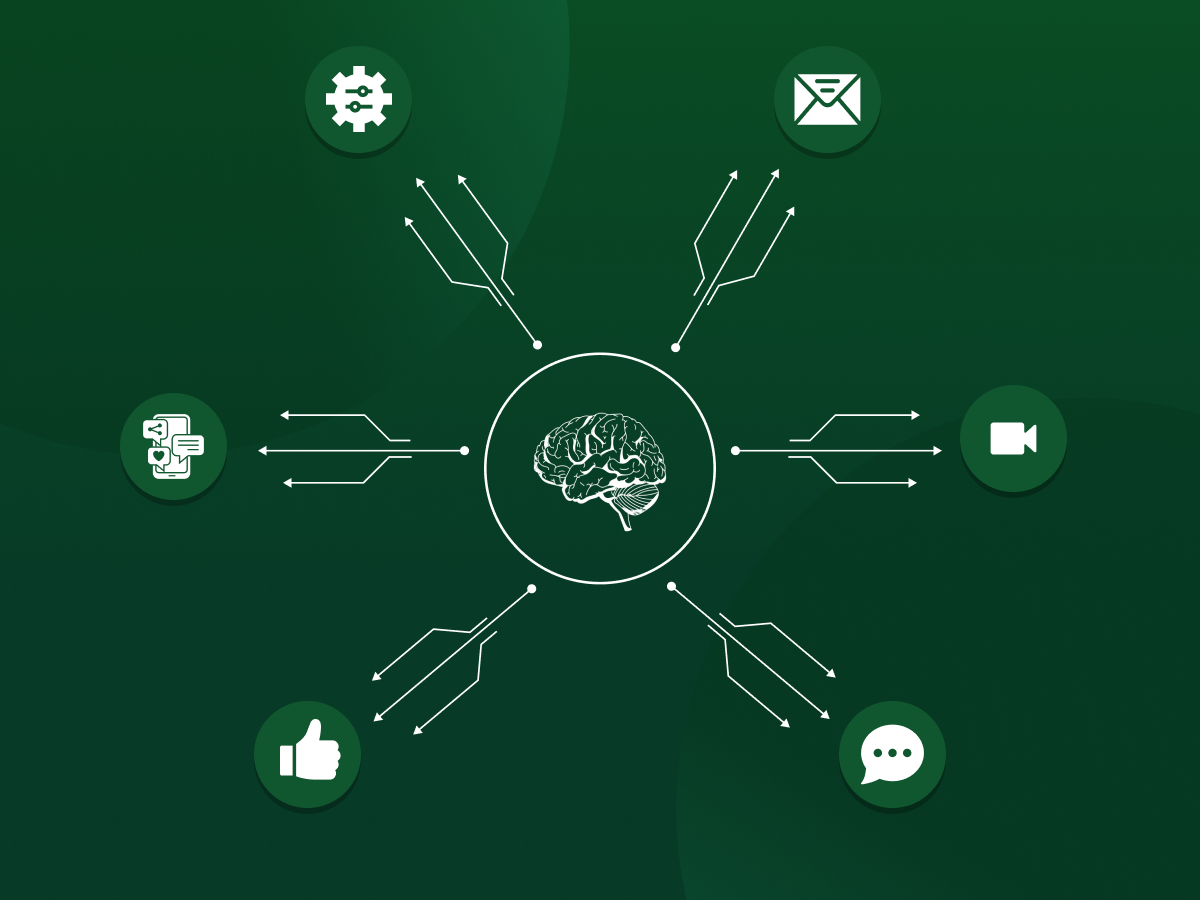
Are your teams stressed by too many messages while you keep missing important client calls? If you are still using old, separate tools for talking, you are slowing down your business.
The solution is a modern strategic communication plan that helps your entire company work well. It connects your internal team rules with what your customers need.
In this guide, we will show you how to build a strong plan for the future. You will learn to find your weak spots, use AI to automate tasks, and connect everything with a central phone system. It will turn your communication infrastructure into your biggest business advantage.
To create and run your strategic communication plan in 2026, you will need the following core tools:
A strategic communication plan is a simple roadmap. It makes sure everything you say matches your business strategy plan. It covers both internal and external collaboration. This plan makes sure everyone, from your leaders (executive stakeholders) to your staff, gets the correct key messages using the best communication channels.
For example, your business communication plan might need regular news about product launches. Instead of many emails, you should connect calls, texts, and data using cloud tools.
In 2026, the main goal is to mix different communication methods like VoIP and Cloud Telephony. It will give you a smooth, easy flow of messages everywhere.
Old communication plans fail because they weren’t made for today’s remote world.
According to the Asana Anatomy of Work Index, “an overwhelming 83 percent of teams believe they are not as effective as they could be because they lack the right processes to manage and streamline their collective efforts.”
You must understand these problems. Here’s why the old plans fall short:
Old plans ignore time zone problems for remote team collaboration. Without clear rules, you get information silos and slow status updates. According to Neat, “29% of remote workers cite communication gaps as a major issue”.
Example: If a project team member is in the US and another is overseas, they may struggle to align quickly. This leads to miscommunication and delays.
Communication is scattered across Slack, Zoom, email, and other tools. Teams use too many apps. This leads to constant app switching and confusion. Employees miss important communication activities because they must check too many platforms.
The “No Hello” Rule & Async Etiquette
A good plan needs good rules for how people talk. Successful remote teams use “Async Etiquette” to stop stress and help effective communication plan:
When you use old plans, client communication often goes wrong. You might miss important calls. This makes customers unhappy and causes miscommunication. Clients want a fast answer, but they get delays or are confused about how to reach you.
A centralized cloud communication system solves these problems by integrating voice, text, and data into one platform.
Tools like Dialaxy allow you to manage both internal and external communication. It brings everything together, so you do not have to keep switching between different apps.
By using a tool that links directly to your CRM, every call, text, and note is saved automatically, giving you real-time updates without any extra work.
| Issue | Traditional Plan | 2026 Solution |
|---|---|---|
| Time Zones | Ignored. Plans don’t accommodate hybrid work schedules. | Integrate global communication tools like Dialaxy to manage calls across time zones. |
| App Fatigue | Multiple apps with unclear integration. | Use a centralized communication system (Dialaxy) for calls, texts, and CRM data. |
| Missed Client Communication | Calls go unanswered and messages get lost. | Track client calls in real time using CRM integration and call analytics. |
A modern communication plan is built on five main components. Each is designed to streamline communication within your business and externally with clients, with optimum resource management. Here’s a closer look with examples:
Audience segmentation means to identify your audience and send the right message to them. You need to know if you are talking to your leaders (executive stakeholders), your remote teams, or your global clients.
Example: You can divide your audience into teams for internal updates and clients for support. Using tools like Dialaxy, you can change how you talk based on where your global clients live, using virtual phone number numbers.
You must decide on the main things you want to say, and they must be clear. Your key messages are the most important part of your communication strategy.
Example: For a product launch, your key message could be: “Our new feature will improve workflow by 20%” for employees, and “This feature solves your biggest problem” for clients.
Decide when to use synchronous communication (like video calls) vs. asynchronous communication (like SMS or email).
Example: Use Slack for quick daily team chats and Zoom for big meetings. For clients, use Dialaxy for both calls and SMS so you never miss a message.
Set a clear schedule for when you talk. This is your communication cadence. It stops people from getting too many messages and keeps your teams aligned.
Example: Decide that status updates go out every Friday. Schedule monthly reviews for project milestones at the end of the month.
A feedback loop helps you check if your communication plan is actually working. It shows you where you need to make things better.
Example: Use call analytics from Dialaxy to see how fast your team answers calls. This shows if clients are getting real-time answers.
Your strategic communication plan must have a detailed “Red Alert” plan. What do you do if your system breaks down, or a bad news story hits? You need clear steps ready to protect your brand right away.
In a crisis, being fast and correct matters most. You must decide who approves the public message.
Define a small, agile crisis team, typically the CEO, Head of Communications, and Legal Counsel. This prevents miscommunication and ensures only one consistent message goes out to all project stakeholders.
If your main system (like email) fails, you need a backup. Your plan must name the backup communication channels. For talking to the outside world, using a stable cloud service like Dialaxy for calls and SMS is vital.
Example: If your server goes down, your plan says: “Internal talking moves to WhatsApp Group X. All urgent client communication is done using Dialaxy SMS alerts.”
Do not let your support team write messages when they are panicking. You must write and save basic “holding statements” now for common problems (like a system outage).
Example: For a system outage, a saved message could be: “We are having technical problems and are checking it now. We will send an update via SMS in 30 minutes. Thank you.”
This section shows you how to build your strategic communication plan. Follow these five detailed steps now.
Start by identifying where your current communication breaks down. Start by auditing existing workflows to find information silos. Review reports, like an “Anatomy of Work Index,” to see wasted effort.
Example: See how often sales asks engineering for a simple update. This step identifies hidden communication effort costs.
Vague intentions do not drive business results. You must set SMART goals:
For instance, the target is to reduce missed client calls by 20% in Q1. Use Dialaxy’s features to meet this goal. These targets ensure your strategy supports broader strategic planning.
Your technology defines your workflow efficiency. You need a dedicated work management tool for tasks and a reliable voice provider for clients. Also, avoid using too many disjointed apps to avoid channel fatigue. Select platforms that centralize all operations.
Example: The sales rep instantly sees the customer’s full history when the phone rings. This gives perfect data without manual entry.
The communication matrix is your master plan. Create a grid that explicitly defines project roles, communication cadence, and required detail. State clearly who gets daily updates versus a weekly summary.
For instance, the project team gets a daily Slack update. The CEO only receives a Friday email summary. This clarity prevents confusing email chains.
Define the Who, What, Where, and When for every scenario.
| Communication Type | Audience | Channel | Frequency | Owner |
| Urgent Client Issues | Support Team | Dialaxy (Voice/SMS) | Immediate | Support Lead |
| Project Status Update | Internal Team | Asana / Jira | Weekly (Fridays) | Project Manager |
| Company Announcements | All Hands | Email + Zoom | Monthly | CEO / HR |
| Quick Clarifications | Teammates | Slack / Teams | As needed | All Staff |
| Quarterly Review | Stakeholders | Zoom + Deck | Quarterly | Dept Head |
Download
Even the best plan fails without team buy-in. You must train your staff on new conventions before rollout. Show employees how these tools reduce their workload.
First, host a quick session on the new rules (e.g., “All quick questions go in the team channel, not DMs”).
Second, adopt a quality standard. To prevent miscommunication, teach your team to run every important message through the “7 C’s of Communication” checklist:
By training your team on this checklist, you ensure team and stakeholder support and guarantee smooth project execution from day one.
Modern tools are the foundation of the plan. You have to select tools that eliminate the need for app switching. They must create clear paths for every interaction.
You have to stop project planning in messy email chains. Tools like Asana and Trello can become your team’s central nervous system. Let’s see what it does in the following points.
You can see exactly where every project stands in real-time. For instance, you know instantly if your Q4 product launch is on schedule or if the design phase is delayed.
It is easy to streamline sign-off and permission management across departments. For Example, your marketing team submits the final ad copy, and Legal approves it with a single click in the platform.
You can stop the guessing game! In Asana/ Trello, you can instantly view your team’s workload and resource planning. For example, you can see if a task requiring engineering input is feasible for them to complete this week.
Every document, task, and update is accessible in one place. For example, you will never again have to search old document folders for the latest version of the project brief.
Protect your team’s focus time. You can use Slack or Teams for fast, noise-free internal communication.
Employees will get fast answers without interrupting deep work. For example: Post a “quick question” about brand colors in #design-ops instead of sending a disruptive direct message.
Team members can share rapid project status or urgent alerts effortlessly. For instance, a leader can announce that the server is back online with a quick post rather than sending a company-wide email chain.
It allows your knowledge workers to maintain concentration without constant interruptions. For instance, your engineers can set their status to “Focusing” to limit notifications during complex coding sessions.
It cut unnecessary internal meetings by addressing small issues asynchronously. For example, instead of a 30-minute meeting to decide on a logo color, post two options for a quick emoji vote.
For global external communication, Dialaxy is your competitive advantage to choose cloud telephony. It ensures you never miss a client opportunity.
You can use virtual numbers to appear local in any market. Even when you are on the opposite side of the world, you can still appear as a native caller. For instance, your sales agent in London can call a U.S. client using a Dialaxy number with a 212 (NYC) area code.
It equips your teams with professional text messaging for follow-ups and alerts. For example, automatically send a scheduled appointment reminder via SMS instantly after your client books a call.
Customers are far more likely to answer a local-looking number. Think about it: you will see your response rate in Germany improve significantly when using a local Dialaxy number.
Get instant data on team performance and client wait times. Example: Use analytics to identify if call answer rates drop sharply after 4 PM, indicating a need for more staffing.
Automatically log every call and SMS directly into your CRM (HubSpot/Zoho). For your convenience, the whole history of a client’s support call is ready in the CRM before the next agent picks up their file.
Video is much more convenient for talking with stakeholders in a short time than travelling to a new city. It helps to build essential human connections and clarity.
It is perfect for visual tasks or when you need immediate feedback to prevent miscommunication. For example, you can use screen sharing to walk a client through a detailed budget forecast during a critical call.
You can use video to kick off projects and build initial alignment and excitement. It is easy to hold a remote communication, high-energy project kickoff meeting to ensure all global participants understand the vision.
It is essential for connecting with executive stakeholders and remote teams effectively. Using Zoom and Google Meet, you can schedule a short check-in meeting. It will connect a remote manager to maintain rapport.
The video calls yield high value when operating various departments in the company. Let’s say a video chat with the graphic designer for the new post yields better results than just suggesting them in chat.
No post selected.
Artificial intelligence (AI) is not a future dream; it’s a tool you need now. In 2026, your action plan must show how AI adoption makes work easier, makes customers happier, and helps your team’s communication get stronger.
According to Netguru, “Generative AI usage specifically has jumped from 33% in 2023 to 71% in 2024, showing how quickly businesses have gained confidence in these advanced capabilities”.
AI helps you solve the problem of having too many apps by doing tasks that waste time. You must leverage AI for efficiency to let your team focus on important work. This helps you use asynchronous communication better by making meetings more useful.
Example: Use an AI note-taking app during your video calls. It automatically types up meetings, finds action items, and writes a summary. This means your team no longer has to take notes.
AI is very important for handling the first part of client communication and improving customer support. Chatbots can answer basic questions. They can send hard problems straight to the right person using your cloud telephony system.
Example: Put an AI chatbot on your website to instantly answer the most common client questions. If the client asks a hard question, the bot gathers the details. It then sends the live chat and all the notes, using CRM integration, to a human support agent.
The numbers you collect using various tools mean nothing without analysis. AI can look at your texts, emails, and even transcribed calls to understand how clients feel. This helps you guess if a client might leave soon. You can be proactive instead of just reacting to problems.
Example: If an AI tool looks at call notes from Dialaxy and finds “high frustration,” it can immediately tell a manager. That manager can then call the client personally right away.
To prove your communication strategy is working, you must constantly monitor metrics that reflect communication effectiveness and efficiency. You can’t just hope your plan is successful; you need to see the data.
Speed is your competitive advantage in 2026. You must track exactly how fast your support team responds to external inquiries using tools like Dialaxy Analytics. If your clients are left waiting, it signals immediate friction in your service delivery and indicates that your routing or staffing needs attention.
Example: Imagine Dialaxy Analytics shows your average client call wait time is 90 seconds. You know instantly that you need to adjust staffing during the 2 PM to 5 PM rush, or implement a smarter call flow to improve customer communication.
High call abandonment rates indicate a hidden problem. You need to watch this number to ensure your customer communication is easy to access. If people hang up, your phone system creates significant barriers.
Example: If your team’s call answer rate suddenly drops from 95% to 80% after you change a phone rule, you have clear proof that the new rule is causing a problem. You must fix your system right away so it’s easy to reach you.
Scores reflect the proper health of your workplace culture, showing how well your internal communication is performing. If scores drop, your team may feel overwhelmed by notifications or unclear about project deliverables. This means the internal communication cadence is causing stress instead of reducing it.
Example: Say you roll out a new work management tool, and employee engagement scores drop sharply. This signals that training or buy-in failed. Now, you need to launch an immediate internal campaign to clarify the tool’s benefits and reduce confusion.
Making a strong strategic communication plan for 2026 creates a smooth, easy connection. By stopping the use of many different apps and moving to a single central system, you remove the problems that cause stress and slow growth. But remember, your plan is only as good as the tools you use.
This is why Dialaxy is so essential. By consolidating all your calls, texts, and customer data into a single unified cloud platform, you ensure every part of your plan runs on real-time data.
Do not let old tools hurt your goals. Check your current workflows today, use the “7 C’s” checklist for quality, and give your team the modern infrastructure they need to win the market.
Without a plan, hybrid teams suffer from information silos and “app fatigue.” A strategic plan aligns the project lifecycle and ensures clients aren’t ignored.
The five core components are:
This is what you use to send your message:
This is why and when you choose to speak:
The biggest challenge is time planning and ensuring effective communication. Leadership teams need to build an action plan that clearly defines the schedule and who handles resource management.
A project communication plan only covers one job, like sending status updates for project milestones. An effective communication plan is the whole company’s strategy. It provides the overall action plan for leadership teams, covering everything from resource management to all project planning.

 Register Now