

BPO vs Call Center: Which One Is Right for Your Business?

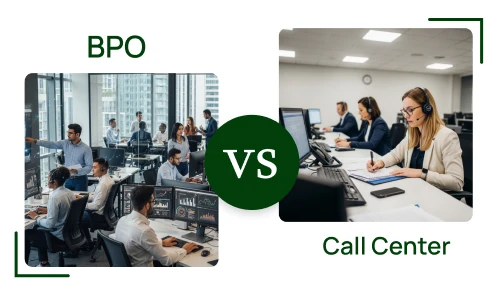
The business support world can be compared to a maze. You come across such terms as BPO and Call Center. They get tossed around a lot. However, what do these expressions imply?
But more to the point, what makes you understand which decision is the best to make in your company?
Making the right pick here isn’t just helpful. It can really save you money. It also builds stronger relationships with your customers.
Let’s make sense of it all. We will find the clear path for your business.
By the time you finish reading this, you will have a rock-solid grasp of:
It is quite typical that people confuse BPO and Call Center services. They tend to assume that they are one and the same thing. But that’s a big mistake. These two concepts are very divergent. Knowing the real key difference between BPO and call centers is super important. If you choose the wrong one, you could waste time. You could also spend too much money. Worse, it could harm how your customers feel about your business. Your company deserves a clear strategy. This guide will help you find that strategy. It will lead you to make smart choices for your service operations.
Let’s carefully pull apart these two concepts. This will show you the real differences. It’s not just about what they’re called. It’s about what they do.
Think of a call center as a group of people. Their main job is to talk to customers. These talks happen in specific ways. Often, it’s phone calls. It can also be through live chat on a website. Or by email.
The team members in a call center are called “call center agents.” These agents speak directly with your customers. They are on the front lines of your customer interactions.
Their focus is clear: managing communication channels. This includes taking inbound calls when customers need help. It also includes making outbound calls for sales or other reasons.
A call center focuses almost entirely on these direct chats. It makes sure customers get answers. It solves problems. It handles many types of customer communication.
Some tasks include: answering phone calls, responding to live chat messages, responding to customer emails, responding to social media questions, responding to incoming support requests, making outbound sales calls, and confirming appointments.
BPO is a much broader concept. It means you hire an outside company. That company then handles specific business tasks for you. These tasks are things your own team used to do.
A BPO provider takes on an entire business process. It’s not just about talking to customers. It could be managing human resources (HR). It might be doing data entry. Or even complex software development.
A BPO provider acts like an extension of your company. They take over a whole function. This lets your internal team focus on other important work.
Call centers can actually be part of a BPO service. You might hire a BPO company to handle all your customer calls. In that case, the call center is just one piece of the bigger BPO picture.
Examples of tasks: running payroll, managing staff benefits, detailed data entry, website or mobile app development, digital marketing campaigns, financial accounting, processing claims, tech support (as a whole unit, not just the calls).
The Key Difference: The biggest difference is how wide their work is. A call center has a narrow focus. It’s all about communication. BPO has a very wide focus. It takes on entire jobs or departments within your business. If you need someone to manage just your customer calls, that’s a call center. If you need someone to manage your entire accounting department, that’s BPO.
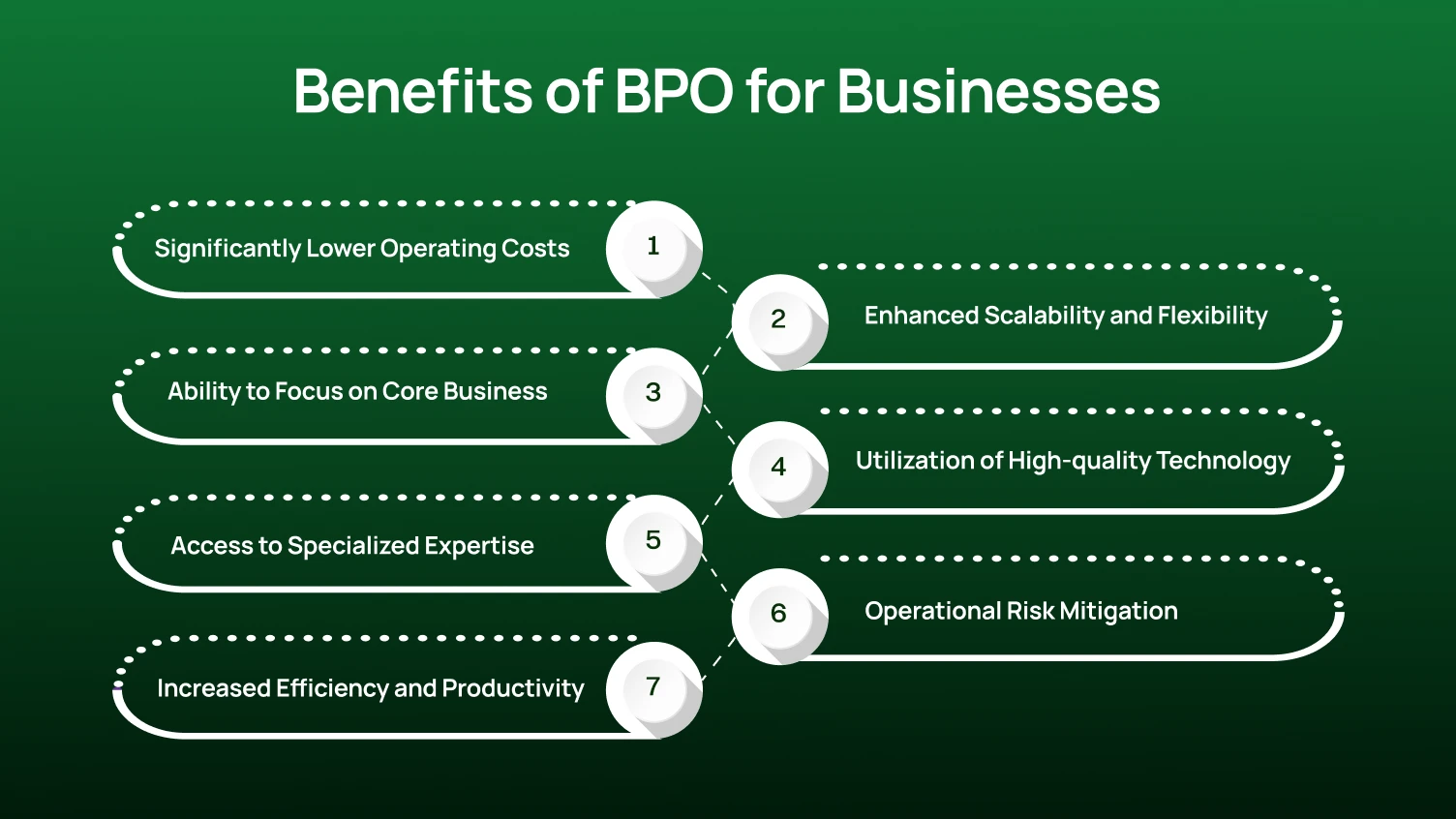
Business Process Outsourcing brings many good things to companies. It’s not just about getting help with calls. It’s about letting another company take charge of big parts of your work. This can change how you operate.
BPO is like having an entire specialist department ready to jump in. They expertly manage whole sections of your business work. This allows you to streamline and optimize your entire operation.

Call centers, whether you run them yourself (in-house call center) or hire another company to run them, bring their own distinct advantages. Their focus is always on talking to your customers directly. This is their core strength.
A call center is your main bridge to the people who buy from you. It’s where lasting relationships are formed. It’s where problems are quickly and smoothly resolved. It plays a central role in your customer retention efforts.
Choosing BPO means you’re ready to hand over a complete function. It’s a strategic move. It’s about more than just managing phone calls. Think about these specific situations when BPO really makes sense for your company.
Going with BPO is an indication that you are willing to relinquish an entire function. It’s a strategic move. It is not only about phone call management. Consider the following specifics of cases when BPO is really appropriate for your company.
As an example, a rapidly expanding e-commerce business may have its whole human resource department outsourced to BPO. This involves recruiting, remuneration, and benefits administration. This allows their core team to be able to concentrate all their efforts on making great products and better the experience of their customers in making a purchase. They are not entangled in the administration.
The need of your company is such that at certain times, it is obvious that a dedicated call center is needed. This is particularly so when having direct and unending contact with your customers is among the priorities.
For example, a specialized medical device company would likely need an in-house call center. Their agents handle complex technical support questions. They deal with highly sensitive patient information. They need detailed product knowledge. This requires direct oversight and control.
Choosing between BPO vs Call Center is a strategic business decision. It needs careful thought. Here are the most crucial points you must weigh before making your final choice.
BPO: Often offers a lower variable cost model. You pay for the service, not the infrastructure or benefits. This can be cheaper for big tasks. It can also reduce fixed expenses. Use an ROI calculator to project savings.
Call Center (In-house): Can have higher upfront costs. This includes setting up facilities, buying CRM software, and hiring staff. However, in the long run, per-call costs might be controlled better.
BPO: Great for outsourcing tasks that are not your main strength. This allows your internal teams to pour all their effort into what truly makes your business unique and profitable.
Call Center (In-house): If stellar customer experience and direct interaction are what your brand is all about, keeping the call center in-house means it’s a core competency.
BPO: Means less direct, day-to-day control. You set the rules and monitor results. But the BPO provider manages the staff and their processes. You trust them to uphold your standards.
Call Center (In-house): Gives you maximum control. You directly train your call center agents. You manage their daily work. You ensure every conversation perfectly matches your brand’s voice and values.
BPO: Offers high flexibility. A BPO provider can quickly add or remove staff. They adapt to seasonal peaks or sudden changes in demand with less fuss.
Call Center (In-house): Building up an in-house team to scale rapidly takes more time. It involves more hiring, training, and infrastructure investment.
This is a massive factor. If you handle sensitive customer data (like financial info or health records), strict rules apply. A BPO provider must meet all your data protection rules. They must follow industry standards (e.g., GDPR, HIPAA). Ensure their security measures are top-notch for all communication channels.
Both options need strong security. But with BPO, you’re trusting an external party.
BPO: Can provide highly specialized skills instantly. This could be complex software development, specific digital marketing strategies, or unique language support. They also often have modern CRM software and marketing automation tools.
Call Center (In-house): You might need to invest in training or hire new experts. You’ll also need to purchase and maintain your own tech stack.
If providing an absolutely outstanding customer experience is the absolute cornerstone of your brand, an in-house call center gives you the most direct influence. You build the culture of service from the ground up.
A good BPO can also provide great service, but you need to manage the partnership carefully.
Think deeply about what truly drives your business’s success. Consider what functions you can comfortably delegate. And what functions must you keep close? This careful thought will lead you to the best decision.
The old lines between BPO and call center are fading. More and more, businesses are opting for integrated solutions. This means they strategically combine the best parts of both worlds. They build a support system that is truly their own.
Imagine this: a company might decide to outsource some of its back-office BPO tasks. This could include complex data entry projects. Or managing the bulk of their human resources paperwork. This frees up their internal staff. At the same time, they might keep an in-house call center. This team handles all their direct, customer-facing interactions. This strategy gives them direct control where it matters most for their brand. It also helps them achieve significant cost savings on other, less central business functions.
Furthermore, many BPO companies are expanding their offerings. They no longer just do one thing. They now offer a full suite of services. This means they can provide excellent customer contact services. And they can also handle other key business processes. You might find a single BPO provider that can manage many of your operational needs. This simplifies vendor management for your business. It makes things less complex.
The ultimate goal for companies is to build a strong, flexible support system. One that helps their business grow sustainably. One that consistently keeps customers happy. This often means a thoughtful blend. A mix of in-house teams for core, brand-defining interactions. And specialized external partners for other important functions. This integrated approach is becoming the standard. It provides both efficiency and tailored customer service.
Choosing between a BPO and a Call Center depends on your business goals. A call center specializes in direct customer communication, handling inbound and outbound calls, live chat, and emails. It focuses on improving customer experience and building loyalty through real-time interactions, supported by effective call management and call center quality management.
A BPO (Business Process Outsourcing) covers a broader range of operations. It manages entire business functions like human resources, data entry, software development, and even call center services. It’s ideal for reducing costs, filling skill gaps, and scaling operations quickly and efficiently.
Choose a call center when customer service and sales are central to your brand. Go for a BPO when you want to streamline operations and boost productivity. The right choice will strengthen customer satisfaction and support long-term business growth.
The main difference between BPO and call centers is their scope. A call center focuses only on handling customer communications. BPO covers many different business processes, and a call center might be one of those services.
Yes, absolutely. A call center can be a component of a larger BPO service. Many BPO companies offer customer contact services as one of the outsourced functions they provide to businesses.
BPO often helps lower operating costs. This is because BPO companies benefit from economies of scale. They also often operate in regions with lower labor costs. An in-house call center typically involves higher initial setup and ongoing fixed costs.
BPO providers can handle a wide variety of tasks. These include human resources (HR) functions, detailed data entry, financial accounting, payroll processing, software development, mobile app creation, web design, and extensive digital marketing campaigns.
An in-house call center is usually preferred when direct, strong control over the customer experience is critical. It’s also ideal when your brand image heavily depends on personal customer interactions or if you have highly unique customer needs.
An outbound call center’s primary function is to make outgoing calls to existing customers or potential new customers. These calls can be for various purposes, such as lead generation, pre-sales efforts, telemarketing campaigns, customer surveys, or follow-ups.
An inbound call center focuses on handling incoming calls from customers. These interactions are usually for customer service inquiries, technical support, taking product orders, making appointments, or responding to general questions and complaints.
By outsourcing non-core business functions like human resources administration or routine data entry to a BPO service provider, your internal team is freed from these tasks. This allows them to concentrate fully on the activities that are central to your business’s mission and growth.
Customer experience refers to the entire journey a customer has with your brand. Both BPO (if it includes customer-facing services) and call centers significantly impact this. A dedicated call center focuses solely on refining and improving direct customer interactions, which is a major part of the overall experience.
You should carefully consider your overall budget, what your business does best (its core competencies), the level of direct control you need over operations, your requirements for rapid scalability, stringent data security and compliance needs, the specific expertise required for the tasks, and the absolute importance of direct customer experience to your brand.
