

Philippines Country Code +63: How to Call the Philippines

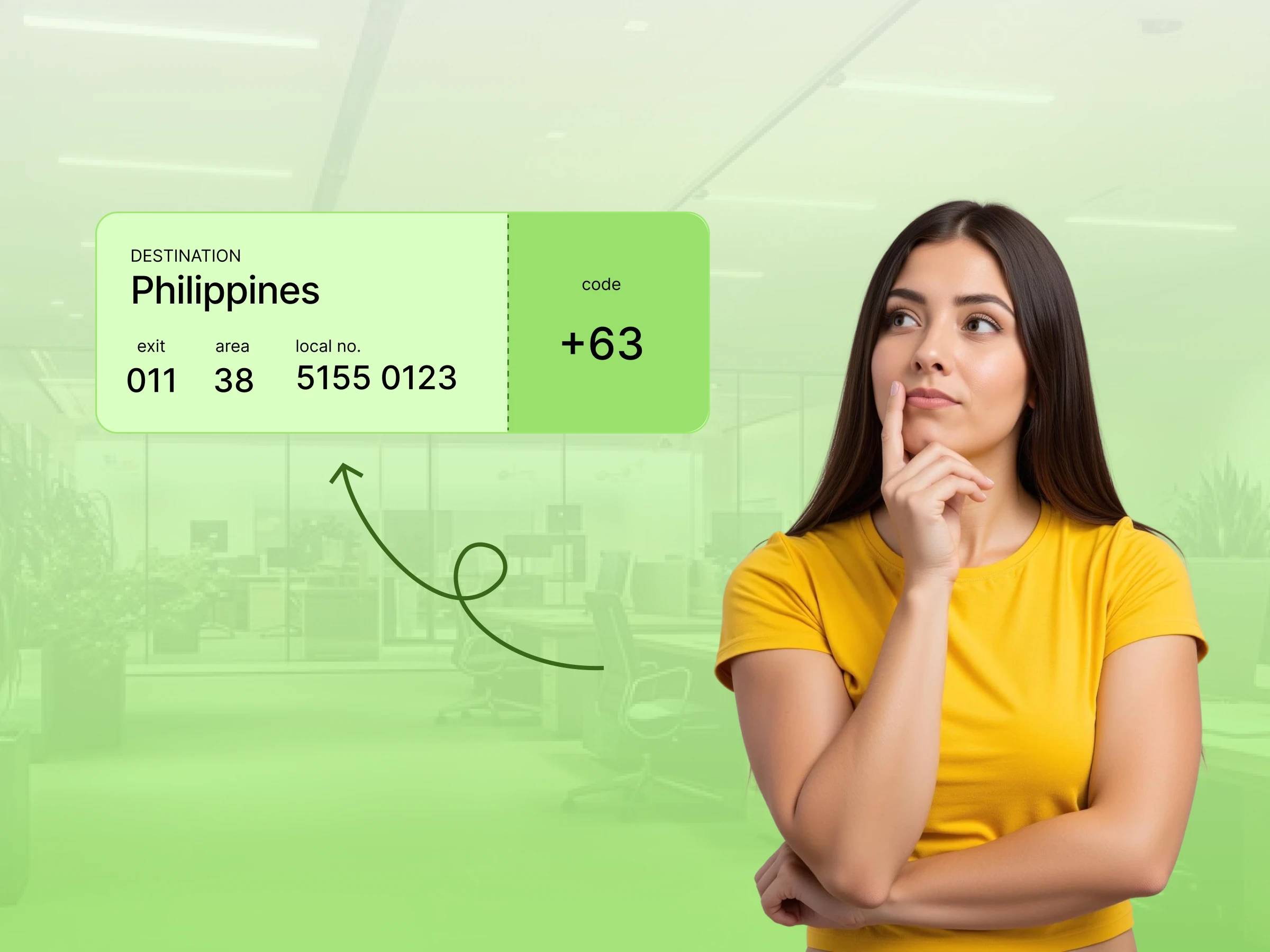
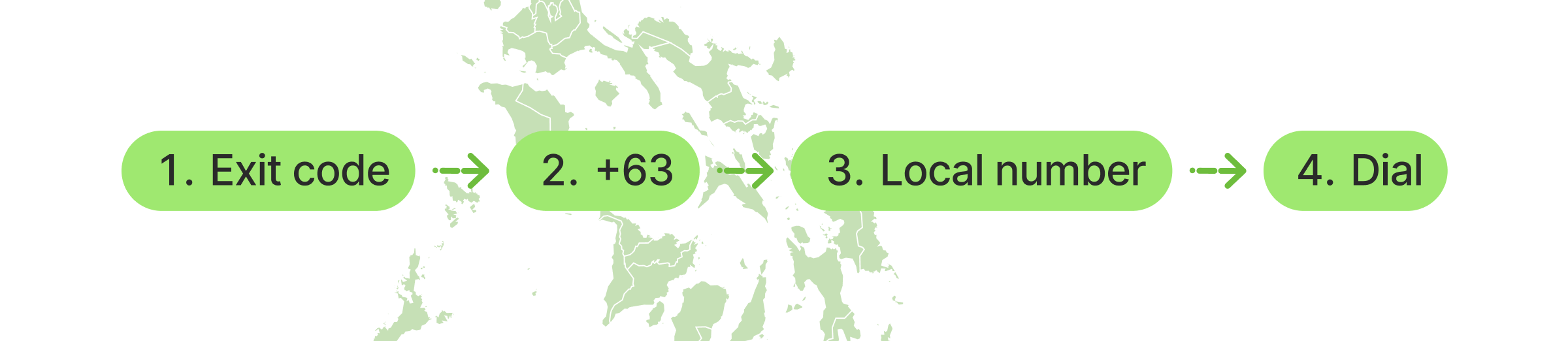
Staying in touch with contacts in the Philippines is easy when you know the keypad sequence. The Philippines country code is +63. To call the Philippines, you start with your local exit code. Next, type 63 and leave out the domestic zero. Then dial the local number.
This guide explains how to call the Philippines, mobile number formats, regional landline codes, and mobile prefixes so you can easily connect your next call to the Philippines.
Calling someone across the world can feel tricky. You just need the right sequence before you dial. Here are the core details you need for the Philippines country:
| Detail | Information |
|---|---|
| Country | Philippines |
| Country code | +63 |
| International dialing prefix (exit code) | 011 (USA/Canada), 00 (UK) |
| National/trunk prefix | 0 |
| Time zone | UTC+8 |
| Mobile number format | +63 9XX XXX XXXX |
| Landline | Varies by geographic area |
International callers must dial an international access code first when placing international calls. This table shows how to call the Philippines from various countries:
| How to Call the Philippines from Abroad | Dialing format |
|---|---|
| USA & Canada | 011 + 63 + Philippine number |
| UK | 00 + 63 + Philippine number |
| Australia | 0011 + 63 + Philippine number |
| India | 00 + 63 + Philippine number |
| From a mobile | +63 + Philippine number |
Each code in the left column is an exit code. It gets your call out of your home country. It is not part of the code for the Philippines itself.
A country code tells global telecom switches which nation should receive your call. Without it, international networks do not know where to direct your voice signal.
The plus sign(+) represents the international dialing prefix in a phone number’s international format. The numbers 63 are the official calling code for the nation. When you see the +63 country code, you are looking at the standard international format for a Philippine phone number.
The Philippines is assigned country code 63 under the international E.164 numbering system.
Yes, +63 and 0063 can represent the same international destination when 00 is the international access code used by the caller’s country. In 0063, 00 is the international access prefix, and 63 is the Philippines country code. The + notation replaces a specific access code in international phone-number format.
A Philippine phone number looks different based on whether you call a landline or a mobile phone. You need to spot these differences so you can dial without errors.
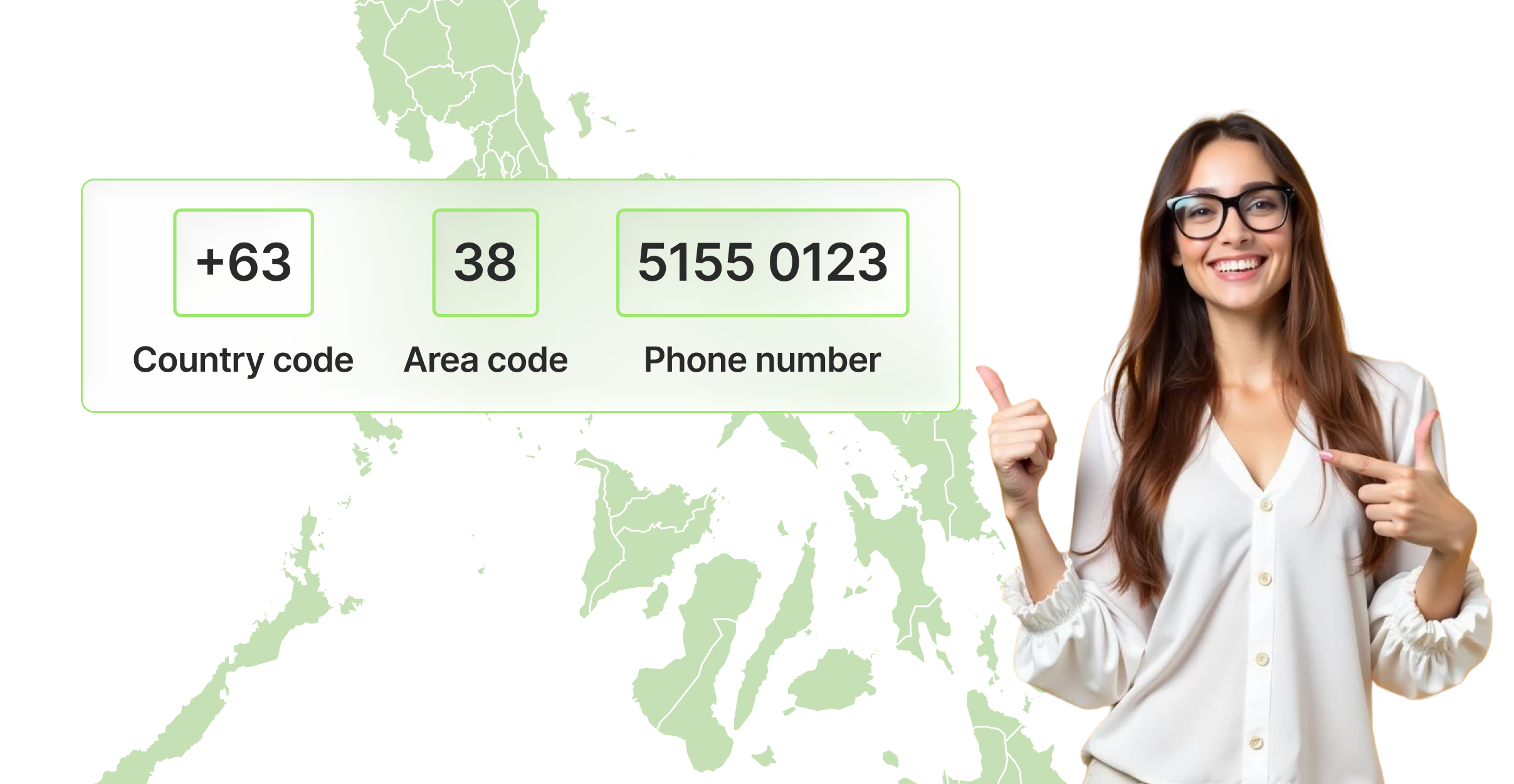
Every standard Philippine mobile number has ten digits after the domestic trunk prefix. They use the 09XX format domestically.
Here is a common example: 0917 123 4567 becomes +63 917 123 4567.
When you convert a mobile line to the international pattern, drop the domestic leading 0. Then add the +63 prefix. The first four digits of a domestic mobile line, like 0917, are a mobile prefix. They are not a geographic area code.
Fixed line setups depend on where the physical phone sits. A landline in Metro Manila uses the geographic code 2. In 2019, the National Telecommunications Commission shifted Metro Manila landlines from seven digits to eight digits.
Outside the capital, most provincial landline numbers are seven digits long. You place the local area code right in front of the local number. The total number of digits varies depending on the province you want to reach.
Do not mix up a country code and an area code. They do distinct jobs:
The country code gets you past the border. The area code takes you to a town. The mobile prefix directs your call to a specific service provider network.
Yes. When you call the Philippines from abroad, omit the domestic leading 0.
Look at this simple example: 0918 555 4321 becomes +63 918 555 4321.
Domestic calls inside the country keep that zero. Overseas networks will drop your call if you leave the zero in place after the country code.
People call from all over the globe. Here is how you place your call from key countries.
The exit code for the USA and Canada is 011, and the Philippines country code is +63.
Example: 011 63 917 123 4567.
The United Kingdom uses 00 as its international access code.
Australia uses 0011 to leave the country.
India uses 00 for overseas connections.
If you live in another country, look up your local exit code. Then dial:
[Exit Code] + 63 + [Number without 0]
Cellular phones simplify international calls. You do not need to memorize your region’s exit code. Press and hold 0 until the plus symbol shows up on your screen. Type 63, enter the area code or mobile prefix, and add the remaining telephone number. Your cellular provider handles the outbound routing for you.
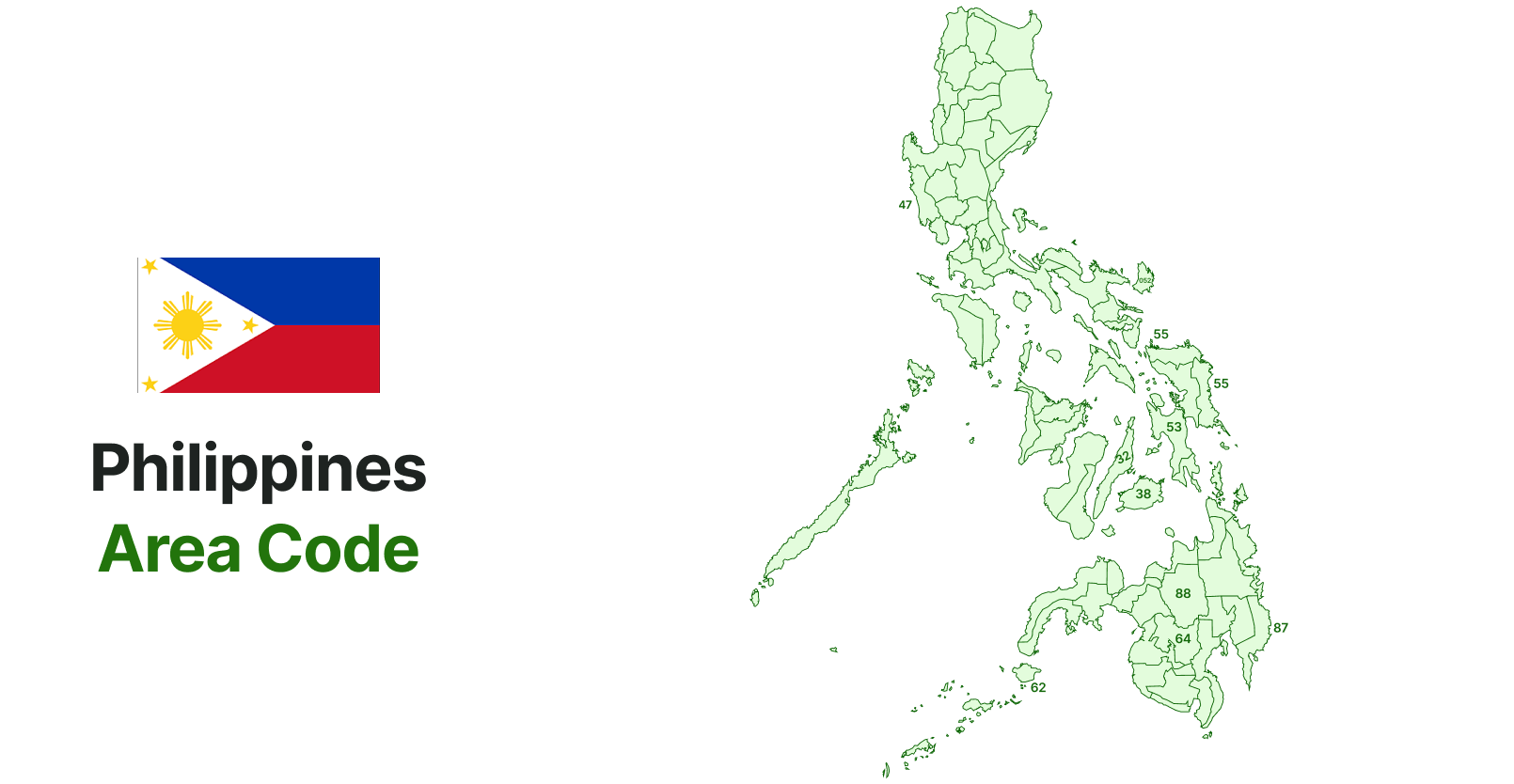
Knowing Philippine area codes helps your call reach the exact desk or home you want. Landlines use regional numbers. Philippine mobile phones use mobile prefixes.
The National Telecommunications Commission assigns area codes fixed by geographic zones. Here is a practical overview:
| Region / City | Area Code |
|---|---|
| Northern Samar | 55 |
| Eastern Samar | 55 |
| Leyte | 53 |
| bohol | 38 |
| Cebu | 32 |
| Basilan | 62 |
| Coabato | 64 |
| Zambales | 47 |
| Bukidnon | 88 |
Mobile numbers do not follow geography. Instead, they begin with a four-digit mobile prefix like 0917, 0918, 0922, or 0998.
In the past, each prefix pointed to a specific service provider. You knew instantly if a contact used Globe, Smart, or Dito. Mobile prefixes identify number ranges rather than reliably identifying a subscriber’s current carrier, because mobile numbers can be ported between providers. Because of this rule, a mobile prefix is no longer proof of their current carrier.
No. Cellular mobile numbers in the country do not have geographic area codes. They run strictly on cellular network prefixes. Never add a city code like 2 or 32 when calling a mobile device.
Keep these local contacts handy if you are visiting or managing operations in the country.
The nationwide emergency hotline across the country is 911. The government introduced 911 to replace the older 117 hotline under Executive Order 56.
| Service | Number |
|---|---|
| National Emergency Hotline | 911 |
| Anti-Corruption / Citizen Hotline | 8888 |
| Red Cross Philippines | 143 |
Nobody likes getting a phone call in the middle of the night. Check local business hours before you pick up the phone.
The nation operates on Philippine Standard Time. This is UTC+8. The entire country follows a single time zone. You do not have to worry about regional time shifts between Manila, Cebu, and Davao. The country does not use daylight saving time.
The Philippines uses UTC+8 year-round. The time difference varies by the caller’s location and, in some countries, by daylight-saving changes. Check the local time before calling.
For corporate calls, reach out between 9:00 AM and 5:00 PM local time. For personal calls, check their plans first, so you do not disturb their rest.
International calling costs can add up fast. Take a minute to check your carrier’s overseas fee sheet before dialing.
International calling rates vary by your country, carrier, destination, number type, and calling plan. Check your provider’s current international rates before making the call.
You can save money and stay connected without overspending:
Overseas calls sometimes fail. These troubleshooting tips will help you fix common errors quickly.
Leaving the domestic zero in place is the most frequent dialing mistake.
Drop the leading zero when using the +63 country code.
Do not confuse the country code with a provincial code. The digits 63 identify the nation. Codes like 2, 32, and 82 belong to cities. Never stack random numbers between the country code and the local subscriber line.
Never attach a landline area code to a mobile phone number. A mobile line requires only the country code and the ten-digit mobile number. Adding a city code will direct your call into a dead end.
If your call will not go through, try these quick checks:
Modern business links companies across the globe to skilled teams in Metro Manila, Cebu, and the Davao region. Clear telephone access keeps operations moving smoothly.
Running a company using standard long-distance calls can hurt your budget. A virtual phone system lets you stay connected with partners while holding down costs. You can set up local virtual numbers so customers in Manila can call you as if you were right down the street.
Dialaxy provides an easy way to run your business calls. It gives your team local Philippine numbers, call routing, and web-based management tools. Your overseas staff can dial out at affordable rates while presenting a local office presence. This setup keeps your business communication clear, reliable, and cost-effective.
Calling the Philippines from overseas is simple once you learn the basic steps.
Find your home nation’s exit code, add the Philippines country code 63, and drop the leading domestic zero from the local number. Now that you know how to call the Philippines, whether you ring a friend in Cebu or dial a client in Manila, you can easily connect without hassle or wasted time.
Connect with Dialaxy to make your business communication easier.
The digits 63 represent the official country code for the Philippines. You dial it to route calls to mobile phones and landlines across the country. Global telephone systems use this code to send inbound traffic directly to Philippine telecom networks.
The country code of the Philippines is +63. You enter it right after your nation’s exit code, or type +63 on any mobile phone. It connects you to any telephone line within the archipelago.
The Filipino country code for landlines is 63. When dialing from overseas, enter your outbound exit code, dial 63, add the local geographic area code, and type the local subscriber line.
Dial 011 to leave the North American telephone system. Next, dial the Philippines phone code 63. Then enter the area code or mobile prefix, followed by the local number. Remember to leave off the domestic zero.
Dial 00, which is the British exit prefix. Type 63 for the country code. Finish by dialing the area code or mobile prefix, along with the rest of the telephone number. Drop the leading 0.
Press and hold 0 on your mobile phone to type the plus symbol. Enter 63, followed by the ten-digit mobile number starting with 9. If you use a landline, replace the plus symbol with your local international access code.
Yes, you always remove the initial 0 when calling from abroad. That leading zero is a domestic trunk prefix meant only for calls inside the country. When converting a Philippine number to international format, remove the domestic leading 0 and replace it with +63.
The landline area code for Metro Manila and nearby Rizal is 2. To reach a Manila landline from overseas, dial +63 2, followed by the eight-digit local phone number.
The landline area code for Cebu province and Cebu City is 32. From overseas, dial your exit code, type 63, enter 32, and finish with the local subscriber number.
A Philippine mobile number has eleven digits for domestic calls, starting with 09. In international format, it is twelve digits long: +63 9XX XXX XXXX. Metro Manila landlines use eight digits, while provincial landlines use seven digits.
A number beginning with +63 uses the Philippines’ international code. The + indicates international dialing notation, while 63 identifies the Philippines.
