

VoIP vs WiFi Calling: The Ultimate Guide to Choosing What’s Best for You

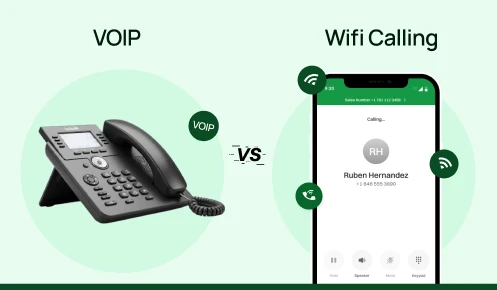
We rely on various technologies to stay connected and communicate. Two popular methods for making calls are Voice over Internet Protocol, also known as VoIP, and WiFi Calling. Many people wonder about the differences.
This guide breaks down VoIP vs Wi-Fi calling in detail, explaining how each one works, its pros and cons, and which is better for different situations. Whether for personal use or business communication, understanding the core differences will help you make the most informed choice.
The central idea for both is using the internet for phone service. However, they use very different operational methods. Voice over Internet Protocol is a mature technology. It changes your voice into data packets. These packets travel across the public internet to connect the call. This is the basic operation of VoIP.
VoIP phones are special hardware for this purpose. You can also use software installed on your computer or phone. This software acts as a client for the service. VoIP provides an independent phone service that you purchase from a provider. This service is often part of a cloud phone system.
In contrast, WiFi calling allows your mobile phone to place calls. It sends the communication over a wifi network. It does this instead of using the standard cellular network. This feature is already built into your smartphone’s operating system. It relies on your existing SIM card and mobile carriers.
The key difference is the reliance on the carrier. Unlike wifi calling, VoIP offers a completely separate service. Wifi calling and VoIP diverge here. Vs wifi calling is still tied to your carrier for authentication and billing. This fundamental difference is important for users to clearly understand.
| Feature | Voice over Internet Protocol (VoIP) | WiFi Calling |
|---|---|---|
| Primary Use Case | Business phone systems, advanced features, low-cost international calls | Overcoming poor cellular coverage indoors or in remote areas |
| Required Equipment | VoIP phones, softphones, or ATA adapters | Smartphone with carrier support and a SIM card |
| Network Reliance | Independent internet connection (wifi network or wired) | Mobile carrier authentication and a wifi connection |
| Feature Set | Extensive: call forwarding, call recording, video conferencing, etc. | Basic: simple receive calls and make calls |
| Cost Structure | Monthly subscription; very low or free long-distance and international calls | Included in mobile plan; saves on roaming charges abroad |
| Scalability | Highly scalable for many users and desk phones | Limited to the number of mobile devices on the plan |
| Emergency Calls (E911) | Requires address registration with the service provider | Automatically uses registered home address or cell tower location |
| Provider Type | Third-party providers offering cloud phone service | Mobile service provider (mobile carrier) |
VoIP offers a very robust suite of advanced features for businesses. Business communication improves greatly with its deep capabilities. For example, comprehensive call recording is often a standard feature today. This greatly assists with important training and compliance.
Adding lines is simple and very quick. There is no need for complex hardware installation. Many VoIP systems offer very low costs. The service allows companies to utilize a white label product. They can offer branded VoIP services to their own customers easily.
VoIP relies heavily on a fast and stable internet connection. Poor bandwidth quality directly affects call quality. Latency or jitters can result in dropped or choppy VoIP calls. You must ensure your network is reliable before deploying VoIP fully.
A major power outage will stop service instantly. Backup power is absolutely necessary for maintaining uninterrupted communication. Some older network routers may not handle the traffic well. They may lack proper Quality of Service controls.
The main strength of vs WiFi calling is overcoming poor cellular coverage. Users in underground locations or dense buildings can make and receive calls. It simply uses the existing wifi connection to establish communication. This greatly increases the usability of the mobile phone.
Integration is very simple because the function is built into the device. You do not need to manage a separate account or credentials. The feature automatically turns on when the phone senses a weak signal. This operation is transparent to the user.
The main limitation of VoIP and WiFi calling is the lack of advanced features. Unlike WiFi calling, VoIP provides extensive tools for business operations. WiFi calling and VoIP offer very different functionalities. The mobile carriers control all of the available features.
The call quality relies heavily on the Wi-Fi signal. A congested network shared with other users will compromise audio clarity. This service is strictly limited to mobile phones and tablets. It is not suitable for a professional office setup. The technology does not provide the extensive tools a modern business needs.
Both of these technologies represent a true upgrade of what we think of as traditional phone systems. However, they each cater to different users and offer different features. One is a full-on communication platform, while the other is a very simple extension of your mobile device.
VoIP is a comprehensive cloud-based service. It is designed to handle the complexity of large organizations. It provides flexibility and control over the entire phone system. VoIP vs wifi calling reveals a major difference in scope here. WiFi calling is a great personal convenience feature.
VoIP fundamentally changes how a company manages its calls. It transforms a basic phone line into a modern, integrated communication hub. This modernization is vital for today’s fast-paced business world. It allows for global and local connectivity through a single platform.
The ability to connect your VoIP phone system to other platforms is powerful. System integrations make workflows much more efficient. For instance, customer information can pop up automatically with an incoming call. This leads to improved customer service and faster resolution times for clients.
VoIP also offers superior disaster recovery capabilities. Since the service is cloud-based, it is not tied to a physical location. If the office is inaccessible, the service remains active. Calls can be automatically forwarded to mobile phones or other locations instantly. This continuity is a major advantage.
The benefits of Wi-Fi calling are immediate and highly practical for mobile users. It solves the frustrating problem of the “dead zone” at home or work. This simple feature makes sure your expensive mobile device is always functional for communication.
For someone using it personally, a major benefit is the ease of setup. There is nothing to install or accounts to set up and manage. It works quietly, utilizing the phone’s native dialing application. It’s very user-friendly for someone who wants the simplest solution for usage.
The financial benefit for travelers is significant. Avoiding exorbitant roaming charges makes international trips much cheaper. They can easily receive calls and make calls home over hotel Wi-Fi. This simple cost saving is a powerful incentive for using this feature regularly.
The decision of which method to use depends entirely on your situation. Your need dictates the most appropriate technology. Consider whether you need a dedicated business phone solution or a personal mobile enhancement. The context of your communication determines the choice.
You require a complete and professional phone system. Your business needs advanced call routing capabilities for managing customer calls. You are setting up a call center or a multi-office organization.
If you are a service provider, you might want to explore white label VoIP. Offering your own branded communication product can expand your business. A cloud phone system offers flexibility that traditional phone services cannot match easily.
Your main issue is poor indoor cellular coverage at home or in the office. You are a frequent international traveler who wants to avoid high roaming charges. You just need simple, reliable communication without complex features.
This option is perfect for personal use and simple residential needs. It is the easiest way to ensure basic connectivity. You leverage the stability of your home wifi connection for seamless communication.
Choosing the final setup comes down to a methodical approach. You should take into consideration what your needs are, what your current infrastructure is, and what your needs will be moving forward. You should not choose a technology solely because it’s new. It must address and solve all the issues you have surrounding communication.
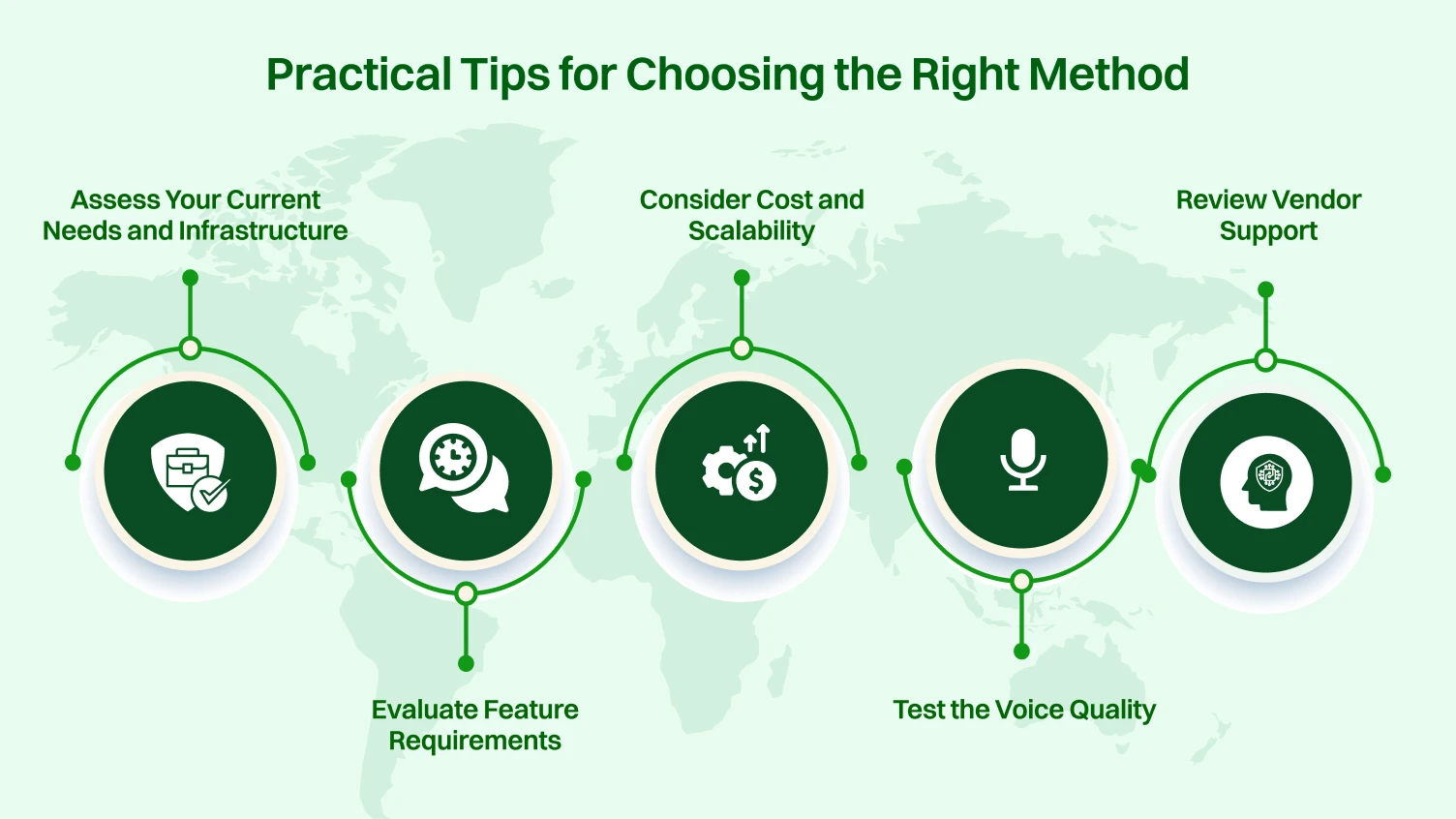
First, consider what kind of basic calling needs you have. Do you only need to be reached, or do you need complicated call management? Next, assess the quality provided by your internet.
VoIP systems need consistent high-speed. If wifi is being bogged down or is slow on the internet speed spectrum, both systems will experience quality issues.
If you are replacing traditional phone systems, measure the number of employees. Decide if you need desk phones or if softphones are sufficient. Check if your current systems integrate well with a cloud phone. This prevents wasted time and double entry.
A small business may only need call forwarding and voicemail. A large organization requires call recording, video conferencing, and API documentation. The list of needed call features determines if VoIP is mandatory.
Remember that vs wifi calling offers almost none of these business tools. It is strictly a voice solution tied to the mobile carriers. The complexity of your communication decides the required feature set.
Compare the pricing plans of different VoIP solutions. Factor in the cost of new VoIP phones or adapters. Balance this against the savings on international calls and roaming charges.
For growth, ensure the VoIP phone system is highly scalable. A cloud-based system makes adding users simple. Wi-Fi calling capacity is only limited by your number of employees and their service plans.
Before committing, test the call quality extensively. Use a trial period for VoIP calls over your current internet connection. If the data packets are slow, you will hear a noticeable difference.
For wifi calls, test the feature in all areas of your home or office. Ensure the handoff between the cellular network and Wi-Fi is smooth. This prevents call drop as you move around the location.
If you choose a white label or standard VoIP provider, check their support. Good customer support is vital for maintaining a reliable phone system. Inquire about their service level agreements and response times.
Mobile carriers provide support for wifi calling to address issues. However, they cannot customize or enhance the basic calling feature. Their support focuses only on connectivity and billing.
Our emotional attachment to a practical method of connectivity is largely a psychological state of mind. Reliable phone service reduces anxiety and builds trust in a business relationship.
People have come to expect easy-connected communication in today’s digital world. Most people go beyond the actual call quality and factor the reliability perception into their decision to use your service.
VoIP fulfills the need for a professional presence. The advanced features, like call forwarding and custom greetings, signal competence. The ability to use desk phones or softphones projects a modern image. This builds improved customer confidence in the organization.
The control over the digital data and system is empowering for businesses. Knowing the system is cloud-based and redundant provides security. This peace of mind allows staff to focus on their work. This is important for high-stakes business communication.
Wifi calling satisfies the desire for easy and free-flowing connectivity. The way it automatically switches from cellular signals to wifi calls when a cellular phone signal is low is almost magical. Wifi calling alleviates the anxiety of being in a “dead zone” with no cellular service. This ease in connection ensures that wifi calling is a more popular option for personal use.
The fact that you can avoid high roaming charges is another powerful motivator. Wifi calling satisfies your feelings of “I have control of my finances” while you are traveling or away from home. Users appreciate that in a wifi calling environment, they can receive calls without any doubt. Wifi calling is just simple; it works without a thought.
Take a moment to analyze your communication patterns. This simple exercise helps clarify the choice between VoIP and Wifi. It ensures you pick the right tool for the job. Do this before you decide on a new system.
If your list leans toward business communication and advanced features, VoIP is likely the winner. If your list only highlights poor cellular coverage and simple travel, stick with Wi-Fi calling. The ultimate decision is based on facts, not just preference.
Choosing between VoIP vs WiFi Calling is about finding the tool for your needs. Both are good alternatives to phone systems with wires. However, they serve distinctly different purposes. Understanding this core difference is the key to an informed decision.
VoIP provides a powerful, feature-rich cloud phone system. It is a modern business communication platform that handles complex needs. Features like call forwarding, SIP trunking, and API documentation are standard. VoIP systems are highly scalable for any size of organization.
Wifi calling is a simple, effective feature provided by mobile carriers. It enables basic calling when cellular coverage fails. It is ideal for personal users who want to make and receive calls over a wifi network. It uses your existing SIM card and number. It helps avoid expensive roaming charges.
Remember most of all, wifi calling is simply connectivity. Wifi calling, unlike a dedicated cloud-based VoIP solution, does not have all the advanced call features. The quality of your wifi connection is integral to both of those services. Ultimately, connecting through either of those methods depends on whether you are looking for an all-inclusive business phone solution or a simple extension of your cellular service.
The primary reason to switch to a VoIP phone is that it is cheaper and offers better features than a regular phone.
Yes, there is often a monthly fee, but it is usually lower than your traditional phone bill.
It has to have a good internet connection to work. If you lose the internet, you also lose your phone.
Wi-Fi calling also depends on your internet, so if the Wi-Fi signal is weak, you can lose the call or have poor call quality.
Yes, in most cases, you would just connect the VoIP phone to your internet.
Yes, you would typically be able to keep your old number when you switch to VoIP.
