

Email Marketing vs SMS Marketing: Which Channel Produces Better Results?

Overview:
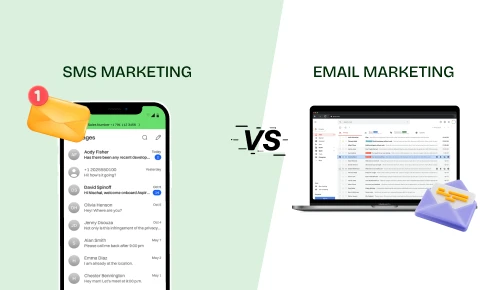
Email marketing fosters long-term relationships with in-depth content, while SMS provides instant engagement through concise updates. Using both channels together enhances reach, improves customer trust, and drives higher response rates.
The topic of SMS vs. email marketing is now gaining more significance in the digital world. The right marketing channel depends on the customer’s needs, the response time, & the degree of involvement. Making a poor decision can hinder growth, decrease response rates, and diminish returns on investment.
Text message marketing, including SMS marketing campaigns, mass text, and urgent updates, has grown quickly. Yet email marketing helps send detailed product updates, build stronger communication with customers, and nurture leads. Many businesses become confused when it comes to choosing one.
With this guide, you’ll learn when text marketing works best for flash sales or appointment reminders, and when vs email marketing improves reach. You’ll see how marketing guides compare sms messages and marketing messages, helping you build trust, reach customers faster, and drive results effectively.
It will be way better when you choose between email and SMS marketing once you understand what each channel offers. Both are popular in message marketing, and they differ in terms of time, audience needs, and overall business strategy.
SMS marketing is a fast, simple, and concise method of sending marketing messages with a limited character count. Companies utilize text message marketing as a means to conduct flash sales, send appointment reminders, handle emergencies, and even facilitate referrals.
SMS messages are received instantly because the average open rate is high, which increases the response rate to customers.
For updates on products, newsletters, promotions, and marketing guides, use email marketing. It is because the email helps facilitate better communication and build stronger interactions with customers.
Email also enables brands to gain trust through detailed monitoring of clickthroughs and returns on investment, conduct personalized campaigns, and provide time-sensitive updates at scale.
“Content builds relationships. Relationships are built on trust. Trust drives revenue.” – Andrew Davis
Let’s compare their core strengths and limitations:
Voice notes, business texting, and the balance of message marketing vs email show that the first step in creating an effective plan is knowing which marketing channel works best for your audience.
Understanding these differences is only the first step. Next, let’s see how both email and SMS marketing directly support business growth and enhance customer communication.
As you already know, email and sms are both powerful business tools. If you have a general idea of both, it will help you to find the proper solution for your objective. In some regions of sales, engagement, or customer relationship development, you will have an upper hand.
Sms marketing is not only a quick and direct method but also a way to keep in touch with clients on a regular basis. Such marketing will help you give on-time notifications and also stimulate productive responses.
What is Conversion?
Conversion means turning a lead into a customer. It could be booking a showing, signing up for a newsletter, or closing a deal. Strong email and SMS campaigns increase conversions.
Examples used would explain these advantages. An example is a flash sale sent via SMS, allowing customers to receive the message immediately. In contrast, a more thorough email newsletter can be used to describe the functionality and advantages of the products.
The integration of the two can achieve the highest level of engagement and reach. The two methods have their own strengths. The decision between SMS marketing and email campaigns would be based on your audience, urgency, and communication objectives. They usually do their best when used in combination.
Knowing the benefits is essential, but real impact comes from how you use them. Let’s explore how SMS and email marketing work in practice and what it means for your strategy.
The selection of the appropriate marketing channel must be well-planned. Follow these steps to determine which of the SMS marketing or email campaigns would be most effective in achieving your objectives, customer base, and the kind of message you have to convey.
Begin with the question: What am I trying to get out of this message?
For SMS:
For Email:
Consider who will receive your message
While using SMS:
While Using Email:
SMS fits best when:
Emails work best when:
After determining the objective, audience, and message type, select the channel with the highest impact.
If you use SMS:
If you use Email:
“In the world of Internet Customer Service, it’s important to remember your competitor is only one mouse click away.” – Doug Warner
Example in Practice for SMS:
An SMS flash sale notification instantly reaches customers, creating a sense of urgency and motivating immediate purchases. Likewise, an SMS appointment reminder ensures clients never miss important schedules by delivering direct, concise, and timely updates straight to their mobile phones.
Example in Practice for Email:
A follow-up email provides customers with detailed directions, fillable forms, and extra guidance that an SMS cannot include. The format enables brands to convey clarity, context, and professional communication, while fostering stronger trust and long-term customer relationships.
Steps and strategies outline the process, but psychology explains the underlying reasons. Let’s examine customer behavior to understand why people respond differently to each channel.
Understanding the reasons behind customer differences in their responses to SMS marketing and email marketing can inform the formulation of more effective communication strategies. It is not just about sending messages, but also about selecting the method that’s right for the audience at the right time.
When individuals compare text message marketing and email marketing, similar themes emerge. It is said that SMS messages can capture their attention in a matter of seconds. On the other hand, emails are more appropriate when there are more details.
For example, customers may prefer to receive fast text messages to know when their deliveries are ready, whereas they want emails in cases of contracts or instructions.
Mass text campaigns will be more effectively received by younger users who are accustomed to receiving mobile alerts. They see SMS as fast and easy. Older customers tend to prefer email campaigns, as they are a more familiar format and allow for explanations.
These variations explain why the marketing channel should be aligned with the desired group.
By adhering to such trends, companies will be in a position to determine when to utilize the power of SMS marketing and when to employ an email campaign. The wise choice is that messages that are not artificial have a higher response rate and support a larger business strategy.
Insights into customer psychology set the foundation. Now, let’s move to practical templates you can use today for both SMS and email marketing campaigns.
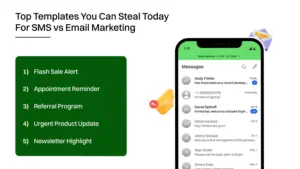
It is all about creating the appropriate marketing messages. Regardless of whether you are using SMS marketing or email campaigns, the tone and structure of your tool count should be considered if you wish to achieve results.
The following are tested templates, which can be applied to your business strategy in real life.
“Don’t find customers for your products, find products for your customers.” – Seth Godin
Templates provide a starting point, but success ultimately depends on measurement. Let’s see how you can track performance and measure results for SMS and email campaigns.
Sending sms messages or emails is just the first step. One of the main benefits of knowing the effectiveness of something is its actual value.
Tracking outcomes enables a deeper understanding of what motivates engagement, identifies opportunities for action, and reveals practical ways to gain the customer’s trust.
With SMS, check how many of your texts are delivered and opened. A strong sms solution usually shows near-perfect delivery rates because texts land directly on phones.
For email, delivery depends on inbox filters. High average open rates indicate that your subject lines are effective, while low ones suggest that your marketing channel may need tuning. If you have reasonable average open rates, it means that your subject lines are working well.
However, if the numbers are low, it tells you that your marketing channel is likely out of sync.
It’s not enough for people to see your message — you want them to act. SMS works best for quick responses, such as confirming an appointment or a flash sales campaign.
Emails excel for detailed product updates and campaigns, where you can measure click-through rates on links, buttons, or referral offers. Both show how well your marketing messages encourage action.
Timing matters. SMS usually wins here, as most people open texts within minutes. This makes it perfect for urgent updates or time-sensitive updates.
Emails may take longer, but they create space for storytelling. Think of a marketing guide or newsletter that builds relationships over time. This slower pace still helps build stronger communication with customers.
Responses are good, but sales are better. Track how many leads from texts book appointments or make purchases. Connect your CRM to see if sms marketing campaigns actually drive results. For email, measure conversions tied to clicks.
Did your campaign bring in orders or sign-ups? That’s where return on investment becomes clear in text vs email marketing.
Texting is a low-cost and powerful tool for direct communication, especially when utilizing mass text campaigns for events or promotions. Email has a lower per-message cost and works better for nurturing leads with longer marketing and email marketing strategies.
The mix of both channels often delivers the best balance of price and impact.
Metrics reveal effectiveness, but execution makes the difference. The following section walks you through a step-by-step tutorial on running SMS or email marketing campaigns.
A compelling communication message is not sufficient; the user should employ a step-by-step process to reach their audience genuinely. This type of communication will result in users being more active and leads being guided towards sales.
Pick an SMS service provider that supports bulk messaging, delivery tracking, & scheduling. Look for automation tools such as Drip texts & instant alerts. This ensures smooth execution with minimal manual work.
Only send messages to people who have opted in. Use sign-up forms, event registrations, or QR codes to capture numbers. Regularly clean your list to remove outdated contacts and avoid delivery failures.
Keep the message under 160 characters. Use the recipient’s name when possible and add a clear call-to-action, like “Reply YES to confirm” or “Tap the link to claim.” Always include opt-out instructions.
Send texts when your audience is most likely to respond. For example, late afternoons or evenings often work best. Avoid sending too frequently to prevent fatigue while maintaining consistent engagement.
Review delivery rates, response rates, and clicks on links. If open rates are low, adjust timing. Test different CTAs to determine which ones trigger immediate responses. Small changes create stronger campaigns over time.
What is A/B Testing?
A/B testing means sending two versions of a message to see which performs better. This method helps refine campaigns and boost results.
Choose a platform like Mailchimp, GetResponse, HubSpot, or Constant Contact that supports bulk delivery, marketing automation, and analytics dashboards. Ensure it can manage templates, A/B testing, and drip sequences.
Utilize website sign-up forms, gated content, or webinar registrations to expand your email list. Segment subscribers by demographics, interests, or past behavior for more personalized campaigns. Remove inactive addresses to protect deliverability.
Write a compelling subject line to boost open rates. Keep the email body clear, scannable, and visually appealing, incorporating images or links where appropriate. Whenever you add images make sure to remove the background noise with clipping path tools. They keep the resolution but lower file size. Add a strong CTA, such as “Download Now” or “Shop the Sale.”
Schedule emails when recipients are most likely to check their inboxes, commonly in the mornings between 9 AM and 11 AM. Set a consistent cadence for newsletters or promotions that doesn’t overwhelm subscribers.
Measure open rates, click-through rates, and conversions. Run A/B tests on subject lines, layouts, or send times. Use insights to refine future campaigns and maximize long-term engagement.
Running campaigns is only part of the job. To maintain a safe and trustworthy business, you must also adhere to compliance rules and uphold customer trust.
The use of SMS or email as a marketing tool can revolutionize your business, but if you are not cautious, the opposite could happen. Keeping your campaigns safe by following the standards in a way that your audience will actually trust and participate in your messages.
Never send texts to numbers that didn’t consent. Collect opt-ins via website forms, events, or in-person sign-ups. Respecting consent ensures your messages are noticed, increases engagement, and establishes trust from the start.
Include a clear opt-out, such as “Reply STOP to unsubscribe.” Transparency demonstrates politeness, empowers recipients to feel in control, and reduces frustration while maintaining compliance.
Send messages periodically, not too frequently. A consistent but moderate schedule keeps your audience engaged without triggering annoyance or opt-outs. Balance is key for long-term SMS effectiveness.
If messages may incur charges, include “Message & data rates may apply.” Always provide precise details about promotions, special offers, or referral program conditions. Honest communication builds confidence in your messages.
Track opt-outs, complaints, and delivery rates. Test changes in timing, wording, or content gradually. Minor adjustments enhance engagement and ROI while maintaining your campaign’s compliance and effectiveness.
Send emails exclusively to subscribers who consented via forms, events, or downloads. Respecting opt-in permissions ensures your emails land in the inboxes of those who are genuinely interested and improves response rates.
Every email must have a visible unsubscribe link. Providing an easy exit shows professionalism, respects your audience, and helps maintain a positive brand reputation.
Space emails appropriately to avoid fatigue. Regular newsletters or campaign updates nurture engagement while preventing recipients from marking messages as spam or disengaging entirely.
Clarify costs, restrictions, or deadlines in promotions. Honest, detailed communication builds credibility and strengthens subscriber trust in your brand.
Monitor open rates, click-through rates, and unsubscribes. Test subject lines, layouts, or sending times. Gradual improvements enhance campaign performance while keeping your approach ethical and reliable.
Such dealings, which follow the steps mentioned, are not merely a compliance with the laws, but also cultivate trust and deepen the involvement of the people.
Compliance creates the foundation, but best practices ensure long-term success. Let’s review the most effective tips for running SMS and email campaigns smoothly.
“Without data, you’re just another person with an opinion.” – W. Edwards Deming
Both Email and SMS marketing are essential for successful inbound marketing. It is a branch of digital marketing, and digital marketers understand which methods to follow in different situations. To implement SMS and Email marketing, you need to have a basic understanding of digital marketing.
To effectively reach and engage audiences, businesses must understand the differences between these methods and leverage each one appropriately.
SMS marketing means sending promotional messages directly to the customer’s phone. It uses software to manage the contact lists, track campaigns, and schedule messages.
Yes, you can use both email and SMS marketing together. This helps in creating a comprehensive strategy that strengthens both channels. By following this approach, you can effectively reach your audience, which helps maximize engagement.
You can use email marketing for newsletters, educational content, and product announcements while making professional B2B communication.
