

Virtual Phone Number Explained: Instantly Upgrade Your Business Calls

These days, business happens everywhere; it can be from a home office or simply in a coffee shop.
With a traditional desk phone, how would you stay connected with your team and never miss a customer call while also maintaining professional courtesy with customers?
The answer is in a simple yet powerful tool: a virtual phone number.
This guide will ultimately make you understand what a virtual phone number is and why you should use one to revolutionize your business communication.

A virtual phone number is a phone number that operates over the internet. It is not connected to a physical phone line. Instead, it uses cloud communications and can receive calls on any device connected to the internet.
It works through VoIP phones, mobile apps, or contact center software. You can use it from your cell phone, desk phone, computer, or any other device you wish, as long as you are connected to Wi-Fi.
Unlike landlines or telephones, you don’t need a physical phone or copper wiring. You can think of it like an email address; you can access it from anywhere, at any time.
The best part is that the receiver receives the phone call, which displays the area code and location of the region you choose. So, whether you are based on business calls or operating remotely, virtual phone systems work best for you.
A real-life example:
A real estate agent in the United Kingdom uses a virtual phone number to take client calls while traveling through Hong Kong. The client never knows the agent is halfway across the world. It is because the client does not have to use an extra country code or area code, and it feels like a local call.
Simply dial like you call other native people. This flexibility helps maintain a local presence.
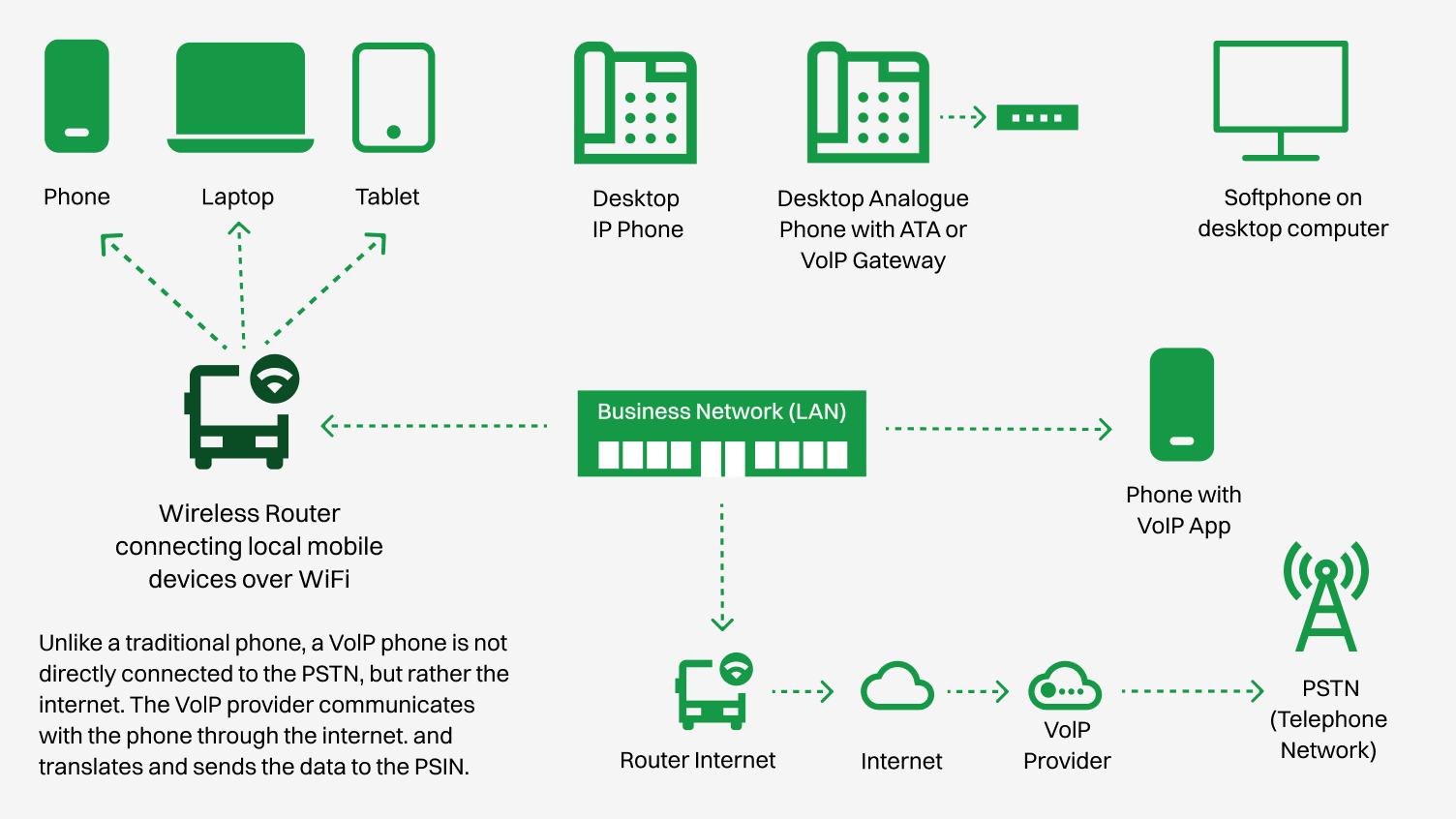
Instead of using a regular phone line, a virtual phone number routes calls via the internet. A cloud-based phone system or VoIP phone service handles the call when someone dials your virtual number.
Then it forwards the call to any device you choose, like your mobile phone, desk phone, or a browser-based communication platform. Unlike traditional phones, there’s no physical SIM or fixed line. You can use call forwarding, set a caller ID, and receive incoming calls from anywhere.
These numbers are often managed through a virtual phone system dashboard where you control call routing, call recording, and even assign phone numbers per user.
They’re perfect for businesses that want a local virtual phone presence in multiple regions or need features like unlimited calling, outbound calls, or custom call handling without investing in hardware.
A traditional phone line requires a rigorous physical setup and has a high maintenance risk. It also includes a security threat as it heavily depends on the wires.
Meanwhile, the virtual phone number operates over the internet, ensuring high security. They offer various other facilities, including call forwarding, call routing, call recording, and many more. And the best part is that it can be used from any part of the world.
Here’s a quick breakdown:
| Feature | Virtual Phone Number | Traditional Phone Line |
|---|---|---|
| Infrastructure | Cloud-based, VoIP number | Copper-based, physical phone lines |
| Devices | Any device, from mobile phones to laptops | Only desk phones or wired cell phones |
| Call Routing | Smart call forwarding, auto attendant setup | Fixed routing, hardware-based |
| Mobility | Full mobility for remote teams | Restricted to one location |
| Setup Time | Active in minutes | Days to install |
| Maintenance | Cloud-based updates | Regular hardware servicing |
| Cost | Often lower, priced per user per month | Higher due to hardware and labor |
| Features | Call logs, caller ID, call recordings, voicemail transcriptions | Basic ringing and voicemail |
According to Verified Market Reports, “over 80% of businesses report increased customer satisfaction and reduced operational costs after implementing virtual number systems”.
Imagine running an e-commerce store,
You must receive calls, respond promptly to text messages, and route lead calls to another department. All these things are possible through a virtual phone number, even if your team members work in multiple time zones.
This flexibility makes virtual phone number providers ideal for businesses that want to scale their software capacity.
All virtual numbers do not have the same functionality. The right choice depends on your business’s specific requirements. Here’s a breakdown of the primary types available for virtual phone numbers.
A local number helps familiarize your company with customers in a particular region or city, thereby building trust with them, as a startup in San Francisco that would like to get into Austin.
You could now have a local presence with a (512) number, which would mean that it is more probable that Austin-based clients will call you.
To get toll-free numbers such as 800, 888, and 877 is a great move for a company. It gives a business-like, countrywide brand image.
It also eliminates the price factor so that customers can call you at any cost. It is perfect to use in e-business outlets, national advisory companies, and call centers.
Vanity numbers are the ultimate branding tool. It consists of a word or phrase instead of a number. It is attractive, and businesses use it to make it memorable. For instance, a bouquet store can use numbers like 1-800-FLOWERS.
Customers can easily remember them from the advertisements, which increases the rate of inbound calls significantly. It makes customers strongly associate your brand name whenever they hear it.
Ready to make your business global? A virtual phone number on an international scale allows you to have a presence in another nation without having to incur the cost of an office.
The UK firm may have a virtual Spanish numero virtual to serve customers in Madrid, or a Turkish company may have a sanal telefon numarası to establish a market in London. This renders your business accessible and local to international customers.
Do you need a number to work on a short-term project, a temporary advertising campaign, or to hide your identity?
You can use it to secure sign-ups on online accounts or temporarily communicate with clients for a project. It ensures that your primary business and personal lines remain private and secure.
A virtual phone number has more functionality than just calling. The user gets the convenience of using the powerful capabilities that a traditional phone system simply can not match.
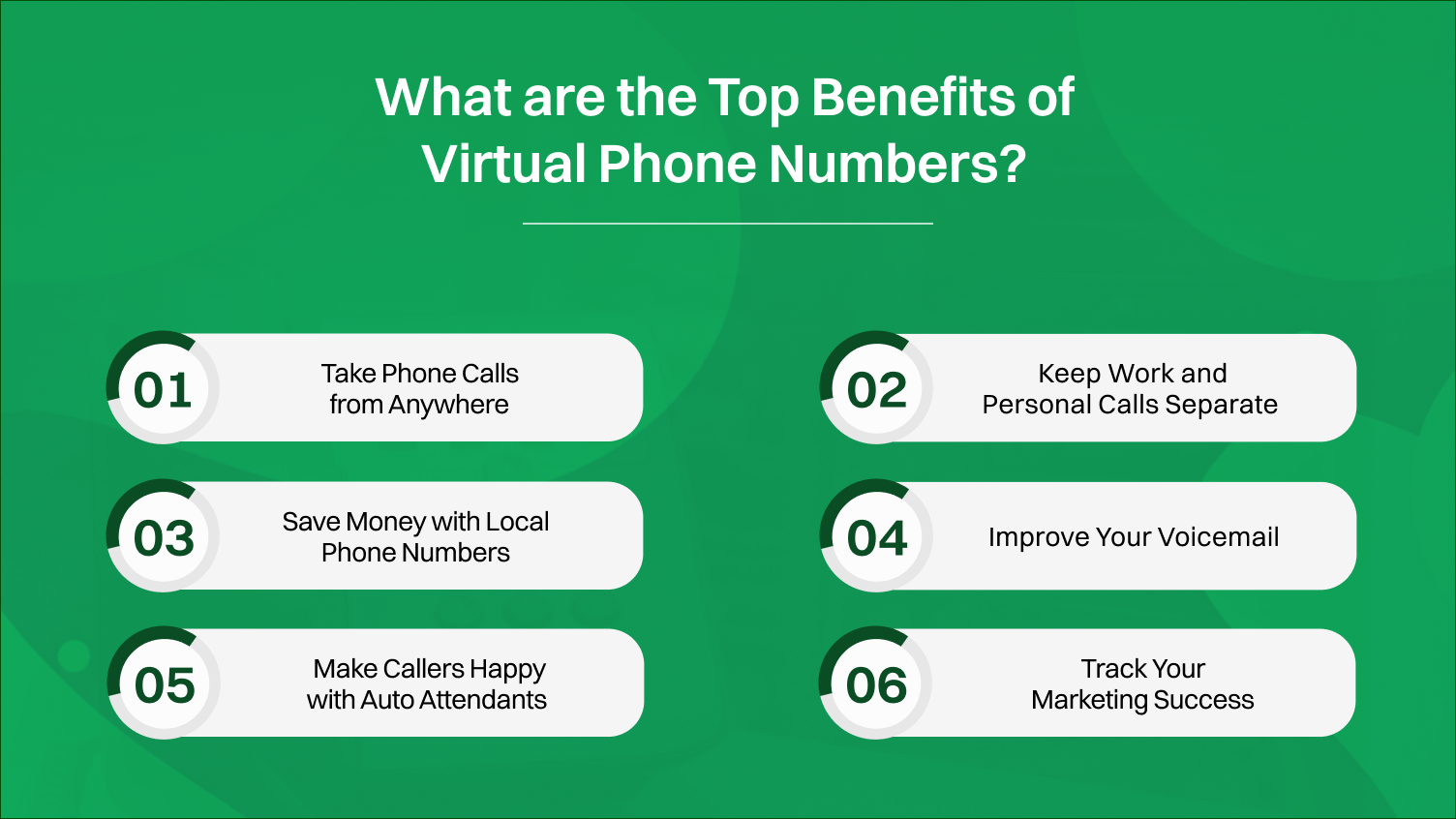
It helps businesses of all sizes to be efficient, professional, and have a global reach. The following are nine practical advantages of the major business results.
Business Outcome: You will never miss a critical lead or customer call again.
The competitive market requires a business to be actively responsive. If you are tied to the desk to make and receive calls, chances are you will miss some of them.
Well, a virtual phone number gives the freedom to be anywhere with your device and take calls anywhere. It can be in your home, on the road, or even in another country, on the device of your choice.
The swiftness of the virtual phone system ensures that the conversations meet the right person, which automatically caters to customers, driving an increase in sales.
Business Outcome: You can build instant credibility and trust with your team and customers in every call.
We all know that first impressions set the tone for future interactions. Even a one-man startup sounds like a well-established corporation with a virtual phone system.
The professional auto attendant (Press 1 for Sales, Press 2 for Support) and greetings explicitly recorded for your business give the caller a sense of direction and an image of a well-organized and professional business.
You are not only purchasing a virtual office phone number, but a tool that will raise your brand perception even before the first ring.
Business Outcome: You can lower the cost of ownership and reinvest the money into other departments.
Traditional phones are costly: the hardware is expensive, the installation is complicated, and there are maintenance contracts. They also charge a lot for international calls.
You have the choice to pay for a monthly subscription that allows for unlimited calling in certain areas. Here, you can allocate the remaining communication budget to other useful resources.
For this reason, you do not have to be constrained by the budget allocation for communication; the flexible monthly model also works the best.
Business Outcome: You can adapt your communications infrastructure according to your business needs in just seconds, not weeks.
Is your company recruiting at a fast rate or preparing for a seasonal peak? In a traditional system, it is a time-consuming and expensive procedure to add a new phone line.
Meanwhile, a virtual phone system grows with you. If you have to create ten new users for a new sales team? It takes only a few minutes through a basic web interface.
You can easily scale back when the season is over, and you will never pay more than what you use. This allows quick adaptation to changing workforce needs.
Business Outcome: You can increase call answering rates and turn them into a meaningful deal without opening a physical office.
Expanding into a new office or location is a huge step. A virtual phone number allows you to test the water first. You can instantly have a local presence by getting a number with a local area code, such as London, Hong Kong, or New York.
People will call and respond to a number they know much more than to an unknown number. This small modification can make a huge difference and enable you to create a customer base in new territories regardless of your location around the globe.
Business Outcome: You can prevent employee burnout and maintain professional courtesy.
When employee use their personal number, it’s like handing them the receipt to burn out. A work call at any time will become a barrier between work and personal life. It will also affect morale and efficiency.
Here, a virtual phone number works as a protective shell for the employees. With VoIP, they are able to make business calls and receive those calls without their personal number being exposed.
Moreover, options such as business hours allow calls to be directed to voicemail after 5 PM, sparing everyone their personal time.
Business Outcome: You can leverage business intelligence to improve training and customer service.
You might have seen heroes packed with powers. Just like that, virtual phone systems have features that work as dynamic business tools.
You can use call recordings to train new support agents or review key client conversations. Voicemail-to-email transcription ensures you can quickly read and respond to messages without having to listen.
Additionally, detailed call analytics show you peak call times, wait times, and call volume, providing the data you need to optimize staffing and improve the customer experience.
Picture this: A support manager can review recorded calls to evaluate service quality and provide coaching. This leads to improved customer experiences and service consistency.
Business Outcome: You can increase team productivity by creating a unified system for all customer communications.
Efficiency is lost when your tools don’t talk to each other. Contemporary virtual phone systems are designed to work hand in hand with the programs that you are familiar with, including the CRM.
You can integrate your existing CRM software with the virtual phone number. Upon receiving the incoming call, the call activity can be logged. The customer’s record can be automatically displayed, eliminating the need for manual data entry.
Imagine a sales team saving time by having call data synced with client records instantly. It will also reduce manual errors and improve operational efficiency.
You can set up a virtual phone number in a straightforward way. The process will take less than an hour. This five-step plan will guide you to set up the virtual phone number, ensuring you choose the right system for your specific needs.
Before you start connecting to the virtual phone number providers, you have to know what you are looking for. So ask yourself:
Your answers to these questions will inform the providers about your needs and help them find the best pricing plan for you.
Today’s competitive market is filled with excellent providers. Each virtual phone number providers have their own strengths. Don’t just pick up the first one you see. Research the top five contenders to find the perfect match for your budget.
Here is a table to help you with it.
| S.N. | Provider | Strengths | Best For | Unique Features | Starting Price |
|---|---|---|---|---|---|
| 1 | Dialaxy | Fast setup, local-global reach, intuitive dashboard | Small to large businesses | Area code customization, call forwarding, instant activation | $10/month |
| 2 | Grasshopper | Mobile-friendly interface, strong call handling tools | Solo entrepreneurs, small businesses | Business texting, voicemail transcription | $14/month |
| 3 | RingCentral | Enterprise-level features, a unified communications suite | Mid-size to large teams | VoIP, video, messaging, and integrations with CRMs and apps | $20/month |
| 4 | OpenPhone | Startup-focused platform, fast setup, CRM integrations | Remote teams, growing startups | Slack and HubSpot sync, shared team inbox | $15/month |
| 5 | Nextiva | VoIP with built-in CRM and helpdesk capabilities | Professional service firms, call centers | Auto-attendant, sales pipeline tools, HD voice quality | $25/month |
Do you already have an established business number that your customers know and trust? You don’t have to lose it.
The act of transferring your current number to a new carrier is referred to as phone number porting (or Local Number Portability, LNP).
All reputable virtual phone providers provide this service. You will complete a Letter of Authorization (LOA), and your new provider will take care of the transfer.
This will provide a seamless transition without any downtime, allowing you to retain your established identity while upgrading your technology.
Once you are ready with your business numbers, now is the time to configure your system for the best performance.
You can customize your own dashboard. For that,
Before you start to make calls to your customers or switch from your old system, run some tests. Call your number from a separate phone to check the tone of greeting, if the calls are recorded and routed correctly, and others.
Once you’re confident everything is working perfectly, it’s time to go live. Update your phone number on your website, email contacts, and social media profiles.
The true power of a virtual phone system isn’t just in its features, but in how it solves real-world business challenges.
This is how some of the industries put them to work:
The Challenge: Small businesses or startups need to build credibility at as low a price as they can. Using a personal cell number looks unprofessional and leads to founder/ employee burnout.
The Solution: For a low monthly subscriber like Dialaxy’s $10, a virtual phone number can get all the features. The auto attendant, professional greeting, and a dedicated business line answerable from anywhere, and more. This automatically projects a larger and organized company.
The Challenge: A real agent has to deal with multiple marketing channels such as billboards, newspaper ads, social media campaigns, and others. How would they know which one is generating the leads?
The Solution: The agent assigns a unique local virtual number to each campaign. Each ad on a different platform is assigned a different number. In the dashboard, the agent can see how many calls each specific number generated. Hence, the marketing ROI cost was reduced just like that.
The Challenge: An online shopper sees no phone number, which feels risky and untrustworthy. He/she liked the product but declined the cart.
The Solution: The e-commerce business displays a toll-free number, 800, on their website. This immediately signals to customers the legitimacy of the website and the cost-free enquiry. There are agents ready to answer pre-sale questions that reduce cart abandonment rates and increase sales.
The Challenge: A large enterprise handles thousands of customer inquiries daily. The inefficient call routing leads to frustrated customers and overwhelmed agents.
The Solution: The enterprise uses a virtual phone number with advanced skill-based routing and AI features. The system automatically directs calls to the agents based on the issue. Managers use a real-time analytics dashboard to monitor the call queue and the performance of agents. It enables the company to make data-driven decisions.
Virtual phone numbers offer flexibility, cost savings, and global reach. But like any tool, they come with limitations that can impact reliability, security, and performance, especially if not implemented correctly.
Below are the key drawbacks every business should consider before fully adopting a virtual phone system.
A virtual phone number works through an internet connection. If the connection is unstable or drops, so will incoming calls, call recordings, and any live support. This becomes a critical issue for teams relying on real-time communication through a cloud-based phone system.
A strong, reliable internet provider is essential for uninterrupted service.
Virtual numbers generally lack true 911 or emergency call capabilities. Since these systems do not necessarily track physical location, they may not be able to give reliable information to emergency services.
Businesses needing emergency support should not rely solely on a VoIP phone or virtual telephone.
Many communications platforms offer apps for mobile phones, but they may not function consistently across all devices. Older desk phones or operating systems may struggle to handle advanced features such as call forwarding, voicemail, or call routing.
Testing app functionality across team devices is recommended before full deployment.
Overall, the new standard for modern, agile business communication is a virtual phone number. It’s a low-cost, high-impact tool consisting of powerpack features for your organization. It equips businesses of all sizes with flexibility and professionalism.
Whether you are a solopreneur or an enterprise looking to break the wire barrier and scale the operation, he virtual phone number will change your game.
Ready to upgrade your phone system? Explore Dialaxy’s virtual phone number for the perfect fit for your business today.
Yes, some providers offer a virtual phone number free with basic features.
A virtual phone number for business improves flexibility, enhances professionalism, and supports remote communication.
Simply choose a cloud telephony provider and sign up. Then, choose your preferred country, area code, plan, and enjoy calling.
Yes, Google Voice numbers are virtual, and they operate over the internet.
Yes, most virtual phone number provides texting (SMS), but availability depends on the provider.
