

How Many Area Codes Are in the US?

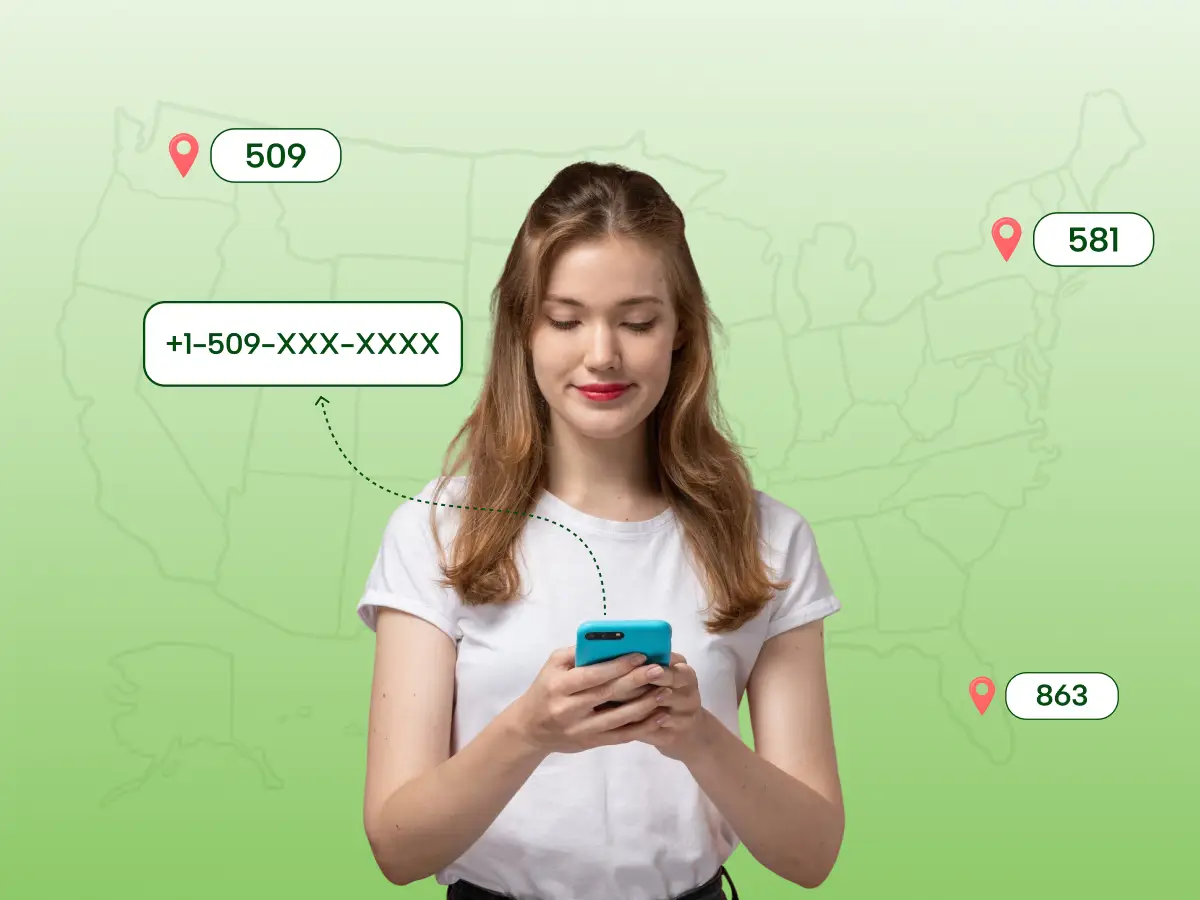
Ever wondered why your phone number starts with three specific digits?
Those are area codes, and they’re everywhere in America. From New York to Los Angeles, every phone number has them.
But what are they exactly?
Why do some states have dozens while others have just one?
In this guide, we’ll break down everything you need to know about area codes and, most importantly, how many area codes there are in the US.
Learn how many area codes exist in the US, why some states need more, and what they mean for business communication.
Whether you’re curious about your own number or looking to get a local area code for your business, we’ve got you covered.
Your phone number starts with three digits. That’s your area code. So, like 415-555-0123? That 415 part is what we’re talking about. It tells you what part of the country someone’s in.
When counting U.S. area codes, it is important to distinguish geographic NPAs from non-geographic codes. Geographic NPAs serve specific locations, while non-geographic NPAs support services such as toll-free calling. NANPA’s U.S. and territories figure includes geographic NPAs serving those locations.
Here’s what happens. You dial a number and boom, those first three digits tell the phone system where it needs to go. It’s like directions for your call.
After that, you’ve got three more numbers that get more specific, then four more that actually find the person. Without those first three, nothing would work at all.
Back before these existed, calling someone who wasn’t nearby was a nightmare. You’d have to talk to a person working the switchboard and wait forever while they manually plug cables around. Super slow.
Then, 1947 rolled around, and the North American Numbering Plan introduced area codes. Suddenly, calls went through right away. Changed everything for business and how people stayed in touch.
These days, area codes mean stuff. You see 212, and you know it’s New York. You see 415, and you think San Francisco. Popular area codes like these actually have real meaning.
Companies care about this. They’ll get a phone number from Los Angeles because it makes them look local to folks there. People pick up local calls way more often. It actually works.
Next up, let’s get into the history of area codes.
The story of area codes goes back further than most people think. Understanding when and why they started helps you appreciate how modern phone systems actually work.
It all started in 1947. AT&T, the American Telephone and Telegraph Company, rolled out the first area codes. They basically changed how the whole phone system worked. Before this, everything was a mess.
Before area codes, long-distance calls were expensive and slow. You couldn’t just call someone far away whenever you wanted.
The American Telephone and Telegraph Company had to find a better way. They figured out that if they used three-digit codes to organize everything, calls could go through automatically instead of needing an operator to connect manually.
That was the big idea. Three numbers could tell the whole system where to send a call. Revolutionary stuff for the time.
The old way sucked, honestly. You would dial somebody, and an operator would pick up. Then you would tell them what you wanted, and they would sit there, hand-plugging cables into a switchboard. When the individual was at a distance, you would wait indefinitely.
Following World War II, however, far more individuals desired phones. The country was booming. Operators were not sufficient to cope with demand.
That’s when AT&T decided to automate everything using area codes. No more waiting for operators to connect your call manually.
Rolling out something this new wasn’t easy. The American Telephone and Telegraph team had to test everything first to make sure it actually worked. They couldn’t just flip a switch and hope for the best. They started by assigning 86 area codes across the country.
The first one ever was code 201 in New Jersey. They had to figure out which places needed codes based on population and how many people actually wanted phone service.
But once it went live, long-distance calls happened almost instantly instead of taking minutes. Businesses could suddenly call across the country without wasting hours on connections.
Hence, the introduction of area codes in 1947 was a game-changer for America. That one innovation solved communication problems and shaped how we talk to each other today.
Now that you understand the history, let’s dive into how the whole system actually works. The North American Numbering Plan is what keeps everything organized.
Alright, the North American Numbering Plan, or NANP as it is commonly referred to, is the rulebook for how phone numbers are used across the continent. It encompasses the United States, Canada, and a few other territories.
Suppose that all the nations had entirely different methodologies for grouping phone numbers. That would be a disaster, right?
You’ve no idea which number format was from where. The NANP mitigated that issue by ensuring that everything was standardized across North America. The format is the same for everyone; you are never left guessing what you are dealing with.
Alright, so every phone number has ten digits. Period. The first three digits are your area code. Then you get three more, and that’s your central office code. Some folks just call it the exchange code. And the last four digits? That’s your actual line number.
Let’s say you’re dialing someone in San Francisco. The number’s 415-555-0123. That 415 at the beginning tells you it’s the San Francisco area. The 555 after that is the central office code.
It basically tells the phone system which part of San Francisco you’re trying to reach. And that 0123 at the end? That’s the specific line. Nobody else in that same central office has those exact four digits.
When they first set this up, there were some pretty weird rules. Area codes and central office codes couldn’t start with a 0 or a 1.
It sounds totally random. But back then, it actually made sense. Rotary phones and all that old equipment? They just couldn’t handle those numbers at the beginning.
The American Telephone and Telegraph Company had to work with what it had. You can’t build something around tech that doesn’t exist. So they made the whole thing fit the equipment they were working with.
What’s cool about the NANP is that even though it handles millions of calls, it’s honestly just really simple. Everything’s organized the same way everywhere. Your call goes out, and the system automatically knows where it’s going.
Doesn’t matter if you’re calling next door or across the country. It just works.
Phone companies don’t have to deal with a bunch of different systems either. They all just follow the same rules. They talk to each other just fine.
When something new comes up, like nongeographic area codes for virtual stuff, they just add it. The whole thing is built to grow without falling apart.
The NANP might seem complicated, but it’s really just a smart way to organize phone numbers. It’s flexible enough to grow with America while keeping everything organized and running smoothly.
Understanding the system is one thing, but how does it actually work in real life? Let’s look at how area codes are organized across different parts of the country.
It’s pretty straightforward, actually. You’ve got more people, you need more area codes. California’s got like 37 because there are just so many people living there. Meanwhile, North Dakota has one.
Look, the whole continent breaks down differently depending on where you are. The South’s loaded with area codes because you’ve got all these states like North Carolina, South Carolina, West Virginia, with real cities and populations.
Out in places like North Dakota and South Dakota? Way fewer. They don’t need as many.
There are basically two types going on. Geographic area codes are stuck to real places. Like, if you see 212, that’s New York. You see 415, that’s San Francisco.
Then there are nongeographic area codes. These aren’t connected to anything. Businesses use them all the time for virtual phone stuff. You could be in Alaska and use a nongeographic code; it doesn’t matter where you actually are.
Los Angeles County is massive. You can’t fit all those people into one area code, right? So you get multiple ones. 310’s the one you hear about in Los Angeles, but then there’s 213, 424, and more. When you’ve got this overlap, people gotta dial the full ten digits even for calls next door.
When places get more people moving in, they need more area codes. It’s always changing. Once a region runs out of available numbers, they just add new area codes.
Geography and population tell the whole story. Big cities need more area codes; small towns need fewer. It’s a system that adapts to where people actually live and work.
So, how many area codes in the US do we actually use today?
So, how many area codes in the US are we talking about? As of 2025, there are 335 area codes across the United States. This number includes both geographic area codes tied to specific locations and geographic area codes used for virtual services and business phone systems.
Out of the 335 total area codes, most are geographic area codes connected to actual regions. There are also nongeographic area codes mixed in there for companies that need flexibility with their business phone setups.
The North American Numbering Plan Administration keeps track of all of them and assigns new ones when needed.
The total has grown quite a bit over the decades. When the system started back in 1947, there were only around 86 area codes. As America grew and technology expanded, the demand for phone numbers increased significantly.
More people meant more area codes needed. Now we’re at 335, and that number continues to evolve.
The number of area codes isn’t static. It changes based on demand in different regions. Once a popular area code approaches exhausting the number of available telephone numbers, it develops a new area code. This occurs frequently in emerging cities and states where the population continues to grow.
Analysts also believe that the system will keep on expanding. Therefore, as long as there are still people immigrating to different areas of the country, and the technology continues producing new demands for phone numbers, we are likely to see some new area codes being created in the future.
With 335 area codes across the country, the system keeps growing. As America changes and populations shift, expect that number to keep climbing.
California’s got the most with 37 area codes. Makes sense, really. It’s a huge state with tons of people living everywhere, from the coast to inland cities.
Los Angeles County is basically its own beast; you’ve got millions of people packed in there, so naturally, you need multiple area codes just for that region alone.
Texas comes next with 27, and New York is sitting at 19. Between these three states, you’re looking at a massive chunk of all the area codes in the country.
Both states have sprawling cities. In Texas, you’ve got Houston, Dallas, and Austin all needing their own codes. New York’s got the whole New York City situation, which obviously needs a bunch.
The bigger the state and the more people living there, the more area codes you’re gonna need. It’s not complicated. You’ve got more people, more businesses, more companies that need business phone lines.
Everyone wants phone numbers. A state the size of California just has way more demand than someplace with fewer people.
The cities are really what drive this whole thing. Los Angeles is massive, so it needs tons of area codes. That 310 area code in Los Angeles, you hear about? There are actually loads more serving the same area because the city’s just too big for one.
The same deal happens in Houston, New York City, and other major urban centers. When you’ve got that much economic activity and that many people packed into one place, you need multiple geographic area codes to handle everything.
California, Texas, and New York dominate because they’re huge. Big populations and major cities mean massive demand for phone numbers.
The Eleven States Operating With Single Area Codes
There are 11 states with only one area code (given below in the table).
| S.No. | State | Area Code |
|---|---|---|
| 1 | Alaska | 907 |
| 2 | Delaware | 302 |
| 3 | Hawaii | 808 |
| 4 | Montana | 406 |
| 5 | New Hampshire | 603 |
| 6 | North Dakota | 701 |
| 7 | Rhode Island | 401 |
| 8 | South Dakota | 605 |
| 9 | Maine | 207 |
| 10 | Vermont | 802 |
| 11 | Wyoming | 307 |
These states don’t need as many phone numbers when there aren’t as many people living there. Fewer people means fewer demands for different codes.
Single area codes make things simpler. People in those areas don’t have to worry about overlays or dialing 10 digits for local calls. Everyone in Alaska knows they’re 907. But the downside is that eventually these states might run out of phone numbers if they grow enough. Then, they’ll need to add new codes too.
The following are the states with more than one area code:
| State | Number of Area Codes | Area Codes |
|---|---|---|
| Alabama | 6 | 205, 251, 256, 334, 659, 938 |
| Arizona | 5 | 480, 520, 602, 623, 928 |
| Arkansas | 4 | 327, 479, 501, 870 |
| California | 41 | 209, 213, 279, 310, 323, 341, 350, 357, 408, 415, 424, 442, 510, 530, 559, 562, 619, 626, 628, 650, 657, 661, 669, 707, 714, 738, 747, 760, 805, 818, 820, 831, 837, 840, 858, 909, 916, 925, 949, 951 |
| Colorado | 6 | 303, 719, 720, 748, 970, 983 |
| Connecticut | 4 | 203, 475, 860, 959 |
| Florida | 23 | 239, 305, 321, 324, 352, 386, 407, 448, 561, 345, 656, 689, 727, 728, 754, 772, 786, 813, 850, 863, 904, 941, 954 |
| Georgia | 10 | 229, 404, 470, 478, 678, 706, 762, 770, 912, 943 |
| Idaho | 2 | 208, 986 |
| Illinois | 14 | 217, 224, 309, 312, 331, 447, 464, 618, 630, 708, 730, 773, 779, 815, 847, 861, 872 |
| Indiana | 8 | 219, 260, 317, 463, 574, 765, 812, 930 |
| Iowa | 5 | 319, 515, 563, 641, 712 |
| Kansas | 4 | 316, 620, 785, 913 |
| Kentucky | 5 | 270, 364, 502, 606, 859 |
| Louisiana | 6 | 225, 318, 337, 457, 504, 985 |
| Maryland | 6 | 227, 240, 301, 410, 443, 667 |
| Massachusetts | 9 | 339, 351, 413, 508, 617, 774, 781, 857, 978 |
| Michigan | 13 | 231, 248, 269, 313, 517, 586, 616, 679, 734, 810, 906, 947, 989 |
| Minnesota | 8 | 218, 320, 507, 612, 651, 763, 924, 952 |
| Mississippi | 4 | 228, 601, 662, 769 |
| Missouri | 9 | 235, 314, 417, 557, 573, 636, 660, 816, 975 |
| Nebraska | 3 | 308, 402, 531 |
| Nevada | 3 | 702, 725, 775 |
| New Jersey | 10 | 201, 551, 609, 640, 732, 848, 856, 862, 908, 973 |
| New Mexico | 2 | 505, 575 |
| New York | 22 | 212, 315, 329, 332, 347, 363, 516, 518, 585, 607, 624, 631, 646, 680, 716, 718, 838, 845, 914, 917, 929, 934 |
| North Carolina | 10 | 252, 336, 472, 704, 743, 828, 910, 919, 980, 984 |
| Ohio | 15 | 216, 220, 234, 283, 326, 330, 380, 419, 436, 440, 513, 567, 614, 740, 937 |
| Oklahoma | 4 | 405, 539, 580, 918 |
| Oregon | 4 | 458, 503, 541, 971 |
| Pennsylvania | 15 | 215, 223, 267, 272, 412, 445, 484, 570, 582, 610, 717, 724, 814, 878 |
| South Carolina | 6 | 803, 821, 839, 843, 854, 864 |
| Tennessee | 8 | 423, 615, 629, 729, 731, 865, 901, 931 |
| Texas | 29 | 210, 214, 254, 281, 325, 346, 361, 409, 430, 432, 469, 512, 621, 682, 713, 726, 737, 806, 817, 830, 832, 903, 915, 936, 940, 945, 956, 972, 979 |
| Utah | 3 | 385, 435, 801 |
| Virginia | 10 | 276, 434, 540, 571, 703, 757, 804, 826, 948 |
| Washington | 6 | 206, 253, 360, 425, 509, 564 |
| West Virginia | 2 | 304, 681 |
| Wisconsin | 8 | 262, 574, 353, 414, 534, 608, 715, 920 |
| District of Columbia | 2 | 202, 771 |
| Puerto Rico | 2 | 787, 939 |
Some parts of the country need way more area codes than others. Let’s explore why certain cities and states can’t get by with just one.
Simple answer? When you’ve got millions of people living in one place, you need a ton of phone numbers. Los Angeles is huge. Millions of people, tons of businesses. One area code just can’t handle it. You run out of available numbers way too fast.
That’s why Los Angeles County has multiple area codes like 310, 213, and 424. They all serve basically the same area because the demand is so crazy high.
When a city gets too big and needs more area codes, they don’t always create new geographic boundaries. Instead, they do overlays. This means a new area code gets added to the same exact region as an existing one.
Both codes serve the same neighborhoods. The catch? People have to dial all ten digits for every call now, even if they’re calling someone right next door. It’s annoying but necessary.
It’s not just population that drives this. Businesses need tons of phone numbers. A company might have hundreds of lines. Hospitals, universities, and government offices all need large numbers of phone numbers.
Then you’ve got fax machines, cell phones, and internet services all needing numbers, too. Technology exploded in demand like crazy. What used to work for a city thirty years ago doesn’t work anymore.
Take the 212 area code in New York or the 415 in San Francisco. These are famous, popular area codes. Businesses want them because they sound legit and established.
But there are only so many phone numbers you can squeeze out of one area code. Once you hit that limit, you have to create new ones. The system just keeps growing as demand grows.
Therefore, multiple area codes aren’t random. When millions of people and businesses need phone numbers, the system has to adapt.
America keeps changing, and so does the demand for phone numbers. Let’s explore how population growth affects area code demand.
When places grow, people need phone lines. More people mean more demand for area codes. It’s simple math. Cities that exploded in size over the last few decades needed way more area codes than they used to.
Cell phones changed everything. Back in 1947, maybe one person per household had a phone. Now everyone’s got multiple devices needing numbers. Businesses need tons of lines, too. That’s why area code demand keeps growing.
As regions grow and attract new residents, they eventually run out of available phone numbers in existing area codes. When that happens, new area codes get created. It’s an ongoing process that will keep happening as long as the country keeps changing.
Let’s dive into why area codes are important for modern business communications:
Customers trust local numbers. When someone sees a call coming from their area code, they’re way more likely to pick up. It feels safe.
A business in California using a Los Angeles area code makes people in that region feel like they’re dealing with a local company. That trust matters. People do business with companies they trust.
Businesses no longer require a physical office in all cities. Instead, they are able to acquire a virtual phone number with a local area code and place calls anywhere they wish to.
The New York number can be assigned to a tech company in San Francisco. The New York customers believe that they are calling locally, but the call directly connects to California. It’s smart business. You are everywhere, but not everywhere.
Some area codes are just cooler than others. A 415 number screams Silicon Valley. A 212 sounds like New York power. Popular area codes carry weight.
Companies actively choose specific area codes because they want that association. It’s marketing. The area code itself becomes part of the brand.
Growing companies need to reach different regions. Instead of opening offices everywhere, they get business phone systems with multiple area codes.
One company might have a Los Angeles number for West Coast customers, a Chicago number for the Midwest, and a New York number for the East. Each area code makes them look local in that market.
A business that has local numbers in different regions looks more established and professional. It shows they understand each market. They’re not some fly-by-night operation. They’re serious about serving customers in those areas.
That perception changes how people interact with the business.
Hence, population growth directly fuels area code demand. As long as people keep moving and settling in new places, the system will keep expanding to meet those needs.
Finding your area code is easier than you think. Whether you need it for work or personal reasons, there are simple ways to figure out what yours is.
Your area code is the first three digits of your phone number. That’s it. Look at any call you’ve made or your phone bill. The first three numbers are your area code. Super simple.
Open your phone settings and find where it shows your phone number. Most phones display it right there. You’ll see all ten digits. The first three are your area code.
If you need to find someone else’s area code or look up a specific city, there are tons of free websites. Just type in the city name and state. The tool gives you the area code instantly. Takes two seconds.
Want to know what area code serves Los Angeles or North Carolina? Search online for that city plus “area code.” You’ll get results showing all the area codes that serve that region. Helpful if you’re trying to reach someone in a specific place.
Not sure what your area code is? Call your phone company. They’ll tell you right away. They have all that information about your account anyway.
When you move, you can normally retain your area code. Phone number portability allows you to retain your number to another state. Thus, you may have an old area code despite the fact that you currently reside in another location.
Some even want to preserve their original area code for that reason.
If you run a business with a business phone system, you might have multiple area codes. Check your phone settings or account dashboard to see which codes you’ve got set up for different locations.
Therefore, finding and identifying your area code is straightforward. Whether you’re checking your own number, looking at someone else’s code, or getting a business phone number with a specific area code, the process is simple and takes just a few minutes.
Understanding your area code helps you communicate better and gives you flexibility when it comes to business and personal phone needs.
Area codes are fundamental to how America’s phone system works. From their introduction in 1947 to today’s 335 codes, they’ve evolved to meet growing demands. Knowing how many area codes in the US exist helps you understand the scale of your communication infrastructure.
Whether you’re running a business, moving to a new state, or simply curious about your phone number, understanding area codes helps you navigate modern communication better.
Ready to get a local area code for your business?
Explore virtual phone number services at Dialaxy today and establish your presence in multiple markets.
There are 335 area codes across the United States as of 2025.
California has the most with 37 area codes, followed by Texas with 27 and New York with 20.
A total of 11 states have one area code, namely, Alaska, Delaware, Hawaii, Maine, Montana, New Hampshire, North Dakota, Rhode Island, South Dakota, Vermont, and Wyoming.
Area codes were introduced as part of the North American Numbering Plan (NANP), established in 1947. The original plan assigned 86 area codes, with 78 initially assigned to telephone companies in the United States.
Yes. With virtual phone systems, you can get business phone numbers with area codes from different cities to appear local in multiple markets without having a physical office there.
