Skip to content

Automated Receptionist: What Is It and How Does It Work?

Edward Dalton
Automated Receptionist: What Is It and How Does It Work?
Ready to transform your business telephony?
Dialaxy gives your team local numbers in 100+  countries, smart call routing, and a centralized dashboard — all set up in under 90 seconds.
Summarize with AI block
Overview: An automated receptionist is a phone system tool that answers incoming calls, plays a greeting, and routes callers using menu options or voice commands. It follows call routing rules set by the business. Traditional versions use keypad input. Some newer systems add conversational AI for spoken requests.

Every missed call is a lost opportunity. When your team is busy, after-hours leads go to competitors and callers face long wait times or voicemail. Growing businesses struggle to answer every call while staying professional.

An automated receptionist solves this by answering calls instantly, routing them correctly, and working 24/7, so you never miss a lead and your team stays focused on real work.

This guide shows how it works, how to calculate ROI, and how to choose the right system for your business.

Key Highlights

  • An automated receptionist answers and directs business calls without a person at the front desk.
  • It receives the call, plays a greeting, collects input, and routes based on rules.
  • Basic systems use IVR menus. AI versions interpret natural speech.
  • Common functions include routing, voicemail, and after-hours handling.
  • Choose based on call volume, business needs, and existing phone system.

What Is an Automated Receptionist?

An automated receptionist is software that answers incoming business calls. It operates without a human operator. It greets callers, presents menu options, and routes calls directly to the correct person or department.

The system operates through your business phone service or a VoIP platform. You do not need physical on-site hardware.

People often use the terms interchangeably, but a basic auto attendant and a full automated receptionist are different tools:

  • Basic Auto Attendant: A simple call router that presents fixed keypad prompts, such as “Press 1 for Sales, Press 2 for Support.”
  • Full Automated Receptionist: A complete front-desk intake system. It checks business hour schedules, routes calls across multiple offices, and provides self-service answers to common questions. It also takes messages and logs call data into your business software.

Automated Receptionist vs. Auto Attendant vs. IVR

These terms often overlap across different providers, creating confusion for buyers. Here is how they break down:

Term What it does
Automated receptionist Manages full front-desk operations by greeting callers, answering routine questions, taking messages, and routing calls.
Auto attendant Plays a predefined audio menu and transfers callers to the right extension based on their keypad choices.
IVR Collects keypad tones or spoken commands to automate self-service tasks and retrieve account information.

How Does an Automated Receptionist Actually Work?

Here is the call flow from the moment the phone rings:

Step 1: The Call Is Received

  1. Inbound calls are detected instantly to prevent busy signals.
  2. Checks time against business hours and holiday routing settings.
  3. Plays business phone call greetings during open hours.
  4. Routes callers to voicemail or offers after-hours coverage when closed.

Example: A customer calls at 2:00 PM on Tuesday. The system confirms standard operating hours and plays the daytime greeting.

Edge Case (After-Hours & Holidays): A call at 11:30 PM or on New Year’s Day routes to an after-hours emergency mailbox. It plays a holiday notice with ticket instructions.

Step 2: The System Receives Caller Input

  1. Callers hear menu options (e.g., “Press 1 for sales, 2 for support”) or use voice commands.
  2. AI receptionist systems use speech recognition and natural language processing. These technologies help interpret requests.
  3. An autonomous voice system processes spoken needs, such as booking appointments.

Example: A client presses “3” or says “Billing department”. They do this to check an outstanding balance.

Edge Case (Unclear Input or Background Noise): If input is invalid, silent, or noisy, the system plays a fallback prompt. The prompt instructs users to press 0 for an operator or hold.

Step 3: The System Determines Where the Call Should Go

  1. Call routing rules direct the path.
  2. Uses a basic auto attendant for simple lists. Uses a multi-level auto attendant with multi-level menus for specific teams.
  3. Smart routing directs traffic based on call volume, staff availability, or caller details.

Example: A caller selects “Sales,” and smart routing sends the call to Agent B if Agent A is busy.

Edge Case (High Call Volume & Full Queues): During call spikes, the system queues callers. They receive wait times, queue position updates, or an automated callback option.

Step 4: The System Takes Action

  1. Acts instantly to prevent dropped leads and lost revenue.
  2. Transfers calls to live agents and support teams. Alternatively, it plays a recorded message for routine inquiries.
  3. Isolates urgent calls for immediate response.

Example: A patient seeking directions hears an automated sub-menu. The sub-menu includes the address, parking instructions, and landmarks.

Edge Case (No-Answer / Abandoned Transfer): If an extension rings for 20 seconds with no answer, the call fails over to a secondary ring group or backup admin. Alternatively, it may go to visual voicemail.

Step 5: Call Information Can Be Recorded

  1. The contact center platform logs timestamps, durations, and caller details.
  2. Stores call recordings for quality audits.
  3. Pushes account details into connected business software and CRMs.

Example: After a call, the VoIP platform logs caller ID, duration, and the audio recording directly into the CRM contact record.

Edge Case (Compliance & Privacy Rules): The system mutes audio during credit card entry. It plays recording disclosures before bridging the call.

Automated vs. Human Receptionist

When comparing a receptionist vs. an automated system, both have distinct operational roles.

Factor Automated Receptionist Human Receptionist
Call handling Follows configured instructions Responds based on human conversation
Availability Operates 24/7 without breaks Limited to assigned desk hours
Routing Follows predefined routing rules Uses personal judgment
Repetitive requests Resolves common requests fast Spends manual effort answering repetitive questions
Complex conversations Transfers callers to a human agent Resolves sensitive situations directly
Personal interaction Delivers consistent brand greetings Adds direct warmth to interactions

Industry Solutions

AI Receptionist: Definition, Benefits, and Use Cases

Jul 13, 2026

Read More

Call & Contact Center

What is Conversational AI? How Does It Work

Apr 8, 2026

Read More

Types of Automated Receptionist Systems

Businesses can choose from three primary categories of automated reception technology, depending on their operational complexity and budget.

1. Rule-Based IVR

How It Works: 

  • Callers navigate a structured phone tree using keypad tones, guided by text-to-speech or recorded prompts. 
  • Best for managing predictable call volume and reliable routing.

Best For:

  • Handles standard menu choices (e.g., “Press 1 for Sales, Press 2 for Support”).
  • Directs callers by time of day.
  • Distributes calls evenly across ring groups.

Key Limitation:

  • Rigid navigation.
  • If a caller’s request does not fit pre-programmed menu options, they must cycle through prompts or wait for an operator.

2. AI or Conversational Voice Receptionists

How It Works: 

  • AI agents use natural language processing to understand spoken phrases. 
  • They resolve basic tasks directly and transfer complex calls to live agents.

Best For:

  • Understands conversational sentences and caller intent despite colloquial phrasing.
  • Queries databases in real time to provide status updates.
  • Looks up account details and answers routine questions.
  • Directly manages appointment booking on calendar tools.

Key Limitation:

  • Can misunderstand unusual accents, garbled audio, or multi-part inquiries that require subjective reasoning.

3. Hybrid Systems

How It Works: 

  • Blends automated tools with a human answering service or internal staff to lower desk operations workloads and protect customer satisfaction.

Best For:

  • Acts as a front-line filter to validate caller ID and collect account numbers.
  • Resolves frequent FAQs.
  • Handles verification and cleanly bridges callers to the right specialist with full context.

Key Limitation:

  • Requires thoughtful configuration and ongoing team training to ensure call handoffs run smoothly without dropped calls or repeated questions.

Key Functions and Features to Know

Modern systems provide extensive auto attendant features that go well beyond simple call transferring:

  • Call Routing Rules: Smart routing directs callers to the right person or multiple departments based on various factors. These factors include time of day, agent skill, caller input, or round-robin distribution.
  • Custom Greeting: Create professional business phone call greetings, such as a Dialaxy auto-attendant greeting or custom studio recordings. These establish brand credibility from the first second.
  • Appointment Scheduling: AI agents and automated workflows integrate with calendar software to manage appointment bookings. They handle this directly over the phone without staff involvement.
  • Call Management & Analytics: Log calls and record audio to monitor your communication. Track peak calling hours and adjust menu settings based on how the business operates day-to-day.
  • Multilingual Support: Offer language-selection prompts at the beginning of the call. This allows you to assist callers in multiple languages without additional staffing costs.
  • Voicemail-to-Email & Transcription: Automatically convert voicemails into audio files and written text transcripts. These are sent directly to team email inboxes for fast follow-up.
  • CRM Integrations: Automatically match inbound phone numbers with existing customer records to log activity. Give reps instant context when picking up.

Automated Receptionist ROI: Is It Worth It?

Calculating your return comes down to call volume, labor overhead, and system costs.

Cost Comparison: In-House vs. Automated

Model Cost Level What It Covers
In-House Receptionist High Base salary plus payroll taxes, healthcare, PTO, and equipment. Limited to business hours.
VoIP Auto Attendant Low Standard phone tree menus, business-hour routing, and voicemail bundled into your phone plan.
Conversational AI Receptionist Low to Moderate 24/7 natural speech recognition, direct calendar booking, and real-time database lookups.

Three High-Impact Benefits

  • Reduced Missed Inbound Leads: Answers calls on the first ring, 24/7. You capture high-value sales and bookings instantly, rather than losing prospects to competitors.
  • Instant Inquiry Resolution: Resolves common questions such as business hours, location, and basic status checks with zero hold time. This keeps lines open for urgent calls.
  • Reclaimed Staff Productivity: Reduces constant phone interruptions so your team can spend more time on focused, revenue-generating work instead of routine calls.

How to Calculate Your ROI

Use this simple formula:

ROI = (Recovered Revenue + Labor Savings – Cost) ÷ Cost

Here’s how to calculate each part:

  1. Potential Recovered Revenue: Estimate how many calls you currently miss per month × your average close rate × average job value.
    Example: 20 missed calls × 25% close rate × $400 job value = $2,000 recovered revenue.
  2. Labor Savings
    • Track weekly hours spent on routine calls (e.g., 10 hours)
    • Multiply by hourly wage (10 × $25 = $250/week)
    • Multiply by 4.3 weeks ($250 × 4.3 = $1,075/month)
  3. Cost: Your monthly automated receptionist cost (e.g., $150).
  4. Final Calculation
    ($2,000 recovered + $1,075 labor savings – $150 cost) ÷ $150 = 19.5x ROI

Top Use Cases by Business Type

Different industries configure automated receptionists to solve distinct bottlenecks:

  • Small Businesses: Solo consultants and contractors use virtual receptionist services. They route calls to mobile phones and capture after-hours inquiries via voicemail-to-text.
  • Healthcare: Medical offices automate appointment scheduling and routing of urgent calls. Patients confirm visit times, check locations, or reach prescription refill lines.
  • Real Estate: Brokerages direct callers to individual agents. Callers can hear listing details or speak with the listing agent on the call. They can also reach property management for maintenance requests.
  • E-commerce: Retail teams automate order tracking inquiries. Complex returns are routed directly to live support teams.
  • Multi-Location Organizations: Centralized phone systems route callers to local branches. Collect a ZIP code or city to connect callers to the right branch.

Common Myths About Automated Receptionists

  • Myth 1: They always sound robotic.
    Reality: Modern AI voices sound clear and natural.
  • Myth 2: They only fit large corporations.
    Reality: Affordable plans exist for solo owners and small businesses.
  • Myth 3: They eliminate human staff.
    Reality: They handle routine calls so humans can focus on complex and high-value conversations.
  • Myth 4: Every system requires complex AI
    Reality: Basic auto attendants work well with simple keypad menus.

How AI Is Changing Automated Receptionists

Modern AI receptionist tools interpret intent and context. They adapt to conversational answers and handle appointment booking. They resolve routine inquiries instantly.

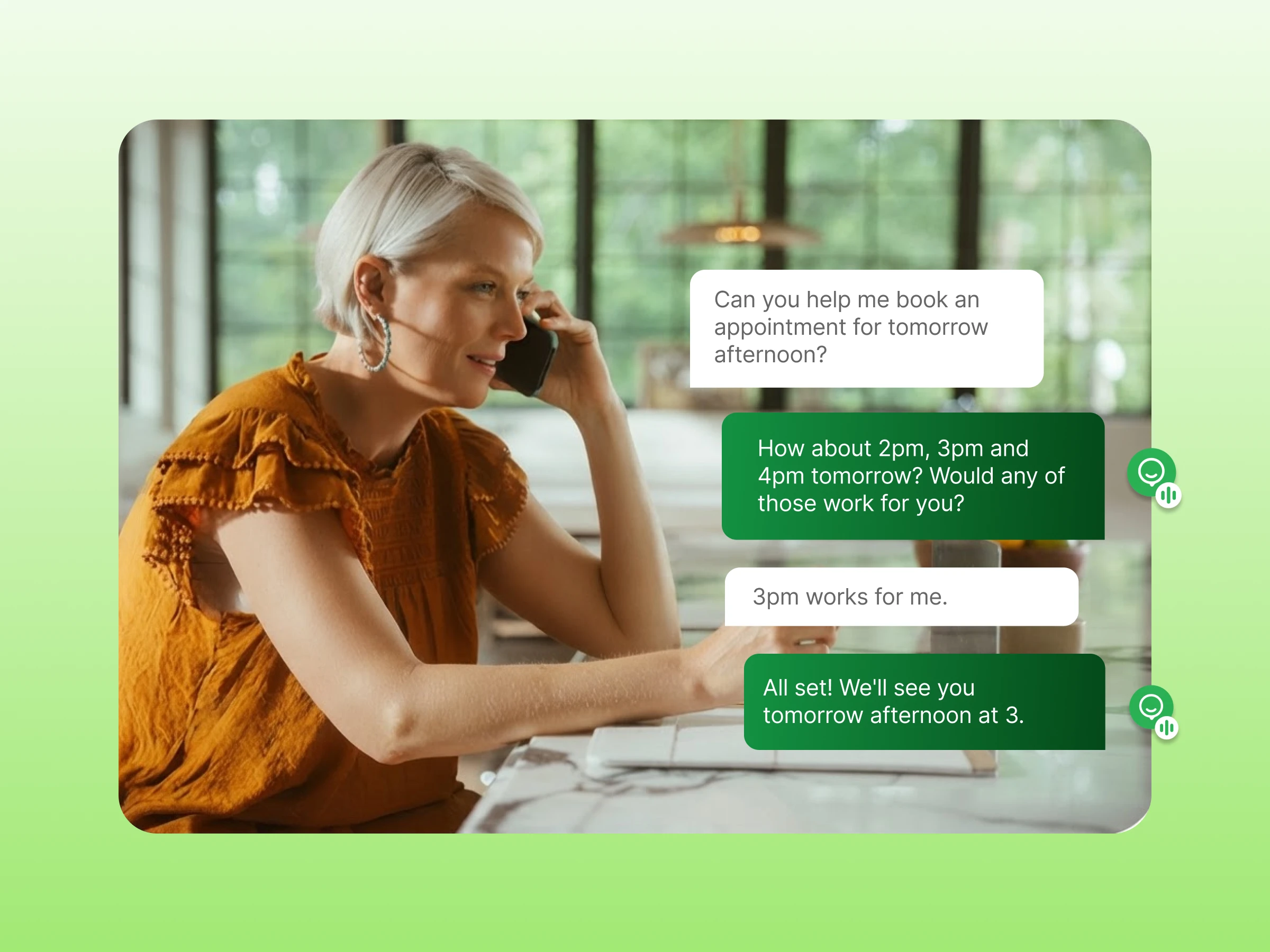
Conversational systems allow callers to speak naturally. A caller can say, “Hi, I need to reschedule my Friday appointment to next Monday afternoon.” The AI agent can check availability and confirm the change in real time.

AI models can struggle with noisy phone lines and ambiguous requests. They also have difficulty handling emotionally charged customer complaints that demand human empathy. Reliable platforms therefore use intelligent human escalation, passing the caller’s details and full context to a live agent. This ensures the customer never has to repeat themselves.

Automated Receptionist Platforms to Consider

When evaluating providers, look for reliability, ease of menu configuration, call quality, and integration support.

Platform Receptionist option Notable capabilities
Dialaxy IVR and automated call routing Call routing, IVR, business hours
Nextiva XBert AI Receptionist AI answering, booking, CRM/calendar integration
RingCentral AI Receptionist AI call answering and routing
Dialpad AI Agent AI voice agents, task execution, human escalation

Conclusion

An automated receptionist ensures every caller gets an immediate answer. It connects them to the right person without delay. You can choose a basic auto attendant for simple keypad menus or conversational AI for hands-free tasks. Your choice depends on what your business needs. Review your weekly call volume. Decide whether to start with a simple setup or test an AI platform.

Ready to stop missing calls?

Try Dialaxy’s automated receptionist, which answers and routes calls in minutes.

Book a Demo now!

FAQs

Is an automated receptionist the same as an IVR?

No. IVR is simply the underlying tool that processes keypad tones or spoken words. An automated receptionist is the complete call management system. It handles your daytime greetings, business hour schedules, voicemail routing, call queues, and staff transfers. IVR is just one feature inside it.

How much does an automated receptionist cost?

Pricing depends on features, users, and call volume. Basic systems are more affordable, while advanced AI options cost more. Most plans require no expensive hardware.

Do automated receptionists work for small businesses?

Yes. They are ideal for small teams, local contractors, and solo owners. The system answers calls instantly and routes inquiries to your mobile phone. It projects an established, professional image. It also saves you the high cost of hiring a full-time front-desk employee.

Can an automated receptionist sound natural?

Yes. Modern AI voice engines use natural speech patterns with clear pacing and smooth tones. Callers hear a pleasant, conversational voice rather than a robotic monotone. You can record your own voice directly to the platform. You can also upload professional studio audio files.

What happens if the system cannot understand a caller?

It uses a built-in fallback rule. If a caller stays silent, enters an invalid number, or speaks with heavy background noise, the system politely prompts them to try again or press 0 for an operator. Alternatively, they can hold for a live agent. Callers never get trapped in a loop.

Can an automated receptionist transfer calls to mobile phones?

Yes. Cloud phone systems easily forward calls to cell phones, home lines, softphones, or mobile apps. You can set rules so incoming calls ring your office desk first. Then they roll over to your mobile phone automatically when you step away.

Can I customize greetings and menu options?

Yes. You can update your greetings, call menus, and holiday routing at any time. Most providers let you make these changes in minutes using a simple online portal or smartphone app. You won’t need an IT specialist to do this.

Does an automated receptionist integrate with my CRM?

Yes. Most modern platforms connect directly to CRMs like HubSpot, Salesforce, and Zoho. The integration automatically logs call durations, attaches recordings, and matches incoming caller IDs to existing customer records. Your team has full context before picking up.

Is call data from automated receptionists secure?

Yes. Reputable business phone providers encrypt all live calls, voicemails, audio recordings, and caller details. They comply with strict data privacy standards like SOC 2 and GDPR. They provide HIPAA-compliant settings for medical clinics handling sensitive patient records.

How long does setup take?

A basic setup takes under an hour. You can pick a standard template, enter your business hours, and record a welcome greeting in just a few minutes. Complex setups with multi-level menus, ring groups, and CRM syncs usually take two to three hours to configure. Testing is also included in this timeframe.

Ready to transform your business telephony?
Dialaxy gives your team local numbers in 100+  countries, smart call routing, and a centralized dashboard — all set up in under 90 seconds.
Edward develops high-impact content tailored for search, helping brands attract traffic, improve rankings, and build authority with well-researched, audience-centric writing.

Related Posts

Back To Top