

How to Create a Professional Voicemail Greeting That Leaves a Lasting Impression

Ever called a business and their voicemail was so bad you just hung up?
You’re not alone. Most people bail on terrible voicemail greetings without leaving a message. And here’s the kicker: that recording might be costing you customers right now.
It’s your first impression, your brand voice, and sometimes the only shot you get at keeping potential customers interested. One bad greeting and they’re calling your competitor instead.
But don’t worry, we’ve got your back. Here’s a detailed guide on professional voicemail greeting, how you can create one for your business, and what mistakes you need to avoid to create a solid voicemail greeting.
Here’s the thing: voicemail isn’t dead. People use it differently now, but they still use it. When someone can’t reach you and they’ve got urgent matters to discuss, the greeting you set up months ago becomes your voice.
Most businesses mess this up. They either sound too stiff or too casual. Sometimes the message is so confusing that callers don’t even know if they’ve reached the right place. Then they hang up without leaving their details.
What actually happens when your voicemail works well?
Callers know they’ve reached the right person. They understand why you’re currently unavailable. They get clear instructions on what to do next, leave a message, call back during business hours, whatever makes sense.
The best part? A decent greeting with a friendly tone makes people want to leave a detailed message. They’ll tell you their reason for calling instead of just saying “call me back.” That saves you time playing phone tag later.
Your voicemail greeting is basically doing your job when you’re not there. Therefore, let us understand the basics of a good professional voicemail greeting.
A professional voicemail greeting is a pre-recorded message that is played to the caller when the phone’s owner is unable to answer. It should include an estimated timeframe for a return call, giving the caller an idea of when they can expect your call.
So what actually goes into a voicemail greeting? Let’s break it down without overcomplicating things.
At its core, every voicemail has a few basic parts.
First, you identify yourself. Something simple like “Hi, you’ve reached [name]” or “Hello, you’ve reached [name] at [company].” This tells callers they dialed the right number.
Next comes the reason you can’t pick up. Perhaps you are currently closed or in meetings all day, or even just out of your office. Individuals like knowing the reason why they are conversing with the machine rather than with you.
Next, there is the question: what do you want them to do? It is usually “leave your name, contact details, and a short message.” However, you can also specify other ways of contacting in case something is truly pressing.
This is where people get entangled: either they say too much or too little. Too much sounds like you’re reading a script at them. Too few leaves leave callers confused about what happens next.
The greeting must fit your circumstances, as well. A typical message about a workday is not the same as when it is holiday time or when you are out of work.
And business people require more than just personal information; stating business hours and when you will call back makes a difference.
Think of it as writing something on your door. You would not write “I’m gone,” but where you’ve gone and how soon you will come back.
Then what is the advantage of this voicemail thing when it comes to contemporary communication?
The voicemail systems have silently become one of the most sure tools in modern communication. Voice mail continues to be a significant process by itself, even in a world where instant messages, video calls, and AI chatbots exist, particularly in the business world.
It bridges the gap between being available and responsive, ensuring no valuable reason to call is missed if the person is not available to answer immediately.
You can’t be glued to your phone 24/7. Meetings run long. You’re driving. Maybe you’re just having lunch. Voicemail bridges that gap. Someone calls, they leave their details, and boom, the conversation isn’t dead.
They told you their reason for calling, and you get back to them later. Simple as that. Without voicemail, every time you’re unavailable means you lose potential business. It’s not fancy, but it works.
There’s a massive difference between calling a business that sounds organized versus one that sounds sketchy. When someone hears “Hello, you’ve reached [name] at [company]” with actual information about business hours, they relax. They know they called the right place.
Compare that to a confusing mess where callers aren’t sure if they’ve reached a legitimate operation. Your voicemail greeting is doing PR work for you.
A friendly tone and clear information make people want to leave a detailed message instead of hanging up and trying your competitor.
Missing a call doesn’t mean losing a customer anymore. Here’s why, when your greeting asks people to explain what they need, you’re gathering intel. They mention product updates they’re interested in.
They describe their urgent matters. They basically tell you how to help them before you even talk. So when you return your call, you’re not starting from scratch. You’ve got context. That missed call just became a chance to impress someone with how prepared you are.
Include some human elements, mention the holidays when it fits, thank them for contacting your business, and say that you are closed now, but you will return to them.
These small things matter. Callers can know when a person is actually attentive and when one is merely acting the part. Their personalized greeting will make people feel comfortable providing their name and contact details.
Modern voicemail systems are legitimately helpful for staying on top of things. Call transcripts mean you can scan messages in seconds instead of listening to rambling voicemails. You spot which ones need immediate attention.
Call recording gives you a backup in case of disputes. Some systems even sort messages by topic or urgency automatically. When you mention an alternative contact for urgent matters in your greeting, people use it, which means the truly important stuff gets handled faster.
You’re not drowning in disorganized messages. Everything’s there when you need it, filed and ready to go.
Modern voicemail systems have evolved way beyond basic message recording. They keep your business running smoothly, turning every missed call into an opportunity.
Now, if you’re wondering how to actually create such a professional greeting, continue to the next section.
Don’t just hit record and hope for the best. Write down what you’re going to say. You need your name, why you’re currently unavailable, what callers should leave, and when you’ll get back to them. That’s it. Keep it straightforward. Winging it always sounds messy and unprofessional.
Think about who’s calling. A lawyer needs a different vibe than a yoga instructor, but everyone should sound friendly. Your friendly tone makes people actually want to leave their details. Practice out loud a few times. If it sounds robotic to you, it’ll sound worse recorded.
“Hi, you’ve reached [name]” or “Hello, you’ve reached [name] at [company].” Simple intro. Just confirmation they dialed right. If it’s your business phone, definitely mention the business name. People relax when they know they’ve reached the right place.
Tell them what’s up. In meetings? Currently closed? Out for the holiday season? Just unable to answer your call at the moment? Say it. This prevents callers from getting frustrated, wondering where you are. Even “I can’t take your call right now” works fine.
Don’t just say “leave a message.” That’s useless. Try “Please leave your name, contact information, and a brief message about your reason for calling.” Now you’ll get detailed messages instead of a vague “call me back” message.
If you need specific info about product updates or whatever, ask for it.
“I’ll return your call within 24 hours” or “I’ll get back to you shortly during business hours.” Pick a realistic timeframe and say it. This manages expectations and makes people actually leave their details. Nobody wants to wonder if their message vanished into the void.
Always offer an alternative contact for urgent matters. Another number, an email, a coworker covering for you, something. “If you need immediate help, please reach out to [option].” This is huge when you’re currently unavailable for extended periods.
Record somewhere with zero background noise. Close doors, turn off fans, silence everything. Background noise kills professionalism. Your car works if you can’t find a quiet room. Just park first.
First attempt always sucks. Do several and pick the best one. Listen for stumbles, weird pacing, or if you sound annoyed. Smile while recording, sounds weird, but it actually changes your voice.
You want a personalized greeting that sounds natural, not like you’re reading a boring script.
Seriously, 30 seconds max. Long voicemail messages make people hang up before they can even speak. Say what matters and stop. Every extra second makes you lose potential callbacks.
Check your greeting every few months. Business hours change. The holiday season comes around. You go on vacation. Outdated greetings make you look sloppy. Set a phone reminder to review it quarterly.
Call yourself and listen like you’re a customer. Better yet, have someone else call and give honest feedback. Would they leave a message? Can they understand everything? Fix issues before real callers hear it.
Maybe have one for regular hours, another for when you’re currently closed, and a special one for holidays. Swap them as needed. Not everyone needs this, but it’s helpful if your schedule varies a lot.
Your greeting means nothing if you don’t follow through. If you promise to return your call promptly, do it. Check voicemail messages daily. Respond to what people actually said. Your credibility depends on keeping your word.
That’s the whole process. Nothing fancy, just doing each part right. Most people skip half these steps and wonder why nobody leaves useful messages.
“Hello! I appreciate you calling [Your name/business name]. I am [Your Name] at [Your position]. Sorry, I am unable to speak with you at this time. Please leave your name, phone number, and the reason for your call, and I will respond as soon as possible.”.
“We appreciate you reaching out to the customer support staff at [Your Company]. Our first goal is your satisfaction. Since our staff is currently assisting other clients, we are unable to answer your call at this time.”
“One of our committed representatives will swiftly resolve your problems if you kindly provide your name, contact details, and a brief explanation of your inquiry. We value your patience and are eager to be of service to you.”
“Hello, this is [Your Name]. Sorry, I’m currently unavailable. Please leave a message and reason for your call. I will call you ASAP.”
“Hi, our business [Your company name] is available until August 10, 2026. When we get back, we’ll make sure to give you a call right away. Please send us an email at [Business email address] if your request is urgent. Thank you. Enjoy your wonderful vacation, and have a happy holiday.”
There are a few things you need to be wary of when preparing your voicemail greetings. The following section covers such mistakes you need to avoid.
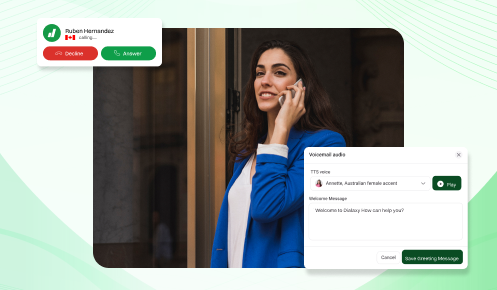
Dialaxy’s Voicemail Greeting Generator creates professional greetings for business hours, after-hours, holidays, and more. No recording skills needed.
There are a few things that you should avoid while crafting a Professional Voicemail greeting. Avoiding mistakes is crucial while crafting an effective voicemail to enhance your voicemail greeting and improve the overall call experience for callers.
Here are some common mistakes that most businesses make while recording a voicemail.
Your Voicemail Greeting would be brief, sweet, and to the point. Good and concise greetings will keep your customers interested. Professional Voicemails are mostly 20-30 seconds long.
Lengthy greetings are bad because they can damage your business, and even customers may find them boring. Therefore, make it clear and concise.
Your Voicemail Greeting should be professional and should not contain slang words that not all customers will appreciate. One should avoid informal language and take advantage of professionalism and polite tones.
It is significant as some individuals might appreciate slang language and informal communication, yet the majority of clients would value professionalism and respect in business communication.
To create a good and professional impression on your callers, you must have a concise and clear voicemail greeting. A properly designed voicemail greeting ought to be a call to action, and this gives the callers a clear idea of what is required of them.
Additionally, give your name and your company name, in case you own one, and elaborate instructions regarding what you want to leave in the text.
Updating and customizing are essential to keeping your business communication relevant and engaging. You can maintain current and interesting communication with a timely context by reviewing frequently and sending out greetings for special occasions or promotions.
This will enable your communications and strengthen your relationship with your clients.
Avoid these mistakes and you’re good to go. A good voicemail greeting leaves callers with a better impression of you and drives positive actions in your callers.
This next section is all about the psychological impact of a good professional voicemail greeting on the caller.
Voicemail might feel like a simple feature, but it does a lot behind the scenes. The tone, wording, and even silence in a message can shape how someone feels about your business.
Here are a few ways voicemail affects what callers think and feel when they reach you.
You’ve got about five seconds before a caller decides whether to leave a message or just hang up. That’s it. Five seconds. When someone hears “Hi, you’ve reached [name]” in a rushed, unclear voice, their brain goes “nope, not worth it.”
But a clear greeting that sounds put together? They stick around. This matters because people judge your entire business based on those first few words.
If your voicemail sounds like you recorded it while running to catch a bus, callers assume that’s how you run everything else, too. They’re reaching out to your business, hoping for help, and that greeting either reassures them or sends them running to a competitor.
The crazy part is that most people don’t even realize they’re making these snap judgments. It just happens automatically.
Nobody enjoys talking to voicemail. Let’s just be honest about that. People wanted to talk to you, not a recording. But here’s the thing: a friendly tone makes that disappointment way less annoying.
When your greeting sounds warm and acknowledges that you’ve missed their call, it softens the blow. Something like “Sorry, I can’t answer your call at the moment” with genuine friendliness makes callers think “okay, they’re busy but they care.”
Compare that to a cold, corporate-sounding message. That makes people feel like they’re bothering you. They get defensive or irritated before they even leave their details. The emotional difference is huge.
A personalized greeting that sounds like an actual human apologizing for being currently unavailable changes how the caller feels about waiting. They’re annoyed at the situation, not at you.
Confusion kills trust. When callers don’t understand what to do next, they panic a little. Should they leave a detailed message? Just their name and contact info? Is anyone even going to listen to this?
Unclear voicemail messages create anxiety, and anxious people either ramble or hang up without saying anything useful. But when your greeting sounds like, “Please leave your name, contact information, and reason for calling, and I’ll return your call shortly”, people relax.
They know you’ll actually get back to them. That clarity makes them feel like they’re in good hands. It’s the difference between a caller leaving useful information about their urgent matters versus a vague “um, call me back, I guess.”
Clear instructions make people confident that their message matters and won’t disappear into some black hole.
Generic greetings are everywhere. “You’ve reached the voicemail of…” in that robotic default voice. It’s boring, and it makes callers feel like they’re one of a thousand people leaving messages that nobody will care about.
But when you add personal details, everything shifts. Mentioning you’re currently closed for the holiday season, or that you’re out handling product updates for clients, or even just saying your actual name like a real person, changes the vibe completely.
Suddenly, the caller feels like they’ve reached a real individual who has a life and reasons for being unavailable. They’re not leaving a message for some faceless corporation. They’re talking to Sarah, who’s currently in client meetings but will definitely get back to them.
That human element makes people way more comfortable sharing their detailed message and actually expecting you to respond. It’s basic psychology; we trust people, not systems.
The way you say things matters as much as what you say. Two people can use the exact same words for their voicemail greeting and get totally different responses based purely on tone. An upbeat, energetic greeting makes callers feel positive about leaving their information.
A monotone one makes them think you don’t actually want to hear from them. Timing plays into this, too. If your greeting drags on forever before getting to the point, people get impatient. They’re standing there thinking, “Just tell me what to do already.”
But a greeting that respects their time, a quick intro, a brief explanation of why you’re currently unavailable, and clear next steps make them feel valued. When you mention you’ll return your call promptly, say it like you mean it.
That confident, assured tone tells callers their message won’t sit there ignored for three days. They hang up feeling good about the interaction, which is wild considering they never actually talked to you. But that’s how powerful tone and pacing are in shaping caller perception.
A solid greeting is bound to impress your caller. Want to explore how such voicemail greetings bring about changes in business? Let’s discuss how a company managed to get the most out of it.
Thompson & Associates, a small Michigan insurance agency, was bleeding clients without knowing why. Their voicemail greeting had been the same robotic message for six years: “You’ve reached Thompson & Associates. Leave a message.” That’s it.
The problem? Only three out of ten callers actually left a detailed message. The rest hung up and probably called competitors. Owner Mike Thompson didn’t realize this was an issue until a loyal client mentioned she almost switched agencies because calling them felt like “shouting into emptiness.”
Mike tried something simple. He recorded a new personalized greeting in his own voice with a friendly tone.
It said: “Hi, you’ve reached Mike at Thompson & Associates. I’m currently unavailable. Please leave your name, contact information, and reason for calling. I’ll return your call within two business hours, or first thing next morning if you’re calling after 5 PM.”
He added an alternative contact for urgent matters, too.
The results? Within one month, messages jumped from 30% to 71% of missed calls. But here’s the better part: callers started explaining their actual needs instead of just saying “call me back.” They mentioned needing product updates or had specific questions about coverage.
Mike’s callback time dropped from 4 hrs to under 2 because he knew what people needed before dialing them back. Three months later, customer satisfaction scores went up 23%.
Clients specifically said the professional voicemail greeting made them feel valued and confident they’d reached a trustworthy business.
The whole thing cost zero dollars and took fifteen minutes to record. Mike now uses different voicemail messages for when he’s currently closed, during the holiday season, or at conferences.
His takeaway?
“I obsessed over our website and office appearance for years. Never thought our voicemail was making first impressions on tons of potential clients. Fixing that one thing changed how people saw our entire operation.”
Next up, we have a mini exercise to help you improve your existing voicemail.
Take a Quiz
Question
1/9
1. 1. Does your greeting clearly state your name and business name?
A professional voicemail greeting with a friendly tone tells callers they’ve reached the right place, sets clear expectations, and makes them want to leave detailed messages.
It’s not about being perfect; it’s about sounding human and actually following through when you promise to return the call.
Take twenty minutes today to fix yours. Your next caller will notice the difference.
Keep it under 30 seconds, max. Any longer and people hang up before leaving a message. Say your name, why you’re currently unavailable, what info you need, and when you’ll return your call. That’s it. Don’t ramble.
Use your regular voice with a friendly tone. You want to sound professional but still human. People can tell when you’re faking it or being overly stiff. Just talk like you would to a customer in person, clear and respectful but natural.
Check it every three months minimum. Update it whenever your business hours change, during the holiday season, or if you’re going to be unavailable for a while. Outdated greetings make you look disorganized and hurt your credibility.
Always provide an alternative contact option. Give callers another number, email, or person to reach for urgent matters when you can’t answer your call. This shows you care about solving problems quickly, not just collecting voicemail messages.
Probably, because your greeting doesn’t tell them what to say. Ask specifically for their name, contact information, and reason for calling. Without clear direction, people either leave vague messages or hang up. Guide them and you’ll get better responses.
Yes. When someone is reaching out to your business, the business name confirms they dialed correctly. It builds confidence immediately and makes them more likely to leave their details instead of worrying that they called the wrong place.
