

Top 10 Healthcare Call Center Software in 2026

Good communication is very important for any successful healthcare provider. Missed calls, slow replies, and broken messages can make patients unhappy and cause problems in daily work.
The good news is that the right healthcare call center software can make communication easier, speed up responses, and make sure every patient interaction is smooth and safe.
In this guide, you will find the top 10 healthcare call center software options for 2026, along with essential features, benefits, and helpful tips to choose the best platform for your clinic or hospital.
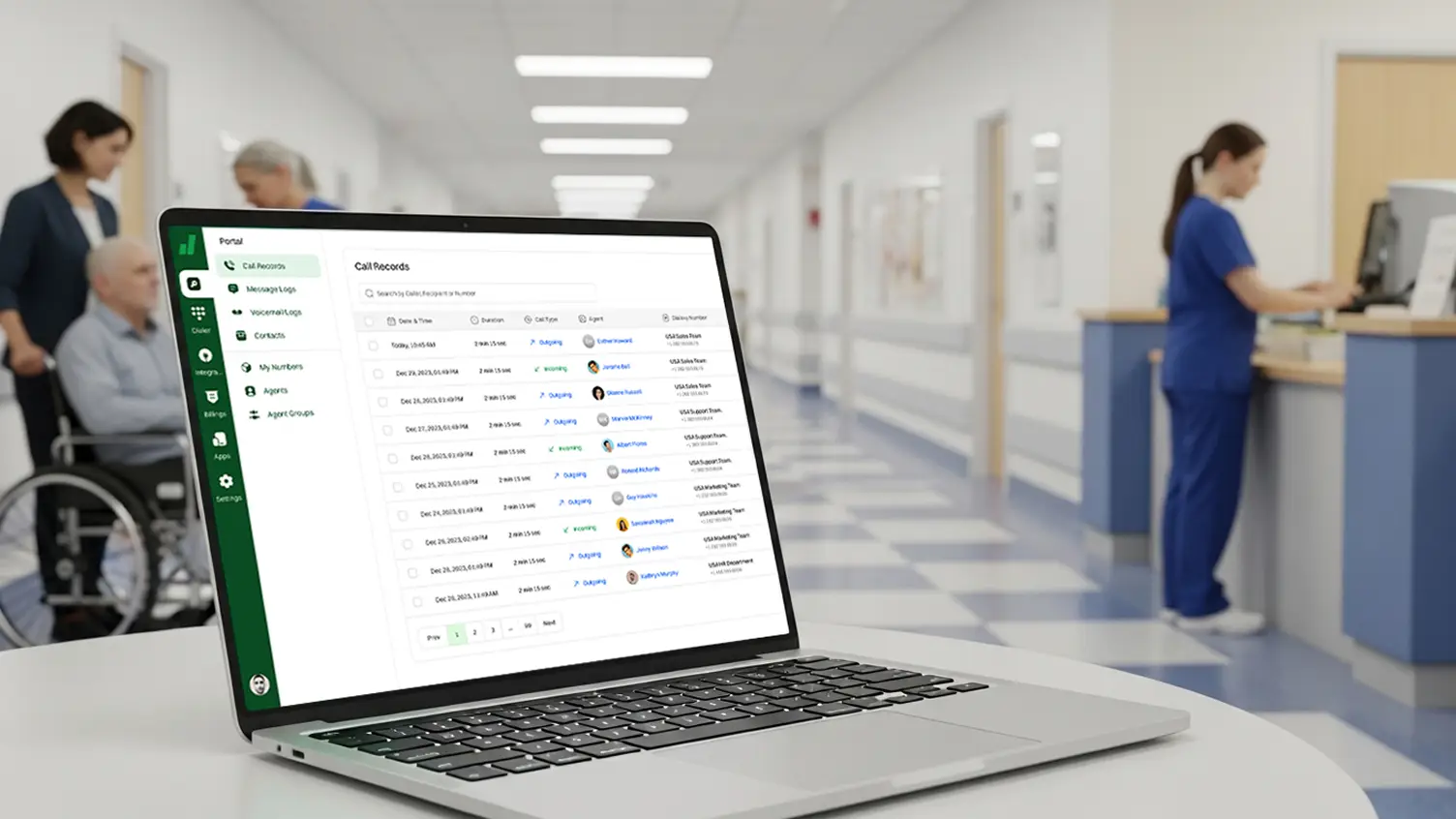
Healthcare call center software is a sophisticated suite of tools designed specifically to optimize and streamline communication between patients and healthcare providers. This software plays a crucial role in managing incoming and outgoing calls, thereby significantly improving the overall efficiency of call handling.
The software often integrates seamlessly with other vital systems, including Electronic Health Records (EHR), ensuring that patient information is readily accessible and up to date during calls.
By facilitating efficient call management and real-time data access, call center software enhances the overall patient experience, leading to higher satisfaction rates.
Furthermore, it aids healthcare organizations in maintaining compliance with industry regulations and standards, thus minimizing risks associated with data breaches and ensuring that all patient interactions are documented as mandated by law.
Overall, healthcare call center software is instrumental in modernizing patient engagement and improving operational workflows within healthcare facilities.
Healthcare call center software is essential for organizations seeking to provide a modern, efficient, and patient-centric experience. With challenges like staffing shortages, boosted patient expectations for digital care, and complex regulations, advanced software is vital for overcoming these obstacles and maintaining a competitive edge.
Here is why healthcare call center software matters:
Patient satisfaction is the most important concern in the current competitive healthcare environment. Call center software improves this experience by:
Using software in healthcare call centers makes organizations work more efficiently. Among several operational issues resolved, the following are some:
Since patient data are sensitive in nature, the healthcare organization must adhere to strict regulations such as HIPAA. Healthcare call centers need a specialized call center application, which has significant functions that keep data secure and comply with different regulations:
Healthcare call center software is a vital tool that enhances communication simplifies operations, and ensures the safety of patient data. Now let’s look at the features that make it truly effective.
The process of selecting the appropriate call center software in healthcare applications does not involve only answering the phones but also streamlining an experience that is pleasant, safe, and individualized to every single patient who is calling in.
The great solutions do not just provide the basic functionality, but they also provide links to direct patients to the right assistance, at the right time, using the medium of choice.
Here is what you should look out for when choosing your options:
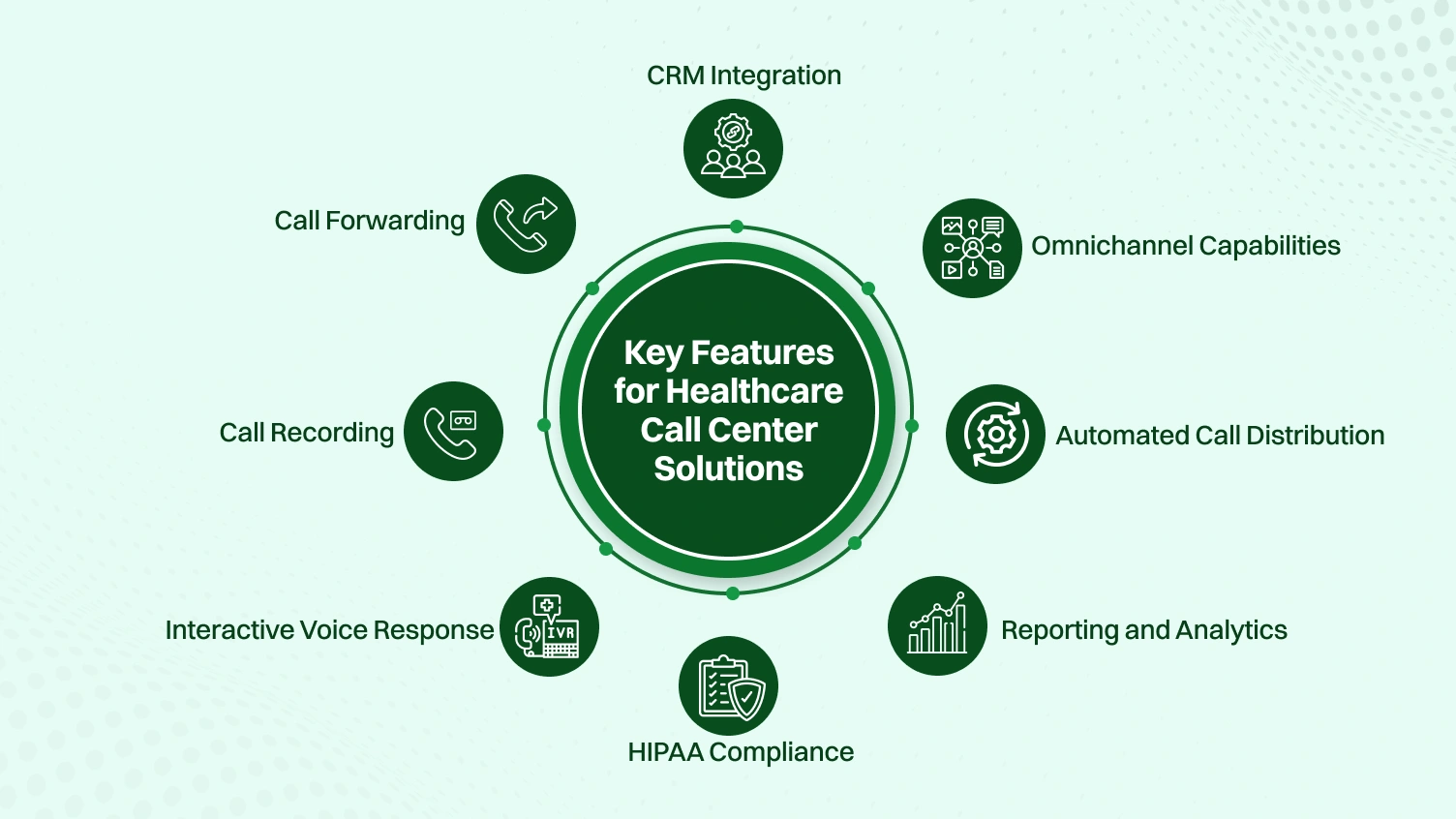
Integrate CRM to provide agents with patient profiles before their initial greeting. This allows your team to offer personalized care without patients having to repeat their stories, as they will have instant access to details like demographics, appointment history, and prior conversations.
Also, the ability to integrate into your patient management systems means that follow-ups and record updates are made without any difficulties.
Patients now communicate via calls, texts, emails, and chats, often using multiple methods in a single day. An omnichannel call center links these interactions, ensuring a consistent experience regardless of how patients reach out.
Your agents will have all communication history right at their fingertips, no matter whether the person prefers to give a phone call or use SMS, or just have a live chat.
No one prefers to jump from department to department. ACD solves that by dynamically routing the calls to the correct agent or department, either by skills, availability, or urgency.
It implies reduced wait times, quicker responses, and more satisfied patients because they receive the necessary assistance at the first attempt.
The true performance of your call center is reflected in the numbers. Advanced reporting tools show call volume, resolution time, agent productivity, and patient satisfaction trends.
Using this information, you will be able to identify bottlenecks, streamline workflow, and arrive at knowledgeable choices to increase efficiency and the quality of care.
Trust is everything in the field of healthcare, and patient privacy must always be respected. The appropriate call center software must be HIPAA compliant and have built-in security regulations such as encryption and secure data storage.
This will make sensitive information remain secure at the same time, ensuring that your organization remains compliant.
An IVR system can be a valuable ally for patients when well-designed. It effectively connects callers to the right department, helps set appointments, and provides quick answers without needing an agent.
Not only does this enhance convenience on the part of the patient, but it also eases the workload on your team.
Recording calls serves multiple purposes beyond just compliance. It can be an invaluable resource for training staff, ensuring quality control, and helping to resolve disputes effectively.
Reviewing past calls can reveal communication gaps, highlight great service moments, and help you coach agents toward consistently excellent patient interactions.
By keeping these features in mind, you’re setting the foundation for a call center that not only answers patient queries but also builds trust, streamlines communication, and delivers a truly personalized experience.
Let’s explore the top healthcare call center software options in 2026 that bring these features to life and help healthcare providers stay ahead of patient expectations.
Many call center software systems are designed for healthcare needs. These systems focus on keeping patient information safe and following rules (HIPAA compliance).
They allow healthcare providers to talk to patients in different ways, like phone, email, chat, and social media, making it easier for patients to reach out.
Most of these systems also use advanced technology, like chatbots and automatic call handling, to work faster and provide a better experience for patients.
These features make the software very important for healthcare organizations that want to give great care and improve their systems.
Let’s explore the top 10 best healthcare call center software for 2026:
When it comes to delivering exceptional patient communication and operational efficiency, Dialaxy leads the pack in 2026. Dialaxy is a cloud phone system that helps businesses connect globally. Featuring a set of tools such as call routing, IVR systems, and call analysis, seamlessly integrates with CRM, making it a solid fit for the healthcare call center.
What truly sets Dialaxy apart is its ease of use, from setting up Interactive Voice Response (IVR) menus to recording calls for training and compliance, everything is designed to make your call center more efficient without adding complexity.
| Category | Details |
|---|---|
| Key Features |
|
| Advantages |
|
| Review (G2) |
|
| Pricing & Plans |
|
Five9 provides advanced call center software for healthcare, which improves communication and efficiency. Its AI features, such as sentiment analysis and training for agents, help healthcare providers enhance patient interactions. The platform handles both incoming and outgoing calls securely while following healthcare rules.
| Category | Details |
|---|---|
| Key Features |
|
| Advantages |
|
| Review (G2) |
|
| Pricing & Plans |
|
Talkdesk offers smart call center software made for healthcare needs. Its Healthcare Experience Cloud connects with important systems like EHRs and CRMs, enabling providers to personalize patient interaction tools and real-time guidance for agents that help drive productivity and lower costs while ensuring quality service.
| Category | Details |
|---|---|
| Key Features |
|
| Advantages |
|
| Review (G2) |
|
| Pricing & Plans |
|
Cisco Webex Contact Center from Cisco can be referred to as the solution in helping healthcare providers build better patient experiences. It also provides skill-based call routing and real-time monitoring for improved communication. The flexibility of this cloud-based service adapts to the ever-changing needs of a healthcare contact center.
| Category | Details |
|---|---|
| Key Features |
|
| Advantages |
|
| Review (G2) |
|
| Pricing & Plans |
|
CallHippo is a VoIP platform that provides key tools for healthcare call centers. It simplifies patient communication with its intuitively smart call forwarding and IVR systems. This helps in scheduling appointments, and it can allow calls via voice or video; hence, it’s the finest option for providers who value efficiency.
| Category | Details |
|---|---|
| Key Features |
|
| Advantages |
|
| Review (G2) |
|
| Pricing & Plans |
|
NICE CXone is a flexible platform designed to improve patient care with advanced contact center software. Its strong analytics and connection with CRM systems like Salesforce help healthcare providers manage data well. While it is more suited for larger organizations, it offers benefits like better patient outcomes and improved workflows.
| Category | Details |
|---|---|
| Key Features |
|
| Advantages |
|
| Review (G2) |
|
| Pricing & Plans |
|
CloudTalk is an easy-to-use solution for healthcare providers wanting efficient call center software. It features call tracking, IVR systems, and real-time reporting to help improve patient communication. It also supports CRM connections, allowing providers to streamline operations and offer personalized care.
| Category | Details |
|---|---|
| Key Features |
|
| Advantages |
|
| Review (G2) |
|
| Pricing & Plans |
|
Bright Pattern provides a modern omnichannel platform for healthcare call centers. Its AI tools help personalize patient interactions by giving agents useful information for each call. The platform easily connects with existing healthcare systems, ensuring smooth service delivery without major changes.
| Category | Details |
|---|---|
| Key Features |
|
| Advantages |
|
| Review (G2) |
|
| Pricing & Plans |
|
RingCentral offers a complete, cloud-based healthcare communication platform with robust features like automated reminders and secure messaging, which essentially make it irreplaceable for any healthcare call center. Focusing on the security of patient data, RingCentral is bound to assist organizations in maintaining trust and enhancing communication.
| Category | Details |
|---|---|
| Key Features |
|
| Advantages |
|
| Review (G2) |
|
| Pricing & Plans |
|
Genesys Cloud CX offers extensive healthcare contact center software that uses AI to enhance patient interactions. Its features include smart call routing and detailed analytics aimed at improving agent performance and patient satisfaction. The platform helps healthcare providers optimize their workflows while delivering high-quality, personalized care.
| Category | Details |
|---|---|
| Key Features |
|
| Advantages |
|
| Review (G2) |
|
| 5Pricing & Plans |
|
Choosing the right healthcare call center software is crucial for enhancing patient communication, streamlining operations, and ensuring compliance with industry regulations.
Here are the steps to process how you can choose the right healthcare contact center software:
Figure out what your organization requires. Consider call volume, services (e.g., appointments, patient questions), and how they fit with your current systems (like electronic health records).
Ensure the software follows rules like HIPAA and has strong security features, such as data encryption and secure access.
Pick software that can grow with your organization, whether you’re a small clinic or a large hospital. It should handle more calls and adapt to future needs.
Make sure the software works well with your existing systems, like electronic health records and billing software, to avoid errors and keep data flowing smoothly.
Choose software with a simple interface for both agents and managers. Avoid complicated systems that can slow things down or cause mistakes.
Look for tools like automated responses, call recording, analytics, and support for multiple channels (phone, email, chat) to improve patient experience and efficiency.
Don’t just focus on cost. Consider setup fees, licensing, maintenance, and any extra charges for upgrades or add-ons.
Choose a provider with 24/7 support and a reputation for solving problems quickly. Reliable support is essential for smooth operations.
Dialaxy is a robust and feature-rich call center solution designed to meet the unique needs of healthcare organizations. With Dialaxy, you can enhance the overall patient care journey through its improved and integrated communication and coordination within healthcare organizations.
Let’s see why it stands out as the best choice for healthcare call centers in 2026:
Picking the right call center software for healthcare can change how providers talk to patients, make things easier, and improve care. The tools we’ve looked at, like Dialaxy’s global reach and Genesys Cloud CX’s smart features, show how much technology has improved healthcare communication.
Make your patient communication better! Get in touch with Dialaxy today to set up a demo and see how our solutions can help your healthcare practice.
Cold calling in healthcare refers to the practice of reaching out to potential patients, clients, or partners without prior contact or relationship. It is often used for appointment scheduling, health campaigns, and service promotion.
EHR stands for electronic health records and is a digital system used to store, manage, and share patient health information. It includes patient history, test results, and care coordination.
EHR system improves accuracy, reduce paperwork, and enhance patient care by providing centralized, up-to-date records of patient health.
The top EHR systems widely used in healthcare are Epic Systems, Cerner, and Meditech.
ERP (Enterprise Resource Planning) in healthcare refers to software that integrates and manages core business processes, such as finance, inventory, human resources, and patient management. It improves efficiency, reduces costs, and enhances decision-making.
