

B2C outbound call center campaigns – Know to Master it!

Many B2C call centers struggle to reach customers. Poor targeting makes calls less effective. Inconsistent messages confuse people. Low response rates are a waste of time and money. These are issues that annoy businesses and customers. They also slow growth and hurt relationships.
B2C outbound call center campaigns offer a solution. They focus on clear outreach. They use data to target the right audience. They also create personal communication. Furthermore, this approach not only reduces waste but also fosters stronger customer connections.
This guide explains why outbound campaigns are essential. It outlines the primary benefits and breaks down the key components. It also covers success metrics, common mistakes, best practices, & a case study. Ultimately, it examines how AI and automation will shape the future.
Outbound call center campaigns help B2C businesses grow. They are more than phone calls. They drive sales, enhance customer service, and foster stronger relationships. When executed well, these campaigns give any business a competitive advantage in today’s market.
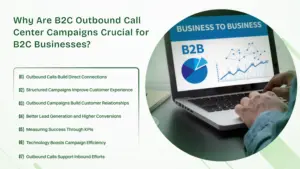
Outbound calls enable businesses to communicate directly with individuals. Ads or social media feel passive. Calls are active. Agents speak with customers, learn their needs, and gather helpful information. This helps find the right customer and increase sales quickly.
Outbound call centers build trust, not just sales. Agents use call scripts and caller ID to facilitate communication. Appointment setting gives customers flexibility. Tools like predictive dialing & power dialers enable agents to reach a larger number of people. This improves service & customer satisfaction.
Customer loyalty can be sustained through regular contact. Outbound dialing enables agents to contact their existing customers. They may update, reply to the questions, and correct the issues in a timely manner. These little details make individuals feel cherished &, thus, over time, customer loyalty will increase.
Outbound campaigns find new leads faster than waiting. Tools like call center software and call recording tools are helpful. Cold calls reach new prospects. Follow-up calls turn interested people into buyers. Simple planning and effort give better sales results for businesses.
Businesses must track progress. Key numbers indicate the number of calls made, answered, and completed. Quality checks make sure messages are clear. Blended call centers compare inbound and outbound calls. Measuring these numbers helps improve service and results.
Software makes outbound campaigns easier. Caller ID, predictive dialing, and call scripts save time. Automated tools enable agents to reach a wider audience. Power dialing cuts the waiting time between calls. These features improve teamwork, speed, and consistency in customer interactions every day.
Inbound call centers handle customer questions. Outbound calls reach out first. Together they form a stronger system. Inbound telemarketing solves problems. Outbound dialing finds leads. When combined, both sides provide customers with full support, ultimately improving service and overall satisfaction.
Now that you understand why outbound campaigns are crucial. It’s essential to understand precisely what a B2C outbound call center campaign entails.
A B2C outbound call center campaign is when a business makes calls to its customers. Call agents utilize outbound dialing and call center software to connect with customers. This helps generate leads and build better customer relationships. All these help to improve customer engagement and customer satisfaction.
Outbound call centers act first. They do not wait for inbound calls. Agents talk to the right customer, follow preferences, and keep notes. This helps improve service, answer questions, and increase interest among a wider audience. Outbound calls also let businesses share updates or new offers.
B2C outbound call center campaigns succeed because of key features in the software and tools used. These features enable call agents to reach more customers, track calls, enhance customer interactions, and increase satisfaction and loyalty across campaigns.
Call center software helps agents keep customer data. It stores customer profiles, tracks calls, and records conversations. Agents use it to follow up on leads, verify details, and enhance customer satisfaction during each call. It also helps sales teams organize tasks more easily.
Predictive dialers call many numbers and connect agents to answers. Power dialers call numbers one by one. Both help call agents reach more people, save time, and generate more leads quickly. These tools also reduce waiting time between calls.
Automated outbound tools enable faster and easier call making. They help call agents manage big campaigns and follow customer preferences. These tools also support appointment setting and improve customer satisfaction with less effort. Automation also allows call agents to focus on key conversations.
Call scripts show agents what to say. Scripts keep calls clear and polite. Appointment setting allows customers to choose a time to speak. This enhances the customer experience and enables agents to achieve better results. Scripts also guide agents to resolve issues quickly.
Call recording saves all phone calls. Managers can review them for training or quality purposes. This helps call agents effectively handle customer questions, resolve issues, and maintain customer satisfaction. It also helps track key performance indicators for campaigns.
Outbound call centers can connect to social media and blended call centers. This helps manage both inbound and outbound calls within a single system. It enhances service, tracks results, and facilitates easier customer interactions. Integration also allows better follow-up and customer engagement.
Up to this point, you have gained a general idea of the B2C outbound campaign and its features. It’s time to see the benefits these campaigns bring to both businesses and customers.
Outbound campaigns enable businesses to connect quickly with potential customers. They call first and share reminders, offers, or updates. Customers benefit too. It helps the consumers receive care, personal support, and prompt information in a clear & helpful format.
Outbound campaigns enable companies to reach potential customers early. They share offers, reminders, or updates before customers ask. This makes people feel valued. It also builds trust. Companies maintain steady sales, proving that they are active, caring, and ready to help.
These campaigns create new leads and help close sales. Companies contact people who have already shown interest. This brings quick results. It also helps reach more people, grow sales, and stay strong in crowded and busy markets.
Outbound campaigns spread awareness fast. This helps companies step into new areas. It fosters recognition and strengthens the brand in various locations.
Automation makes outbound calling easier. Agents work faster and save time. Calls cost less and flow smoothly. This improves conversion rates and pipeline results. Teams also stay focused and productive while reaching more customers in less time.
Outbound campaigns give companies real customer data. They show needs, habits, and feedback. This guides products and future plans. Businesses will gain an upper hand in understanding what customers want and can stay flexible, adjusting to the demands accordingly.
Customers receive messages tailored to their needs. Calls reflect past actions and give value. This makes contact feel personal. People feel respected and enjoy stronger bonds with brands that show care and take time to listen.
Outbound calls enable customers to have direct contact with businesses. These talks feel genuine, not automated. They help solve issues quickly. Trust grows when customers perceive businesses as caring, helpful, and responsive when needed most.
Outbound campaigns share updates when they matter most. This makes outreach helpful. Customers welcome the contact because it saves time and adds value, rather than feeling like a disruption.
Having seen the advantages, the next step is to examine the major elements that ensure an outbound campaign runs successfully.
Outbound campaigns are not only about making calls. You must set simple goals, implement the right plans, and utilize tools that help you achieve success. With clear steps and trained agents, businesses can have more effective interactions and achieve measurable results. Let’s see them.
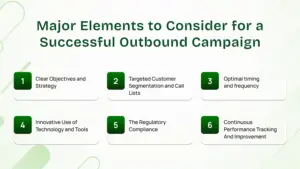
To meet business needs such as sales, generating leads, retaining customers, or gathering feedback, set smart goals. Goals give campaigns direction and purpose. They guide what to say, make progress more straightforward to check, and help each call lead to potential customers.
Segment customers into groups based on age, habits, or past purchasing behavior. This makes calls more personal. Furthermore, keep lists up to date and accurate. This saves time, avoids wasted effort, and focuses only on people more likely to answer or respond.
Call people when they are not busy. It can be late afternoons. Steer clear of late working hours or peak times. People get annoyed by the too many calls. Inadequate calls make you forgettable. Good timing will make the customers more open and receptive.
Utilize VoIP phones, CRM, dialers, and campaign tools, which will enable agents to operate more effectively. These devices are time-saving, make conversations clear, and give urgent information. Teams can manage/track results better and manage campaigns with less stress on technology.
TCPA, GDPR, and Do Not Call lists are the regulations that you need to be aware of. Regulations guard the privacy of customers and prevent hefty fines. They also respect the rights of people. Observing the rules guarantees the safety of both businesses and customers on every call.
Track key metrics, including conversions, response rates, call times, and customer satisfaction. Use data to improve scripts, lists, and training materials. This frequent checking can also ensure that campaigns remain robust, adjust to changing customer requirements, and improve every time they are run.
With these elements in mind, let’s walk through how to plan, create, and run a B2C outbound call center campaign effectively.
Designing an outbound call center campaign needs a well-planned and strategic system. All the steps are crucial to success. With the help of the appropriate tools and approaches, organizations can significantly reach consumers, expand their reach, and enhance campaign outcomes. Let’s see the steps.
Select an outbound dialer that aligns with your business objectives and budget. A good platform can help you achieve your long-term plans. Think about ROI, agent targets, conversion rates, and how outbound calls will be handled efficiently.
Create a contact list and give each contact a unique ID. This keeps data organized. Import the list into the dialer and link it to your campaign. Add fields that show useful details to agents during calls. These will help smooth the interaction between your agents and customers.
Write a clear script for agents to follow. Include answers to common questions and objections. Test and refine it as needed. Upload the script to the dialer so every call is professional and consistent.
Plan when and how calls are made to improve service and agent productivity. Use predictive or progressive dialing. Features like AI or answering machine detection reduce wasted time and lower costs. Ultimately, it helps agents focus on more complex issues, as they can skip repetitive work.
Handle prospect data carefully:
Before starting, test the campaign. Contact centers may call for reminders, telemarketing, or follow-ups. Assign the campaign to a queue, check the bandwidth, and select the appropriate dialer type. Testing ensures smooth high-volume calls.
Supervise the campaign closely. Agents should introduce themselves, explain the purpose of the call, and ask relevant follow-up questions to ensure a productive conversation. End calls with a recap. Follow up with post-call actions, like sending additional details to the agent.
Pick a dialing method based on team size, technology, and time:
Focus on two main areas:
Now that you know the steps to launch a campaign, it’s essential to understand how to measure its performance and implement improvements.
Running outbound campaigns well needs tracking key metrics and following simple steps. Monitoring KPIs shows performance clearly. Using these steps helps plan, execute, and improve campaigns. This ensures agents work efficiently and campaigns meet business goals reliably.
The response rate indicates the percentage of prospects who respond to your calls or messages. It tells you how well your message is working and whether your audience is being effectively targeted. High response rates indicate that your approach effectively connects with prospects.
The conversion rate measures the percentage of responses that result in sales, appointments, or other desired outcomes. This metric is crucial for checking ROI. High conversion rates indicate that your scripts are effective, your agents are performing efficiently, and your list is targeting the right prospects.
Connection rate refers to the percentage of calls that a live representative answers. It reflects the quality of your contact list and the effectiveness of your dial plan. Low rates may indicate poor data or timing that requires correction.
Calls per agent measure productivity. Tracking this shows if agents are efficient or need support. Low numbers may mean training is required. High numbers indicate good performance. This metric helps spot bottlenecks and optimize agent workflow.
The first call close rate tracks the number of deals made on the first contact. It demonstrates the effectiveness of your script and pitch. High rates indicate that agents handle objections effectively, explain products clearly, and can persuade prospects to act on the first call.
Sales growth and revenue per call show the financial impact of each call. It tells which agents and scripts are most effective. High revenue per call signals strong performance. This metric links outbound efforts directly to business results.
The engagement rate indicates how frequently prospects interact beyond simply replying. This includes clicks, downloads, or other actions. High engagement suggests that your message is both interesting and relevant. It helps measure if prospects are willing to move further in the sales journey.
List penetration measures how much of the target list you reached. It demonstrates the effectiveness and comprehensiveness of your campaign. Low penetration means gaps in outreach. High penetration ensures most prospects in the list are contacted and engaged effectively.
Set specific, measurable, achievable, relevant, and time-bound goals. Examples include sales targets or qualified meetings. Clear goals guide agents and allow campaign performance to be measured against concrete outcomes.
Divide prospects into groups based on their persona, behavior, or specific needs. Good segmentation increases response and conversion rates. Well-structured lists make outreach efficient. Agents can tailor messaging to each segment for better engagement.
Write simple, adaptable scripts that address questions and objections. Train agents on products, communication, compliance, and how to handle concerns. Well-trained agents deliver consistent, confident messages that improve customer experience and campaign results.
Use dialers, CRM systems, and analytics tools. Technology automates work, tracks KPIs, and saves time. It also ensures that agents have access to the correct customer information in real-time. This improves efficiency and helps monitor campaign performance.
Check KPIs daily and weekly. Look for patterns and trends. Use findings to improve scripts, adjust targeting, and train agents. Continuous monitoring ensures campaigns stay effective and agents perform well. Regular adjustments lead to better results.
Test different scripts, call approaches, or subject lines to see which one works best. Compare results to see what works best. A/B testing improves engagement and conversions. Over time, this helps create stronger messages, provides better agent guidance, and leads to more successful outbound campaigns.
After learning how to track and improve campaigns, let’s identify common mistakes businesses often make and how to avoid them.
Outbound campaigns help companies reach people. However, many fail due to repeated mistakes. These errors waste time and money. Learning them early helps avoid problems. Fixing them makes outreach easier, builds better customer ties, and improves campaign success.
Many companies are unaware of their actual audience. They call or message random people. These efforts often fail because the message feels wrong. Knowing exactly who to target helps focus time, improves interest, and creates better customer responses.
Some businesses never check campaign data. They skip results like answered calls or email opens. Without this, they cannot learn what works. The same problems stay. Tracking simple numbers helps identify issues and strengthens campaigns. Check voicemail greetings to learn how customers respond.
General messages sound boring and fake. People usually ignore them. Personalized messages feel real and friendly. Customers pay attention when the message speaks to their needs. Simple personalization improves trust, raises interest, and makes sales more likely.
Many businesses stop after one call or email. Without follow-ups, chances disappear. A clear plan helps reach people again at the right time. Follow-ups keep the lead warm, build trust, and gradually guide customers toward making a purchase.
Some campaigns ignore what customers say. This is a big mistake. Feedback shows what works and what fails. Listening helps improve tone, timing, and approach. When businesses adjust based on feedback, results improve, and customer trust grows.
Once you’re aware of these pitfalls, applying best practices ensures campaigns run smoothly and achieve their intended goals.
Running a strong outbound campaign is not just about making calls, using scripts, or tracking KPIs. Success also depends on additional strategies that support your team, enhance the customer experience, and ensure campaigns run smoothly. Here are some best practices to follow:
Automation saves time, but too much can feel robotic. Use automated tools for dialing, scheduling, or reminders, but let agents handle personal conversations. Customers appreciate real interaction that feels authentic, not just system-driven.
Agents should know more than scripts. Training them to listen actively, show empathy, and handle customer emotions makes calls smoother. Emotional intelligence helps resolve concerns faster and leaves customers with a positive impression.
Not all customers respond to calls. Combine phone calls with emails, SMS, or even social media. This increases the chance of connecting with prospects while respecting their preferred method of communication.
Campaigns should feel smooth from start to finish. Design call flows that respect the customer’s time—quick introductions, clear purpose, and simple next steps. Avoid long waits in call queues or confusing handoffs.
Regulations change often. Regular refresher training on privacy rules, Do Not Call lists, and consent policies keeps agents and businesses safe. Compliance should be viewed as an ongoing process, not a one-time step.
Outbound calling can be tough. Recognizing top performers and rewarding effort boosts morale. Simple rewards, such as shout-outs, leaderboards, or incentives, help motivate agents and improve their performance.
With best practices in place, it helps to see a real-world example showing how these strategies improve results.
A mid-sized B2C virtual contact center struggled with low response rates and declining client satisfaction. Their agents were making calls, but conversations often ended without sales or meaningful customer engagement. The management decided to restructure their outbound campaigns.


Takeaway:
For call centers, outbound campaigns are not just about volume. With segmentation, the right tools, and trained agents, call centers can improve efficiency, boost conversions, and deliver measurable results for their clients.
Having seen a case study, it’s worth looking ahead at how AI and automation will shape the future of outbound campaigns.
Outbound call centers are shifting toward more intelligent, automated systems. AI helps predict the best times to reach customers and supports call routing. Agents also receive real-time prompts, which makes conversations more engaging and efficient without adding stress.
As automation advances, campaigns will combine machine precision with human insight. Call centers that adopt these changes can enhance efficiency, lower costs, and foster stronger customer relationships. This approach enables businesses to remain competitive in a rapidly evolving market.
Having understood future trends, let’s recap the key insights to ensure you can apply them effectively in your campaigns.
Outbound call center campaigns are most effective when executed with precise planning and proactive engagement. Segmenting customers into warm leads, past clients, and new prospects ensures that relevant conversations are held.
Predictive dialers and smart call routing reduce idle time and boost conversions. Tracking response and conversion rates allows continuous improvement.
AI and automation enhance campaigns further. Real-time agent guidance and intelligent call routing streamline workflows while maintaining natural interactions. Combining multi-channel follow-ups and agent coaching increases customer satisfaction.
These strategies help call centers grow and deliver measurable results.
They build connections, enhance customer experience, generate leads more efficiently, and foster stronger relationships.
They reduce idle time, reach more contacts, and improve lead conversions.
The key aspects to improve agent performance in outbound campaigns can be:
Scripts ensure clear, consistent communication, while appointment scheduling allows customers to choose convenient times. Together, they improve satisfaction and increase the likelihood of successful conversations.
Compliance with the TCPA, GDPR, and Do Not Call lists protects customer privacy, avoids fines, and ensures ethical business practices, thereby maintaining trust and credibility.
