

What is Conversational AI? How Does It Work

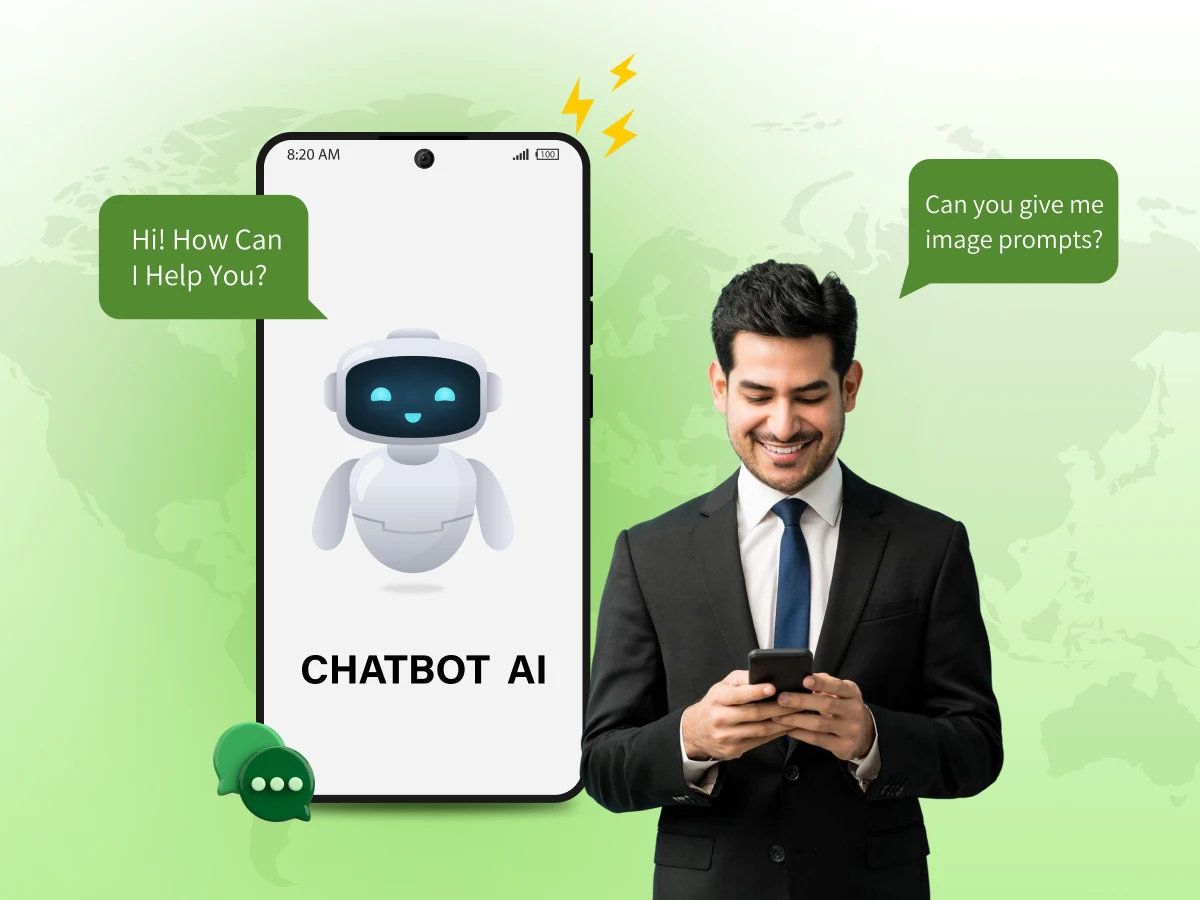
Have you ever tried to talk with ChatGPT? And you cannot help but talk with it for hours. It listens, replies to your answers, and suggests. This is conversational AI.
But while we use it for fun or help with homework, businesses are looking at it through a much more serious lens. Today, most companies are hitting a wall. They’re struggling to keep up with what customers want. We’ve all seen it: high operational costs, slow response times that make you want to hang up, and service that feels inconsistent. These aren’t just minor annoyances; they’re growth killers.
Conversational AI has stepped in as the heavy hitter. It’s not just some simple, fabricated response designed to sound like a human. It’s much smarter. It uses natural language processing (NLP) and machine learning, which actually understands the intent behind what you’re saying. It builds real customer engagement and spikes operational efficiency while saving everyone a ton of time.
In this guide, we’re going to break down exactly what this tech is and the features that make it tick. By the end of this, you’ll see the full context of how this is changing the way we talk to the world.
Think of Conversational AI as more than just a shiny new chatbot. It’s actually a strategic heavy-hitter that helps businesses stay in the game. In a world where everyone wants an answer yesterday, these systems give you a massive head start.
When your business starts to take off, the questions start piling up. It’s a good problem to have, sure, but hiring a massive army of human agents to answer every single “Where is my package?” email is slow and incredibly expensive. Conversational AI lets you juggle thousands of those customer interactions at the same time. The best part? You’re scaling your support without watching your business costs go through the roof.
Let’s face it: customers don’t stick to a 9-to-5 schedule. Someone might be trying to fix a software glitch at midnight on a Sunday or shopping while they can’t sleep. Since virtual assistants don’t need coffee breaks or sleep, they’re always on standby to give an immediate answer. That kind of speed is exactly what keeps customer satisfaction high.
There’s nothing more annoying for a customer than being asked for their account number five times in one call. It feels robotic. Modern Conversational AI tools can actually “talk” to your existing databases. This means the AI already knows who it’s talking to and what they bought last week. It turns a clunky, frustrating process into a smooth, personalized experience that feels, well, human.
If your team spends all day resetting passwords or looking up order status inquiries, they’re going to burn out fast. By automating those repetitive tasks, you’re giving your human workforce their time back. Now, they can focus on the big, messy problems that actually require empathy and creative thinking. That’s the real secret to boosting your operational efficiency.
Every single chat is a goldmine of info. By using data analytics, your marketing team and product managers can see exactly what people are confused about in real-time. Instead of just guessing what your customers need, you’re seeing their true user intent as it happens. It lets you spot a trend and fix a “pain point” before it turns into a PR nightmare.
To put it simply, Conversational AI is a type of artificial intelligence that allows computers to understand, process, and respond to human language. It is the technology behind voice assistants like Alexa and Siri, as well as the advanced AI chatbots you see on modern websites.
While a traditional chatbot follows a strict “if-this-then-that” logic (like a decision tree), Conversational AI is much more flexible. It doesn’t just look for keywords; it tries to understand the meaning and intent behind a sentence.
This is a common question. Think of it this way: a chatbot is a format, while Conversational AI is the brain inside it.
There is a big overlap, but they have different goals.
To make a machine talk like a human, four complex processes happen in a matter of milliseconds. Understanding this “workflow” is key to seeing how the technology manages to feel so “real.”
The process starts when a user provides an input. This can be text typed into a chat or voice spoken into a mobile device. If it is voice, the system uses automatic speech recognition (ASR) to turn those sounds into text that a computer can read.
Once the text is captured, the AI needs to figure out what it means. This is the Natural Language Understanding (NLU) phase. The AI breaks the sentence down into:
After understanding the user’s meaning, the system decides what to do next. This is handled by a dialogue management component. It checks the enterprise data or a database to find the right information. It then decides if it should ask a follow-up question or provide an answer.
Finally, the AI creates a response. This is where Natural Language Generation (NLG) comes in. It turns the data back into a human-friendly sentence. If the user is on a phone, text-to-speech (TTS) software like 11 Labs or Google Cloud’s voice engine reads the response aloud.
If you are a conversational AI designer or an engineer, these are the building blocks you work with every day.
NLP is the umbrella term for everything involving human language and computers. It combines computational linguistics (the rules of language) with machine learning (how patterns are learned). It allows the AI to handle accents, dialects, and even sarcasm.
Instead of a human programmer writing a rule for every possible sentence, machine learning algorithms are trained on massive data sets. The more human conversations the system sees, the more accurate its predictions become.
The “new wave” of AI uses LLMs. These are models trained on almost the entire internet. They give the AI a massive “knowledge base,” allowing it to answer questions on almost any topic. Companies often use HuggingFace conversational AI libraries or Vertex AI to build these.
For contact centers, voice AI is essential. It requires high-quality speech recognition to filter out background noise and understand the tone of a caller. This is what makes a virtual agent sound like a helpful human representative.
Let’s look at why both sides of the “phone call” benefit from this technology.
Choosing the right solution is where strategy becomes reality. The market is divided into Platforms (the infrastructure to build) and Agents (the workers that execute). Here are the top five leaders currently shaping the space.
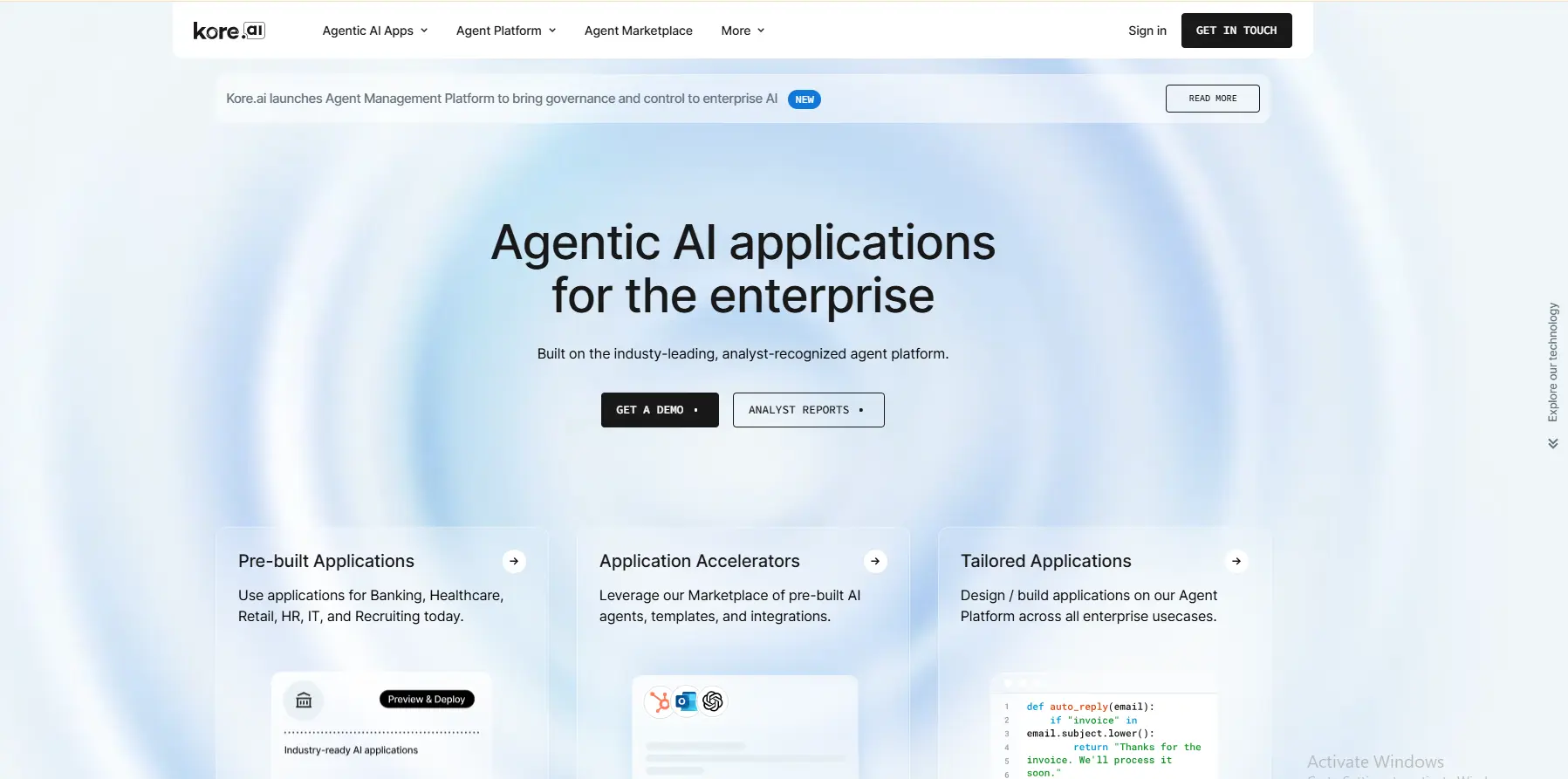
Kore.ai is the “heavy lifter” platform. It isn’t just a bot; it’s a workshop for building smart assistants that handle complex, high-security transactions in banking or healthcare.
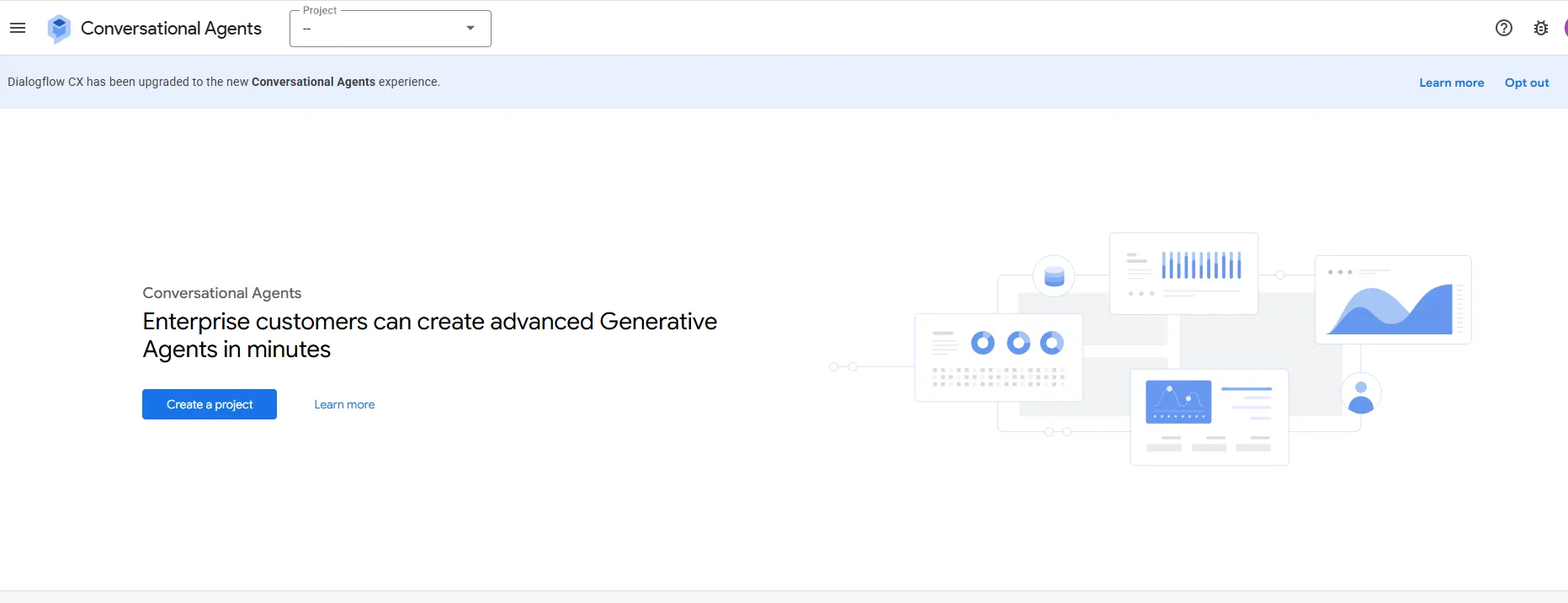
Dialogflow is the gold-standard platform for teams that want to build custom, human-like conversation flows from the ground up using Google’s world-class natural language understanding.
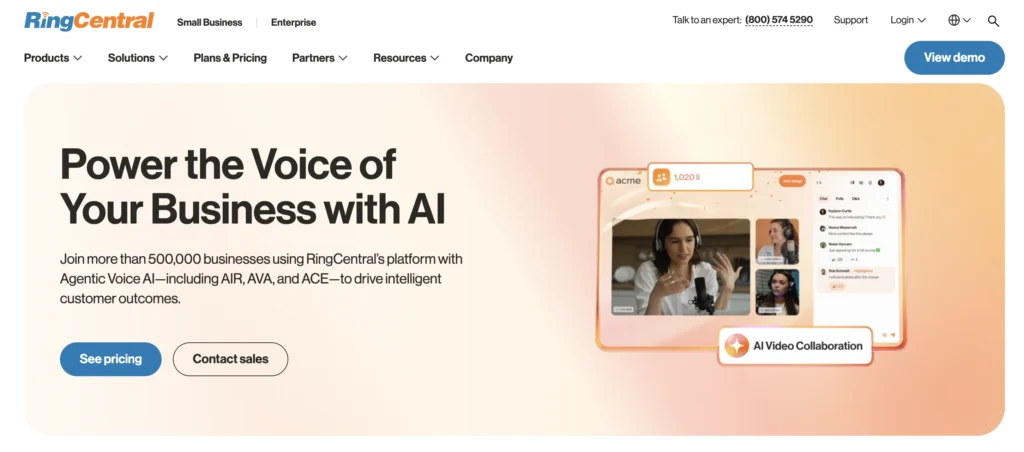
RingCentral’s AI Receptionist is purpose-built for one of the most high-stakes conversational AI use cases: answering the phone. Unlike repurposed chat bots applied to voice, AIR is designed specifically for real inbound calls, gathering caller intent, capturing information, and routing to the right person every time, around the clock.
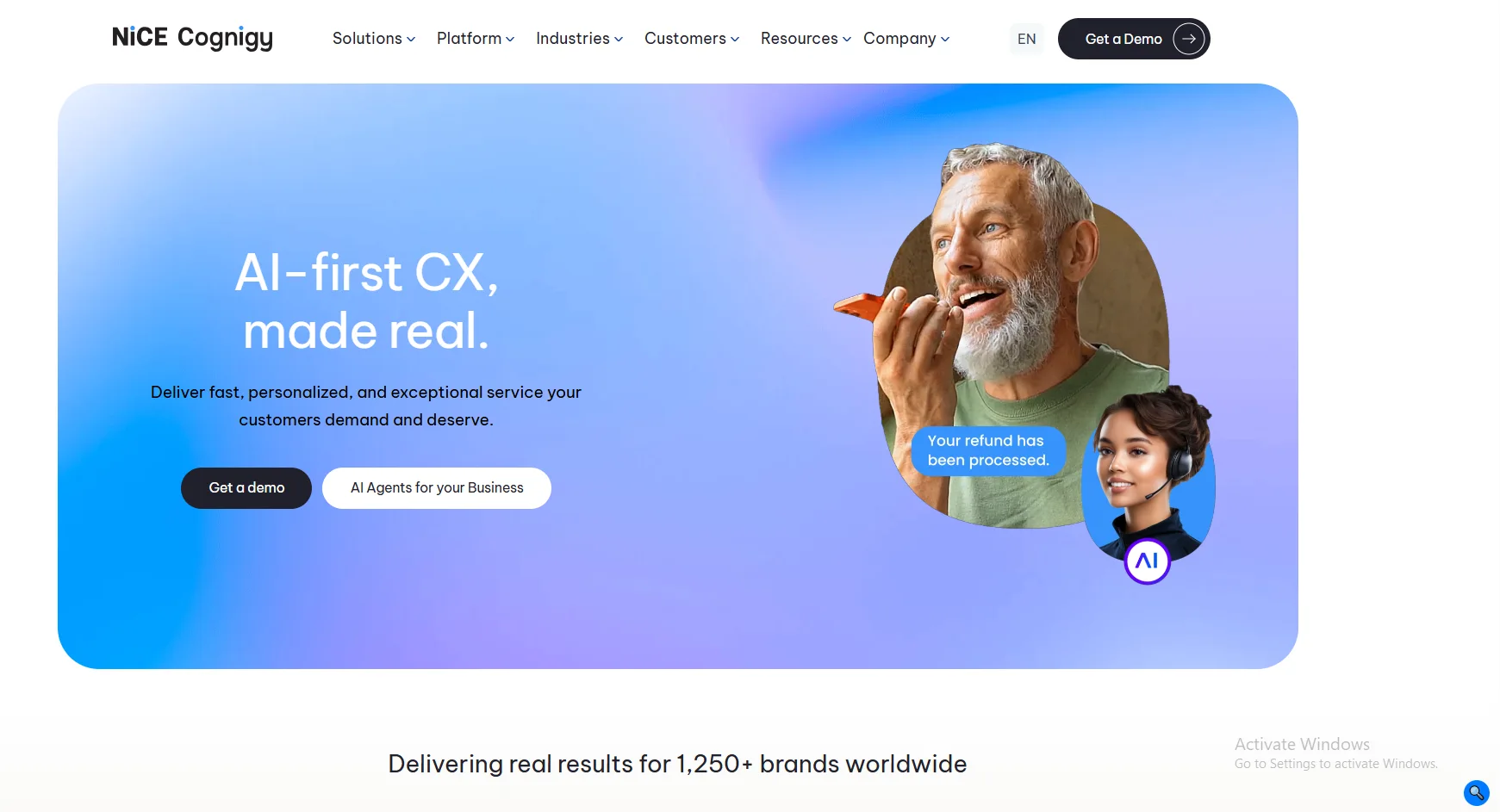
Cognigy is a leader in Agentic AI, where the AI doesn’t just talk—it performs work. It strikes a rare balance between technical power and a clean, accessible design for non-developers.
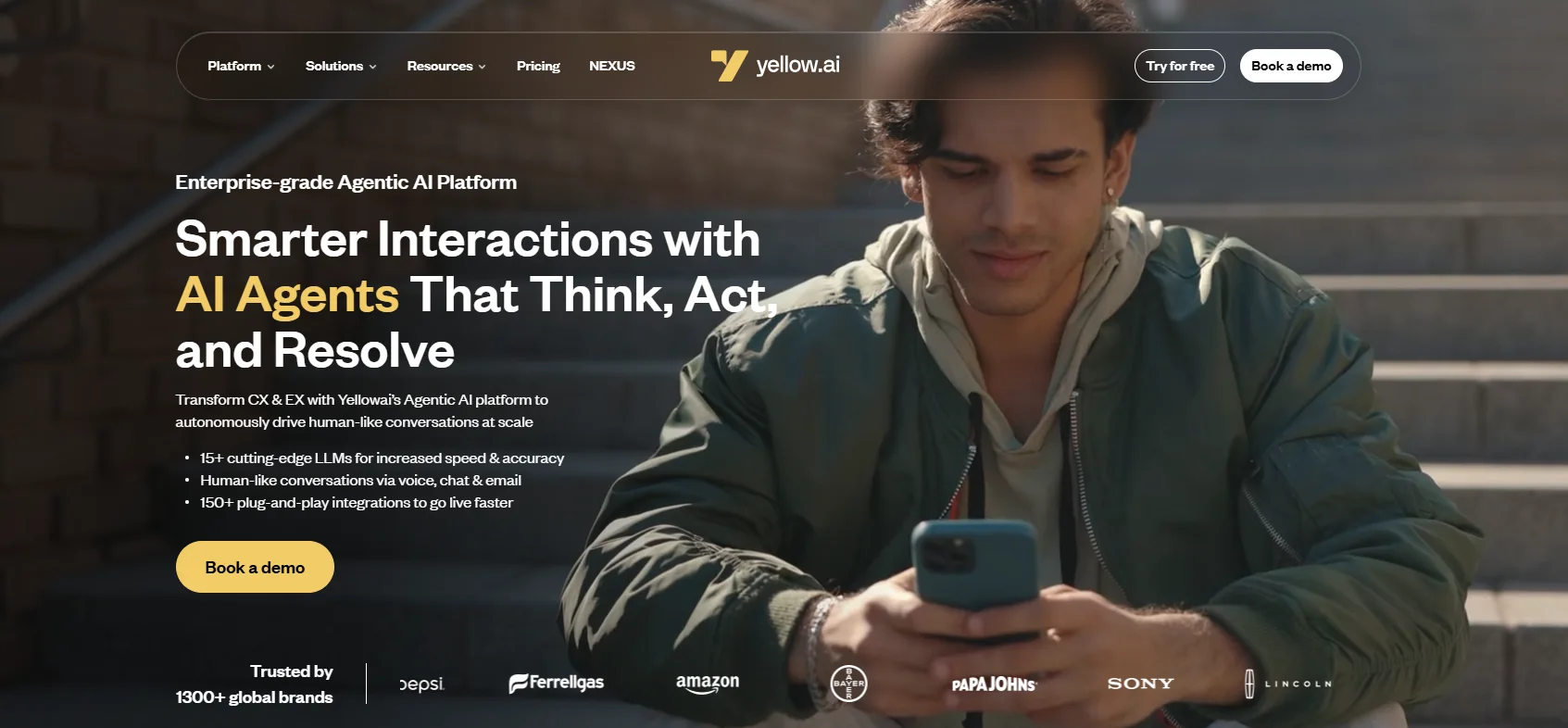
Yellow.ai focuses on speed and agility. They provide “Dynamic Agents” that can be deployed across 35+ channels (like WhatsApp and Instagram) in a fraction of the time it takes to build a custom platform.
Building a successful conversational AI solution isn’t just about the code. You have to think about the user experience.
Your AI is only as smart as the data you give it. If your resource center or FAQ list is outdated, the AI will give wrong answers. You need a solid data management plan to keep the “brain” updated.
The conversational ai ui design matters. The conversation flow should feel natural. It should include small talk, but get to the point quickly. A good conversational AI designer makes sure the bot knows when to apologize and when to be direct.
When users share a debit card number or employee information, they expect privacy. You must follow standards like GDPR and ensure your cloud computing provider (like Google Cloud or IBM) has strong data protection features.
The best systems know their limits. If a customer is angry or has a very complex problem, the virtual agent should seamlessly hand the chat over to a human agent. This ensures the customer journey never hits a dead end.
If you’re ready to implement conversational AI agents in your business, follow this structured roadmap.
Don’t just build an AI because it’s trendy. Are you trying to reduce call center wait times? Do you want to increase sales? Having a clear objective helps you choose the right tools.
There are many options depending on your needs:
Think about the different “paths” a conversation can take. Use conversational flows to plan out what happens if a user says “yes” versus “no.” Keep it simple. The goal is to solve the problem in the fewest steps possible.
Use your transcript data from old phone calls and emails. This helps the AI learn how your specific customers talk. It helps the system understand the specific nouns and phrases unique to your industry, whether that’s healthcare, real estate, or e-commerce.
Before going live, run a testing phase. Ask the AI tricky questions. See how it handles sarcasm or background noise in voice conversations. Use a feedback loop to correct its mistakes.
Once you launch, use data analytics to track KPIs like the deflection rate (how many calls the AI handled alone) and customer satisfaction.
How do you know if your AI assistant is actually working? You need to look at the numbers.
Even big companies make mistakes when launching conversational AI. Here is what to watch out for:
Patients can use a virtual assistant to book appointments, check their symptoms, or get reminders to take their medicine. This reduces the burden on health care services and ensures patients get 24/7 support.
A bank can use AI call center to handle account balance inquiries or password resets. If a user reports a stolen debit card, the AI can instantly freeze the account and trigger a fraud alert.
A realtor can have an AI on their website that asks visitors about their budget, preferred location, and timeline. The AI then schedules a call with the human agent only when the lead is “warm.”
A large airline was struggling with massive call volume spikes during bad weather. Their call center wait times were over two hours, leading to high backlash on social media.
The Solution: They implemented a conversational AI bot built on Google Cloud. This bot was designed to handle flight status checks and simple rebookings.
The Results:
We are moving into the era of Conversational AI 2.0. Here is what to expect:
The next generation of AI agents won’t just talk; they will act. They will be able to log into your shipping system, update an order, and then send a confirmation to the customer, all without a human clicking a single button.
With better data integration, AI will know your customer preferences before you even speak. It will remember that you prefer email over phone calls and that you always ask for a “discount code” on your birthday.
Companies like D-ID are already creating conversational AI avatars. Instead of a text box, you will talk to a realistic 3D character on your screen. This adds a “human factor” to the digital experience.
Conversational AI is the future of business communication. It is not just about “saving money”; it is about improving customer experiences and creating operational efficiency.
By adopting conversational AI tools now, your business can stay ahead of the curve, providing the fast, personal service that modern customers demand.
In All the post should be change FAQ (v3)
There is no “one-size-fits-all.” Google Cloud (Dialogflow) is excellent for large enterprises. Rasa is great for developers who want to stay local and open-source. For simple needs, tools like Zendesk or HubSpot have great built-in AI.
Not exactly. A chatbot is a way to deliver the experience. Conversational AI is an advanced technology (like NLP and ML) that makes the chatbot smart.
Generally, no. Creating artwork is the job of Generative AI (like Midjourney or DALL-E). However, a conversational AI bot can be the interface you use to tell a generative AI what to draw.
It allows for patient onboarding, symptom checking, and 24/7 support without requiring a doctor or nurse to be on the phone constantly.
Yes, many platforms offer a “lite” or “free” version. Huggingface provides many free models, and Google Cloud often offers a free tier for Dialogflow to get you started.
