

Free vs. Paid Temporary Phone Numbers: Key Differences

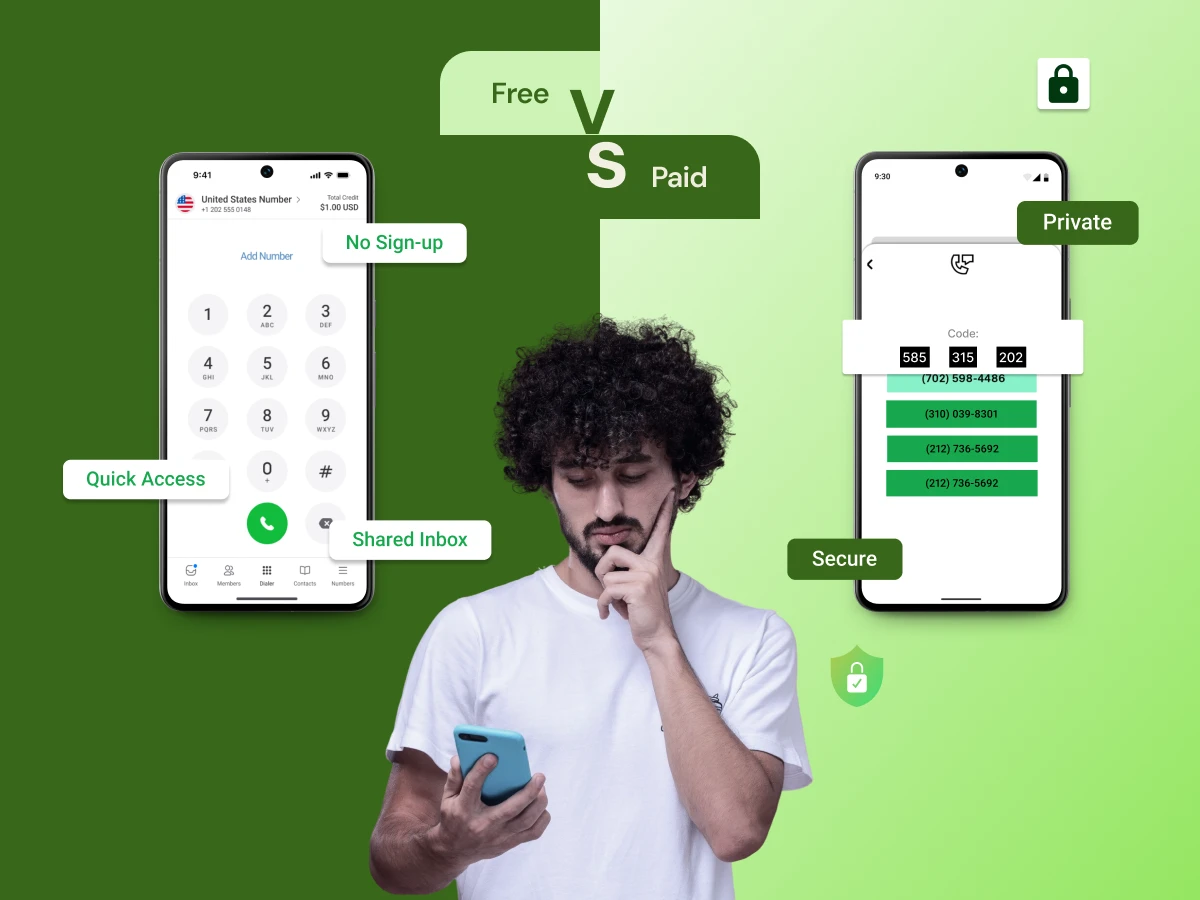
Privacy is hard to find in the modern era. Every time you sign up for a new service, they ask for your digits. You want to access a coupon or a new app. But you do not want to give away your real phone number. This is where the temporary phone number comes in. It acts as a buffer between you and the internet.
Today’s digital landscape is full of data leaks. Sharing your personal number leads to endless spam calls. You might even face identity theft risks.
This guide helps you make an informed decision by settling the free vs paid temporary phone numbers debate. We will look at how these numbers work. We will compare their success rate and privacy levels.
A temporary phone number is a virtual phone line. It does not require a physical SIM card to operate. You do not need a new handset or a contract. These numbers live in the cloud. They allow you to receive SMS messages through a website or an app. You can use them for a few minutes or several months.
People use these numbers for many tasks. You might need one for account verifications on social media. You might use one for dating apps or classified ads. These numbers help you stay anonymous. They protect your real phone number from marketing lists.
Free numbers are part of shared pools. Many people use the same number at the same time. You visit a website and see a list of numbers. You pick one and enter it into a signup form. Then, you refresh the website to receive SMS online.
The messages appear on a public dashboard. Anyone on that website can see your verification codes. There is no registration required. You do not need an account or a credit card. These sites survive on ad revenue. They are popular because they are fast.
However, these numbers have limits. Thousands of people use them for the same websites or apps. This causes platforms to flag the numbers. You might try to use one for SMS verification and see an error. The site might say, “This number is already in use.” This is the main hurdle with free tools.
A paid virtual phone number is private. When you buy one, you are the only person using it. You get a dedicated line for your one-time verification. These numbers are assigned to your specific account. You must register with trusted providers to get one.
These numbers come in different forms. Some are app-based. Others work through a web portal or an API. You can choose the duration. You might need a number for one hour. Or you might need it for a whole year. Paid options offer much more flexibility.
The verification process is much smoother here. Because the number is fresh, it has not been banned. You get your SMS verification codes instantly. You also get a higher level of reliability and security. Your messages are private and encrypted.
Choosing between the two depends on your needs. Below is a side-by-side look at the key differences.
| Feature | Free Temporary Numbers | Paid Temporary Numbers |
|---|---|---|
| Cost | $0 (Ad-supported) | Varies (Subscription or pay-per-SMS) |
| Privacy | Public (Everyone sees messages) | Private (Only you see messages) |
| Platform Acceptance | Low (Often blocked) | High (Accepted by most apps) |
| Reliability | Hit or miss | Very high |
| Number Type | Shared VoIP | Private VoIP or Non-VoIP |
| Duration | Short-term (Hours) | Flexible (Days to months) |
| Security | None | High encryption |
| Support | None | Dedicated customer support |
Not all numbers are equal. Big tech companies like Google and Meta are smart. They keep databases of “bad” number ranges. Most free SMS online services use cheap VoIP ranges. These ranges are easily identified and blocked.
This is why you see “Invalid Number” errors. Platforms want to stop bots and spam. When they see a number used by 500 people, they blackball it. Paid virtual providers use high-quality ranges. Some even offer non-VoIP numbers. These look exactly like a standard mobile line.
Understanding the differences between these types is vital. If a site detects a virtual number, it might reject your SMS verification. Paid providers work hard to keep their numbers clean. They recycle them less often. This leads to better phone verifications every time.
Free numbers are fine for low-stakes tasks. If the account has no value, go free. Use them for newsletters that you only want to read once. They work well for one-time discounts on retail sites.
Developers also use them. If you are testing a site, a free online SMS number is a good sandbox tool. You do not need to worry about billing. You just need to see if the message sends.
However, draw a clear line. Do not use them for anything tied to your identity. If you lose access to the free number, you lose the account. Most free numbers expire in a few hours. You cannot get them back later to reset a password.
Use paid numbers for anything important. If you are setting up a WhatsApp or Telegram account, go paid. These apps require a stable connection. If the number vanishes, you might get locked out.
Financial accounts also need paid services. You need reliability and security when handling money. Paid numbers ensure your verification codes do not end up in a public search. They are also better for online marketplaces like Craigslist or Airbnb.
Paid numbers are the best choice for travel. You can get a local number in a different country. This helps you receive SMS without roaming fees. It is a professional and secure way to stay connected.
Businesses have higher standards than individuals. A failed SMS verification costs time and money.
If you are a business owner, you cannot afford to be blocked. Dialaxy provides robust solutions for teams. It ensures your verification process is always active and secure.
Using a disposable phone number is generally legal. However, it can violate a website’s Terms of Service (ToS). Platforms want “real” users. If they catch you using a temporary line, they might ban your account.
Free numbers carry a higher risk here. Because they are shared, they look like bot activity. Paid numbers are safer because they appear unique. They mimic a real phone much better.
Here are some of the best tools available for 2026.
| Type | Provider | Best For | Key Limitation |
|---|---|---|---|
| Free | Quackr | Quick, non-private signups | Numbers are often blocked |
| Receive-SMS | Public testing | Zero privacy | |
| Free/Paid | TextNow | Basic calling | Requires an app and data |
| Paid | Dialaxy | Business & High Success SMS | Monthly subscription |
| Hushed | Personal secondary line | Can be expensive for bulk | |
| Burner | Short-term private use | Limited international support |
The process to get a temporary phone number is simple for both types.
Still not sure? Ask yourself these questions to make an informed decision.
Choosing between free and paid numbers comes down to your goal. Free numbers are great for one-time, low-risk tests. Paid numbers offer the reliability and security needed for important accounts. They ensure your verification process stays private and successful.
For businesses and privacy-conscious users, Dialaxy is the best way to receive SMS without stress. Choose a paid plan today to secure your digital identity and ensure your accounts stay active.
A free number is shared and public, so everyone can see the incoming SMS messages. A paid number is private, meaning only you can access the verification codes. Paid numbers also have a much higher success rate because they are not commonly flagged as spam by websites or apps.
It is very difficult. WhatsApp blocks most free virtual phone numbers. Even if one works temporarily, someone else could later receive the same number and potentially access your account. For WhatsApp verification, a paid private number is the safest and most reliable option.
Yes. Temporary phone numbers are legal in most countries and are commonly used to protect privacy. However, using them for illegal activities remains unlawful. You should also review the terms of service of the platform you are joining, as some websites prohibit their use.
Most free temporary phone numbers remain active for only a few days before they are recycled. They are not suitable for long-term use. If you need a number for ongoing access, a paid service with monthly renewals is a better choice.
Yes. Most free SMS websites display incoming messages on public dashboards that anyone can view. Never use a free temporary number for sensitive information or personal accounts. They are intended only for basic one-time verifications.
A VoIP number works over the internet, while a non-VoIP number is connected to a traditional mobile carrier. Many websites and financial platforms prefer or require non-VoIP numbers because they are considered more trustworthy for SMS verification.
No. A burner phone is a physical mobile device, while a temporary phone number is a virtual service that works through an app or website. Virtual temporary numbers are generally faster, more convenient, and do not require additional hardware.
Most free temporary number services only support SMS messages. Many paid providers allow both voice calls and text messages. If you need to receive voice verification codes, choose a paid service that supports calling features.
Pricing depends on the provider. Some services charge only a few dollars for one-time verification, while others offer monthly subscriptions ranging from $5 to $15. Premium non-VoIP numbers generally cost more but provide higher reliability.
Paid temporary phone numbers are the better choice for businesses because they provide greater reliability, privacy, and account security. Using free shared numbers can increase the risk of account bans and damage customer trust.
Yes, provided you use a paid virtual phone number. WhatsApp requires a unique and active phone number for verification, making paid temporary numbers a practical solution for separating personal and business accounts.
Once a temporary phone number expires, you can no longer receive SMS messages or calls on it. If an important account is linked to that number, recovering access may become difficult. For long-term accounts, keeping the number active through a paid service is recommended.
